
Locus Robotics
Locus Robotics pairs autonomous mobile robots with LocusONE orchestration for warehouse picking, putaway, and transport.
Pick Locus if your constraint is change — spiky peaks, shifting SKU mix, multi-level sites you can't rebuild — and you want throughput gains without CapEx. The 360+ site footprint and 65+ WMS/ERP integrations mean you're unlikely to be the first customer doing something weird. The catch is commitment: RaaS is a recurring line item, and at low daily pick volumes it won't pay back.
Verified 7h ago · liveness 76/100 · cite: rightaichoice.com/tools/locus-robotics
- 3PL warehouses running spiky, unpredictable multi-customer order volumes
- High-volume eCommerce and retail fulfillment centers targeting 2-3x picking productivity
- Multi-level or mezzanine sites that can't be rebuilt around fixed automation
- Operations that want subscription automation instead of a large upfront CapEx build
- Small warehouses with low daily pick volumes where RaaS fees won't pay back
- Sites that need a fully lights-out, zero-human floor today — collaborative flows still staff pick stations
- Facilities with aisles too narrow for AMR traffic, which need a site survey first
We scan live Reddit threads, YouTube comments, X posts, G2 reviews and other communities — and hand you an honest verdict in under a minute.
- Honest verdict, not marketing
- Real pros & cons from real users
- Attributed quotes with receipts
3 free scans · no card needed
Skip Locus if your facility has extremely narrow aisles that AMRs can't navigate, or if your daily pick volume is low enough that a RaaS subscription won't pay back within a reasonable window.
RaaS subscriptions are ongoing — the cost doesn't stop after deployment, so model the monthly O&M against your throughput gains, not just the initial rollout.
Locus prices via sales consultation rather than published tiers, which fits operations large enough to justify a fleet and whose volumes vary enough that RaaS beats capital purchase. If your daily volume is under a few thousand picks, a manual-plus-light-automation setup or a smaller AMR fleet will likely cost less. If you need fixed-grid goods-to-person density above all else, AutoStore is the comparison to run.
In short
Locus Robotics — Locus Robotics pairs autonomous mobile robots with LocusONE orchestration for warehouse picking, putaway, and transport. Best for 3PL warehouses running spiky, unpredictable multi-customer order volumes, High-volume eCommerce and retail fulfillment centers targeting 2-3x picking productivity, Multi-level or mezzanine sites that can't be rebuilt around fixed automation. Contact Sales pricing.
What people actually say about Locus Robotics — is it worth it?
We ran a structured research pass across product reviews, community discussions, and post-purchase forum threads to surface the patterns vendors won't publish themselves. Below: the recurring strengths, the hidden costs people mention most, and the cohort that consistently regrets adopting this tool.
14 mentions across 1 source (YouTube) · researched Oct 7, 2026.
Weighted by the 14 posts each of 1 source contributed.
- +Proven at scale: 20,000+ robots deployed across 360+ sites with 8B+ picks completed.
- +Mixed-fleet flexibility lets a site run 10 bots today and scale to 1,000+.
- +API connects to 65+ WMS/ERP systems, including SAP EWM, Manhattan, and Blue Yonder.
- +RaaS subscription converts automation from capex to opex with support included.
- +Collaborative Origin and Vector models reportedly cut unproductive walking up to 90%.
- −Public, independent operator reviews are scarce — most content is vendor marketing.
- −A 2017 commenter accused the system of slowing down previously fast pickers.
- −No clear answer in community threads on confirming inventory removal after pick.
- −Alternate pick locations for the same SKU weren't supported per one user question.
- −High-throughput grocery operations like Ocado's volume likely exceed this design.
- • WMS-side integration engineering is rarely free even when Locus's API supports the system
- • Warehouse layout changes, charging infrastructure, and network upgrades may fall outside the subscription
- • Associate retraining and change-management time during ramp-up
- • Multi-year commitment terms typical of RaaS contracts limit mid-term renegotiation
Viability Score
How well maintained and how widely used is Locus Robotics? Built from what the vendor actually publishes (docs, changelog, tutorials, integrations, pricing), whether the site is live, and how much real users discuss it. How we calculate this
Last calculated: October 2026
How we score →Key Features
- Autonomous mobile robots (AMRs) for picking, putaway, transport, and sortation
- Locus Array: Physical AI robot-to-goods fulfillment with in-aisle picking and consolidation
- LocusONE orchestration platform balances tasks across robots, people, and workflows
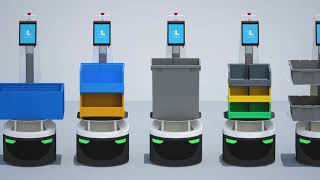
- Locus Origin and Locus Vector collaborative robots for person-to-goods picking
- Mixed fleet deployments scaling from 10 bots to 1,000+ at a single site
- LocusIntelligence AI layer reportedly driving task assignment and fleet decisions
- Physical AI that perceives, reasons, and acts in real time in the aisle
- Continuous putaway and replenishment with intelligent task interleaving
- Multi-level and mezzanine fulfillment across floors without fixed infrastructure
- Reduces unproductive walking by up to 90% in collaborative picking, per vendor
- Locus Array reports up to 90% lower labor costs and up to 2x storage density
- Robots-as-a-Service (RaaS) subscription model with deployment and 24/7 support included
- API connectivity to 65+ WMS/ERP systems
- Real-time dashboards for productivity and performance management
About Locus Robotics
Locus Robotics sells warehouse automation as a subscription: a mixed fleet of autonomous mobile robots (AMRs) plus the LocusONE orchestration platform that decides what each robot and associate does next. Two systems cover the work. Collaborative fulfillment uses Locus Origin and Locus Vector so associates stay in the pick zone while robots absorb the travel — Locus quotes 50-90% lower labor costs and 2-3x productivity lift on that flow. Fully autonomous fulfillment uses Locus Array, the Physical AI robot-to-goods line launched in January 2025, where robots pick and consolidate orders directly in the aisle and handle picking, putaway, replenishment, slotting, and auto induct and drop-off. The scale is real: 360+ sites, 20,000+ robots deployed, 8B+ picks completed, and more than 150 customers serving 1,000+ brands, with deployments ranging from 10 bots to 1,000+ at a single site. Named customers include DHL Supply Chain (Carhartt's operation hit ~200 UPH and a 200% productivity increase), Ulta Beauty, MSK Pharma, S&S Activewear, and Fleet Feet. Integration is the practical hook. Locus says its API has connected to over 65 unique WMS and ERP systems, and the profile on file names SAP EWM, Manhattan Associates, Blue Yonder, Oracle, Microsoft Dynamics 365, NetSuite, Infor, and Körber — so you keep the systems of record you already run. LocusONE sits above them as the orchestration and intelligence layer. Every deployment runs on Robots-as-a-Service, with deployment, optimization, account management, field services, and 24/7 global support included. That model puts Locus between manual labor and fixed automation like AutoStore's grid — flexibility-first AMRs in existing aisles, priced as an operating cost rather than a capital build.
Behind the Verdict
The decision here usually isn't Locus versus nothing. It's Locus versus a fixed goods-to-person grid, or versus hiring another shift. Locus wins when your building is the constraint. Existing aisles, mezzanine levels, no fixed infrastructure, go-live measured in weeks rather than a construction cycle — S&S Activewear deployed in 49 days. If you're a 3PL whose customer mix changes every quarter, that adaptability is worth more than raw density. MSK Pharma reassigns robot capacity between two neighboring sites in about 15 minutes; try doing that with a conveyor. The Locus Array line is the piece to watch. Launched January 2025, it moves Locus from person-to-goods into robot-to-goods — robots pick and consolidate in the aisle, with vendor-reported labor reduction up to 90% and up to 2x storage density. This is the part that competes directly with grid automation, and it's also the newest, so ask for references at sites running Array in anger, not just Origin and Vector. Where it bites: RaaS is an ongoing cost, so a site doing modest daily picks will struggle to justify it against hourly labor. If you need a fully hands-off floor with zero human touch, collaborative fulfillment isn't that — you're still staffing pick stations, just not the walking. Very narrow aisles are a site-survey question, not a marketing answer. And the pricing is quote-based per site, so the number depends on fleet size, workflows, and term; there's no public rate card to sanity-check against. Closest alternative is AutoStore or another grid-based goods-to-person system — denser and more rigid, bigger upfront commitment, harder to redeploy. 6 River Systems is the nearer peer in collaborative picking; Locus's differentiator is the LocusONE layer running both collaborative and autonomous fleets on
Researching Locus Robotics? Get your full AI stack in 60 seconds.
Free, no signup — tell us your goal and get tools matched to your budget & existing stack.
Real-world workflow fit
Concrete scenarios for the personas Locus Robotics actually fits — and what changes day-one when you adopt it.
A client's peak season drives order volume 3x overnight. You add Locus AMRs to the existing aisle layout through the RaaS subscription, and LocusONE rebalances task assignment across the robots and associates as the surge builds.
Outcome: Throughput holds without a temporary-labor scramble, and you scale the fleet back down when the spike ends instead of carrying idle capacity.
You deploy Locus AMRs with mezzanine management so robots work across floors rather than running between them. LocusONE assigns pick, putaway, and replenishment tasks to whichever resource is closest and least loaded.
Outcome: Vertical space gets used, travel time drops, and pick rates rise 2-3x per the vendor's target.
You pilot Locus Array in a high-throughput picking area to test autonomous R2G execution on picking, putaway, and replenishment across shifts.
Outcome: You get real numbers on labor reduction in your own SKU mix rather than relying on the vendor's up-to-90% headline figure.
Use Cases
- Deploy AMRs to reduce worker walking distance by up to 60% in picking operations.
- Scale fulfillment capacity without adding labor by dynamically adding robots during peak seasons.
- Integrate with existing WMS to automate putaway and replenishment tasks.
- Use LocusONE dashboards to monitor real-time productivity and identify bottlenecks.
- Implement mezzanine management to utilize vertical space efficiently in multi-level facilities.
- Deploy Locus Array for fully autonomous picking and putaway in high-throughput areas.
Models Under the Hood
as of 2026-10-08
Limitations
- The system is designed for warehouse fulfillment environments, focusing on person-to-goods and robots-to-goods workflows.
- Deployment and ongoing operation are handled through a Robotics-as-a-Service (RaaS) model, with pricing and configuration determined via sales consultation.
- Performance is dependent on warehouse layout and operational processes, and integration with existing warehouse management systems is supported through APIs.
- The up-to-90% labor reduction figure for Locus Array is vendor-reported and should be validated against your own SKU mix and throughput.
as of 2026-09-29
Verification history
We have re-verified Locus Robotics 95 times since . Each pass re-reads the vendor's own pages and re-checks every listed field against that evidence; passes where nothing had changed are marked as such.
- — re-checked, vendor evidence unchanged
- — re-checked, vendor evidence unchanged
- — re-checked, vendor evidence unchanged
- — re-checked, vendor evidence unchanged
- — re-checked, vendor evidence unchanged
- — re-verified summary, description, our verdict, our analysis, pricing model, pricing tiers, features, integrations, who it suits, who should skip it
Showing the 6 most recent of 95 verification passes.
Free to cite with attribution — this page re-verifies continuously.
12-month cost
Project the real annual outlay, including the implied monthly cost when only an annual tier is published.
Vendor list price only. Add-on usage, seat overages, and contract minimums are surfaced under Hidden costs & gotchas.
Where the pricing makes sense
The company stage and team size where Locus Robotics's pricing actually pencils out — and where peers do it cheaper.
Locus prices via sales consultation rather than published tiers, which fits operations large enough to justify a fleet and whose volumes vary enough that RaaS beats capital purchase. If your daily volume is under a few thousand picks, a manual-plus-light-automation setup or a smaller AMR fleet will likely cost less. If you need fixed-grid goods-to-person density above all else, AutoStore is the comparison to run.
Setup time & first value
How long it actually takes to get something useful out of Locus Robotics — broken out by persona, not the marketing-page minute.
Deployment timelines depend on facility layout, WMS integration scope, and fleet size — Locus positions rapid deployment in existing facilities without redesign as a core advantage, but actual time to first value is set during the sales and implementation process. Plan for phased rollout rather than a single cutover.
Switching to or from Locus Robotics
How to bring data in from common predecessors and how to get it back out — written for the switcher, not the buyer.
- →From manual cart picking: deploy AMRs in existing aisles with no facility redesign, keeping associates in the loop for the less mechanizable picks.
- ↗To fixed grid-based goods-to-person: migrate to AutoStore if peak storage density outweighs flexibility in your operation.
Integrations
Resources & Guides
Tutorials & Learning
Official links
Featured Head-to-Head Comparisons
Dox vs Locus Robotics
Locus Robotics and dox serve entirely different markets: Locus is a physical AMR solution for warehouse automation (RaaS), while dox is an open-source AI agent framework for autonomous computer tasks. Choose Locus if you need to scale physical order fulfillment in high-volume warehouses; choose dox if you are a developer wanting to run autonomous agents on your own machine with full control. There is no overlap in use cases.
Lemma Platform vs Locus Robotics
Lemma and Locus Robotics solve entirely different problems—Lemma is for teams building custom AI workflows (open-source, free), while Locus Robotics is for physical warehouse automation (RaaS, enterprise). Choose Lemma if you need a flexible, code-first agentic platform for business processes; choose Locus Robotics if you need proven, scalable mobile robots for high-volume fulfillment.
Clawputer vs Locus Robotics
These tools address completely different domains. Locus Robotics is a warehouse automation platform using AMRs and Physical AI to boost fulfillment productivity, ideal for high-volume 3PL and eCommerce operations. Clawputer is an AI assistant that lives in iMessage/Telegram with a persistent Linux sandbox—perfect for developers and executives wanting a proactive digital coworker. Choose based on your need: physical logistics or digital task automation.
Oh My Taiyiforge vs Locus Robotics
Locus Robotics and oh-my-taiyiforge serve completely different domains. If you need physical warehouse automation to boost productivity by 2-3x in high-volume fulfillment, Locus Robotics is the obvious choice with its proven AMRs and RaaS model. If you're a developer seeking a structured, auditable AI code generation workflow with human approval gates, oh-my-taiyiforge is a free, open-source plugin that supports multiple AI terminals. No cross-shopping is likely; pick based on your operational domain.
Arena Of Autonomous Threads vs Locus Robotics
Locus Robotics is for physical warehouse automation, offering a mature RaaS solution with recent Physical AI enhancements (Locus Array). Arena-of-Autonomous-Threads is a free, open-source research tool for simulating AI agent societies. Choose Locus if you need to improve fulfillment productivity; choose Arena if you study emergent multi-agent behavior.
Tabbit Browser vs Locus Robotics
Locus Robotics and Tabbit Browser serve completely different domains. Go with Locus if you run a warehouse and need physical automation to boost picking productivity 2–3x via RaaS. Choose Tabbit if you're a knowledge worker wanting a free AI browser that organizes tabs, automates web tasks, and leverages Chinese LLMs. No overlap in use cases.
Heoster Jarvis Ai Assistant vs Locus Robotics
If you run a high-volume warehouse and need to boost productivity 2-3x with scalable, flexible automation, Locus Robotics’ proven AMRs and new Locus Array Physical AI are worth the RaaS investment. For developers and researchers seeking a customizable open-source AI assistant with contextual memory, Heoster Jarvis is a free, self-hosted option. These tools are not substitutes; choose based on your domain: logistics vs. conversational AI.
Local Operator vs Locus Robotics
Locus Robotics and Local Operator serve completely different automation needs: Locus automates physical warehouse picking with AMRs, ideal for high-volume 3PLs; Local Operator automates desktop software tasks via AI agents, perfect for solo devs or small teams. Choose Locus if you run a warehouse and need to scale order fulfillment; choose Local Operator if you want to offload repetitive computer work without cloud dependency.
Lyto vs Locus Robotics
Locus Robotics is the clear choice for 3PL and eCommerce warehouses needing to boost fulfillment productivity 2-3x with scalable AMR fleets and advanced orchestration. Lyto is a lightweight browser tool for web automation tasks but cannot replace core warehouse operations. Your decision hinges on whether you need physical robot automation (Locus) or digital task automation (Lyto).
Blurr vs Locus Robotics
Locus Robotics and Blurr serve entirely different domains: warehouse automation vs. Android device automation. If you run a 3PL or eCommerce fulfillment center needing to 2-3x productivity with flexible robots, Locus Robotics is the clear choice with its RaaS model and deep WMS integrations. If you’re a developer or QA engineer who wants to automate Android app interactions visually without APIs, Blurr’s freemium model and vision-language approach are ideal. There's no overlap, so the decision hinges on your problem space.
Tiptour Macos vs Locus Robotics
Locus Robotics is an enterprise-grade warehouse automation solution for 3PLs and eCommerce fulfillment centers seeking 2-3x productivity gains, while Tiptour Macos is an open-source voice-driven macOS automation tool for developers and power users. Choose Locus if you run a large-scale warehouse and need proven AMR technology; choose Tiptour if you want to control your Mac hands-free and integrate with AI coding agents.
Omnigent vs Locus Robotics
Locus Robotics and Omnigent serve entirely different domains: Locus automates physical warehouse tasks with AMRs, while Omnigent enables multi-agent AI orchestration. Choose Locus for high-volume fulfillment centers needing 2-3x productivity gains via robots; choose Omnigent if you're a developer building and controlling multiple AI agents with policy-based guardrails. They are not direct competitors.
Popular in Robotics & Physical AI



Frequently Asked Questions
Topics
Used Locus Robotics? Help shape our editorial sentiment research.