
Agent Scripts
Open-source CLI scripts and utilities for building custom AI coding agent workflows.
A sharp, opinionated toolkit for devs who prefer CLI control over GUI agents. Not a product but battle-tested patterns from a veteran engineer. Best for those comfortable reading and modifying shell scripts. Skip if you need support, documentation beyond the repo, or a no-code interface.
Verified 14d ago · liveness 63/100 · cite: rightaichoice.com/tools/agent-scripts
- Developers building custom AI agent workflows
- Open-source enthusiasts seeking reusable utilities
- Agentic engineers wanting to learn from production patterns
- Users of Claude Code looking for supplementary scripts
- Non-technical users seeking a no-code agent tool
- Teams requiring commercial SLA or support
- Users needing a full-featured agent platform with GUI
We scan live Reddit threads, YouTube comments, X posts, G2 reviews and other communities — and hand you an honest verdict in under a minute.
- Honest verdict, not marketing
- Real pros & cons from real users
- Attributed quotes with receipts
3 free scans · no card needed
Skip Agent Scripts if you need a GUI, commercial support, or a no-code interface—this is a CLI toolkit for developers who can read and modify shell scripts.
Since it's free and open source, there are no direct costs, but you'll spend time learning and adapting scripts to your workflow.
Agent Scripts is free, which makes it ideal for individual developers and small teams. It beats any paid agent framework on cost, but you invest time instead of money. For a turnkey solution, you'd pay for Claude Pro or Codex, but here you get the raw pieces.
In short
Agent Scripts — Open-source CLI scripts and utilities for building custom AI coding agent workflows. Best for Developers building custom AI agent workflows, Open-source enthusiasts seeking reusable utilities, Agentic engineers wanting to learn from production patterns. Free to use.
What's new in Agent Scripts
Checked yesterdayAcross the latest 1 update: 1 news mention.
What people actually say about Agent Scripts — is it worth it?
We ran a structured research pass across product reviews, community discussions, and post-purchase forum threads to surface the patterns vendors won't publish themselves. Below: the recurring strengths, the hidden costs people mention most, and the cohort that consistently regrets adopting this tool.
29 mentions across 3 sources (Hacker News, GitHub, Lemmy) · researched Jul 3, 2026.
Average across the 3 sources that answered — each source counts once, not each post.
- +Lightweight; doesn't pollute agent context as much.
- +MIT licensed—free to fork, remix, and integrate.
- +Practical real-world patterns from an experienced developer.
- +Composable shell scripts that are easy to read and modify.
- +Works with multiple agents (Claude, Gemini, Codex) after adaptation.
- −Documentation is sparse; beginners may find it hard to use.
- −No formal releases or changelogs for tracking changes.
- −Limited to shell-script patterns; not a full framework.
- −Only tested on author's own projects; edge cases unknown.
- −No built-in sandboxing for untrusted agent execution.
Viability Score
How well maintained and how widely used is Agent Scripts? Built from what the vendor actually publishes (docs, changelog, tutorials, integrations, pricing), whether the site is live, and how much real users discuss it. How we calculate this
Last calculated: September 2026
How we score →Key Features
- MIT-licensed open source code
- CLI-based interface
- Modular, composable scripts
- Poltergeist universal build watcher
- Zero-config auto-detection
- Arena collaborative coding tool
- Claude Code integration
- Custom LLM pipeline support
- File watching and build triggering
- Live coding session available
- Public GitHub hosting
- Blog posts with production patterns
- Reusable agent workflow utilities
About Agent Scripts
Agent Scripts is a modular, MIT-licensed collection of scripts and utilities from Peter Steinberger (@steipete), a veteran engineer now joining OpenAI to work on agents. It’s a developer’s toolkit, not a polished product: raw, forkable code that gives you the building blocks to craft your own agentic workflows. Each script does one job, and they’re designed to be mixed and matched. The project lives fully on GitHub with every commit public, making it both a practical resource and a learning library for agentic engineers. Key components include Poltergeist, a zero-config universal build watcher that auto-detects and rebuilds any project—Swift, Rust, Node.js, CMake, or anything else—the moment you save a file. There’s also Arena, a collaborative coding tool demonstrated in a live coding session streamed on Steinberger’s blog. The blog itself offers real-world context, such as a no-BS guide to agentic engineering and a breakdown of his current AI-driven dev workflow. Agent Scripts integrates with Claude Code and can plug into custom LLM pipelines. While it’s not a full agent platform, it provides transparency and control. If you’re comfortable reading and modifying shell scripts, you can adapt these utilities to your exact workflow. If you need a GUI, support, or a no-code interface, this isn’t the tool for you. Compared to higher-level abstractions like LangChain or AutoGPT, Agent Scripts gives you the underlying pieces instead of a turnkey solution. It’s a toolkit for developers who want to understand and control every step of their agentic process.
Behind the Verdict
Agent Scripts is the kind of project that polarizes developers. If you live in the terminal and obsess over your workflow, you’ll find genuine gold here — modular, MIT-licensed utilities that you can fork, tweak, and assemble into your own AI agent pipeline. The star is Poltergeist, a build watcher that truly saves you keystrokes, auto-detecting any project and rebuilding on save. That’s a real productivity win for anyone juggling multiple languages. But this isn’t a product. There’s no support, no documentation beyond the repo, and no GUI. You have to read code — and write some — to make it yours. If that’s your thing, you’ll appreciate the transparency and control. If not, you’ll bounce off quickly. The author’s move to OpenAI adds credibility, but also a potential risk: will he keep maintaining this? The blog posts promise ongoing experimentation, and the repo remains public for forking. Still, anyone relying on this for critical workflows should be prepared to fork and own their copy. Compared to LangChain or AutoGPT, Agent Scripts is the opposite of a framework. It hands you the building blocks, not the structure. That’s powerful for learning and customization, but it means you’re on your own for assembling the whole picture. Where it bites: the lack of formal support, the need to read shell scripts, and the fact that it’s not a turnkey solution. If you want to get from zero to agent fast without coding, look at managed platforms. If you want to understand every step and make it your own, Agent Scripts is a great starting point. In practice, we’ve found it most valuable as a learning resource and a source of battle-tested patterns. Even if you don’t use the scripts directly, the concepts — like Poltergeist’s auto-detection — are worth stealing for your own
Researching Agent Scripts? Get your full AI stack in 60 seconds.
Free, no signup — tell us your goal and get tools matched to your budget & existing stack.
Real-world workflow fit
Concrete scenarios for the personas Agent Scripts actually fits — and what changes day-one when you adopt it.
You want to automate rebuilds when editing code.
Outcome: Set up Poltergeist to watch your project and trigger builds on save, saving minutes per iteration.
You want to integrate file watching with your own LLM calls.
Outcome: Fork the scripts and modify them to call your preferred LLM API, creating a custom automation pipeline.
You want to learn from production patterns.
Outcome: Read Steinberger's blog posts and study the public commits to understand how a veteran builds agent workflows.
Use Cases
- Automate build-and-test loops with an AI agent using Poltergeist scripts.
- Kickstart a custom agentic workflow by forking the reusable scripts.
- Learn practical patterns for integrating Claude Code with file watchers.
- Set up a zero-config build watcher that detects project types automatically.
- Remix agent scripts to add custom hooks for your own repositories.
- Build a custom agentic automation pipeline from composable CLI modules.
- Collaborate in real-time using Arena for pair programming with AI.
- Use Steinberger's blog patterns to design production agent workflows.
Models Under the Hood
as of 2026-09-13
Limitations
- Agent Scripts is an open-source collection of CLI scripts and utilities for building custom AI coding agent workflows, tied to the personal site of Peter Steinberger.
- It is not a standalone product; it is distributed via GitHub and blog posts, and users are expected to be comfortable with the command line and reading/modifying scripts.
- The author is now at OpenAI, but the tool remains independent and open source.
as of 2026-08-27
Verification history
We have re-verified Agent Scripts 6 times since . Each pass re-reads the vendor's own pages and re-checks every listed field against that evidence; passes where nothing had changed are marked as such.
- — re-verified summary, description, our verdict, our analysis, pricing model, pricing tiers, features, integrations, who it suits, who should skip it
- — re-verified summary, description, our verdict, our analysis, pricing model, pricing tiers, features, integrations, who it suits, who should skip it
- — re-verified summary, description, our verdict, our analysis, pricing model, pricing tiers, features, integrations, who it suits, who should skip it
- — re-verified summary, description, our verdict, our analysis, pricing model, pricing tiers, features, integrations, who it suits, who should skip it
- — re-verified summary, description, our verdict, our analysis, pricing model, pricing tiers, features, integrations, who it suits, who should skip it
- — re-verified summary, description, our verdict, our analysis, pricing model, pricing tiers, features, integrations, who it suits, who should skip it
Free to cite with attribution — this page re-verifies continuously.
12-month cost
Project the real annual outlay, including the implied monthly cost when only an annual tier is published.
Vendor list price only. Add-on usage, seat overages, and contract minimums are surfaced under Hidden costs & gotchas.
Plans compared
For each published Agent Scripts tier: who it actually fits, and what it adds vs. the previous tier. Cross-reference the cost calculator above for projected annual outlay.
Open Source
$0
Ideal for
Individual developers and open-source enthusiasts who want free, forkable code for custom agent workflows.
What this tier adds
Starting tier: MIT-licensed source code, public GitHub repo, and community contributions.
Where the pricing makes sense
The company stage and team size where Agent Scripts's pricing actually pencils out — and where peers do it cheaper.
Agent Scripts is free, which makes it ideal for individual developers and small teams. It beats any paid agent framework on cost, but you invest time instead of money. For a turnkey solution, you'd pay for Claude Pro or Codex, but here you get the raw pieces.
Setup time & first value
How long it actually takes to get something useful out of Agent Scripts — broken out by persona, not the marketing-page minute.
For a developer familiar with the command line, you can get Poltergeist running in under 10 minutes. Forking and adapting scripts for custom workflows may take an hour or more depending on your needs.
Switching to or from Agent Scripts
How to bring data in from common predecessors and how to get it back out — written for the switcher, not the buyer.
- →From manual build scripts: Replace your ad-hoc watcher with Poltergeist's zero-config setup.
- →From other agent frameworks: Port your workflow logic to these composable scripts for more control.
- ↗To a full-featured agent platform: Move to OpenAI Codex or Google Jules if you need GUI and support.
Integrations
Resources & Guides
Tutorials & Learning
Agent Scriptによるエージェントの挙動制御 | アーキテクトの知見
Salesforce Architects
What are Agent Scripts within Microsoft Dynamics 365 Customer Service Omnichannel app ?
Power Tech Speck (Girish Uppal)
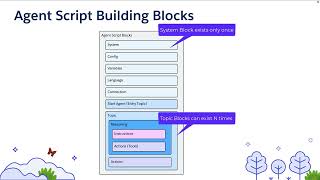
【Agent Script】ビルディングブロック入門
Salesforce Developers Japan
YouTube returned 6 videos for “Agent Scripts”, and we withheld 1: 1 did not mention Agent Scripts. Showing the 5 we can prove are about Agent Scripts.
Official links
Tools that pair well with Agent Scripts
Common stack mates teams adopt alongside Agent Scripts, with the specific reason each pairing earns its keep.

OpenHands
Open-source platform for autonomous cloud coding agents that fix bugs, review PRs, and automate workflows.
Continue
Pioneering open-source AI coding agent for VS Code and JetBrains, now archived after Cursor acquisition.
Imbue
Imbue is an open AI lab building coding agent tools that run in parallel and answer to you, not a vendor.
Featured Head-to-Head Comparisons
Agent Scripts vs Locus Robotics
For high-volume warehouse automation, Locus Robotics delivers proven productivity gains with physical AMRs and a robust orchestration platform, but requires a significant subscription investment. Agent Scripts is a free, open-source toolkit for developers who want to build custom AI agent workflows, but offers no comparison in physical automation. Choose based on whether your need is operational logistics or developer tooling.
Agent Scripts vs Presto Voice
Agent Scripts vs Truleo
If you’re a law enforcement agency drowning in siloed data (RMS, CAD, jail calls, body cameras), Truleo’s purpose-built AI intelligence platform saves detectives hours per case with automated leads and report writing. If you’re a developer building custom AI coding agents and want free, reusable scripts to speed up CLI workflows, Agent Scripts is a practical open-source resource. These tools serve completely different domains—choose based on whether you wear a badge or a hoodie.
Alternatives to Agent Scripts
View allFrequently Asked Questions
Used Agent Scripts? Help shape our editorial sentiment research.