
Agentspan
Open-source durable execution for AI agents that survive crashes and resume seamlessly.
Agentspan delivers on its core premise: crash-resistant agents without changing how you code. The one-line wrappers for LangGraph, OpenAI SDK, and ADK make adoption frictionless. If you run agents in production and need reliability, this is a strong choice — but skip it if you want a fully managed SaaS or don't need state persistence.
Verified 2d ago · liveness 77/100 · cite: rightaichoice.com/tools/agentspan
- Production engineers needing crash-resistant agent deployments
- Teams building long-running or batch agent workflows
- Developers wrapping existing LangGraph/OpenAI/ADK agents with durability
- Systems requiring human approval steps in agent pipelines
- Beginners looking for a no-code agent builder
- Teams that need a fully managed, zero-ops SaaS (self-hosting or Orkes Cloud required)
- Projects that don't require crash resilience or state persistence
We scan live Reddit threads, YouTube comments, X posts, G2 reviews and other communities — and hand you an honest verdict in under a minute.
- Honest verdict, not marketing
- Real pros & cons from real users
- Attributed quotes with receipts
3 free scans · no card needed
Skip Agentspan if you need a fully managed, zero-ops SaaS or if your agents are short-lived and don't require crash resilience, because the operational overhead of self-hosting and the learning curve won't pay off.
Self-hosting requires you to provision and maintain your own Conductor server and worker processes, so factor in infrastructure costs and ops time.
Agentspan is free and open source (MIT) for self-hosting, so it fits any budget if you have the ops skills to run it. For teams that want a managed option, Orkes Cloud charges per project or per worker, which can be cheaper than running your own cluster but still adds a monthly cost. Compared to enterprise orchestration platforms like Temporal's cloud offering, Agentspan's self-hosted tier is essentially free, and Orkes Cloud is typically more affordable for small to mid-sized agent workloads.
In short
Agentspan — Open-source durable execution for AI agents that survive crashes and resume seamlessly. Best for Production engineers needing crash-resistant agent deployments, Teams building long-running or batch agent workflows, Developers wrapping existing LangGraph/OpenAI/ADK agents with durability. Free to use.
What people actually say about Agentspan — is it worth it?
We ran a structured research pass across product reviews, community discussions, and post-purchase forum threads to surface the patterns vendors won't publish themselves. Below: the recurring strengths, the hidden costs people mention most, and the cohort that consistently regrets adopting this tool.
25 mentions across 5 sources (Hacker News, YouTube, Product Hunt, Bluesky, GitHub) · researched Jul 6, 2026.
- +Agents survive process crashes and resume exactly where they left off.
- +Human-in-the-loop with a single decorator and Slack integration.
- +Multi-agent coordination strategies: sequential, parallel, handoff, router.
- +One-line wrappers for LangGraph, OpenAI Agents SDK, Google ADK.
- +Built-in observability logs every tool call and LLM request.
- −Self-hosting requires Kubernetes or Docker expertise.
- −Documentation is sparse—new users may need to explore GitHub issues.
- −Orkes Cloud is required for managed support, adding cost.
- −Community size is small; 493 stars as of the data collection.
- −Some YouTube reviewers question the direct Netflix claim.
- • Self-hosting requires infrastructure (servers, Kubernetes)
- • Orkes Cloud pricing is not publicly listed
Viability Score
How well maintained and how widely used is Agentspan? Built from what the vendor actually publishes (docs, changelog, tutorials, integrations, pricing), whether the site is live, and how much real users discuss it. How we calculate this
Last calculated: September 2026
How we score →Key Features
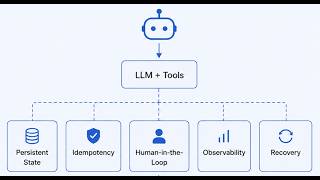
- Durable execution: crash + resume for agents
- Human-in-the-loop approvals via decorator
- Multi-agent patterns: sequential, parallel, handoff, router, swarm
- One-line wrappers for LangGraph, OpenAI Agents SDK, Google ADK
- Observability: tool calls, LLM requests, timing
- Structured output via Pydantic models with auto-retry
- Memory: conversation history, semantic search (Pinecone, Weaviate, etc.)
- Guardrails: retry, block, fix, pause
- Testing helpers: mock_run, expect, record/replay, pytest support
- Agentsnap: snapshot testing for AI agents
- AHP: Agent Handoff Protocol for cross-framework context transfer
- Self-hostable via Docker or Helm, or use Orkes Cloud
- MCP tool integration via mcp_tool()
- Switch LLM providers with one string (Anthropic, OpenAI, Gemini, Groq)
- Streaming runtime events and async execution
About Agentspan
Agentspan is an open-source, self-hostable server and SDK that compiles AI agent definitions into durable, fault-tolerant workflows. It separates execution state from your process using Conductor, an orchestration engine proven in production at Netflix, LinkedIn, and Tesla. When a worker crashes or is redeployed, the agent picks up exactly where it left off — no lost steps, no manual restarts. Write agents in Python and wrap existing frameworks like LangGraph, OpenAI Agents SDK, and Google ADK with one-liner wrappers. Built-in human-in-the-loop via a simple decorator pauses agents indefinitely until approval, and multi-agent pipelines support sequential, parallel, handoff, router, and swarm patterns. Every tool call and LLM request is logged with timing for full observability. Structured output is enforced with Pydantic models, memory includes conversation history and semantic search, and guardrails validate input/output with retry, block, fix, or pause behaviors. Agentspan is MIT-licensed and self-hostable via Docker or Helm, ideal for production engineers running long-running or batch agent workflows where reliability is critical. It also includes Agentsnap, a snapshot testing tool that captures and compares agent outputs for deterministic testing, and supports the Agent Handoff Protocol (AHP) for transferring context across frameworks.
Behind the Verdict
Agentspan is for teams that treat agent reliability as a non-negotiable. We'd reach for this when a crashed worker means lost money, lost progress, or angry customers. The durability model is the headline: your agent's state lives in Conductor, not in the process, so redeploys and crashes become non-events. For anyone already invested in LangGraph, OpenAI Agents SDK, or Google ADK, the one-line wrappers mean you get durability without rewriting your agent logic — that's the kind of low-friction adoption that actually sticks. Where it bites: it's not a no-code playground. You need to be comfortable with Python, Docker or Helm, and operating an orchestration server if you self-host. The vector database integration for semantic search memory (Pinecone, Weaviate, Postgres, Mongo) adds ops overhead you'll have to size and secure. And while Orkes Cloud offers a managed path, that's a separate product with its own pricing — Agentspan itself is free and self-hosted. Compared to building durability yourself with retries and checkpoints, Agentspan is more complete out of the box: it gives you HITL, guardrails, observability, and multi-agent orchestration patterns in one package. The addition of Agentsnap for snapshot testing and AHP for cross-framework handoffs makes it more than a durability layer — it's a testing and interop story too. If you're prototyping a demo or running agents that can tolerate occasional restarts, the extra operational weight isn't worth it. But if you're shipping agents into production workloads where 'just retry' isn't acceptable, this is one of the few tools that treats that problem as its primary job.
Researching Agentspan? Get your full AI stack in 60 seconds.
Free, no signup — tell us your goal and get tools matched to your budget & existing stack.
Real-world workflow fit
Concrete scenarios for the personas Agentspan actually fits — and what changes day-one when you adopt it.
You need to run a batch job that processes 10,000 customer records nightly, calling an LLM to extract data and a human to approve any high-value refunds.
Outcome: You define an agent with a sequential pipeline, add a human-in-the-loop step for refunds, and deploy. When a worker crashes mid-run, the agent resumes from the exact step, and the nightly job completes without manual intervention. You can monitor every step via the observability logs.
You have a LangGraph-based code review bot that sometimes fails during deployment and loses context.
Outcome: You wrap it with the one-line wrapper, and now the bot survives redeploys and resumes from the last completed step, preserving the full conversation context. You add snapshot tests to catch regressions, and the bot is production-ready.
You're building a multi-agent system for support tickets that needs to route, classify, and escalate to humans for complex cases.
Outcome: You design a multi-agent pipeline with router and handoff patterns, each agent handling a step. Human-in-the-loop pauses for approval on high-stakes actions. The system runs 24/7, survives failures, and every decision is logged for auditability.
Use Cases
- Process 10K documents in parallel with automatic crash recovery
- Classify, route, and resolve support tickets using a multi-agent pipeline
- Run a research-writing-editing chain that survives overnight jobs
- Approve refunds and other sensitive actions via Slack integration
- Wrap an existing LangGraph code review bot with durable execution
- Build a batch customer data enrichment pipeline that resumes on failure
- Create a multi-step RAG system that pauses for human fact-checking
Models Under the Hood
as of 2026-08-28
Limitations
- Agentspan is an open source, self-hostable server and SDK (MIT licensed) for durable AI agent execution.
- It requires running your own server and worker processes, with deployment via Docker or Helm, and supports Python, TypeScript, Java, and C# SDKs.
- The docs mention LLM providers but do not specify rate limits or context window caps, which depend on the underlying providers.
- Teams may face a learning curve with durable execution concepts.
as of 2026-08-26
Verification history
We have re-verified Agentspan 5 times since . Each pass re-reads the vendor's own pages and re-checks every listed field against that evidence; passes where nothing had changed are marked as such.
- — re-verified summary, description, our verdict, our analysis, pricing model, pricing tiers, features, integrations, who it suits, who should skip it
- — re-verified summary, description, our verdict, our analysis, pricing model, pricing tiers, features, integrations, who it suits, who should skip it
- — re-verified summary, description, our verdict, our analysis, pricing model, pricing tiers, features, integrations, who it suits, who should skip it
- — re-verified summary, description, our verdict, our analysis, pricing model, pricing tiers, features, integrations, who it suits, who should skip it
- — re-verified summary, description, our verdict, our analysis, pricing model, pricing tiers, features, integrations, who it suits, who should skip it
Free to cite with attribution — this page re-verifies continuously.
12-month cost
Project the real annual outlay, including the implied monthly cost when only an annual tier is published.
Vendor list price only. Add-on usage, seat overages, and contract minimums are surfaced under Hidden costs & gotchas.
Plans compared
For each published Agentspan tier: who it actually fits, and what it adds vs. the previous tier. Cross-reference the cost calculator above for projected annual outlay.
Open Source (Self-Hosted)
$0/mo
Ideal for
Production engineers and teams comfortable with self-hosting via Docker or Helm who need durable AI agents without per-seat costs and want full control over their infrastructure.
What this tier adds
The free, MIT-licensed tier where you run your own Conductor server and workers. It includes crash recovery, HITL, multi-agent pipelines, observability, Pydantic structured output, memory, guardrails, testing helpers, and no usage limits.
Where the pricing makes sense
The company stage and team size where Agentspan's pricing actually pencils out — and where peers do it cheaper.
Agentspan is free and open source (MIT) for self-hosting, so it fits any budget if you have the ops skills to run it. For teams that want a managed option, Orkes Cloud charges per project or per worker, which can be cheaper than running your own cluster but still adds a monthly cost. Compared to enterprise orchestration platforms like Temporal's cloud offering, Agentspan's self-hosted tier is essentially free, and Orkes Cloud is typically more affordable for small to mid-sized agent workloads.
Setup time & first value
How long it actually takes to get something useful out of Agentspan — broken out by persona, not the marketing-page minute.
For a developer familiar with Python and Docker, you can have a basic durable agent running in under an hour: clone the repo, spin up the Conductor server via Docker, and write your first agent with the SDK. Wrapping an existing LangGraph or OpenAI SDK agent takes about 15 minutes with the one-liner wrapper. Full production setup, including Helm deployment, guardrails, and observability,
Switching to or from Agentspan
How to bring data in from common predecessors and how to get it back out — written for the switcher, not the buyer.
- →From LangGraph: Wrap your existing graph with @agentspan.agent to add durability without rewriting your logic.
- →From OpenAI Agents SDK: Use the one-liner wrapper to make your agents resume after crashes.
- →From Google ADK: Add the wrapper to get durable execution and human-in-the-loop.
- →From Temporal: If you're already using Temporal for workflows, you can add Agentspan for agent-specific abstractions, but you'll need to port your workflow logic.
- ↗To Temporal: If you need more control over workflow primitives and don't need agent-specific features, you can port your agents to Temporal workflows, though you'll lose the built-in agent patterns and HITL helpers.
Integrations
Resources & Guides
Tutorials & Learning
Official links
Featured Head-to-Head Comparisons
Agentspan vs Spider Cloud
Choose Spider Cloud if you need fast, cost-effective web data extraction for RAG pipelines or AI agents — its Rust engine, Browser AI commands, and data connectors make it a no-brainer for real-time web context. Pick Agentspan if you're shipping production AI agents that must survive crashes, require human approval steps, or need durable execution across complex multi-agent workflows. They solve complementary problems; using both together can be powerful.
Agentspan vs Presto Voice
Presto Voice and Agentspan serve completely different markets: Presto Voice is a specialized drive-thru voice AI platform for QSR chains, while Agentspan is a developer-oriented durable execution runtime for AI agents. Your choice depends on whether you need to automate order-taking in a restaurant or build resilient, production-grade agent workflows with crash recovery.
Agentspan vs Temporal Ai
Temporal AI is the mature, battle-tested durable execution platform with cloud option, richer SDKs, and enterprise integrations — ideal for teams needing reliability at scale. Agentspan is a leaner, Python-first open-source runtime that focuses on crash-resilient AI agents with simpler HITL, best for engineers who want to retrofit durability into existing agent frameworks like LangGraph, OpenAI SDK, or Google ADK.
Popular in Agent Frameworks & Orchestration

Temporal AI
Durable execution platform keeping AI agents and workflows running through failures with automatic state capture and retries.


Frequently Asked Questions
Categories
Best-of guides
Used Agentspan? Help shape our editorial sentiment research.