
Applied Intuition
Physical AI infrastructure for building, testing, and operating autonomous vehicles, drones, trucks, and industrial machines.
If you run an OEM, defense prime, or industrial autonomy program measured in years, Applied Intuition is the most complete single-vendor stack you can buy — Tools for Vehicle Intelligence, Vehicle OS, and SDS under one roof, now with Dana for agentic machine development and Drone Stack for defense. The 2026 news flow (Dana, VIVALDI certification, SDS Japan, the HUMAIN trucking program) shows the platform moving faster than a year ago. If you're a small team wanting to prototype this quarter, the overhead will crush you; start with CARLA or Foretellix and revisit.
Verified 21h ago · liveness 60/100 · cite: rightaichoice.com/tools/applied-intuition
- Automotive OEMs and Tier 1 suppliers building AI-defined vehicles with OTA updates
- Defense contractors needing drone autonomy, swarms, and cross-platform UAV support
- Trucking operators deploying OS-level autonomy for long-haul fleets
- Mining operators automating haul trucks on fixed routes with a mixed sensor stack
- Small robotics startups — the procurement cycle and adoption cost will outlast most runways
- Academic research groups wanting low-cost or open-source simulation environments
- Software-only AI projects with no hardware, sensor, or vehicle component
We scan live Reddit threads, YouTube comments, X posts, G2 reviews and other communities — and hand you an honest verdict in under a minute.
- Honest verdict, not marketing
- Real pros & cons from real users
- Attributed quotes with receipts
3 free scans · no card needed
Skip Applied Intuition if you're a software-only team with no vehicle or sensor hardware and want something running in a week — the stack assumes a multi-year autonomy program with hardware in the loop.
A full autonomy program means simulation, OS, and autonomy stack licensing under one contract — budget for the whole stack, not one module, once you commit to end-to-end coverage.
Priced and scoped for OEMs, defense primes, Tier 1 suppliers, and industrial operators running multi-year autonomy programs — where the alternative is assembling Foretellix or CARLA for simulation plus separate OS and autonomy vendors. Open-source simulation is dramatically cheaper but leaves you to integrate and qualify the rest of the stack yourself; single-layer commercial tools cost less upfront but multiply integration work.
In short
Applied Intuition — Physical AI infrastructure for building, testing, and operating autonomous vehicles, drones, trucks, and industrial machines. Best for Automotive OEMs and Tier 1 suppliers building AI-defined vehicles with OTA updates, Defense contractors needing drone autonomy, swarms, and cross-platform UAV support, Trucking operators deploying OS-level autonomy for long-haul fleets. Contact Sales pricing.
What's new in Applied Intuition
Checked todayAcross the latest 8 updates: 1 feature update, 1 launch, 4 community discussions and 2 news mentions.
Digital Proving Grounds: Where Autonomy Earns Trust Before the Battlefield
Applied Intuition published a post on digital proving grounds for validating defense autonomy before battlefield deployment.
Building Physical AI at National Scale in Saudi Arabia
Applied Intuition detailed its physical AI and trucking autonomy work at national scale in Saudi Arabia.
Applied Intuition Earns VIVALDI Certification
Applied Intuition obtained VIVALDI certification, aimed at its automotive customers.
The Future of Vehicle Software Is Agentic
Applied Intuition published its position on agentic AI for vehicle software.
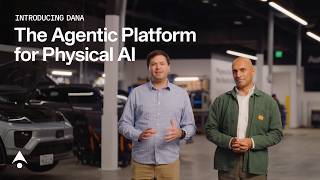
Introducing Dana: A New Way to Build Physical AI
Applied Intuition launched Dana, a product for building physical AI.
Drone Stack: The Software Foundation for Modern Warfare
Applied Intuition introduced Drone Stack, a software stack for defense drone programs.
The Road Has Already Told Us Where It's Dangerous. Are We Listening?
Applied Intuition published on using road data to identify dangerous locations for automotive safety.
Nissan Showcases What AI-Defined Vehicle Development Looks Like
Nissan showcased AI-defined vehicle development work with Applied Intuition.
Viability Score
How well maintained and how widely used is Applied Intuition? Built from what the vendor actually publishes (docs, changelog, tutorials, integrations, pricing), whether the site is live, and how much real users discuss it. How we calculate this
Last calculated: September 2026
How we score →Key Features
- Tools for Vehicle Intelligence for simulation, validation, and scenario testing
- Vehicle OS providing OS-level control for intelligent vehicles
- Self-Driving System (SDS) autonomy stack for automotive and industrial vehicles
- Dana agentic AI platform for building, testing, deploying, and operating intelligent machines
- Drone Stack software foundation for defense drone operations
- Autonomous drone swarming for defense missions
- Cross-platform drone autonomy, including AeroVironment partnership work
- Autonomous haulage system for mining using lidar, camera, and radar sensor stack
- AI-defined vehicle development with over-the-air update pipelines
- VIVALDI certification for automotive software and safety requirements
- Hardware-in-the-loop testing and ECU-level validation
- Digital twin environments for mining, construction, and industrial sites
- Synthetic sensor data generation for perception model training
- End-to-end integration from simulation through OS to deployed autonomy
- National-scale physical AI deployment programs
About Applied Intuition
Applied Intuition sells the digital infrastructure for physical AI — machines that perceive, reason, and act in the real world. The stack is three layers that fit together: Tools for Vehicle Intelligence for simulation and validation, Vehicle OS for OS-level control, and the Self-Driving System (SDS) for the autonomy itself. Dana is the newest piece, an agentic platform for building, testing, deploying, and operating intelligent machines at scale, launched July 2026. Drone Stack, detailed July 2026, is the software foundation for defense drone operations, including swarms and cross-platform work with AeroVironment. The customer list is the positioning: automotive OEMs, defense primes, trucking operators, and mining companies. Nissan publicly showcased AI-defined vehicle development on the tooling, TRATON built ONE OS for long-haul trucking, and SDS is expanding into the Japan market. In mining, the autonomous haulage system runs a lidar-camera-radar stack to navigate haul routes. National-scale work is real: a HUMAIN collaboration targets driverless trucks across Saudi Arabia, with press reporting deployment on Saudi roads targeted within a year. Applied Intuition also earned VIVALDI certification for automotive software and safety requirements in August 2026. Against simulation-first vendors like Foretellix or open-source stacks like CARLA, the pitch is coverage — one vendor from simulation through OS to the deployed autonomy stack, so you don't stitch four suppliers together. That breadth is also the lock-in. Expect a multi-year program and a serious engineering commitment, not a quarter-long trial.
Behind the Verdict
Applied Intuition's real asset is coverage. Most autonomy programs assemble a simulation vendor, an OS vendor, and an autonomy-stack vendor, then spend years on integration glue. Applied Intuition sells all three as one stack, which is why OEMs, defense primes, and mining operators end up on it rather than on point tools. Strengths: the breadth is genuine and the reference customers are named and public. Nissan showcased AI-defined vehicle development on the tooling; TRATON built ONE OS for long-haul trucking; the mining haulage system runs a documented lidar-camera-radar stack. Defense is now a first-class vertical, not a side page — Drone Stack covers drone operations, swarming, and cross-platform autonomy including AeroVironment partnership work. VIVALDI certification (August 2026) matters if you answer to functional-safety auditors, because it gives you a compliance artefact to cite rather than a claim to defend. The HUMAIN collaboration in Saudi Arabia shows the platform can operate at national scale rather than only in a test track. The Dana launch (July 2026) is the most significant recent shift: it recasts the platform as agentic infrastructure for building, testing, deploying, and operating intelligent machines, and Applied Intuition's own positioning argues vehicle software is moving toward agentic architectures. For an OEM planning a 2027-2030 vehicle program, that is a signal about where the roadmap is heading. Weaknesses are structural, not technical. This is a deep integration commitment with domain expertise required on the buyer side — autonomous systems, sensor stacks, hardware-in-the-loop rigs, ECU-level validation. The sales cycle is long and the deployment is multi-year, so the total cost of ownership is a program cost, not a software subscription. The same breadth that removes integration risk creates lock-in: once simulation, OS, and autonomy come from one vendor, swapping one layer means re-qualifying the others. Where it fits: automotive OEMs and Tier 1 suppliers shipping AI-defined vehicles with OTA pipelines; defense contractors needing drone autonomy and swarms; trucking operators on long-haul routes; mining operators automating haul trucks on fixed routes. Where it doesn't: robotics startups with a term sheet and eight months of runway, academic groups wanting a free simulator, and software-only AI products with no vehicle, sensor, or hardware component.
Researching Applied Intuition? Get your full AI stack in 60 seconds.
Free, no signup — tell us your goal and get tools matched to your budget & existing stack.
Real-world workflow fit
Concrete scenarios for the personas Applied Intuition actually fits — and what changes day-one when you adopt it.
You need to validate an AI-defined vehicle's driving behavior before real-world testing, so you build scenario suites in Tools for Vehicle Intelligence, generate synthetic sensor data where real data is thin, and push candidate software through hardware-in-the-loop rigs on the target ECUs.
Outcome: Validated software candidates move to Vehicle OS with an over-the-air update pipeline, so the same validated build ships to the fleet instead of being re-qualified by hand.
You replicate a haul route as a digital twin, tune the autonomous haulage system against the lidar-camera-radar sensor stack offline, and test edge cases that would be unsafe or expensive to reproduce on a live site.
Outcome: Haul trucks go live on fixed routes with the autonomy stack pre-tested against site-specific terrain, cutting the live commissioning window.
You stand up Drone Stack as the software foundation for a drone fleet, covering single-platform operations and swarm behavior, and work cross-platform autonomy including AeroVironment integration.
Outcome: One software foundation spans multiple airframes, so new platforms inherit tested autonomy behavior instead of starting from a blank slate.
Use Cases
- Simulate millions of miles of driving scenarios to validate autonomous vehicle behavior before real-world testing.
- Create synthetic sensor data for training perception models when real data is scarce or expensive.
- Deploy an end-to-end autonomous driving stack on a fleet of trucks for commercial logistics routes.
- Integrate a vehicle operating system to manage over-the-air updates and in-vehicle software across a global automaker's lineup.
- Build digital twins of mining or construction sites to test autonomous haulage systems offline.
- Run hardware-in-the-loop tests to validate that an autonomy stack performs correctly on specific ECUs.
- Deploy autonomous haulage systems in Australian mining operations (live as of April 2026).
- Stand up a software foundation for defense drone operations, including swarms and cross-platform autonomy.
Models Under the Hood
as of 2026-09-22
Limitations
- The platform is built for enterprise autonomy programs, so expect a substantial engineering commitment and domain expertise in autonomous systems, sensor stacks, and hardware integration before you see value.
- Deployment programs are multi-year and require coordination across vehicle, software, and safety teams — this is not a tool one engineer picks up on a Friday.
- Custom deployment can involve long onboarding timelines, and the same breadth that removes supplier-integration risk (simulation, OS, and autonomy from one vendor) makes individual layers expensive to swap once qualified.
- Buyers without an existing autonomy program, sensor hardware, or a functional-safety function will find most of the stack idle.
as of 2026-09-28
Verification history
We have re-verified Applied Intuition 17 times since . Each pass re-reads the vendor's own pages and re-checks every listed field against that evidence; passes where nothing had changed are marked as such.
- — re-verified summary, description, our verdict, our analysis, pricing model, pricing tiers, features, integrations, who it suits, who should skip it
- — re-verified summary, description, our verdict, our analysis, pricing model, pricing tiers, features, integrations, who it suits, who should skip it
- — re-verified summary, description, our verdict, our analysis, pricing model, pricing tiers, features, integrations, who it suits, who should skip it
- — re-verified summary, description, our verdict, our analysis, pricing model, pricing tiers, features, integrations, who it suits, who should skip it
- — re-verified summary, description, our verdict, our analysis, pricing model, pricing tiers, features, integrations, who it suits, who should skip it
- — re-verified summary, description, our verdict, our analysis, pricing model, pricing tiers, features, integrations, who it suits, who should skip it
Showing the 6 most recent of 17 verification passes.
Free to cite with attribution — this page re-verifies continuously.
Where the pricing makes sense
The company stage and team size where Applied Intuition's pricing actually pencils out — and where peers do it cheaper.
Priced and scoped for OEMs, defense primes, Tier 1 suppliers, and industrial operators running multi-year autonomy programs — where the alternative is assembling Foretellix or CARLA for simulation plus separate OS and autonomy vendors. Open-source simulation is dramatically cheaper but leaves you to integrate and qualify the rest of the stack yourself; single-layer commercial tools cost less upfront but multiply integration work.
Setup time & first value
How long it actually takes to get something useful out of Applied Intuition — broken out by persona, not the marketing-page minute.
OEM or Tier 1: weeks to first simulated scenario suite, months to a validated hardware-in-the-loop pipeline, and a full vehicle program to production. Mining operator: site-specific digital twin plus sensor calibration before live haul routes, typically a multi-month commissioning. Defense drone program: Drone Stack integration is a program-level effort, not a same-week install.
Switching to or from Applied Intuition
How to bring data in from common predecessors and how to get it back out — written for the switcher, not the buyer.
- →From CARLA or another open-source simulator: port scenario definitions and maps into Tools for Vehicle Intelligence to gain validation and safety tooling around the same simulation approach.
- →From Foretellix or a simulation-only vendor: add Vehicle OS and SDS alongside the existing simulator if you want end-to-end coverage without re-qualifying the simulation layer immediately.
- →From a hand-rolled in-house autonomy stack: map existing test scenarios and ECU validation rigs onto the platform, then move toward SDS for the deployed autonomy layer.
- →From separate OS and autonomy suppliers: consolidate onto Vehicle OS and SDS to remove the integration work between layers.
- ↗To CARLA or an open-source simulator: rebuild scenario suites in an open environment if you need to cut program cost and can absorb the integration work.
- ↗To a simulation-only vendor such as Foretellix: keep simulation and re-source the OS and autonomy layers separately, accepting the integration overhead.
- ↗To in-house autonomy development: retain the validated scenario library as reference and rebuild the stack internally, which trades license cost for a much longer engineering timeline.
- ↗To per-layer best-of-breed suppliers: split simulation, OS, and autonomy across vendors, re-qualifying each interface as you go.
Resources & Guides
Tutorials & Learning

Official links
Tools that pair well with Applied Intuition
Common stack mates teams adopt alongside Applied Intuition, with the specific reason each pairing earns its keep.

Bedrock Ocean
Autonomous underwater vehicles plus a cloud platform for high-resolution seabed intelligence

Saildrone
Saildrone builds wind- and solar-powered autonomous USVs for maritime ISR, ASW, and seafloor mapping missions.

Boston Dynamics Spot
Boston Dynamics Spot: legged inspection robot for industrial and hazardous sites.
Alternatives to Applied Intuition
View all
Bedrock Ocean
Autonomous underwater vehicles plus a cloud platform for high-resolution seabed intelligence

Saildrone
Saildrone builds wind- and solar-powered autonomous USVs for maritime ISR, ASW, and seafloor mapping missions.

Boston Dynamics Spot
Boston Dynamics Spot: legged inspection robot for industrial and hazardous sites.
Frequently Asked Questions
Categories
Best-of guides
Used Applied Intuition? Help shape our editorial sentiment research.