
Big AGI
Big-AGI is an expert's AI workspace: Beam runs 2–24 models in parallel and Merge fuses their answers, all on your own API keys.
Beam is the most convincing cure for single-model overconfidence we've tested: blind parallel answers plus a Merge pass surface disagreement instead of hiding it. The AI Inspector showing the exact request, tokens and cost before it leaves your browser is the kind of transparency managed chat apps like ChatGPT and TypingMind simply don't offer. The cost is real work — you manage API keys and tune parameters yourself, and multi-model runs burn tokens faster. If you're wrong-cheap, stay on a managed chatbot; if being wrong is expensive, this is the setup.
Verified 14d ago · liveness 75/100 · cite: rightaichoice.com/tools/big-agi
- AI researchers and engineers cross-validating outputs across many models
- Physicians and clinicians double-checking decisions where errors are costly
- Lawyers and analysts who need to see where models disagree before trusting an answer
- Developers building reusable persona workflows with attached docs and fixed models
- Casual users who want a plain chatbot without configuring API keys
- Teams needing built-in seat billing, shared workspaces, or usage administration
- Anyone unwilling to pay providers directly — multi-model Beams multiply token spend
We scan live Reddit threads, YouTube comments, X posts, G2 reviews and other communities — and hand you an honest verdict in under a minute.
- Honest verdict, not marketing
- Real pros & cons from real users
- Attributed quotes with receipts
3 free scans · no card needed
Skip Big-AGI if you want a managed chatbot that handles model choice and billing for you and never shows you an API key.
Every provider you connect bills you directly, and a 5-model Beam burns roughly 5x the tokens of a single query.
Free is genuinely free — the open-source local-first app costs nothing and you pay providers at their own rates. Pro at $9/mo ($108/yr) adds cloud sync for chats and personas across devices. Compared with a flat $20/mo managed chatbot, Big-AGI is cheaper on the subscription but your provider spend scales with usage, so heavy Beam users pay more in tokens and light users pay less.
In short
Big AGI — Big-AGI is an expert's AI workspace: Beam runs 2–24 models in parallel and Merge fuses their answers, all on your own API keys. Best for AI researchers and engineers cross-validating outputs across many models, Physicians and clinicians double-checking decisions where errors are costly, Lawyers and analysts who need to see where models disagree before trusting an answer. Free to start; paid plans from $9/mo.
What's new in Big AGI
Checked 7 days agoAcross the latest 10 updates: 1 feature update, 1 pricing change and 8 changelog entries.
GPT-6.1 Sol support, near GPT-6 Astra coding performance at one-fifth price
GPT-6.1 Sol added: close to GPT-6 Astra on coding and computer use at a fifth of the price. Ultrafast tier for GPT-6 Astra runs up to 6x faster at 6x the price.
Claude Sonnet 5.5, GPT-6 Sol and Luna support with automatic pause_turn
Claude Sonnet 5.5 and GPT-6 Sol and Luna added. Anthropic pause_turn now continues automatically, with a pause divider showing stats.
Adaptive streaming markdown, Beam merge fixes
Streaming markdown renders adaptively, 10x faster on very large merges. Beam merges now wait for pending replies and skip empty or error-only ones.
Claude Opus 5.5, Grok 4.7 and GLM-5.3 FlashX support
Claude Opus 5.5, Grok 4.7 and GLM-5.3 FlashX added, with smarter cross-vendor auto-retries and clearer display of messages cut off by token limits.
Refresh all models at once; Beam Teams pane management
New Update All control refreshes every provider at once and shows the latest updates. Beam Teams can be loaded, renamed and deleted from the right pane.
DeepSeek V4.1 Flash beta, GPT Image 2.5 models, OpenRouter search config
DeepSeek V4.1 Flash beta adds native image input and 1M context. GPT Image 2.5 Flare and Sunburst drawing models with max quality. OpenRouter web search gains native, Exa, Parallel, Perplexity and Firecrawl engine options.
OpenAI GPT service tier control: flex half price, fast double
OpenAI GPT service tier parameter exposed: flex at half price or fast at double price. Cost tracking adds cache write pricing and per-call web search fees.
GPT-6 Astra and Meta AI Muse models support
GPT-6 Astra support where enabled. Meta AI added: Muse Spark models with reasoning effort and search, plus Muse Image generation.
Offline Mode in Labs; Gemini 3.8 Flash and Qwen3.8 Max 0902
Offline Mode (Labs) lets the app open with no connection when enabled. Gemini 3.8 Flash and Qwen3.8 Max 0902 added; Beam can apply the Merge model to all models.
Claude Fable 5.1 and Mythos 5.1 support with quarter-price cache reads
Anthropic Claude Fable 5.1 and Mythos 5.1 added with cache reads at a quarter of the price. Fable 5.1 preserved thinking keeps history edits working and flags skipped reasoning.
What people actually say about Big AGI — is it worth it?
We ran a structured research pass across product reviews, community discussions, and post-purchase forum threads to surface the patterns vendors won't publish themselves. Below: the recurring strengths, the hidden costs people mention most, and the cohort that consistently regrets adopting this tool.
46 mentions across 4 sources (Hacker News, YouTube, GitHub, Lemmy) · researched Aug 11, 2026.
Average across the 4 sources that answered — each source counts once, not each post.
- +Beam runs 2–24 models in parallel with live streaming — a real differentiator.
- +Merge pass fuses responses, turning model disagreement into deeper questions.
- +Day-0 support for new models like GPT-5.6 and Gemini Omni.
- +Zero markup on API costs; you only pay providers directly.
- +Local-first, self-hostable, and offers full data ownership.
- −Browser cache clear can wipe all data without warning.
- −OpenRouter integration sometimes cuts off answers in long chats.
- −MCP support is missing and not on the roadmap.
- −Requires self-managing multiple API keys and rate limits.
- −No turnkey experience; setup is technical and time-consuming.
- • You pay API costs to providers directly — can add up if you beam multiple models
- • Cloud sync may require a paid subscription (details unclear)
- • Self-hosting requires server/bandwidth if you deploy on-prem
Viability Score
How well maintained and how widely used is Big AGI? Built from what the vendor actually publishes (docs, changelog, tutorials, integrations, pricing), whether the site is live, and how much real users discuss it. How we calculate this
Last calculated: October 2026
How we score →Key Features
- Beam: run 2–24 models in parallel with live streaming side by side
- Merge fuses multi-model replies via Fuse, Guided, Compare, or custom prompts
- Personas bundle instructions, attached docs and images, memory, model, and voice
- 44 controllable model parameters: effort, temperature, verbosity, reasoning budget
- AI Inspector reveals the exact API request, tokens, and cost before and after
- Bring your own API keys across 30+ services with 0% markup
- 800+ AI models, including day-0 support for newly released models
- Local model support via Ollama, LM Studio, LocalAI, and Modular Cloud
- Attachments: PDF, PPT, Word, Excel, images with PDF extraction
- Voice calls, voice input, and Gemini 3.5 Transcribe speech-to-text dictation
- Camera input and live screen input for multimodal prompting
- Image generation through providers including Muse Image and GPT Image 2.5
- Gemini YouTube link input for video analysis
- Automatic retries, provider timeout handling, and route-arounds
- Branch, fork, and edit any message, then re-generate or re-Beam
About Big AGI
Big-AGI is a bring-your-own-key AI workspace for people who can't afford a single model's blind spot. Rather than picking one provider, you connect 30+ AI services — OpenAI, Anthropic, Google Gemini, Meta AI, Mistral, Sakana AI, Groq, Perplexity, Cerebras, NVIDIA, DeepSeek, Moonshot, Z.ai, MiniMax, OpenRouter, Fireworks AI, Together AI, Azure, AWS Bedrock — plus local runtimes like Ollama, LM Studio, and LocalAI. The catalog covers 800+ models with day-0 support for new releases, and there's 0% markup: you pay providers directly, not a middleman. The signature move is Beam. Send one prompt to 2 to 24 models at once, streaming side by side, with each model answering blind so agreement is genuinely hard to fake. Where they converge you can act; where they split, that's your signal to dig. A Merge pass then fuses the replies into one answer using Fuse, Guided, Compare, or your own custom merge prompt. Power-user plumbing is the point. Personas carry their own instructions, attached docs and images, memory, a fixed model, parameters, custom merges, and voice — portable experts you reuse. Precise controls expose 44 tunable parameters per request or per persona: effort, temperature, verbosity, reasoning budget, search and tools. The AI Inspector prints the exact request leaving your browser — model, parameters, tokens, cost — before and after it runs, and automatic retries plus provider timeout handling keep work alive through outages. Multimodal input and output is broad: PDF, PPT, Word and Excel attachments, camera and live screen input, Gemini YouTube links, image generation through models like Muse Image and GPT Image 2.5, PlantUML and Mermaid diagrams, speech-to-text dictation via Gemini 3.5 Transcribe, and voice calls. It runs local-first as an installable PWA with optional cloud sync for chats and personas. Compared with managed chat apps like ChatGPT or TypingMind, Big-AGI trades hand-holding for transparency, control, and multi-model cross-validation — a different tool for a different job.
Behind the Verdict
Big-AGI occupies a specific niche: the expert interface. Where ChatGPT optimizes for a single well-behaved assistant, Big-AGI optimizes for cross-validation. Beam sends your prompt to 2 to 24 models simultaneously, each answering blind, so agreement is hard to fake. Merge then fuses those replies using Fuse, Guided, Compare, or your own custom merge prompt. For a physician double-checking a clinical decision tree or a lawyer scanning for where models diverge, that disagreement signal is the whole product. Strengths. Breadth is genuine: 30+ AI services including cloud and local, 800+ models added on day-0, and 44 controllable parameters per request or persona covering effort, temperature, verbosity, reasoning budget, search and tools. Transparency is unusual — the AI Inspector prints the exact outgoing request, token counts and cost before and after it runs. Resilience is engineered: automatic retries, provider timeout handling and route-arounds mean a flaky provider doesn't kill your session. Personas are portable: instructions, attached docs and images, memory, a fixed model, custom merges and voice travel with them. Multimodality covers PDF/PPT/Word/Excel attachments, camera and live screen input, Gemini YouTube links, image generation, PlantUML/Mermaid diagrams, voice calls and Gemini 3.5 Transcribe dictation. It runs local-first as an installable PWA with optional cloud sync for chats and personas, and the Open 2.1.0 'Weights Dust' build is self-hostable from GitHub and Docker. Weaknesses. This is not a casual chatbot. You must supply and manage your own provider API keys across every service you connect, and you pay each provider directly — multi-model Beams multiply token spend fast. Context limits, pricing and available capabilities depend entirely on the models and providers you configure. There is no seat billing, no shared workspace administration for teams, and offline operation requires enabling the experimental Offline Mode in Labs. Setup is configuration-heavy compared to a managed app. Where it fits. Research, medicine, law, engineering and any domain where being confidently wrong is expensive. Where it doesn't: teams that want a managed, administered chat product with per-seat billing, or users who don't want to see an API key. The trade is explicit — hand-holding out, control and cross-validation in.
Researching Big AGI? Get your full AI stack in 60 seconds.
Free, no signup — tell us your goal and get tools matched to your budget & existing stack.
Real-world workflow fit
Concrete scenarios for the personas Big AGI actually fits — and what changes day-one when you adopt it.
Paste a patient case into Beam with 5 frontier models, read the parallel streams side by side, and Merge the consensus into one decision summary.
Outcome: You see where models agree on the decision tree and where they diverge, so you know which part of the summary to verify yourself.
Build a fixed-model persona with attached papers and a custom merge prompt, then re-run the same Beam against a new 0-day model to compare.
Outcome: Reusable expert setup that produces comparable multi-model output run after run without re-pasting context.
Connect Ollama locally plus OpenRouter in the cloud, toggle direct client connections, and check the AI Inspector before sending.
Outcome: Exact request, token count and cost visible before the call leaves your browser, with local models handling sensitive input.
Use Cases
- Cross-validate medical decision making by comparing responses from multiple LLMs in parallel.
- Detect hallucinations by running Beam with 5+ models and focusing on disagreements.
- Create expert personas for legal analysis, each with custom instructions and attached case documents.
- Fuse insights from different models into a single coherent answer using Beam Merge.
- Deploy Big-AGI on-premises for secure, air-gapped AI workflows with local models.
- Tune model hyperparameters per request to optimize output for specific tasks.
- Analyze a YouTube video with Gemini models by pasting the link directly.
- Generate images through Muse Image or GPT Image 2.5 without leaving the workspace.
Models Under the Hood
as of 2026-10-07
Limitations
- Big-AGI requires you to bring your own API keys to connect provider accounts (OpenAI, Anthropic, Google Gemini, Groq, OpenRouter, local models via Ollama/LM Studio, and many more), so you own and pay for usage and costs scale with your own consumption.
- Capabilities such as context length (for example, 1M context on DeepSeek V4.1 Flash beta), pricing, and available options depend entirely on the underlying providers and models you configure.
- Offline operation is listed as a Labs feature that must be turned on in Labs.
- It is available as a hosted app and as an open-source self-hostable instance.
as of 2026-09-24
Verification history
We have re-verified Big AGI 8 times since . Each pass re-reads the vendor's own pages and re-checks every listed field against that evidence; passes where nothing had changed are marked as such.
- — re-verified summary, description, our verdict, our analysis, pricing model, pricing tiers, features, integrations, who it suits, who should skip it
- — re-verified summary, description, our verdict, our analysis, pricing model, pricing tiers, features, integrations, who it suits, who should skip it
- — re-verified summary, description, our verdict, our analysis, pricing model, pricing tiers, features, integrations, who it suits, who should skip it
- — re-verified summary, description, our verdict, our analysis, pricing model, pricing tiers, features, integrations, who it suits, who should skip it
- — re-verified summary, description, our verdict, our analysis, pricing model, pricing tiers, features, integrations, who it suits, who should skip it
- — re-verified summary, description, our verdict, our analysis, pricing model, pricing tiers, features, integrations, who it suits, who should skip it
Showing the 6 most recent of 8 verification passes.
Free to cite with attribution — this page re-verifies continuously.
12-month cost
Project the real annual outlay, including the implied monthly cost when only an annual tier is published.
Vendor list price only. Add-on usage, seat overages, and contract minimums are surfaced under Hidden costs & gotchas.
Plans compared
For each published Big AGI tier: who it actually fits, and what it adds vs. the previous tier. Cross-reference the cost calculator above for projected annual outlay.
Free
$0
Ideal for
Solo experts and researchers who already hold provider API keys and want multi-model Beam without a subscription.
What this tier adds
Free entry point: open-source local-first workspace, Beam across 2–24 models, Merge fusion, 800+ models, 0% markup.
Pro
$9/mo (billed $108/yr)
Ideal for
Individuals working across multiple devices who want chats and personas to follow them without managing replica files.
What this tier adds
Adds cloud sync for chats and personas across devices plus replica sync, on top of everything in Free.
Where the pricing makes sense
The company stage and team size where Big AGI's pricing actually pencils out — and where peers do it cheaper.
Free is genuinely free — the open-source local-first app costs nothing and you pay providers at their own rates. Pro at $9/mo ($108/yr) adds cloud sync for chats and personas across devices. Compared with a flat $20/mo managed chatbot, Big-AGI is cheaper on the subscription but your provider spend scales with usage, so heavy Beam users pay more in tokens and light users pay less.
Setup time & first value
How long it actually takes to get something useful out of Big AGI — broken out by persona, not the marketing-page minute.
Under a minute to open the PWA and paste an OpenAI or Anthropic key. Fifteen to thirty minutes if you connect several providers and tune Beam, Merge and a first persona. Self-hosting Open 2.1.0 from GitHub or Docker is an afternoon project.
Switching to or from Big AGI
How to bring data in from common predecessors and how to get it back out — written for the switcher, not the buyer.
- →From ChatGPT: export your conversations, paste your OpenAI key, and run the same prompts through Beam to see where a single model was overconfident.
- →From TypingMind: recreate your prompt library as Big-AGI personas, which carry attached docs, memory, a fixed model and custom merges.
- →From a single-provider app: add a second and third provider key, then Beam the same prompt across them instead of migrating chat history.
- ↗To a managed chatbot: copy your persona instructions into the app's custom-instructions field and accept losing multi-model Beam.
- ↗To self-hosted Big-AGI: move from the hosted app to the Open 2.1.0 Docker image and point replica sync at your own storage.
Resources & Guides
Tutorials & Learning
LM Studioを使ってローカル環境でbig-AGIを動かす方法【チュートリアル】
Tech Friend AJ
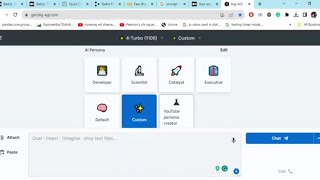
Big AGI:これまでのAGI UIの中で最高
Data Science in your pocket
25 の AI エージェント プロジェクト: Julep、Big-AGI、AnyTool、playwriter、vibe-kanban、Agent S、potpie、liveblocks
Github Awesome
YouTube returned 6 videos for “Big AGI”, and we withheld 2: 2 did not mention Big AGI. Showing the 4 we can prove are about Big AGI.
Tools that pair well with Big AGI
Common stack mates teams adopt alongside Big AGI, with the specific reason each pairing earns its keep.

Alle-AI
Run one prompt across several AI models at once, then combine and compare their answers to flag disagreement and hallucination.

Writingmate
Writingmate puts 350+ chat, image, and video models plus web search and files in one $20/month workspace.

Cabina AI
One login for 55+ AI models — text, image, video, and audio generation in a single workspace with a shared token budget.
Featured Head-to-Head Comparisons
Big Agi vs Spider Cloud
Choose Big AGI if your core need is cross-validating AI outputs from multiple models with fine-grained control and transparency—it's a power user's Swiss Army knife for LLM evaluation. Choose Spider Cloud if you're building AI agents or RAG pipelines that demand fast, reliable web data extraction at scale—it's purpose-built for crawling and scraping. They solve different problems and can complement each other.
Big Agi vs Temporal Ai
Big AGI and Temporal AI solve fundamentally different problems. Big AGI is the best choice for individuals who need to compare and combine outputs from dozens of AI models via its Beam feature, especially with the latest Sonnet 5 support. Temporal AI is essential for teams building production-grade, fault-tolerant AI agents or workflows where durability and recovery matter more than multi-model chat. Choose based on whether your primary need is multi-model reasoning (Big AGI) or reliable workflow orchestration (Temporal AI).
Big Agi vs Voyage Ai
Choose Voyage AI if your priority is domain-tuned retrieval accuracy for enterprise RAG on finance, legal, or code—with long-context and low-dim embeddings. Choose Big-AGI if you need a multi-model power tool to compare, merge, and inspect outputs from dozens of providers (including latest models like Sonnet 5, Gemini Omni, GPT-5.6) in a single workspace. They serve fundamentally different needs: embeddings vs. front-end orchestration.
Alternatives to Big AGI
View all
Alle-AI
Run one prompt across several AI models at once, then combine and compare their answers to flag disagreement and hallucination.

Writingmate
Writingmate puts 350+ chat, image, and video models plus web search and files in one $20/month workspace.

Frequently Asked Questions
Categories
Best-of guides
Used Big AGI? Help shape our editorial sentiment research.