
Brain.fm
Functional music with patented neural modulation, built for focus, sleep, and relaxation—made by humans, backed by neuroscientists.
Buy Brain.fm if your problem is starting and holding focus, not if your problem is finding music to enjoy. The per-activity modes (Deep Work, Learning, Creativity) plus the Intensity Control and the built-in Interval/Infinite timers make it a genuine workflow tool rather than a playlist, and the research program—Nature Communications publication, NSF grant, a claimed 119% boost in focus-associated beta brainwaves—is the strongest evidence base in this category. It's especially compelling for ADHD users thanks to the dedicated ADHD positioning and High Neural Effect setting. Consider Calm or Noisli instead if you mainly want relaxation and sleep content, and Spotify or YouTube focus
Verified 11d ago · liveness 68/100 · cite: rightaichoice.com/tools/brain-fm
- Knowledge workers who need long, uninterrupted focus blocks
- Students preparing for exams or heavy study periods
- Adults with ADHD who need extra stimulation to concentrate
- Remote workers in noisy or distracting environments
- Listeners who want human-composed music with lyrics and vocals
- Audiophiles needing lossless or high-fidelity audio
- Anyone looking for a general music library with popular songs
We scan live Reddit threads, YouTube comments, X posts, G2 reviews and other communities — and hand you an honest verdict in under a minute.
- Honest verdict, not marketing
- Real pros & cons from real users
- Attributed quotes with receipts
3 free scans · no card needed
Skip Brain.fm if you want music as entertainment—lyrics, familiar artists, or a library you browse—or if you need an app that plugs into your calendar, task manager, or other tools via integrations.
Brain.fm is priced in the same band as consumer wellness and focus apps rather than professional productivity suites, which makes it a low-risk solo purchase for an individual knowledge worker, student, or ADHD user. The comparison that matters is against free: Spotify and YouTube focus playlists cost nothing but offer no per-activity modes, no modulation control, and no research program behind them.
In short
Brain.fm — Functional music with patented neural modulation, built for focus, sleep, and relaxation—made by humans, backed by neuroscientists. Best for Knowledge workers who need long, uninterrupted focus blocks, Students preparing for exams or heavy study periods, Adults with ADHD who need extra stimulation to concentrate. Free to start; paid plans from $6.99/mo.
What people actually say about Brain.fm — is it worth it?
We ran a structured research pass across product reviews, community discussions, and post-purchase forum threads to surface the patterns vendors won't publish themselves. Below: the recurring strengths, the hidden costs people mention most, and the cohort that consistently regrets adopting this tool.
47 mentions across 3 sources (Hacker News, Product Hunt, App Store) · researched Jul 2, 2026.
Average across the 3 sources that answered — each source counts once, not each post.
- +Effectively improves focus, relaxation, and sleep for most users.
- +Highly recommended for ADHD and neurodivergent individuals.
- +Continuous music with no lyrics avoids distraction.
- +Long-time users report consistent positive results over years.
- +Works well in open offices to block noise without distracting.
- −Aggressive auto-renewal with hidden yearly charges.
- −Customer support unresponsive to refund requests.
- −Some tracks become unavailable causing playback errors.
- −Free trial cancellation is nearly impossible outside app.
- −Can cause anxiety in some users; not universally effective.
- • Trial may auto-renew into expensive yearly plan without clear notice
- • Cancellation is difficult and support unresponsive for refunds
- • No lifetime option outside limited-time deals (e.g., AppSumo)
Viability Score
How well maintained and how widely used is Brain.fm? Built from what the vendor actually publishes (docs, changelog, tutorials, integrations, pricing), whether the site is live, and how much real users discuss it. How we calculate this
Last calculated: October 2026
How we score →Key Features
- AI-composed original instrumental tracks (not licensed songs)
- Phase-locking neural modulation audio technology
- Customizable modulation intensity from low to high
- High Neural Effect audio setting for ADHD
- 16 listening modes across focus, relax, sleep, and meditate
- Deep Work, Creativity, Learning, Light Work, and Motivation work modes
- Unwind, Destress, Recharge, and Chill recovery modes
- Guided Sleep, Deep Sleep, Sleep and Wake, Wind Down, and Power Nap sleep modes
- Guided and Unguided Meditation with trained-practitioner scripts
- Infinite count-up timer
- Count-down Timer for work or break intervals
- Interval timer mode
- Extra-long, lyric-free tracks to avoid interruption
- Thousands of hours of music and natural soundscapes
- Modes tuned to Delta, Theta, Alpha, and Beta brainwave ranges
About Brain.fm
Brain.fm is a functional music app that composes original instrumental audio engineered to shift your mental state. Instead of licensing songs, it uses patented neural modulation: rhythms and volume modulations placed into specific frequency ranges that are designed to nudge brainwave activity. You pick a mode—Deep Work, Creativity, Learning, Light Work, Motivation, Unwind, Destress, Recharge, Chill, Guided Sleep, Deep Sleep, Sleep and Wake, Wind Down, Power Nap, Guided Meditation, or Unguided Meditation—and get a long, lyric-free stream with no searching required. Tracks are made by human composers and scored by neuroscientists; the company says its phase-locking neural modulation was shown in peer-reviewed research published in Nature Communications and funded by the National Science Foundation to boost focus-associated beta brainwaves by 119%. Brain.fm markets itself as the first music app designed for ADHD, with a High Neural Effect setting for extra stimulation. You can also dial modulation intensity up or down. It runs on web, iOS, Android, and desktop, and there are built-in timers (Infinite count-up, count-down Timer, and Interval) that fit Pomodoro-style work. It suits knowledge workers, students, remote professionals, and people with ADHD who want a reliable cue to start concentrating—and people who struggle to wind down at night. What sets it apart from generic lo-fi or binaural-beats playlists is the per-activity mode structure plus the documented research program; what it isn't is a music library, so there are no popular songs or lyrics here.
Behind the Verdict
Brain.fm sits in a small category of functional audio products that claim a neurological mechanism, and it makes the strongest evidentiary case of the group. The mechanism is phase-locking neural modulation: the app identifies an optimal Hz band for a target mental state—Delta for deep sleep, Theta for deep relaxation, Alpha for relaxed wakefulness and meditation, Beta for active focus—and translates it into volume modulations embedded in the music. The company says this both enhances and synchronizes brainwave activity across regions, and reports that published, NSF-funded research in Nature Communications found a 119% boost in focus-associated beta brainwaves. Treat that number as the company's own research finding rather than a promise about your afternoon, but it's a far more concrete claim than a generic 'focus music' playlist can make. Practically, the mode structure is what you'll feel day to day. There are sixteen activities split across four families: work and learning modes (Deep Work, Creativity, Learning, Light Work, Motivation), recovery modes (Unwind, Destress, Recharge, Chill), sleep modes (Guided Sleep, Deep Sleep, Sleep and Wake, Wind Down, Power Nap), and meditation modes (Guided and Unguided). Within modes you can raise or lower modulation intensity, which matters if a track feels too busy on a low-stimulation day. Tracks are deliberately long and lyric-free to prevent the interruption loop you get when a song ends. The timer suite—Infinite, Timer, and Interval—is an underrated detail: it lets the app double as your Pomodoro driver rather than sitting next to a separate timer. The ADHD angle is the most differentiated positioning here. Brain.fm calls itself the first music app designed for ADHD, offers High Neural Effect audio, and holds what it describes as the first-ever NSF grant to create music supporting ADHD. If you're a knowledge worker or student who loses the first twenty minutes of every session to distraction, this is precisely the use case the product was built around. Where it falls down: it is not a music service. If your enjoyment depends on lyrics, familiar artists, or a play-anything library, functional audio will feel like a tool, not entertainment. The same qualities that make it unobtrusive make it forgettable—you're buying a mental-state cue, not an album. Audiophiles chasing lossless fidelity or sonic detail are also the wrong audience; the point of the mix is the modulation, not the master. Finally, this is a closed-loop app. There's no documented API or third-party integration to trigger a Deep Work session from your task manager or calendar, so any automation around it is manual. Set expectations there: Brain.fm is something you open and press play on, deliberately, and that's the whole interface. For a lot of people that simplicity is the feature.
Researching Brain.fm? Get your full AI stack in 60 seconds.
Free, no signup — tell us your goal and get tools matched to your budget & existing stack.
Real-world workflow fit
Concrete scenarios for the personas Brain.fm actually fits — and what changes day-one when you adopt it.
Opens Brain.fm on desktop, picks Deep Work, sets the Interval timer, and pairs it with a Pomodoro-style rhythm—50 minutes on, then a short break on Chill.
Outcome: Longer code sessions without reaching for a new playlist, and a built-in cue for when to step away.
Uses Learning or Light Work while revising, switching to Motivation for the last stretch of a study block.
Outcome: Holds attention on the material instead of drifting to YouTube, and stops noticing the music—which is the point.
Runs High Neural Effect audio with the Infinite timer during deep work, then switches to Guided Sleep or Wind Down at night.
Outcome: Extra auditory stimulation where standard focus playlists under-stimulate, plus a consistent wind-down routine before bed.
Use Cases
- Run Deep Work with the Interval timer to hold 50-minute focus blocks while coding or writing.
- Use Learning or Light Work while studying for exams to keep attention on the material.
- Switch to Guided Sleep or Wind Down before bed to make falling asleep easier.
- Use Destress or Recharge on a work break to reset tension between meetings.
- Pick High Neural Effect for ADHD-focused focus sessions when regular music isn't enough stimulation.
- Use Guided Meditation for a body scan or visualization at the end of a workday.
- Play Power Nap for a short restorative sleep during a midday break.
- Use Sleep and Wake audio to transition into sleep and back out of it gently.
Limitations
- Brain.fm is a functional audio app, not a music service: the catalog is original instrumental material with no lyrics, no familiar artists, and no play-anything library, so it won't replace Spotify for enjoyment or parties.
- You also can't wire it into other tools—there's no documented public API or third-party integration to trigger a session from your calendar or task manager—so starting a session is always a manual press of play.
- Audiophiles should look elsewhere, since the mix is optimized for neural modulation rather than fidelity.
- Finally, the science is a claim about the audio's measured effects on brainwave activity, not a guarantee of your personal productivity or sleep quality; give it a couple of weeks of consistent use before judging it.
as of 2026-09-27
Verification history
We have re-verified Brain.fm 8 times since . Each pass re-reads the vendor's own pages and re-checks every listed field against that evidence; passes where nothing had changed are marked as such.
- — re-checked, vendor evidence unchanged
- — re-checked, vendor evidence unchanged
- — re-checked, vendor evidence unchanged
- — re-checked, vendor evidence unchanged
- — re-checked, vendor evidence unchanged
- — re-verified summary, description, our verdict, our analysis, pricing model, pricing tiers, features, integrations, who it suits, who should skip it
Showing the 6 most recent of 8 verification passes.
Free to cite with attribution — this page re-verifies continuously.
12-month cost
Project the real annual outlay, including the implied monthly cost when only an annual tier is published.
Vendor list price only. Add-on usage, seat overages, and contract minimums are surfaced under Hidden costs & gotchas.
Where the pricing makes sense
The company stage and team size where Brain.fm's pricing actually pencils out — and where peers do it cheaper.
Brain.fm is priced in the same band as consumer wellness and focus apps rather than professional productivity suites, which makes it a low-risk solo purchase for an individual knowledge worker, student, or ADHD user. The comparison that matters is against free: Spotify and YouTube focus playlists cost nothing but offer no per-activity modes, no modulation control, and no research program behind them.
Setup time & first value
How long it actually takes to get something useful out of Brain.fm — broken out by persona, not the marketing-page minute.
Under five minutes for most people: download the app or open the web player, pick a mode, and press play—there's nothing to configure. Budget an hour if you want to test several modes and dial in modulation intensity to your preference.
Resources & Guides
Tutorials & Learning

How To use Brain.Fm For Improved Productivity, Sleep and Meditation
Heightened Living

30 Minute Focus - Dreamlight ⚡ Brain.fm ⚡ Music for Maximum Focus and Concentration
Brain.fm
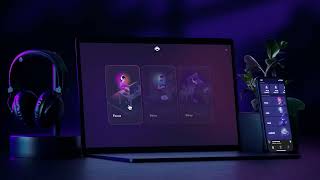
Brain.fm - Free Sample of Premium Focus Music
Brain.fm
YouTube returned 6 videos for “Brain.fm”, and we withheld 1: 1 could not be judged, because “Brain.fm” is a single word that other videos use for other things. Showing the 5 we can prove are about Brain.fm.
Official links
Tools that pair well with Brain.fm
Common stack mates teams adopt alongside Brain.fm, with the specific reason each pairing earns its keep.

Riffusion
Turn text prompts into full-length AI songs and matching music videos, with stem tools and a producer chat built in.

Beatoven.ai
Beatoven.ai turns a text prompt into original, royalty-free background music and sound effects you can monetize.
Boomy
Boomy turns a genre prompt into an original track you can release to Spotify and Apple Music from your browser.
Featured Head-to-Head Comparisons
Brain Fm vs Landr Mastering
If you need to master tracks quickly for release, LANDR Mastering is the practical choice with its stem mastering (Jan 2024) and DAW plugin (June 2023). If you want neuroscience-backed music to boost focus or sleep, Brain.fm is purpose-built and more affordable. These tools serve completely different needs — choose based on whether you're polishing audio or optimizing your mental state.
Brain Fm vs Splice
Splice and Brain.fm serve entirely different needs. Splice is a must for music producers needing high-quality samples and rent-to-own plugins, while Brain.fm is for anyone wanting science-backed audio to boost focus or sleep. Choose Splice if you make music; choose Brain.fm if you want to change your mental state.
Brain Fm vs Storyfile
If you need authentic interactive video conversations from real people for a museum or legacy project, StoryFile is the only choice — no other tool offers cinematic interview capture with AI-powered conversational indexing. But if your goal is to improve focus, relaxation, or sleep through music backed by neuroscience, Brain.fm's freemium model and EEG-validated tracks deliver immediate value at low cost. These tools serve completely different needs; your decision hinges on whether you're preserving human stories or optimizing mental states.
Alternatives to Brain.fm
View all
Riffusion
Turn text prompts into full-length AI songs and matching music videos, with stem tools and a producer chat built in.

Beatoven.ai
Beatoven.ai turns a text prompt into original, royalty-free background music and sound effects you can monetize.
Frequently Asked Questions
Best-of guides
Topics
Used Brain.fm? Help shape our editorial sentiment research.