
Buddy.ai
Voice-based AI teacher for kids ages 3-8, with 1:1 conversation games covering preschool through first grade.
Buddy.ai earns a place on the shortlist for one specific job: getting a 3-8 year old to speak English out loud, repeatedly, without an adult in the room. The warm-up/introduction/practice/application lesson structure and the speech-therapy positioning are the real differentiators, and teachers in the scraped testimonials describe it as part of their toolkit for exactly that. The trade-off is the ceiling: content stops at first grade, so once your child reads comfortably the app has nothing left to teach. Compare it against a live tutor (far more expensive per hour) and against general-purpose AI assistants (no fixed curriculum, no age-tuned speech recognition). If you need kindergarten
Verified 5d ago · liveness 71/100 · cite: rightaichoice.com/tools/buddy-ai
- Parents of kids ages 3-8 who want daily English speaking practice at home
- ESL and kindergarten teachers who need 1:1 speaking practice for a whole class
- Families with shy children or kids with speech delays who need confidence before speaking in class
- Homeschooling families wanting an ad-free, structured kindergarten-readiness tool
- Children reading fluently beyond first-grade level, who will exhaust the content quickly
- Parents who want a typing-first or text-based learning interface
- Families looking for advanced STEM such as coding or upper-elementary math
We scan live Reddit threads, YouTube comments, X posts, G2 reviews and other communities — and hand you an honest verdict in under a minute.
- Honest verdict, not marketing
- Real pros & cons from real users
- Attributed quotes with receipts
3 free scans · no card needed
Skip Buddy.ai if your child already reads fluently past first grade, or if you want a typing-first interface or advanced STEM content rather than voice-based speaking practice.
The vendor positions one month of Buddy as roughly the cost of a single live tutoring session, with a 10% web-only discount when you subscribe through the website rather than in-app. That puts it well below weekly 1:1 human tutoring for the same speaking-practice job, and above free flashcard apps that give you no feedback on pronunciation at all.
In short
Buddy.ai — Voice-based AI teacher for kids ages 3-8, with 1:1 conversation games covering preschool through first grade. Best for Parents of kids ages 3-8 who want daily English speaking practice at home, ESL and kindergarten teachers who need 1:1 speaking practice for a whole class, Families with shy children or kids with speech delays who need confidence before speaking in class. Free to start; it also has paid plans, priced in a currency we have not confirmed — see the pricing table for the vendor’s own figures.
What people actually say about Buddy.ai — is it worth it?
We ran a structured research pass across product reviews, community discussions, and post-purchase forum threads to surface the patterns vendors won't publish themselves. Below: the recurring strengths, the hidden costs people mention most, and the cohort that consistently regrets adopting this tool.
15 mentions across 2 sources (YouTube, Product Hunt) · researched Aug 17, 2026.
Viability Score
How well maintained and how widely used is Buddy.ai? Built from what the vendor actually publishes (docs, changelog, tutorials, integrations, pricing), whether the site is live, and how much real users discuss it. How we calculate this
Last calculated: October 2026
How we score →Key Features
- Voice-based 1:1 conversational tutoring for children ages 3-8
- Real-time speech recognition tuned for young children's voices
- Three programs aligned to the U.S. system: Preschool (3-5), Kindergarten (5-6), First Grade (6-7)
- Structured lesson flow: warm-up, introduction, practice, application
- Active retrieval — Buddy asks students to recall material from previous lessons
- Spaced repetition using flashcard-style review of new and harder items
- Storytelling used to introduce and anchor concepts
- Game mechanics covering visual, auditory, and kinaesthetic learners
- Positioned by the vendor as the world's first AI-based speech therapy tutor
- Covers language and literacy, mathematical reasoning, number sense, science, communication, listening comprehension
- Development areas: social skills, creativity, art, music, movement and coordination
- Topic vocabulary around animals, colors, body parts, numbers, and nature
- Introduction step uses flashcards, 3D objects, animations, video fragments, and sounds
- Ad-free with no extra charges or in-app monetization
- iOS and Android app with a personalized learning plan per child
About Buddy.ai
Buddy.ai is a voice-based AI teacher for children ages 3-8, used for English speaking practice and school-readiness skills. Instead of tapping through a quiz, your child talks out loud and Buddy hears and responds in real time. Buddy runs three programs pegged to the U.S. education system — Preschool (ages 3-5), Kindergarten (5-6), and First Grade (6-7) — and each lesson follows a warm-up, introduction, practice, application sequence. Vocabulary and concepts are grouped around things kids already care about: animals, colors, body parts, numbers, nature. The teaching model leans on active retrieval, storytelling, and spaced repetition, with game mechanics aimed at visual, auditory, and kinaesthetic learners. Development areas go beyond literacy into mathematical reasoning, number sense, science, communication, listening comprehension, social skills, creativity, art, music, and movement. The vendor positions Buddy as the world's first AI-based speech therapy tutor, which is why teachers use it as a confidence-builder for shy or reluctant speakers and as homework between lessons. It's aimed at parents, homeschooling families, and classroom ESL teachers who want speaking repetition without booking a live tutor. Parents of kids who are reading fluently past first grade will run out of content quickly — this is a speaking-practice and kindergarten-readiness tool, not a full curriculum.
Behind the Verdict
The thing that separates Buddy.ai from a generic chatbot pointed at a child is the pipeline: voice recognition tuned for how young children actually pronounce words, a fixed preschool-to-first-grade curriculum, and a lesson shape that front-loads rapport before it asks the child to perform. The warm-up step — Buddy makes small talk first — matters more than it sounds. For a shy kid or an ESL learner, the failure mode isn't not knowing the word, it's refusing to say it; a lesson that starts with chatting lowers that barrier. The curriculum itself is organized around active retrieval, storytelling, and spaced repetition, so new words come back at intervals instead of appearing once and vanishing. Coverage spans language and literacy, mathematical reasoning, number sense, science, communication, listening comprehension, plus development areas like social skills, creativity, art, music, and movement — broader than the typical phonics app. The strengths that matter most day to day: it's ad-free with no in-app monetization, so you're not fighting a toy-store upsell every ten minutes, and lessons are downloadable for use away from Wi-Fi (voice processing still needs a connection, per the app's own framing). The vendor reports 1.2M user reviews at a 4.7-star rating and 115+ million downloads, and the 2026 site footer confirms AI Buddy, Inc. as the publisher. Where it doesn't fit. The content stops at first grade, so a fluent reader will exhaust it fast. It's voice-first by design — if you want a typing or text-based interface, look elsewhere. There's no advanced STEM here, no coding, no upper-elementary math. And it isn't a general-purpose AI chatbot for children; it's a fixed curriculum with a character, and that's deliberate. Classroom use is a genuine second lane, not a marketing afterthought. Teachers in the scraped reviews describe giving a whole class speaking practice, which is otherwise impossible to staff. Assigning Buddy lessons as homework between sessions is the natural rhythm. Verdict framing: judge it against a live tutor and against sitting next to your kid with flashcards. It's cheaper and more patient than the first; more structured and more responsive than the second. Just be honest that you're buying speaking practice and kindergarten readiness, not a curriculum replacement.
Researching Buddy.ai? Get your full AI stack in 60 seconds.
Free, no signup — tell us your goal and get tools matched to your budget & existing stack.
Real-world workflow fit
Concrete scenarios for the personas Buddy.ai actually fits — and what changes day-one when you adopt it.
You download the app, set up a personalized learning plan for your child, and sit through the first lesson together. Buddy makes small talk in the warm-up, introduces new words with flashcards, 3D objects, and animations, then has your child practice them through a conversational game.
Outcome: Your child gets a short daily session of spoken English practice in an ad-free space, without you having to run the lesson or correct pronunciation yourself.
You use Buddy in class for students who are shy about speaking, then assign lessons as homework so each child gets individual speaking time you can't staff. Students work through the practice and application steps on their own device.
Outcome: Every student gets speaking repetition, and the quiet kids get a low-pressure place to build confidence before talking in front of the class.
You build Buddy into the week as the speaking and listening component, letting your child run voice lessons on animals, colors, numbers, and nature while you handle other subjects.
Outcome: Language, literacy, number sense, and science concepts get reinforced through games your child will actually sit through.
Use Cases
- Give your preschooler daily 10-minute English speaking and listening practice through voice games with Buddy.
- Use Buddy as a patient, non-judgmental conversation partner for a child who is shy about speaking or has a speech delay.
- Assign Buddy lessons as homework to reinforce kindergarten literacy and math concepts between classes.
- Let your child practice colors, numbers, body parts, and animals through interactive stories and flashcards.
- Supplement classroom ESL instruction so every student gets 1:1 speaking time a teacher can't provide.
- Keep kids learning during travel or waiting times with downloadable lessons on the app.
- Build a first-grader's confidence by reinforcing what they already cover in class.
Models Under the Hood
as of 2026-09-30
Limitations
- Buddy.ai is built for ages 3-8 and stops at first grade under U.S. standards, so content ceiling is the main constraint.
- The experience is voice-first and game-based, covering language and literacy, mathematical reasoning, number sense, science, and communication; it is not a full school curriculum and does not extend into advanced STEM.
- Voice processing requires a connection, even though lessons themselves are downloadable, so a fully offline session isn't available.
as of 2026-10-03
Verification history
We have re-verified Buddy.ai 8 times since . Each pass re-reads the vendor's own pages and re-checks every listed field against that evidence; passes where nothing had changed are marked as such.
- — re-verified summary, description, our verdict, our analysis, pricing model, pricing tiers, features, integrations, who it suits, who should skip it
- — re-checked, vendor evidence unchanged
- — re-checked, vendor evidence unchanged
- — re-checked, vendor evidence unchanged
- — re-checked, vendor evidence unchanged
- — re-checked, vendor evidence unchanged
Showing the 6 most recent of 8 verification passes.
Free to cite with attribution — this page re-verifies continuously.
12-month cost
Project the real annual outlay, including the implied monthly cost when only an annual tier is published.
Vendor list price only. Add-on usage, seat overages, and contract minimums are surfaced under Hidden costs & gotchas.
Plans compared
For each published Buddy.ai tier: who it actually fits, and what it adds vs. the previous tier. Cross-reference the cost calculator above for projected annual outlay.
Free
$0
Ideal for
A parent who wants to see whether their 3-8 year old will actually talk to Buddy before paying anything.
What this tier adds
Starting tier. Lets you download the app, personalize a learning plan, and try voice-based lessons before subscribing.
Monthly Subscription
Discounted via website (10% web-only discount)
Ideal for
Families using Buddy as a daily or near-daily speaking-practice routine for one child.
What this tier adds
Adds unlimited learning for one month and unlocks the full Preschool, Kindergarten, and First Grade programs.
Where the pricing makes sense
The company stage and team size where Buddy.ai's pricing actually pencils out — and where peers do it cheaper.
The vendor positions one month of Buddy as roughly the cost of a single live tutoring session, with a 10% web-only discount when you subscribe through the website rather than in-app. That puts it well below weekly 1:1 human tutoring for the same speaking-practice job, and above free flashcard apps that give you no feedback on pronunciation at all.
Setup time & first value
How long it actually takes to get something useful out of Buddy.ai — broken out by persona, not the marketing-page minute.
For parents: download the app and personalize your child's learning plan, then complete the first lesson together — a same-day setup. For teachers: install on class devices and assign the first lesson, roughly one planning period. The vendor describes onboarding as three steps: download, personalize the plan, complete the first lesson.
Switching to or from Buddy.ai
How to bring data in from common predecessors and how to get it back out — written for the switcher, not the buyer.
- →From flashcards or worksheets: replace the paper review with Buddy's spaced-repetition practice and get pronunciation feedback you can't get from a card.
- →From a general AI assistant: swap the open-ended chat for a fixed preschool-to-first-grade curriculum with age-tuned voice recognition.
- →From live tutoring: keep Buddy for daily speaking repetition and reserve paid human sessions for higher-level work.
- ↗To a live tutor: move up once your child needs conversation beyond first-grade topics and adult-level correction.
- ↗To a reading or phonics app: switch when your child reads fluently and the bottleneck shifts from speaking to comprehension.
- ↗To a full curriculum program: move on when you need math and science beyond the kindergarten-to-first-grade range.
Resources & Guides
Tutorials & Learning

Playing Buddy.ai For The First Time
Zachary Ralph
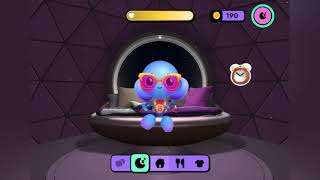
Buddy.ai: Tutorial 01
TechKnowledgeee

MyBuddy.ai demo with Sophia 0+
Buddy.ai: English for kids
YouTube returned 6 videos for “Buddy.ai”, and we withheld 1: 1 could not be judged, because “Buddy.ai” is a single word that other videos use for other things. Showing the 5 we can prove are about Buddy.ai.
Official links
Tools that pair well with Buddy.ai
Common stack mates teams adopt alongside Buddy.ai, with the specific reason each pairing earns its keep.

Gliglish
Gliglish turns language practice into spoken conversation with an AI teacher — 40+ languages, web and iOS.

Learn Languages
AI speaking coach for live voice conversation practice in six languages, with instant feedback

Praktika
Praktika pairs you with named AI tutors for live voice conversation practice and corrections that fold into the dialogue.
Featured Head-to-Head Comparisons
Buddy Ai vs Praktika
For young children (ages 3-8) needing a safe, structured voice-based early learning companion, Buddy.ai is the clear choice. For intermediate language learners seeking flexible, real-time conversation practice with AI tutors, Praktika is better suited. They serve entirely different audiences and use cases.
Buddy Ai vs Surge Ai
Buddy.ai and Surge AI serve completely different markets—Buddy is a voice-based tutor for kids aged 3-8, while Surge AI is a human feedback platform for training advanced AI. Choose Buddy if you need a safe, ad-free early learning app; choose Surge if you're an AI team needing expert human evaluation, RLHF data, or rigorous benchmarks like the new Antidote and Riemann-bench. There is no overlap; decision depends solely on your role (parent vs. AI developer).
Alternatives to Buddy.ai
View all
Gliglish
Gliglish turns language practice into spoken conversation with an AI teacher — 40+ languages, web and iOS.

Learn Languages
AI speaking coach for live voice conversation practice in six languages, with instant feedback

Frequently Asked Questions
Best-of guides
Topics
Used Buddy.ai? Help shape our editorial sentiment research.