
Carbon Robotics
AI-powered laser weeding and tractor autonomy for large-scale farms
For large-scale growers with compatible John Deere tractors and the budget, Carbon Robotics offers the most proven AI-powered, chemical-free weeding and autonomous driving systems on the market. The 1–3 year payback and 5–50% yield gains make it a smart long-term investment. But it's a major capital purchase, so smaller farms or those without Deere equipment should weigh alternatives first.
Verified 16d ago · liveness 69/100 · cite: rightaichoice.com/tools/carbon-robotics
- Large-scale vegetable and row crop farms needing herbicide-free weed control at high throughput
- Growers facing acute labor shortages for manual weeding
- Organic farms requiring non-chemical weed management with precision
- Operations with existing John Deere 6R/8R series tractors (2019+) that want autonomy
- Small farms where the upfront capital cost of a LaserWeeder is prohibitive
- Farms with irregular terrain or conditions that challenge laser accuracy
- Growers already satisfied with conventional chemical or mechanical weeding
We scan live Reddit threads, YouTube comments, X posts, G2 reviews and other communities — and hand you an honest verdict in under a minute.
- Honest verdict, not marketing
- Real pros & cons from real users
- Attributed quotes with receipts
3 free scans · no card needed
Skip Carbon Robotics if you are a small-scale farm with limited capital, lack compatible John Deere tractors, or have irregular terrain that may challenge laser accuracy.
The upfront capital cost of the LaserWeeder G2 is substantial, potentially hundreds of thousands of dollars, and may require financing or leasing arrangements.
Carbon Robotics uses contact-based pricing, typical for premium agtech equipment. For large-scale operations, the 1-3 year payback justifies the investment compared to recurring labor and chemical costs. However, smaller farms may find cheaper alternatives like manual weeding or conventional cultivation.
In short
Carbon Robotics — AI-powered laser weeding and tractor autonomy for large-scale farms. Best for Large-scale vegetable and row crop farms needing herbicide-free weed control at high throughput, Growers facing acute labor shortages for manual weeding, Organic farms requiring non-chemical weed management with precision. Contact Sales pricing.
What's new in Carbon Robotics
Checked 16 days agoAcross the latest 1 update: 1 feature update.
Viability Score
How well maintained and how widely used is Carbon Robotics? Built from what the vendor actually publishes (docs, changelog, tutorials, integrations, pricing), whether the site is live, and how much real users discuss it. How we calculate this
Last calculated: September 2026
How we score →Key Features
- AI-powered laser weeding with Large Plant Model (LPM)
- LaserWeeder G2: tractor-mounted implement for chemical-free weed control
- Carbon Autonomy kit: remote-supervised autonomous tractor operation
- Remote operator supervision in real-time
- Manual override with stock tractor controls
- No permanent modifications to John Deere tractors
- Zero crop damage and no soil disturbance
- Up to 80% cost reduction vs. hand-weeding and chemicals
- 5-50% yield increase validated by farmers and third-party trials
- 1-3 year payback on a 7-10 year machine lifespan
- Works in organic fields with no chemical residues
- NVIDIA AI platform integration for food safety
- Starlink connectivity for fleet control
- Fleet-wide software updates
- Financing options through Carbon LaserWeeder Financing
About Carbon Robotics
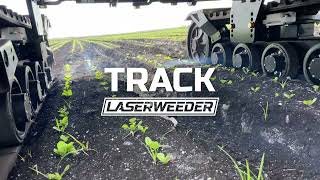
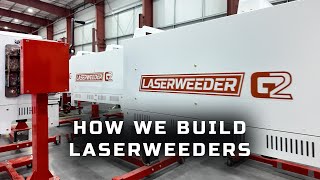
Carbon Robotics builds the two most talked-about machines in high-tech agriculture: the LaserWeeder G2 and the Carbon Autonomy kit. The LaserWeeder is a tractor-mounted implement that uses AI and lasers to kill weeds without chemicals or soil disturbance. The Carbon Autonomy kit retrofits John Deere 6R, 8R, 8RX, and 8RT tractors (2019+) for remote-supervised autonomous operation. Both run on Carbon AI, which is powered by the Large Plant Model (LPM), trained on 150 million labeled plants across 100+ crops in 15 countries. That training lets the system target weeds at the earliest growth stage with zero crop damage, delivering 5–50% yield increases and up to 80% cost reduction versus traditional weeding. Growers report a 1–3 year payback on a machine built to last 7–10 years. Trusted by 200+ growers worldwide, Carbon Robotics has also integrated Starlink for fleet connectivity and partnered with NVIDIA for food safety AI. Named to the 2026 CNBC Disruptor 50 list and winner of the 2026 GeekWire Next Tech Titan award, this is a premium, contact-priced investment for large vegetable and row crop operations facing labor shortages or herbicide resistance.
Behind the Verdict
Carbon Robotics stands out in the agtech space by delivering not one but two transformative products: the LaserWeeder G2 and the Carbon Autonomy kit. The LaserWeeder's use of AI and lasers to eliminate weeds without chemicals or mechanical cultivation is a game-changer for organic and conventional farms alike. Its Large Plant Model, trained on 150 million labeled plants, allows precise weed targeting at the earliest growth stage, reducing yield loss from competition and eliminating the need for herbicides. Growers report up to 80% cost reduction and 5-50% yield increases, with a 1-3 year payback on a machine built to last 7-10 years. The Carbon Autonomy kit retrofits newer John Deere tractors, enabling remote-supervised autonomous operation without permanent modifications. The seamless manual override and real-time remote supervision make it practical for real-world farming. The integration of Starlink for fleet connectivity and the NVIDIA partnership for food safety AI position Carbon Robotics as a leader in physical AI for agriculture. However, the high upfront cost and contact-based pricing make it unsuitable for small farms or those without the necessary tractor infrastructure. Compatibility is limited to specific John Deere models, and the machine's heavy weight may require dedicated field infrastructure. There are also potential limitations in irregular terrain or challenging field conditions. Overall, Carbon Robotics is an excellent fit for large-scale vegetable and row crop operations seeking to reduce labor costs, increase yields, and move toward sustainable practices. It's a premium investment that pays off for those who can afford it and have the right setup.
Researching Carbon Robotics? Get your full AI stack in 60 seconds.
Free, no signup — tell us your goal and get tools matched to your budget & existing stack.
Real-world workflow fit
Concrete scenarios for the personas Carbon Robotics actually fits — and what changes day-one when you adopt it.
Facing labor shortages for manual weeding in lettuce fields.
Outcome: Deploy the LaserWeeder G2 to autonomously weed fields, cutting labor costs by up to 80% and increasing yields by 5-50%.
Wanting to automate cultivation and weeding without buying new equipment.
Outcome: Install the Carbon Autonomy kit on existing 2019+ Deere tractors, enabling remote-supervised autonomous weeding and reducing time in the field.
Struggling with herbicide resistance and rising input costs.
Outcome: Adopt the LaserWeeder to eliminate chemicals and mechanical passes, improving crop health and reducing input expenses.
Use Cases
- Eliminate weeds in specialty crops like lettuce, broccoli, and onions without herbicides
- Reduce hand-weeding labor by up to 80% in organic fields
- Autonomously weed fields at night to free daytime labor for other tasks
- Install Carbon ATK on existing John Deere tractors for autonomous cultivation
- Achieve 5-50% yield increase by removing early-season weed competition without soil disruption
Models Under the Hood
as of 2026-09-15
Limitations
- Pricing is not publicly listed; the Autonomous LaserWeeder is a demo unit and not for commercial sale.
- The machine is heavy (9,500 lb) and requires dedicated infrastructure.
- Autonomous navigation may be limited in certain field conditions, and the Carbon Autonomy kit works with specific John Deere tractors, though exact models are not specified.
as of 2026-08-30
Verification history
We have re-verified Carbon Robotics 17 times since . Each pass re-reads the vendor's own pages and re-checks every listed field against that evidence; passes where nothing had changed are marked as such.
- — re-checked, vendor evidence unchanged
- — re-verified summary, description, our verdict, our analysis, pricing model, pricing tiers, features, integrations, who it suits, who should skip it
- — re-verified summary, description, our verdict, our analysis, pricing model, pricing tiers, features, integrations, who it suits, who should skip it
- — re-verified summary, description, our verdict, our analysis, pricing model, pricing tiers, features, integrations, who it suits, who should skip it
- — re-verified summary, description, our verdict, our analysis, pricing model, pricing tiers, features, integrations, who it suits, who should skip it
- — re-verified summary, description, our verdict, our analysis, pricing model, pricing tiers, features, integrations, who it suits, who should skip it
Showing the 6 most recent of 17 verification passes.
Free to cite with attribution — this page re-verifies continuously.
Where the pricing makes sense
The company stage and team size where Carbon Robotics's pricing actually pencils out — and where peers do it cheaper.
Carbon Robotics uses contact-based pricing, typical for premium agtech equipment. For large-scale operations, the 1-3 year payback justifies the investment compared to recurring labor and chemical costs. However, smaller farms may find cheaper alternatives like manual weeding or conventional cultivation.
Setup time & first value
How long it actually takes to get something useful out of Carbon Robotics — broken out by persona, not the marketing-page minute.
After purchase and site assessment, the LaserWeeder G2 can typically be operational within a few weeks, with Carbon Robotics providing installation and training. The Carbon Autonomy kit installation on existing tractors may take a few days, followed by a brief orientation for remote supervision.
Switching to or from Carbon Robotics
How to bring data in from common predecessors and how to get it back out — written for the switcher, not the buyer.
- →From Manual Weeding: Replace hand labor with the LaserWeeder G2, reducing labor costs and increasing efficiency.
- →From Chemical Weeding: Switch to laser weeding to eliminate herbicide use and address resistance, improving sustainability.
- ↗To Conventional Cultivation: If capital costs are prohibitive, you could revert to mechanical cultivation, but you'll lose precision and labor savings.
Integrations
Resources & Guides
- Resourcecarbonrobotics.com
Resources | Explore and Learn — Carbon Robotics
Discover in-depth information on Carbon Robotics products, maintenance guides, and industry insights with our extensive resource collection.
- Resourcecarbonrobotics.com
Support | Expert Service Anytime — Carbon Robotics
Discover expert support for Carbon Robotics
- Resourcecarbonrobotics.com
Autonomous LaserWeeder Demo Unit | Discover Efficient Weed Control — Carbon Robotics
Explore Carbon Robotics
Tutorials & Learning

Official links
Popular in Robotics & Physical AI

Locus Robotics
Autonomous mobile robots and Physical AI for flexible warehouse fulfillment.


Frequently Asked Questions
Categories
Best-of guides
Topics
Used Carbon Robotics? Help shape our editorial sentiment research.