
Cboard
Free open-source AAC web app with symbol-based communication and text-to-speech
Cboard is a solid free AAC option that covers core symbol-based communication and TTS well. Its open-source nature and offline mode are practical for budget-conscious individuals and educators. We recommend it for anyone needing a no-cost, customizable AAC tool, but if you require eye-tracking, HIPAA compliance, or a vast symbol library, look at paid tools like Proloquo2Go or Tobii Dynavox.
Verified 4d ago · liveness 59/100 · cite: rightaichoice.com/tools/cboard
- Non-verbal children and adults with autism or intellectual disabilities
- Speech therapists seeking a free AAC tool for trial or classroom use
- Individuals with temporary speech loss (surgery, allergies) or who lose voice
- Special education teachers needing customizable multilingual boards
- Users requiring eye-tracking hardware or advanced access methods
- Organizations needing HIPAA-compliant hosted solution
- Users who prefer native mobile apps over progressive web apps
We scan live Reddit threads, YouTube comments, X posts, G2 reviews and other communities — and hand you an honest verdict in under a minute.
- Honest verdict, not marketing
- Real pros & cons from real users
- Attributed quotes with receipts
3 free scans · no card needed
Skip Cboard if you need eye-tracking, a vast symbol library, or HIPAA-compliant hosting, or if you rely on offline access outside of Chrome.
No hidden costs — Cboard is completely free, but you may need to pay for a Chrome-capable device if you don't already have one.
Cboard is free for everyone, making it ideal for individuals, educators, and therapists with limited budgets. Compared to commercial AAC apps like Proloquo2Go which cost hundreds of dollars, Cboard offers a viable free alternative with core communication features.
In short
Cboard — Free open-source AAC web app with symbol-based communication and text-to-speech. Best for Non-verbal children and adults with autism or intellectual disabilities, Speech therapists seeking a free AAC tool for trial or classroom use, Individuals with temporary speech loss (surgery, allergies) or who lose voice. Free to use.
What people actually say about Cboard — is it worth it?
We ran a structured research pass across product reviews, community discussions, and post-purchase forum threads to surface the patterns vendors won't publish themselves. Below: the recurring strengths, the hidden costs people mention most, and the cohort that consistently regrets adopting this tool.
51 mentions across 6 sources (Hacker News, YouTube, App Store, Bluesky, GitHub, Lemmy) · researched Jul 15, 2026.
- +Free offline usage once page is loaded
- +Open-source with self-hosting option for privacy
- +Supports over 40 languages with customizable boards
- +Touch-friendly and works on tablets and phones
- +No registration required, privacy-focused design
- −Core features now require subscription after 15 days
- −Subscription is $8/month, too expensive for many disabled users
- −No warning about free trial; users feel tricked
- −School districts cannot buy subscriptions per student
- −App repeats words as typed, no option to disable
- • Users unaware of 15-day free trial may lose access suddenly
- • $8/month subscription for basic sharing features
Viability Score
How well maintained and how widely used is Cboard? Built from what the vendor actually publishes (docs, changelog, tutorials, integrations, pricing), whether the site is live, and how much real users discuss it. How we calculate this
Last calculated: September 2026
How we score →Key Features
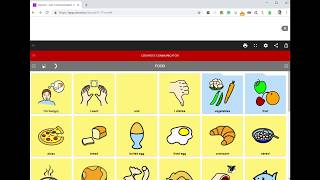
- Symbol-based communication grid
- Text-to-speech in 40+ languages
- Customizable vocabulary boards
- Board import/export (JSON, CSV)
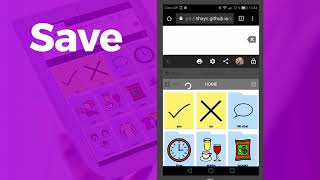
- Offline mode in Chrome (desktop & Android)
- Touch-friendly interface
- Color-coded categories
- Word prediction
- Multi-sentence construction
- Dark mode
- No registration required
- Open-source (React)
- Typed text alongside symbols
About Cboard
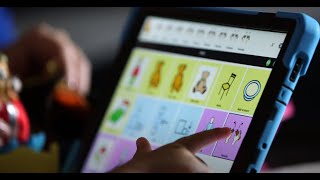
Cboard is a free, open-source, browser-based Augmentative and Alternative Communication (AAC) application designed for children and adults with speech and language impairments, including autism, cerebral palsy, and intellectual disabilities. It lets you communicate via a grid of symbols with text-to-speech (TTS) output, supporting over 40 languages. The app works offline in Google Chrome on desktop and Android, needs no registration, and is touch-friendly for tablets and smartphones. Core features include customizable vocabulary boards, board import/export (JSON, CSV), color-coded categories, word prediction, multi-sentence construction, and dark mode. Built with React, Cboard modernizes AAC with a clean, intuitive interface that does not rely heavily on text help. Unlike many paid AAC apps, Cboard is completely free and open-source, enabling community-driven translations and customizations. It is best suited for non-verbal individuals or those with temporary speech loss, from children to adults. While it lacks advanced eye-tracking or high-end natural language processing found in commercial alternatives like Proloquo2Go, it offers a robust, private, and accessible solution for basic to intermediate communication needs.
Behind the Verdict
Cboard fills a unique niche in the AAC space: it's free, open-source, and runs in the browser, which makes it immediately accessible to anyone with a device and an internet connection. The fact that it's free and community-driven means there's no vendor lock-in and you can customize the code if you have the technical skills. The offline mode in Chrome is a practical feature for users in areas with unreliable connectivity. However, the symbol library is not as comprehensive as paid alternatives, and the lack of advanced access methods like eye-tracking limits its use for individuals with severe motor impairments. Additionally, as a web app, it requires a modern browser and initial online setup. For speech therapists, special education teachers, and families looking for a no-cost AAC solution with multilingual support, Cboard is a strong choice. But if you need a robust symbol library, eye-tracking, or HIPAA-compliant hosting, you'll need to consider commercial options.
Researching Cboard? Get your full AI stack in 60 seconds.
Free, no signup — tell us your goal and get tools matched to your budget & existing stack.
Real-world workflow fit
Concrete scenarios for the personas Cboard actually fits — and what changes day-one when you adopt it.
Assessing a non-verbal child's ability to communicate with symbols during a session.
Outcome: The therapist quickly sets up a personalized board using Cboard's customization features, and the child uses it to express needs. This allows immediate assessment without needing to purchase expensive AAC software.
Setting up a communication board for nightly use at home.
Outcome: The parent uploads photos of family members and favorite objects to create a personalized board. The child taps symbols to request items or express feelings, and the app speaks aloud, facilitating family communication.
Supporting a multilingual classroom with several non-verbal students.
Outcome: The teacher uses Cboard's 40+ language support to create boards in multiple languages, ensuring each student can communicate in their native tongue. The offline mode ensures continuous use even if internet drops.
Use Cases
- Create personalized communication boards for a child with autism
- Use symbols to build sentences and speak them aloud during therapy
- Translate boards into 40+ languages for multilingual families
- Customize board layout and symbols via open-source code
- Run AAC app offline on a tablet without internet connection
Limitations
- As a web app, Cboard requires an internet connection for initial load and TTS, though offline mode works once cached.
- It lacks eye-tracking support and advanced voice customization.
- The symbol library is not as extensive as commercial counterparts, and community contributions vary in quality.
as of 2026-08-23
Verification history
We have re-verified Cboard 7 times since . Each pass re-reads the vendor's own pages and re-checks every listed field against that evidence; passes where nothing had changed are marked as such.
- — re-checked, vendor evidence unchanged
- — re-checked, vendor evidence unchanged
- — re-checked, vendor evidence unchanged
- — re-checked, vendor evidence unchanged
- — re-verified summary, description, our verdict, our analysis, pricing model, pricing tiers, features, integrations, who it suits, who should skip it
- — re-checked, vendor evidence unchanged
Showing the 6 most recent of 7 verification passes.
Free to cite with attribution — this page re-verifies continuously.
12-month cost
Project the real annual outlay, including the implied monthly cost when only an annual tier is published.
Vendor list price only. Add-on usage, seat overages, and contract minimums are surfaced under Hidden costs & gotchas.
Plans compared
For each published Cboard tier: who it actually fits, and what it adds vs. the previous tier. Cross-reference the cost calculator above for projected annual outlay.
Free
$0
Ideal for
Non-verbal individuals, families, and educators needing a no-cost, customizable AAC solution with basic to intermediate communication needs.
What this tier adds
Starting free entry point with unlimited symbol grids, TTS in 40+ languages, and offline mode in Chrome.
Where the pricing makes sense
The company stage and team size where Cboard's pricing actually pencils out — and where peers do it cheaper.
Cboard is free for everyone, making it ideal for individuals, educators, and therapists with limited budgets. Compared to commercial AAC apps like Proloquo2Go which cost hundreds of dollars, Cboard offers a viable free alternative with core communication features.
Setup time & first value
How long it actually takes to get something useful out of Cboard — broken out by persona, not the marketing-page minute.
You can start using Cboard within minutes: no registration, just open the web app in Chrome, create a board, and begin communicating. For advanced customization, expect 30-60 minutes to load images and arrange boards.
Switching to or from Cboard
How to bring data in from common predecessors and how to get it back out — written for the switcher, not the buyer.
- →From paper-based PECS: Create digital boards by taking photos of your PECS cards and uploading them to Cboard, making communication portable and voice-enabled.
- ↗To commercial AAC like Proloquo2Go: Cboard allows exporting boards as JSON or CSV, which you can use to reference when setting up your new board manually.
Resources & Guides
Tutorials & Learning
Official links
Tools that pair well with Cboard
Common stack mates teams adopt alongside Cboard, with the specific reason each pairing earns its keep.

Openai Edge Tts
Free, open-source text-to-speech API using Microsoft Edge voices.

TTSMaker
Free web-based text-to-speech with 100+ languages and commercial use. TTSMaker converts text into natural-sounding AI speech.

RHVoice
Free open-source multilingual speech synthesizer for screen readers, emphasizing underserved languages
Featured Head-to-Head Comparisons
Cboard vs Codametrix
CodaMetrix and Cboard serve completely different needs. If you're a large health system drowning in coding costs and denials, CodaMetrix is a proven, enterprise-grade investment with measurable ROI. If you need a free, open-source AAC tool for non-verbal communication, Cboard is a solid choice. There's no overlap; pick based on your domain.
Cboard vs Rapidsos
If you run a 911 center or enterprise safety program needing AI-powered dispatch and connected device data, RapidSOS is the only choice—but it's expensive and US-focused. If you need a free, open-source AAC tool for non-verbal communication, Cboard is the clear pick. They solve completely different problems; your use case decides.
Cboard vs Isomorphic Labs
Cboard and Isomorphic Labs serve completely different users: Cboard is a free AAC app for non-verbal individuals needing symbol-based communication, while Isomorphic Labs is a high-budget AI drug discovery partner for large pharma. If you need accessible, offline AAC, pick Cboard; if you're a pharmaceutical company seeking AI-driven drug design, consider Isomorphic Labs through a partnership.
Alternatives to Cboard
View allOpenai Edge Tts
Free, open-source text-to-speech API using Microsoft Edge voices.
Frequently Asked Questions
Categories
Best-of guides
Used Cboard? Help shape our editorial sentiment research.