
Common Room
Common Room is buyer intelligence software that resolves signals to individual buyers and runs AI GTM agents on one context layer.
Common Room earns its place when your GTM stack is a pile of enrichment, intent, and sequencing contracts that never talk to each other. Person-level identity resolution feeding RoomieAI is a real difference from account-level players like 6sense and Demandbase, and the MCP server plus CLI on every plan means your AI assistants can reach that context without a special contract. The floor is genuine, though: Essential at $2,500/mo billed annually for 5 seats only pencils out if you have outbound headcount to feed it, and DataAgent plus product signals sit behind add-on pricing.
Verified 1h ago · liveness 86/100 · cite: rightaichoice.com/tools/common-room
- RevOps leaders consolidating 8-10 overlapping enrichment, intent and sequencing contracts onto one platform
- Enterprise GTM teams scaling from 50 to 1,000+ reps without adding engineering headcount
- SDR teams that need automated account research and message personalization at volume
- Organizations that want person-level identity resolution before letting AI agents run outreach
- Lean teams without a real outbound motion — Essential starts at $2,500/mo billed annually for 5 seats
- Teams that can't connect CRM, product, marketing and engagement data to feed the context layer
- Heavy RoomieAI or Prospector users unwilling to manage monthly credits and add-on spend
We scan live Reddit threads, YouTube comments, X posts, G2 reviews and other communities — and hand you an honest verdict in under a minute.
- Honest verdict, not marketing
- Real pros & cons from real users
- Attributed quotes with receipts
3 free scans · no card needed
Skip Common Room if you don't have an outbound motion to feed it — Essential starts at $2,500/mo billed annually for 5 seats, and the value depends on signal volume from a connected CRM, SEP and product usage.
RoomieAI research credits are capped per tier (5k on Essential, 10K on Enterprise), so heavy personalization volume pushes you toward additional credits or a higher plan
Essential at $2,500/mo billed annually for 5 seats puts Common Room above most point enrichment tools but below a full 6sense or Demandbase account-intent contract — and inside the range of what teams spend stitching three or four vendors together. It's priced for mid-market and enterprise outbound teams. If you only need contact data, Prospector's roughly 20% of ZoomInfo cost is the reason to look, not the context layer.
In short
Common Room — Common Room is buyer intelligence software that resolves signals to individual buyers and runs AI GTM agents on one context layer. Best for RevOps leaders consolidating 8-10 overlapping enrichment, intent and sequencing contracts onto one platform, Enterprise GTM teams scaling from 50 to 1,000+ reps without adding engineering headcount, SDR teams that need automated account research and message personalization at volume. Free to start; paid plans from $2,500/mo.
No head-to-head comparison for Common Room yet — the alternatives below are the closest matches we list.
What's new in Common Room
Checked 4 days agoAcross the latest 5 updates: 1 launch and 4 news mentions.
How to Escape the Lead Scoring Black Box
Post on moving beyond opaque lead scoring toward transparent, signal-based prioritization — the argument behind Common Room's AI Scoring and no-code workflow builder.
Your Champion Just Went Dark. Now What?
Post on detecting and acting when a buying-committee champion goes silent, using buyer signals rather than waiting on CRM stage changes.
Your Forecast Said Commit. Your Buyer Said Otherwise.
Post on the gap between CRM forecast commitments and actual buyer behavior, tied to the drillable forecast built on deal and conversation data.
Your AI SDR Sent 500 Emails Today. None of Them Mattered.
Post arguing that AI SDR email volume without buyer intelligence misses the point, reinforcing Common Room's signal-led outbound positioning.
This Is Revenue OS
Blog post framing the buyer intelligence platform as a 'Revenue OS' — one context layer spanning identity, outreach, coaching and forecast.
What people actually say about Common Room — is it worth it?
We ran a structured research pass across product reviews, community discussions, and post-purchase forum threads to surface the patterns vendors won't publish themselves. Below: the recurring strengths, the hidden costs people mention most, and the cohort that consistently regrets adopting this tool.
47 mentions across 4 sources (Hacker News, YouTube, Product Hunt, Lemmy) · researched Oct 14, 2026.
Weighted by the 55 posts each of 4 sources contributed.
- +Person360 identity resolution maps signals to real people, not fuzzy account rollups.
- +AI waterfall enrichment across a 400M+ contact directory competes with ZoomInfo-class datasets.
- +Prospector priced at roughly 20% of ZoomInfo is a genuinely aggressive contact-discovery alternative.
- +AI Scoring plus a no-code workflow builder lets RevOps ship plays without filing eng tickets.
- +MCP server and CLI ship on every plan, unusual for a GTM SaaS at this price band.
- −Zero independent user reviews of the current buyer-intelligence product anywhere in the scraped sources.
- −All visible praise comes from the 2020 community-growth era, not the current GTM SKU.
- −Product name collides with Hogwarts Legacy, hotels, and dorm lounges, wrecking discoverability.
- −Essential tier at $2,500/mo for 5 seats is a steep floor for a first outbound experiment.
- −Signal-based selling claims are unvalidated — no one in the data confirms the intent actually converts.
- • DataAgent (CRM dedup, stale records, data gaps) is an add-on, not included
- • Product signals from usage, web visits, GitHub, and custom entities are an add-on
- • Intent topics scale by tier (6 / 12 / 25 Bombora topics), so more signal means a higher plan
- • Entry price requires annual billing — no monthly escape hatch at the Essential level
- • Seat ceiling of 5 on Essential means any real sales org almost immediately jumps a tier
Viability Score
How well maintained and how widely used is Common Room? Built from what the vendor actually publishes (docs, changelog, tutorials, integrations, pricing), whether the site is live, and how much real users discuss it. How we calculate this
Last calculated: October 2026
How we score →Key Features
- Person360 identity resolution mapping signals to individual buyers
- Buying committee mapping resolved to people, not just accounts
- AI waterfall enrichment across a 400M+ contact directory
- Prospector contact discovery priced at roughly 20% of ZoomInfo
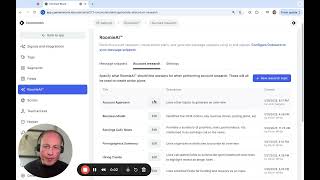
- RoomieAI account research and contact research
- RoomieAI message personalization and message snippets
- RoomieAI live in-call guidance during conversations
- AI Scoring with no-code workflow builder
- Automated workflow templates and custom workflows
- Native dialer with cascading and parallel dialing that auto-logs outcomes
- Zoom Revenue Accelerator with AI coaching on every call
- Hierarchical, drillable forecast built on deal and conversation data
- Spark notifications and Spark Briefs in Slack and email
- Chrome extension and Salesforce widget
- MCP server and CLI available on every plan
About Common Room
Common Room is a buyer intelligence platform for B2B go-to-market teams that have been running signal-based selling across a stack of disconnected enrichment, intent, and sequencing tools. Person360 identity resolution attaches activity from CRM, product usage, marketing, community, and website traffic to real individuals rather than guessing at accounts, and buying-committee mapping resolves to people rather than company records. On top of that context layer, RoomieAI handles account research, contact research, message personalization, and live in-call guidance, while AI Scoring and a no-code workflow builder let RevOps design prioritization models and plays without a developer ticket. Execution happens where reps already work: Salesforce, HubSpot, Slack, email, and a Chrome extension. A native dialer pulls call tasks out of sequences, runs cascading and parallel dialing, and logs outcomes automatically. Prospector provides contact discovery across a 400M+ contact directory, which Common Room positions at roughly 20% of ZoomInfo's cost, and DataAgent (an add-on) handles deduplication, stale records, and data-gap detection. An MCP server and CLI ship on every plan so AI assistants and agents can query buyer context directly. Pricing starts at Essential, $2,500/mo billed annually with 5 seats, 100k contacts, 5k RoomieAI research credits, and 2.5k Prospector credits. Advanced and Enterprise are custom-quoted with 15 and 30 seats respectively. It fits mid-market and enterprise outbound organizations; smaller teams without a real outbound motion will find the floor hard to justify.
Behind the Verdict
The pitch Common Room makes is consolidation, and the product largely backs it up. The pieces that matter are already built to fit together: Person360 resolves every signal — CRM records, product usage, website visits, GitHub activity, community and social engagement, Bombora surge topics — to a named person, and buying-committee mapping keeps the group view attached to individuals rather than collapsing into account-level guesswork. That is the part 6sense and Demandbase do not do the same way, and it is why Common Room's own positioning is 'most tools guess at accounts.' On top of that layer, RoomieAI runs account research, contact research, message personalization, and live in-call guidance, all grounded in the same continuously refreshed buyer picture instead of a stale CRM export. AI Scoring plus the no-code workflow builder is where RevOps gets leverage: you can design scoring models and signal-based plays, govern how AI agents execute across large rep counts, and change the motion without filing an engineering ticket. The vendor claims deployment in hours and scale to 1,000+ reps — treat that as a vendor claim, but the no-code builder is the mechanism that makes it plausible. Execution is the second half of the story. A native dialer pulls call tasks straight out of a sequence, runs cascading and parallel dialing, and logs every outcome on its own, which removes the admin that usually sits between dialing and CRM hygiene. Spark notifications and Spark Briefs surface intelligence inside Slack and email, and the Chrome extension plus Salesforce widget mean reps don't add a fifth tab. The Zoom tie-in adds AI coaching on every call and a hierarchical, drillable forecast. The weaknesses are commercial more than functional. Essential runs $2,500/mo billed annually for 5 seats — that is a real budget line before you've added anything. Credits are metered: 5k RoomieAI research credits and 2.5k Prospector credits on Essential, rising to 10K and 15K on Enterprise. Website deanonymization is capped at 1k/mo on both Essential and Advanced and only unlimited on Enterprise. DataAgent is add-on-only for actions (view-only across all three tiers), product signals are add-on-only, and in-product and auto-recurring data exports are add-on-only on Essential and Advanced. Advanced and Enterprise pricing is custom-quoted, so you cannot self-calculate a 50-rep budget from the website. Where it fits: mid-market and enterprise B2B teams with a real outbound motion, a CRM and SEP already in place, and enough signal volume to make person-level resolution worthwhile. Where it doesn't: lean teams without outbound headcount, buying processes that run on offline channels where digital signals never fire, and pure contact-list buyers who want static data rather than prioritization. If you only need names and emails, Prospector's ~20% of ZoomInfo cost is attractive but you're paying for a context layer you won't use.
Researching Common Room? Get your full AI stack in 60 seconds.
Free, no signup — tell us your goal and get tools matched to your budget & existing stack.
Real-world workflow fit
Concrete scenarios for the personas Common Room actually fits — and what changes day-one when you adopt it.
A rep opens Slack in the morning and a Spark Brief names three contacts at target accounts who visited the pricing page and whose company posted a Bombora surge; RoomieAI has already drafted personalized openers and pushed the contacts into an Outreach sequence.
Outcome: The rep starts dialing from a pre-populated sequence, cascading and parallel dialing run the list, and every outcome logs back without manual entry.
You build a scoring model in the no-code workflow builder weighting product usage, GitHub activity and job changes, then attach an automated play that fires when a buying-committee member goes quiet for 14 days.
Outcome: Plays deploy without an engineering ticket, and you can govern how AI agents execute across every rep on the same rules rather than per-team configurations.
Forecast review stops relying on self-reported stages: you drill from CRO to rep into a hierarchical forecast grounded in what the deal and the recorded calls actually showed, with AI coaching flags from Zoom Revenue Accelerator.
Outcome: You can defend the commit number with deal-level evidence and catch stalled champions before the quarter closes.
Use Cases
- Unify product usage, community engagement, website visits and intent signals to identify in-market accounts
- Automate prospect research and personalized outreach with RoomieAI agents
- Score and prioritize buyers with AI Scoring and custom scoring models
- Trigger automated workflows when contacts change jobs or visit pricing pages
- Govern AI agent execution across 1,000+ reps with centralized playbooks and workflows
- Keep CRM data current with DataAgent reconciliation and deduplication
- Query buyer context from AI assistants via the MCP server, CLI and Claude connector
- Run cascading and parallel dialing out of a sequence with outcomes logging automatically
Models Under the Hood
as of 2026-10-16
Limitations
- Every tier is metered on seats, contacts and credits: 5/15/30 seats, 100k/250k/750k contacts, RoomieAI research credits of 5k/7.5k/10K and Prospector credits of 2.5k/7.5k/15K.
- Website deanonymization is capped at 1k/mo on Essential and Advanced — only Enterprise is unlimited — and website activity runs 240k/480k/960k per year.
- DataAgent actions, product signals, custom product entities, in-product data exports and auto-recurring data exports are add-on-only on the lower tiers, and DataAgent is view-only on all three published tiers.
- Only Essential publishes a number ($2,500/mo billed annually); Advanced and Enterprise are custom-quoted, so larger teams have to work through an account team to budget.
- The platform assumes an existing CRM, SEP and Slack stack to feed the context layer, and the motion it optimizes for is outbound-driven — teams without outbound headcount won't realize the value.
as of 2026-10-18
Verification history
We have re-verified Common Room 20 times since . Each pass re-reads the vendor's own pages and re-checks every listed field against that evidence; passes where nothing had changed are marked as such.
- — re-checked, vendor evidence unchanged
- — re-verified summary, description, our verdict, our analysis, pricing model, pricing tiers, features, integrations, who it suits, who should skip it
- — re-verified summary, description, our verdict, our analysis, pricing model, pricing tiers, features, integrations, who it suits, who should skip it
- — re-verified summary, description, our verdict, our analysis, pricing model, pricing tiers, features, integrations, who it suits, who should skip it
- — re-verified summary, description, our verdict, our analysis, pricing model, pricing tiers, features, integrations, who it suits, who should skip it
- — re-verified summary, description, our verdict, our analysis, pricing model, pricing tiers, features, integrations, who it suits, who should skip it
Showing the 6 most recent of 20 verification passes.
Free to cite with attribution — this page re-verifies continuously.
12-month cost
Project the real annual outlay, including the implied monthly cost when only an annual tier is published.
Vendor list price only. Add-on usage, seat overages, and contract minimums are surfaced under Hidden costs & gotchas.
Plans compared
For each published Common Room tier: who it actually fits, and what it adds vs. the previous tier. Cross-reference the cost calculator above for projected annual outlay.
Essential
$2,500/mo billed annually
Ideal for
Mid-market outbound team of about 5 reps starting signal-based selling, with a CRM, SEP and Slack already connected
What this tier adds
Starting tier at $2,500/mo billed annually: 5 seats, 100k contacts, 5k RoomieAI research credits, 2.5k Prospector credits, 6 Bombora topics, shared CSM
Advanced
Custom
Ideal for
Scaling outbound organization around 15 reps that needs more contacts, more research capacity and a dedicated CSM
What this tier adds
Adds 10 seats, 150k more contacts, 2.5k more RoomieAI credits, 5k more Prospector credits, 12 Bombora topics and 480k/yr website activity over Essential
Enterprise
Custom
Ideal for
Complex GTM organization governing execution across 30+ reps that needs unlimited deanonymization and comprehensive integrations
What this tier adds
Raises to 30 seats, 750k contacts, 10K RoomieAI credits, 15K Prospector credits, 25 Bombora topics, 960k/yr website activity and unlimited deanonymization
Where the pricing makes sense
The company stage and team size where Common Room's pricing actually pencils out — and where peers do it cheaper.
Essential at $2,500/mo billed annually for 5 seats puts Common Room above most point enrichment tools but below a full 6sense or Demandbase account-intent contract — and inside the range of what teams spend stitching three or four vendors together. It's priced for mid-market and enterprise outbound teams. If you only need contact data, Prospector's roughly 20% of ZoomInfo cost is the reason to look, not the context layer.
Setup time & first value
How long it actually takes to get something useful out of Common Room — broken out by persona, not the marketing-page minute.
SDRs get value in days once CRM, SEP and Slack are connected — Spark Briefs and sequences work off existing data. RevOps should budget a few weeks to wire product usage, website tracking and community sources and to build the first scoring model. Enterprise rollouts with product signals and DataAgent take longer because those are add-on scopes.
Switching to or from Common Room
How to bring data in from common predecessors and how to get it back out — written for the switcher, not the buyer.
- →From ZoomInfo: Prospector provides contact discovery at roughly 20% of the cost, and enrichment plus intent land on the same context layer
- →From 6sense or Demandbase: replace account-level intent with Person360 person-level resolution and Bombora surge topics on the same plan
- →From Outreach or Salesloft: keep the sequencer as an integration and add the native dialer for cascading and parallel dialing
- →From Apollo: consolidate contact discovery into Prospector and layer RoomieAI research on top
- →From manual ChatGPT research: replace ad-hoc prompting with RoomieAI research grounded in your own buyer context
- ↗To ZoomInfo: export via in-product or auto-recurring data exports, which are add-on-only on Essential and Advanced
- ↗To a standalone sequencer: CRM and SEP integrations mean records stay in your own system of record
- ↗To 6sense or Demandbase: account-level intent tools require you to give up person-level resolution, so expect to rebuild buying-committee logic
Integrations
Resources & Guides
- Documentationcommonroom.io
Get Started
Full product docs from commonroom.io
- Documentationcommonroom.io
Core Concepts
Full product docs from commonroom.io
- Documentationcommonroom.io
Setup The Basics
Full product docs from commonroom.io
- Documentationcommonroom.io
Native Signals
Full product docs from commonroom.io
- Documentationcommonroom.io
Segments
Full product docs from commonroom.io
- Documentationcommonroom.io
Roomie Ai
Full product docs from commonroom.io
- Documentationcommonroom.io
Prospector
Full product docs from commonroom.io
- Documentationcommonroom.io
Integrations
Full product docs from commonroom.io
- Resourcecommonroom.io
Playbooks
Helpful link from commonroom.io
Tutorials & Learning

Official links
Tools that pair well with Common Room
Common stack mates teams adopt alongside Common Room, with the specific reason each pairing earns its keep.

Persana AI
Persana AI runs AI sales prospecting agents over 100+ data sources and 75+ live intent signals — enrichment and outreach in one

Komo
Komo turns LinkedIn and web buyer signals into scored B2B pipeline, with cited research behind every answer.

Klue
Klue unifies competitive intelligence and win-loss research so B2B revenue teams know why deals are won or lost.
Alternatives to Common Room
View all
Persana AI
Persana AI runs AI sales prospecting agents over 100+ data sources and 75+ live intent signals — enrichment and outreach in one

Frequently Asked Questions
Used Common Room? Help shape our editorial sentiment research.