
Cortex XSIAM
Cortex XSIAM unifies SIEM, SOAR, EDR, NDR and CDR into one AI-driven SOC platform on the Cortex XDL data lake.
Cortex XSIAM is a consolidation bet, not a point tool. It earns its keep when you're already on Palo Alto's firewall, Prisma and Cortex stack and your analysts are drowning in alerts — the Cortex XDL data lake, AgentiX agentic automation with enterprise guardrails, and Unit 42's managed services are the parts that hold up. Weigh the headline figures (98% MTTR reduction, 300% ROI, 99% noise reduction, 100% MITRE coverage) as vendor-reported and re-test them in your own environment. Commit only if you can staff continuous SOC engineering; multi-vendor shops lose flexibility here and Microsoft Sentinel or Splunk remain the sensible first look.
Verified 1d ago · liveness 70/100 · cite: rightaichoice.com/tools/cortex-xsiam
- Large enterprises consolidating SIEM, SOAR, EDR, NDR and CDR into one AI-driven SOC platform
- Palo Alto Networks customers who want tight coupling between NGFW, Prisma and Cortex tooling
- SOC teams with high alert volume that need AI prioritization, triage and root cause analysis
- Organizations that want 24/7 managed detection and response via Unit 42
- SMBs and lean security teams — deployment and tuning are enterprise-scale projects
- Organizations committed to a multi-vendor, best-of-breed SIEM strategy
- Teams that only need basic log management and correlation without automation
We scan live Reddit threads, YouTube comments, X posts, G2 reviews and other communities — and hand you an honest verdict in under a minute.
- Honest verdict, not marketing
- Real pros & cons from real users
- Attributed quotes with receipts
3 free scans · no card needed
Skip Cortex XSIAM if you run a deliberately multi-vendor security stack, or you only need log management and correlation — the consolidation payoff depends on tight coupling with Palo Alto's firewall, Prisma and Cortex products.
Unit 42 Managed Threat Hunting, MDR and Managed XSIAM are a separate commercial line from the platform, so 24/7 coverage is a second budget conversation on top of the platform spend.
That model fits large enterprises consolidating five tools into one budget line; it is a poor fit for a lean team comparing a mid-market SIEM subscription against a platform commitment plus the SOC engineering headcount it quietly requires.
In short
Cortex XSIAM — Cortex XSIAM unifies SIEM, SOAR, EDR, NDR and CDR into one AI-driven SOC platform on the Cortex XDL data lake. Best for Large enterprises consolidating SIEM, SOAR, EDR, NDR and CDR into one AI-driven SOC platform, Palo Alto Networks customers who want tight coupling between NGFW, Prisma and Cortex tooling, SOC teams with high alert volume that need AI prioritization, triage and root cause analysis. Contact Sales pricing.
No head-to-head comparison for Cortex XSIAM yet — the alternatives below are the closest matches we list.
What's new in Cortex XSIAM
Checked yesterdayAcross the latest 2 updates: 2 news mentions.
Palo Alto Networks introduces agentic AI security controls for enterprises
New capabilities for enterprises deploying AI agents, covering sensitive data control, agent action oversight and AI cost governance — directly relevant to SOC teams letting agents act on production infrastructure.
Observability's AI Moment
Palo Alto Networks blog post on how AI is changing observability, part of the broader push toward agentic operations across security and infrastructure telemetry.
What people actually say about Cortex XSIAM — is it worth it?
We ran a structured research pass across product reviews, community discussions, and post-purchase forum threads to surface the patterns vendors won't publish themselves. Below: the recurring strengths, the hidden costs people mention most, and the cohort that consistently regrets adopting this tool.
10 mentions across 1 source (YouTube) · researched Aug 6, 2026.
Average across the 1 source that answered — each source counts once, not each post.
- +Unified SIEM, SOAR, and XDR in one platform simplifies tool sprawl
- +Command Center interface praised for its dynamic, cool dashboards
- +AI-driven alert triage and automation cut noise by up to 99%
- +Lumifi CISO endorses UX-friendly design that creates value
- +Expands insight from endpoints to data lakes for deeper analysis
- −Very few independent user reviews or real-world testimonials
- −Deployment complexity likely high, as hinted by LAN deployment query
- −Potential vendor lock-in with Palo Alto ecosystem
- −No transparent pricing; contact-only may deter small teams
- −Advanced skill level required; steep learning curve for SOC staff
- • No public pricing; likely requires professional services for setup
- • Potential add-ons like Unit 42 MDR and premium support
- • Possible infrastructure costs if on-prem deployment
Viability Score
How well maintained and how widely used is Cortex XSIAM? Built from what the vendor actually publishes (docs, changelog, tutorials, integrations, pricing), whether the site is live, and how much real users discuss it. How we calculate this
Last calculated: October 2026
How we score →Key Features
- Unified SIEM, SOAR, EDR, NDR and CDR on one SOC platform
- Cortex AgentiX agentic AI workforce that plans, reasons and acts under enterprise guardrails
- Cortex XDL unified data lake across endpoint, network, identity, cloud and exposures
- Automatic data preparation, enrichment and intelligent stitching before analytics run
- 10,000+ detections and 2,600+ analytics models (homepage figures)
- 13,300+ detections and 2,900+ ML models cited in accompanying pitch material
- 100% MITRE ATT&CK detection coverage (vendor-reported)
- Up to 99% alert noise reduction through AI prioritization
- 98% MTTR reduction reported by the vendor
- Triple the EDR telemetry plus enriched firewall logs as the starting data set
- AI-driven triage and root cause analysis in a single investigation view
- Automation playbooks reported to cut manual SOC work by 75%
- Advanced IP Defense blocks attacker infrastructure at the network layer via Cloud-Delivered Security Services
- Agentic AI security controls for sensitive data, agent action oversight and AI cost governance
- Extended modules for email security, exposure management, TIP and ITDR
About Cortex XSIAM
Cortex XSIAM is Palo Alto Networks' platform for collapsing the swivel-chair SOC. SIEM, SOAR, EDR, NDR and CDR sit on one foundation — the Cortex XDL data lake spanning endpoint, network, identity, cloud and exposure data — with Cortex AgentiX as the agentic AI and automation layer above it, plus extended modules for email security, exposure management, TIP and ITDR. The pitch is data quality first: start from triple the EDR telemetry plus enriched firewall logs, automatically prepare and enrich that data, stitch it into security intelligence, then apply machine learning detection analytics instead of rules your team has to author and maintain. Palo Alto's published numbers split between the homepage (10,000+ detections, 2,600+ analytics models, 100% MITRE ATT&CK coverage, up to 99% less noise, 98% MTTR reduction, 300% ROI, 75% cut in manual work) and the accompanying pitch material (13,300+ detections, 2,900+ ML models) — all vendor-reported. Recent releases push the platform toward network-layer action: Advanced IP Defense blocks attacker infrastructure through Cloud-Delivered Security Services rather than waiting on a SOC detection, and Palo Alto has been wiring AI security controls for enterprises deploying their own agents, covering sensitive data control, agent action oversight and AI cost governance. The buyer is an enterprise SOC lead with high alert volume who already runs Palo Alto's firewall, Prisma and Cortex portfolio, or has decided to standardize there. Unit 42 wraps Managed Threat Hunting, MDR and Managed XSIAM around the platform when you want 24/7 coverage without building it in-house. If you need best-of-breed flexibility across vendors, or only basic log management, the consolidation math doesn't work.
Behind the Verdict
The honest way to read Cortex XSIAM is as a platform decision, not a product purchase. Palo Alto's argument is that SOC pain is a data problem before it is a detection problem: legacy SIEMs collect whatever they can and force your engineers to write and maintain the correlation logic. XSIAM's counter is to start from triple the EDR telemetry plus enriched firewall logs, automatically prepare and enrich that data, stitch it into security intelligence, and then run machine learning analytics — 2,600+ analytics models on the homepage, 2,900+ ML models in the pitch material — with 10,000+ or 13,300+ detections depending on which page you read. When that foundation works, the payoff is real: AI turns thousands of alerts into a few prioritized cases, shows the full attack story including root cause in one investigation view, and automation playbooks are claimed to cut manual SOC work by 75%. Strengths, in order of durability. First, the unified data lake: endpoint, network, identity, cloud and exposure telemetry in one place is genuinely hard to replicate if you're maintaining four consoles yourself, and it is what makes cross-domain detection possible. Second, AgentiX: an agent workforce that plans, reasons and acts under enterprise guardrails is the right shape for SOC automation, and the October 2026 additions around controlling sensitive data, agent actions and AI cost governance matter because you are letting software act on production infrastructure. Third, Unit 42: Managed Threat Hunting, MDR and Managed XSIAM let a team buy 24/7 coverage instead of hiring it. Fourth, network-layer enforcement via Advanced IP Defense through Cloud-Delivered Security Services — blocking attacker infrastructure before a SOC detection fires is a real architectural advantage that pure-software SIEMs don't have. Weaknesses, and they are not small. Deployment and tuning are enterprise-scale projects; getting full value generally means dedicated SOC engineering, not a part-time administrator. The platform is most valuable when coupled tightly to Palo Alto's own firewall, Prisma and Cortex products, so a deliberately multi-vendor stack leaves value on the table — the open ecosystem for ingesting third-party telemetry is real but the reference implementations are Palo Alto's. The headline metrics are vendor-reported; 98% MTTR reduction, 300% ROI, 99% noise reduction and 100% MITRE ATT&CK coverage are all worth re-testing against your own logs before you build a business case, and note the site itself quotes two different detection counts. Unit 42 managed services are a separate commercial line from the platform, so budget them separately. Where it fits: a large enterprise, already on Palo Alto NGFW and Prisma, with a high-volume SOC and the engineering bench to run continuous tuning — especially one that wants managed coverage layered on top. Where it doesn't: SMBs and lean teams, multi-vendor best-of-breed strategies, and anyone who only needs log management and
Researching Cortex XSIAM? Get your full AI stack in 60 seconds.
Free, no signup — tell us your goal and get tools matched to your budget & existing stack.
Real-world workflow fit
Concrete scenarios for the personas Cortex XSIAM actually fits — and what changes day-one when you adopt it.
Consolidate a legacy SIEM, a standalone SOAR and an EDR console onto Cortex XSIAM, importing existing firewall and endpoint telemetry into the Cortex XDL data lake and retiring rule-based correlation in favor of ML analytics.
Outcome: Analysts work one investigation view instead of three consoles, and AI triage turns thousands of daily alerts into a short list of prioritized cases with root cause attached.
Work the daily case queue where AI has already stitched endpoint, network, identity and cloud signals together and surfaced the attack story, then hand response steps to AgentiX automation under guardrails.
Outcome: Investigation time drops from hours of swivel-chair work to minutes, and repetitive containment steps run automatically with the analyst keeping approval control.
Layer Unit 42 Managed XSIAM on top of the platform — 24/7 expert-led MDR, managed threat hunting and continuous SOC engineering — rather than hiring a full tier-1 bench.
Outcome: Round-the-clock detection and hunting coverage without the hiring cycle, with the platform data lake still under your own control.
Use Cases
- Collapse separate SIEM, SOAR, EDR and NDR tools into one platform running on a single data lake.
- Cut mean time to resolution with AI triage that turns thousands of alerts into a few prioritized cases and shows root cause.
- Automate repetitive investigation and response steps with agentic AI governed by enterprise-grade guardrails.
- Get 24/7 detection, hunting and response through Unit 42 managed services instead of hiring a full tier-1 team.
- See endpoint, network, identity, cloud and exposure telemetry in one place for proactive and reactive security.
- Block attacker infrastructure at the network layer with Advanced IP Defense delivered via Cloud-Delivered Security Services.
- Govern the AI agents your own enterprise is deploying — data access, agent actions and AI spend.
- Standardize SOC operations across an organization already running Palo Alto firewall, Prisma and Cortex products.
Models Under the Hood
as of 2026-10-16
Limitations
- The platform is complex to deploy and tune, and full value generally means dedicated SOC engineering rather than a part-time administrator.
- It is most valuable coupled tightly to Palo Alto Networks' own firewall, Prisma and Cortex products, so a deliberately multi-vendor stack leaves value on the table — the open ecosystem for third-party telemetry exists, but the reference integrations are Palo Alto's.
- Unit 42 managed services (Managed Threat Hunting, MDR, Managed XSIAM) are a separate commercial line from the platform itself.
- Several headline figures — 98% MTTR reduction, 300% ROI, 99% noise reduction, 100% MITRE ATT&CK coverage — are vendor-reported, and the site quotes two different detection counts (10,000+ on the homepage, 13,300+ in the pitch material); validate both against your own environment before building a business case on them.
as of 2026-10-21
Verification history
We have re-verified Cortex XSIAM 22 times since . Each pass re-reads the vendor's own pages and re-checks every listed field against that evidence; passes where nothing had changed are marked as such.
- — re-checked, vendor evidence unchanged
- — re-verified summary, description, our verdict, our analysis, pricing model, pricing tiers, features, integrations, who it suits, who should skip it
- — re-verified summary, description, our verdict, our analysis, pricing model, pricing tiers, features, integrations, who it suits, who should skip it
- — re-verified summary, description, our verdict, our analysis, pricing model, pricing tiers, features, integrations, who it suits, who should skip it
- — re-verified summary, description, our verdict, our analysis, pricing model, pricing tiers, features, integrations, who it suits, who should skip it
- — re-verified summary, description, our verdict, our analysis, pricing model, pricing tiers, features, integrations, who it suits, who should skip it
Showing the 6 most recent of 22 verification passes.
Free to cite with attribution — this page re-verifies continuously.
Where the pricing makes sense
The company stage and team size where Cortex XSIAM's pricing actually pencils out — and where peers do it cheaper.
That model fits large enterprises consolidating five tools into one budget line; it is a poor fit for a lean team comparing a mid-market SIEM subscription against a platform commitment plus the SOC engineering headcount it quietly requires.
Setup time & first value
How long it actually takes to get something useful out of Cortex XSIAM — broken out by persona, not the marketing-page minute.
Expect weeks, not days. XSIAM's first value depends on getting firewall and endpoint telemetry flowing into the Cortex XDL data lake and tuning detection analytics against your environment. A SOC already on Palo Alto NGFW and Prisma is measuring in days-to-weeks to a working case queue; a greenfield or multi-vendor estate should plan on an enterprise deployment project with dedicated engineering.
Switching to or from Cortex XSIAM
How to bring data in from common predecessors and how to get it back out — written for the switcher, not the buyer.
- →From legacy SIEM (Splunk, IBM QRadar): map existing correlation rules to ML-backed analytics and ingest historical data into the Cortex XDL data lake while running both in parallel.
- →From standalone SOAR: port playbook logic into AgentiX automation and governed agent actions rather than re-authoring every workflow by hand.
- →From standalone EDR: XSIAM starts from triple the EDR telemetry, so endpoint coverage typically lands first while network and identity sources follow.
- →From other Palo Alto Cortex products (XDR, XSOAR, Xpanse): consolidate onto the shared data lake so endpoint, orchestration and exposure data stop living in separate consoles.
- ↗To Microsoft Sentinel: rebuild detection logic as KQL analytics rules and re-point log ingestion through Azure-native connectors.
- ↗To Splunk: re-create detection engineering in SPL, accepting that ML-backed analytics and agentic triage do not port and must be rebuilt.
- ↗To a multi-vendor best-of-breed stack: expect to reassemble SIEM, SOAR, EDR and NDR as separate contracts, losing the single-data-lake cross-domain correlation.
- ↗To Google SecOps: migrate detection rules and playbooks to Google's platform, then re-baseline alert volume since noise-reduction tuning is environment-specific.
Integrations
Resources & Guides
Tutorials & Learning

検出率100%を誇る、最先端のCortex XSIAM
Palo Alto Networks Japan
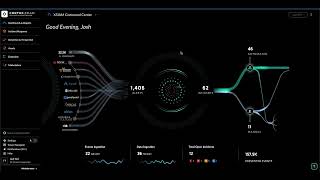
Transform your SecOps: Cortex XSIAM Demonstration and Insights
Cortex by Palo Alto Networks
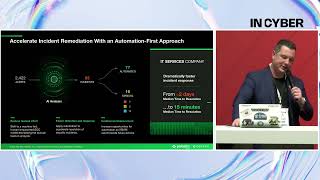
DT13 INCYBER Cortex XSIAM Le SOC moderne, réimaginé
INCYBER
YouTube returned 6 videos for “Cortex XSIAM”, and we withheld 1: 1 did not mention Cortex XSIAM. Showing the 5 we can prove are about Cortex XSIAM.
Official links
Tools that pair well with Cortex XSIAM
Common stack mates teams adopt alongside Cortex XSIAM, with the specific reason each pairing earns its keep.

Anvilogic
Agentic SecOps platform that runs AI agents across SOC onboarding, federated search, detection engineering, and investigation on top of the SIEMs and data

RapidSOS
RapidSOS pipes device, vehicle and building data into 911 dispatch so call-takers act on context before the caller finishes speaking.

Coro
Coro unifies endpoint, email, cloud and network security into one workspace cybersecurity platform run by a single AI agent.
Alternatives to Cortex XSIAM
View all
Anvilogic
Agentic SecOps platform that runs AI agents across SOC onboarding, federated search, detection engineering, and investigation on top of the SIEMs and data


Frequently Asked Questions
Categories
Used Cortex XSIAM? Help shape our editorial sentiment research.