
Droidrun
Droidrun gives AI agents real cloud Android phones with genuine device identity so they can operate mobile apps directly.
Droidrun is worth a proof of concept if your automation target lives inside an Android app and identity matters. The open mobilerun.framework and the 91.4% AndroidWorld figure are concrete engineering signals, and the split between the hosted mobilerun.cloud fleets and the open framework means you can test the control loop before committing to a fleet. Compared with emulator-based device clouds, the real-identity claim is the whole argument — if your target apps don't check device identity, you're paying for a difference you don't use. Pricing beyond the free tier is quoted rather than listed, so budget a negotiation step before you scale.
Verified 4d ago · liveness 76/100 · cite: rightaichoice.com/tools/droidrun
- AI agent developers needing real mobile device access
- Automation engineers automating mobile-only workflows
- Enterprise RPA teams that require physical phone identity
- Mobile app testers who need real devices, not emulators
- Non-developers looking for out-of-box automation
- Teams whose automation targets are web or desktop only
- Users without programming experience
We scan live Reddit threads, YouTube comments, X posts, G2 reviews and other communities — and hand you an honest verdict in under a minute.
- Honest verdict, not marketing
- Real pros & cons from real users
- Attributed quotes with receipts
3 free scans · no card needed
Skip Droidrun if the workflow you need to automate is reachable through a web API or browser session — you'd be paying for real phone identity you never use.
Droidrun competes at the infrastructure layer rather than the app layer. The free API tier lets an individual developer validate the control loop at no cost, while Pro and Enterprise device fleets are quoted per engagement, so the effective price depends on how many phones you keep running concurrently. Teams only touching a handful of Android tasks will likely find a general browser-automation stack cheaper; teams running many concurrent phone sessions get more value here than from per-seat
In short
Droidrun — Droidrun gives AI agents real cloud Android phones with genuine device identity so they can operate mobile apps directly. Best for AI agent developers needing real mobile device access, Automation engineers automating mobile-only workflows, Enterprise RPA teams that require physical phone identity. Free to use.
What people actually say about Droidrun — is it worth it?
We ran a structured research pass across product reviews, community discussions, and post-purchase forum threads to surface the patterns vendors won't publish themselves. Below: the recurring strengths, the hidden costs people mention most, and the cohort that consistently regrets adopting this tool.
12 mentions across 2 sources (Hacker News, Lemmy) · researched Jul 3, 2026.
Average across the 2 sources that answered — each source counts once, not each post.
- +91.4% accuracy on AndroidWorld benchmark through dynamic replanning—strong technical proof.
- +Open-source framework lets developers inspect and customize agent behavior freely.
- +Turns mobile UI into structured text for LLMs, enabling fast app control without mechanical automation.
- +Real cloud-hosted phones give agents a physical identity and human-like interaction.
- +Integrates with any AI agent via API—no vendor lock-in on the agent side.
- −Community feedback is extremely sparse—no independent critical reviews to lean on.
- −Pricing for cloud phone scaling is unclear; freemium limits may be tight.
- −Reliability at scale is untested—no real-world uptime or error rate data.
- −Requires Android Accessibility Tree, which can break with app updates.
- −No integration with major automation tools like Zapier or Slack mentioned.
- • Cloud phone usage beyond free tier likely incurs per-minute or per-device fees; no public rate card
Viability Score
How well maintained and how widely used is Droidrun? Built from what the vendor actually publishes (docs, changelog, tutorials, integrations, pricing), whether the site is live, and how much real users discuss it. How we calculate this
Last calculated: October 2026
How we score →Key Features
- Real cloud-hosted Android phones controlled via API
- Streamed device sessions with genuine phone identity
- Scalable device fleets through mobilerun.cloud
- Open-source mobilerun.framework for giving any agent a phone
- 91.4% accuracy reported on the AndroidWorld benchmark
- Structured text conversion of Android app interfaces for LLM control
- Dynamic replanning when an automation step fails mid-task
- API integration so external AI agents can drive devices
- Designed for multi-device fleets rather than single sessions
- Free entry tier for mobilerun.cloud API access
- Targets Android-only workflows that web agents cannot reach
About Droidrun
Droidrun is the phone layer for AI agents: it hands each agent a real, cloud-hosted Android phone with a physical identity so the agent can operate mobile apps the way a person would. The company ships two products. mobilerun.cloud is the hosted side — scalable device fleets you control over an API, streamed, with real identity attached to each device. mobilerun.framework is the open-source side — a framework that lets any agent drive a phone; the site reports 91.4% on the AndroidWorld benchmark. Rather than mechanical UI scripting, Droidrun converts app interfaces into structured text for an LLM to act on and supports dynamic replanning when a step fails mid-task. It is aimed at developers and enterprises automating mobile-only workflows — social media operations, ride-hailing, food delivery, mobile banking — that web or desktop agents can't reach. It differs from emulator-style device clouds because apps that detect and react to real phone identity still see a genuine device. Pricing starts with a free entry point for API access; Pro and Enterprise fleets are quoted per engagement.
Behind the Verdict
Droidrun's pitch is narrow and honest: agents need a body, not just an API key. Most agent tooling assumes the work happens behind a web endpoint, but a large share of real tasks — messaging, ride-hailing, delivery, banking, social posting — live in Android apps that assume a phone. Droidrun's answer is to hand the agent an actual cloud Android device with a real identity, stream it, and let the agent act on structured text extracted from the app interface rather than on brittle coordinate-clicking scripts. Two things separate it from the device-cloud crowd. First, mobilerun.framework is open source and publicly benchmarked at 91.4% on AndroidWorld, which gives you a measurable control loop to evaluate instead of a demo video. Second, the cloud product is designed around fleets, not single sessions — the point is running many agents on many phones with streaming and identity attached, which is what an operations team actually needs. Where it fits: teams building agents or RPA flows that must touch Android-only surfaces, and infrastructure companies that want to embed phone control rather than build it. Where it doesn't: if your workflow is web or desktop, a browser agent or a standard automation stack gets there faster and cheaper, and if you don't want to write code, this isn't an out-of-box tool — it's an API and a framework. The honest weak spots are the ones the site leaves blank. There's no published per-device rate, no named underlying model, and no public changelog or release notes with dated entries, so you can't judge reliability from history. Treat the free tier and the open framework as your evaluation path, then scope fleets and support directly.
Researching Droidrun? Get your full AI stack in 60 seconds.
Free, no signup — tell us your goal and get tools matched to your budget & existing stack.
Real-world workflow fit
Concrete scenarios for the personas Droidrun actually fits — and what changes day-one when you adopt it.
You point mobilerun.framework at a cloud Android phone, feed the agent a task like filling a mobile banking form, and watch it act on the structured text the app produces, with dynamic replanning covering failed steps.
Outcome: A working phone-control loop you can benchmark yourself against the reported 91.4% AndroidWorld figure before committing to paid fleets.
You replace a set of brittle mobile UI scripts with a mobilerun.cloud device fleet, attaching real identity to each phone so the target apps treat the sessions as genuine devices, and drive the fleet over the API from your existing orchestration.
Outcome: Mobile-only processes run at fleet scale under one API surface instead of a rack of physical handsets.
You wire a desktop workflow to the Droidrun API so a step that can only happen in an Android app — a ride-hail request, a delivery order — fires from your existing pipeline.
Outcome: Desktop and mobile steps live in one flow without a human handing off to a phone.
Use Cases
- Automate form filling in mobile banking apps with an AI agent on a real device
- Run continuous mobile app regression testing on genuine cloud phones
- Extract data from mobile-only platforms that have no usable web API
- Trigger mobile actions from a desktop agent workflow via the Droidrun API
- Scale customer onboarding across many mobile app accounts using device fleets
- Automate ride-hailing or food delivery operations with real phone identity
- Let agents manage social media accounts on real Android devices
- Build a mobile agent platform on top of mobilerun.framework
Limitations
- Droidrun's public site is thin below the fold.
- The homepage describes mobilerun.cloud and mobilerun.framework, and the framework is benchmarked at 91.4% on AndroidWorld, but the pricing, changelog, release-notes and docs pages render only the homepage copy, so no dated release history, no per-device rates and no named underlying model are published.
- That makes reliability and cost hard to assess from the outside, and it means fleet sizing and support terms are worked out with the vendor rather than read off a page.
- The product is developer-facing: you get an API and an open framework, not a point-and-click builder, and it is Android-specific — there is no iOS device offering described on the site.
as of 2026-10-04
Verification history
We have re-verified Droidrun 10 times since . Each pass re-reads the vendor's own pages and re-checks every listed field against that evidence; passes where nothing had changed are marked as such.
- — re-checked, vendor evidence unchanged
- — re-checked, vendor evidence unchanged
- — re-checked, vendor evidence unchanged
- — re-checked, vendor evidence unchanged
- — re-checked, vendor evidence unchanged
- — re-checked, vendor evidence unchanged
Showing the 6 most recent of 10 verification passes.
Free to cite with attribution — this page re-verifies continuously.
12-month cost
Project the real annual outlay, including the implied monthly cost when only an annual tier is published.
Vendor list price only. Add-on usage, seat overages, and contract minimums are surfaced under Hidden costs & gotchas.
Plans compared
For each published Droidrun tier: who it actually fits, and what it adds vs. the previous tier. Cross-reference the cost calculator above for projected annual outlay.
Free
$0/mo
Ideal for
Individual developer or agent team validating phone control before committing to a fleet
What this tier adds
Starting tier — free entry point with access to the mobilerun.cloud API and a limited device fleet size, plus community support.
Pro
Contact for pricing
Ideal for
Teams running production mobile workflows that need more concurrent devices and faster API access
What this tier adds
Adds scalable device fleets and priority API access over the free tier, with email support; quoted per engagement rather than listed.
Enterprise
Contact for pricing
Ideal for
Enterprises running mobile operations at scale with uptime and integration requirements
What this tier adds
Adds dedicated device pools, SLA guarantees and custom integration support beyond Pro; quoted per engagement.
Where the pricing makes sense
The company stage and team size where Droidrun's pricing actually pencils out — and where peers do it cheaper.
Droidrun competes at the infrastructure layer rather than the app layer. The free API tier lets an individual developer validate the control loop at no cost, while Pro and Enterprise device fleets are quoted per engagement, so the effective price depends on how many phones you keep running concurrently. Teams only touching a handful of Android tasks will likely find a general browser-automation stack cheaper; teams running many concurrent phone sessions get more value here than from per-seat
Setup time & first value
How long it actually takes to get something useful out of Droidrun — broken out by persona, not the marketing-page minute.
Developers who already write agent code can get to a first controlled phone session quickly using the open mobilerun.framework and the free API tier. Teams provisioning production fleets on mobilerun.cloud should plan on a scoping conversation with the vendor before scale, since device counts and support terms are quoted per engagement rather than self-serve.
Switching to or from Droidrun
How to bring data in from common predecessors and how to get it back out — written for the switcher, not the buyer.
- →From emulator-based device clouds: move to real cloud Android phones when target apps reject or behave differently under emulated device identity.
- →From hand-written mobile UI scripts: replace coordinate-clicking automation with structured text extraction and dynamic replanning.
- →From physical device racks: shift on-prem handset rigs to streamed cloud fleets controlled over the Droidrun API.
- →From generic browser agents: extend coverage to Android-only workflows that a web agent cannot reach.
- ↗To a browser or web-automation agent: if your targets expose a usable web API and device identity does not matter, a web agent removes the phone layer entirely.
- ↗To an emulator-based device cloud: if you need broad platform coverage across emulated device shapes rather than real identity, a general device farm may cover more ground.
- ↗To a low-code mobile automation suite: if you want non-developers maintaining the flows, a visual builder replaces the API-and-framework approach.
Resources & Guides
Tutorials & Learning
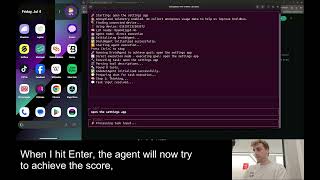
Droidrun Quickstart Guide
Droidrun
Android Automation made easy with Droidrun.ai | No-code automation tool
Droidrun
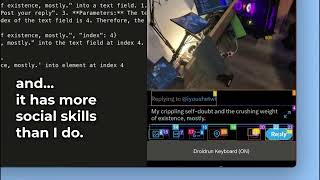
This is how I automated Twitter (X) using Droidrun
Droidrun
YouTube returned 6 videos for “Droidrun”, and we withheld 3: 3 could not be judged, because “Droidrun” is a single word that other videos use for other things. Showing the 3 we can prove are about Droidrun.
Official links
Featured Head-to-Head Comparisons
Droidrun vs Spider Cloud
Spider Cloud and Droidrun serve completely different domains — web scraping for AI agents vs. mobile device automation. If you need real-time web data for RAG or LLM tools, Spider Cloud is the obvious choice with its low cost, rich output formats, and broad AI framework integrations. If you must automate actual mobile apps with real phone identities and high accuracy, Droidrun is purpose-built for that. Choose based on whether your agent needs to read the web or operate a phone.
Droidrun vs Presto Voice
Presto Voice and Droidrun serve fundamentally different markets. Presto Voice is purpose-built for QSR drive-thru automation with proven ROI and major chain adoption (e.g., Dairy Queen). Droidrun addresses AI agent developers needing real mobile device infrastructure. Choose Presto if you run a QSR chain; choose Droidrun if you are a developer automating mobile apps.
Droidrun vs Temporal Ai
Choose Temporal AI if your need is building resilient, long-running workflows or AI agents that survive failures; it's battle-tested by OpenAI and Replit. Choose Droidrun if your core use case requires controlling real mobile phones via AI—it's uniquely designed for mobile agent automation with high AndroidWorld accuracy. They solve fundamentally different problems: Temporal is workflow durability; Droidrun is mobile device infrastructure.
Popular in Browser & Computer-Use Agents

Spider Cloud
Spider Cloud is a web scraping, crawling, and search API that streams live pages as markdown or JSON for AI agents and RAG pipelines.

OpenAgents
OpenAgents is an open-source language agent platform for data analysis, 200+ plugins and autonomous web browsing.

Frequently Asked Questions
Best-of guides
Used Droidrun? Help shape our editorial sentiment research.