
EssayGrader
AI essay grader for K-12 and higher-ed teachers — grade a full class against standards-aligned rubrics in minutes, not evenings.
The most credible AI essay grader for K-12 classrooms we've looked at, mainly because it grades criterion by criterion against your rubric, lets you override anything, and can be calibrated to your own scored exemplars. The accuracy claim worth quoting: on an external dataset of 22,000 essays from The Learning Agency, EssayGrader's scores matched or landed within one point of teacher scores 94% of the time. Pro at $14.99/mo is the tier most teachers need, since that's where native LMS sync, AI-writing detection, and plagiarism detection kick in. Compare against general-purpose chatbots (no rubric logic, no LMS sync, no handwriting OCR) and against grading add-ons inside broad LMS suites
Verified 16d ago · liveness 76/100 · cite: rightaichoice.com/tools/essaygrader
- K-12 teachers grading full class sets of essays weekly who need state or AP standards alignment
- ELA and social studies departments that want uniform scoring rigor across multiple teachers
- Higher-ed instructors grading long research papers who want 8,000-word limits and integrity checks
- Teachers who still collect handwritten essays and need reliable cursive and print recognition
- Teachers who grade only a handful of short assignments per term — the free word cap and essay quota will feel tight
- Students looking for an AI to draft, rewrite, or generate essays
- Writers and professionals outside education who want general-purpose editing or feedback
We scan live Reddit threads, YouTube comments, X posts, G2 reviews and other communities — and hand you an honest verdict in under a minute.
- Honest verdict, not marketing
- Real pros & cons from real users
- Attributed quotes with receipts
3 free scans · no card needed
Skip EssayGrader if you only grade a handful of short assignments per term and can live inside the free tier's 100-essay/1,000-word caps, or if you need students coached interactively during drafting rather than graded after submission.
The Basic tier's 1,000-word limit per essay bites fast on longer assignments — you'll need Lite ($6.99/mo, 2,000 words) or Pro ($14.99/mo, 3,500 words) to grade a full research paper.
Basic (free) fits a teacher dipping a toe — 100 essays/mo, 1,000 words each. Lite ($6.99/mo) suits light graders who mainly want Google Classroom or Canvas sync. Pro ($14.99/mo, 350 essays, 3,500 words, LMS sync plus AI and plagiarism detection) is the tier most working K-12 teachers land on. Premium ($34.99/mo, 800 essays, 8,000 words, automatic detection) targets higher-ed instructors grading long papers. Districts at 25+ users go to the custom School District / Higher-Ed plan. Cheaper than
In short
EssayGrader — AI essay grader for K-12 and higher-ed teachers — grade a full class against standards-aligned rubrics in minutes, not evenings. Best for K-12 teachers grading full class sets of essays weekly who need state or AP standards alignment, ELA and social studies departments that want uniform scoring rigor across multiple teachers, Higher-ed instructors grading long research papers who want 8,000-word limits and integrity checks. Free to start; paid plans from $6.99/mo.
What's new in EssayGrader
Checked 4 days agoAcross the latest 7 updates: 7 community discussions.
How to Prevent Teacher Burnout: 5 Practical Strategies
EssayGrader blog post on teacher burnout prevention, including reducing grading time. Instructional content, not a product change.
11 Grading Strategies for Teachers To Manage Grading Workload
EssayGrader blog roundup of 11 grading strategies for teachers, mentioning AI grading tools for workload reduction.
Grading Fatigue: Why It Happens, What It Costs, & How to Beat It
EssayGrader blog post explaining grading fatigue and pitching AI grading as a remedy.
EssayGrader AI vs. GPTZero AI Reviewer: A Comprehensive Comparison
Vendor-published comparison of EssayGrader against GPTZero's AI reviewer for essay grading.
8 Best AI Tools for Assignment in 2026 (For Teachers & Students)
EssayGrader blog listicle of eight AI assignment tools spanning grading, planning, research and citations.
How to Use AI to Grade Essays: 5-Step Guide for Teachers
EssayGrader walkthrough of a five-step AI essay grading workflow for teachers.
Benchmark Assessment: Definition, Types & How It Works
EssayGrader blog explainer on benchmark assessments, their types, and district scoring practices.
What people actually say about EssayGrader — is it worth it?
We ran a structured research pass across product reviews, community discussions, and post-purchase forum threads to surface the patterns vendors won't publish themselves. Below: the recurring strengths, the hidden costs people mention most, and the cohort that consistently regrets adopting this tool.
13 mentions across 2 sources (YouTube, Product Hunt) · researched Aug 7, 2026.
Average across the 2 sources that answered — each source counts once, not each post.
- +Bulk grading saves hours — 21 essays in 10 minutes
- +500+ pre-built rubrics aligned to state, AP/IB, international standards
- +Integrates with Google Classroom, Canvas, Schoology, Drive, Dropbox, Box
- +Free tier allows 50 essays/month — enough to test
- +AI-detection and plagiarism check provide integrity features
- −Only supports English-language essays (Greek commenter confirmation)
- −Generates philosophical AI backlash — 'what's the point?' criticism
- −Teachers may still need to spend time reviewing AI feedback
- −Pricing unclear for premium tiers; free tier limited
- −No mention of support channels or response times in data
- • Premium tier for video grading may be significantly more expensive — not disclosed
- • Potential extra fees for custom rubrics or district-wide deployments
Viability Score
How well maintained and how widely used is EssayGrader? Built from what the vendor actually publishes (docs, changelog, tutorials, integrations, pricing), whether the site is live, and how much real users discuss it. How we calculate this
Last calculated: October 2026
How we score →Key Features
- Bulk upload: grade an entire class's essays in one pass
- Native LMS sync with Google Classroom, Canvas, and Schoology
- 800+ pre-built rubrics covering all 50 U.S. states, AP, IB, Common Core, and international curricula
- Custom rubric builder for department or curriculum-specific scoring
- Learns your grading style from 2-3 exemplar essays with your scores and reasoning
- Standards-aligned scoring benchmarked against TEKS, STAAR, Florida B.E.S.T, and more
- Handwriting recognition for cursive, print, and messy handwriting from scanned PDFs
- Automatically separates a single class PDF into individual student essays
- AI-writing detection with sentence-level highlights on text likely generated by popular AI models like ChatGPT
- Plagiarism detection
- Feedback reports on content, style, and grammar grounded in Hattie & Timperley's feedback model
- Color-coded, actionable feedback with next steps per rubric criterion
- Side-by-side revision draft comparison to see whether students applied feedback
- Writing Intelligence Layer™ tracks student writing growth across assignments and classes
- Grade oral exams and video submissions (Pro and above)
About EssayGrader
EssayGrader is an AI essay grading tool built by former teachers for K-12 and higher-ed instructors who drown in stacks of student writing. Upload a whole class at once from Google Classroom, Canvas, or Schoology (or drag-and-drop files), pick a rubric from an 800+ library, and get scores with written feedback in minutes. You can also upload 2-3 essays you have already graded with your scores and reasoning — EssayGrader learns your scoring patterns and rigor, then applies them uniformly across the class. It grades narrative, argumentative, expository, and other writing assignments, with feedback grounded in Hattie & Timperley's feedback model rather than generic praise, plus color-coded next steps per rubric criterion. Standards coverage spans all 50 U.S. states — including Texas TEKS/STAAR and Florida B.E.S.T — plus AP, IB, Common Core, and international curricula. Handwritten work is covered: scan from a tablet, phone, or school printer, upload one PDF with the entire class, and it separates and transcribes each student's pages, including cursive and messy print. Integrity checks include AI-writing detection with sentence-level highlights on text likely generated by popular AI models like ChatGPT, plus plagiarism detection. A Writing Intelligence Layer™ tracks student writing growth across assignments and classes, and revision drafts can be compared side by side. The vendor reports 200K+ teachers, 10K+ schools, 1.3M+ students, and 3.5M+ essays graded.
Behind the Verdict
EssayGrader is narrower than a general chatbot or an all-in-one LMS suite, and that narrowness is the point: rubric logic, state-standard benchmarking, and handwriting OCR are the whole product, not a side feature inside something larger. Strengths. First, the grading workflow matches how teachers actually work — bulk-upload a class, pick a rubric, review, adjust, share back to the LMS. Second, the standards layer is real: 800+ rubrics covering all 50 U.S. states including TEKS/STAAR and Florida B.E.S.T, plus AP, IB, Common Core, and international curricula, with class-level reporting against specific standards like TEKS 1.0 and 1.3. Third, the calibration feature is genuinely useful — upload 2-3 essays you've already graded with your scores and reasoning, and EssayGrader learns your scoring patterns and rigor, then applies them uniformly. That is the difference between a tool that produces plausible-sounding grades and one a department can defend to parents. Fourth, handwriting OCR is a real differentiator for schools bringing handwritten essays back to counter excessive AI use — it reads cursive, print, and messy handwriting from a scanned class PDF and separates the pages by student. Weaknesses. The free Basic tier caps you at 100 essays per month with a 1,000-word limit per essay, and AI-writing detection plus plagiarism detection only start at Pro. The Lite tier at $6.99/mo adds Google Classroom and Canvas sync but still caps at 2,000 words and 100 essays. If you grade lengthy research papers, the word limits matter — Pro's 3,500 words and Premium's 8,000 words are the realistic ceilings. Detection quotas scale with the essay quota (350 essays/mo on Pro, 800 on Premium), so a heavy load of both grading and integrity checking needs the matching tier. Where it fits. K-12 ELA and social studies teachers grading full class sets weekly; departments that want uniform scoring rigor across multiple teachers; higher-ed instructors grading long papers who need the 8,000-word limit and integrity checks; districts needing DPAs, district-wide analytics, and state-assessment benchmarking (School District / Higher-Ed tier offers rubric calibration to 96%+ accuracy, single purchase-order purchasing, and an admin dashboard). Where it doesn't. Teachers who grade only a handful of short assignments per term will find the free word cap and quota tight. Students looking for an AI to draft or rewrite essays are the wrong audience. And classrooms where students need interactive writing coaching during drafting rather than feedback after submission should look elsewhere.
Researching EssayGrader? Get your full AI stack in 60 seconds.
Free, no signup — tell us your goal and get tools matched to your budget & existing stack.
Real-world workflow fit
Concrete scenarios for the personas EssayGrader actually fits — and what changes day-one when you adopt it.
Friday afternoon, 120 argumentative essays sitting in Google Classroom. Log in, pick the AP-aligned rubric from the 800+ library, bulk-upload the class from Google Classroom, and let EssayGrader grade criterion by criterion.
Outcome: Scores and color-coded feedback ready within minutes; you review and adjust the borderline ones, then sync grades and feedback back to Google Classroom the same afternoon instead of the following week.
New semester, three ELA teachers scoring the same district argumentative prompt differently. Set up a department rubric in the custom builder, upload 2-3 exemplar essays with your scores and reasoning so EssayGrader learns your rigor, and share the setup with the team.
Outcome: All three teachers grade against the same learned scoring pattern, so a 3 from one classroom means the same thing as a 3 from the next.
End of term, 60 research papers ranging to 7,000 words. Upload the stack, run AI-writing detection automatically, and after returning feedback have students submit revision drafts.
Outcome: Papers graded against your rubric within the 8,000-word cap, AI-use flagged with sentence-level highlights, and revision drafts compared side by side to see whether students applied the feedback.
Use Cases
- Grade 100+ essays in one sitting using a custom rubric aligned to your state standards.
- Give detailed, actionable feedback on grammar, style, and content so students can revise.
- Detect AI-generated submissions and plagiarism with built-in detectors.
- Track writing growth across assignments and classes with Writing Intelligence Layer™.
- Use handwriting recognition to grade handwritten essays and counter AI misuse.
- Benchmark student writing against state assessments to identify learning gaps early.
- Sync assignments, grades, and feedback with Google Classroom, Canvas, or Schoology.
- Grade oral exams and video submissions on Pro and above.
Models Under the Hood
as of 2026-10-02
Limitations
- The free Basic tier is capped at 100 essay gradings and 100 summaries per month with a 1,000-word limit per essay; the Pro tier raises this to 350 essays per month with a 3,500-word limit.
- AI-writing detection and plagiarism detection are listed from Pro upward, at quotas matching the essay quota.
- The evidence only covers the Basic and Pro plans, so higher-tier limits (and any API availability) can't be characterised from this pass.
as of 2026-09-22
Verification history
We have re-verified EssayGrader 9 times since . Each pass re-reads the vendor's own pages and re-checks every listed field against that evidence; passes where nothing had changed are marked as such.
- — re-verified summary, description, our verdict, our analysis, pricing model, pricing tiers, features, integrations, who it suits, who should skip it
- — re-verified summary, description, our verdict, our analysis, pricing model, pricing tiers, features, integrations, who it suits, who should skip it
- — re-verified summary, description, our verdict, our analysis, pricing model, pricing tiers, features, integrations, who it suits, who should skip it
- — re-verified summary, description, our verdict, our analysis, pricing model, pricing tiers, features, integrations, who it suits, who should skip it
- — re-verified summary, description, our verdict, our analysis, pricing model, pricing tiers, features, integrations, who it suits, who should skip it
- — re-verified summary, description, our verdict, our analysis, pricing model, pricing tiers, features, integrations, who it suits, who should skip it
Showing the 6 most recent of 9 verification passes.
Free to cite with attribution — this page re-verifies continuously.
12-month cost
Project the real annual outlay, including the implied monthly cost when only an annual tier is published.
Vendor list price only. Add-on usage, seat overages, and contract minimums are surfaced under Hidden costs & gotchas.
Plans compared
For each published EssayGrader tier: who it actually fits, and what it adds vs. the previous tier. Cross-reference the cost calculator above for projected annual outlay.
Basic
$0/mo
Ideal for
A teacher dipping a toe into AI grading — a few classes a month on shorter assignments, with no LMS sync or integrity detection.
What this tier adds
Free entry point: 100 essays/mo, 1,000-word limit, 800+ rubric library, FERPA/COPPA/CCPA and NIST SP 800-53 compliance, Google Drive/Dropbox/Box.
Lite
$6.99/mo
Ideal for
A light grader who mainly wants Google Classroom or Canvas auto-import and longer essays than the free tier allows.
What this tier adds
Adds Google Classroom and Canvas integration plus a 2,000-word limit per essay, but keeps the 100-essay monthly quota.
Pro
$14.99/mo
Ideal for
K-12 teachers grading a full class stack every month who need LMS sync plus AI and plagiarism detection on every submission.
What this tier adds
Jumps to 350 essays/mo, 3,500 words per essay, native Google Classroom/Canvas/Schoology sync, AI-writing and plagiarism detection at 350/mo, Writing Intelligence Layer™, and oral/video grading.
Premium
$34.99/mo
Ideal for
Higher-ed instructors grading long paper stacks every month, where an 8,000-word cap and automatic integrity checks matter.
What this tier adds
Doubles the workload to 800 essays/mo at 8,000 words per essay with automatic AI-writing and plagiarism detection for 800/mo, plus weekend chat support.
School District / Higher-Ed (25+ users)
Custom
Ideal for
Districts and colleges with 25+ licensed educators that need DPAs, admin controls, district analytics, and purchase-order purchasing.
What this tier adds
Custom billing with mix-and-match Pro/Premium licenses, state exam benchmarking (STAAR, NJSLA), rubric calibration to 96%+ accuracy, custom DPAs in 30+ states, free PD, district analytics, and an admin dashboard.
Where the pricing makes sense
The company stage and team size where EssayGrader's pricing actually pencils out — and where peers do it cheaper.
Basic (free) fits a teacher dipping a toe — 100 essays/mo, 1,000 words each. Lite ($6.99/mo) suits light graders who mainly want Google Classroom or Canvas sync. Pro ($14.99/mo, 350 essays, 3,500 words, LMS sync plus AI and plagiarism detection) is the tier most working K-12 teachers land on. Premium ($34.99/mo, 800 essays, 8,000 words, automatic detection) targets higher-ed instructors grading long papers. Districts at 25+ users go to the custom School District / Higher-Ed plan. Cheaper than
Setup time & first value
How long it actually takes to get something useful out of EssayGrader — broken out by persona, not the marketing-page minute.
A single teacher can connect Google Classroom, Canvas, or Schoology and grade a first class within 10-15 minutes — pick a rubric, upload the class, review. Training EssayGrader on your own scoring style adds about 20-30 minutes once, if you have 2-3 already-graded exemplars to upload. Departments and districts should budget a few days for rubric calibration, DPA review, and the free teacher/admin
Switching to or from EssayGrader
How to bring data in from common predecessors and how to get it back out — written for the switcher, not the buyer.
- →From manual grading: upload 2-3 essays you've already graded with scores and reasoning so EssayGrader learns your rigor before it grades a full class.
- →From a general AI chatbot: move the same writing assignments over, but replace ad-hoc prompts with an 800+ standards-aligned rubric or a custom one so scores are consistent.
- →From grading add-ons inside an LMS suite: connect Google Classroom, Canvas, or Schoology in one click to import assignments and sync grades and feedback back.
- ↗To manual grading: export grades from the grading dashboard and keep the written feedback reports as your comment bank.
- ↗To a general AI chatbot: expect to rebuild rubric logic and standards alignment by hand, and to lose LMS grade sync and handwriting OCR.
- ↗To an LMS grading add-on: move your custom rubrics over manually; departmental calibration will need to be redone in the new tool.
Integrations
Resources & Guides
Tutorials & Learning
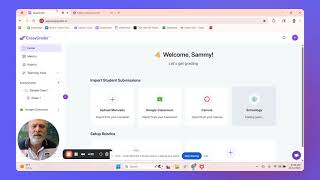
YouTube returned 6 videos for “EssayGrader”, and we withheld 5: 5 could not be judged, because “EssayGrader” is a single word that other videos use for other things. Showing the 1 we can prove is about EssayGrader.
Official links
Tools that pair well with EssayGrader
Common stack mates teams adopt alongside EssayGrader, with the specific reason each pairing earns its keep.

CoGrader
CoGrader is a rubric-based AI essay grader that scores 100 student submissions free each month and pushes grades back to your LMS.

Edexia
Free AI essay grading calibrated to IB English and Australian senior English rubrics, with teacher-controlled feedback release

Curipod
Teacher-led, whole-class K-12 writing practice with instant AI Glow & Grow feedback, mapped to your district's curriculum.
Featured Head-to-Head Comparisons
Essaygrader vs Surge Ai
If you need expert human feedback for training or evaluating frontier AI, Surge AI is the only choice—its curated workforce of doctors, lawyers, and engineers and advanced benchmarks (Antidote, Riemann-bench) are unmatched. For K-12 or college teachers grading essays at scale with standards-aligned rubrics, EssayGrader is purpose-built, affordable, and integrates with classroom LMS. There's no overlap; choose based on whether you're building AI or teaching students.
Essaygrader vs Praktika
If you're a teacher drowning in essay grading, EssayGrader’s rubric-based bulk grading and v4.7 integrity improvements make it a no-brainer. If you're a language learner wanting to practice speaking, Praktika’s AI tutors with real-time corrections are unmatched. They solve completely different problems—choose based on your role.
Alternatives to EssayGrader
View all


Frequently Asked Questions
Best-of guides
Used EssayGrader? Help shape our editorial sentiment research.