
Field Effect
Field Effect MDR delivers AI-native managed detection and response across endpoint, cloud and network
If shadow AI visibility is an actual board-level worry for you, Field Effect is one of the few MDR vendors with AI governance built into the service rather than bolted on. The three named packages mean you aren't forced into an all-or-nothing contract — MDR Endpoint scopes the spend if full managed coverage is too much. Weigh it against Huntress when you just want lean endpoint coverage, and against CrowdStrike when you have the headcount to run detection engineering yourself.
Verified 4h ago · liveness 73/100 · cite: rightaichoice.com/tools/field-effect
- MSPs consolidating multiple security vendors under one managed detection and response provider
- IT teams that need shadow AI visibility and AI governance alongside conventional threat coverage
- Organizations that want hidden vulnerabilities found proactively, not just alerts after the fact
- Buyers chasing compliance outcomes who want a 24x7 SOC standing behind them
- Security teams that want to write and own deep custom detection rules in-house
- Lean teams that only need lightweight endpoint EDR and no managed service overhead
- Organizations already running a mature in-house SOC that treats MDR purely as a backstop
We scan live Reddit threads, YouTube comments, X posts, G2 reviews and other communities — and hand you an honest verdict in under a minute.
- Honest verdict, not marketing
- Real pros & cons from real users
- Attributed quotes with receipts
3 free scans · no card needed
Skip Field Effect if you want to own and tune your own detection engineering in-house rather than hand monitoring and response to a managed SOC team.
Field Effect prices by quote, so the cost scales with how much of your estate you put under management and which package you land on — MDR Endpoint for endpoint-only, MDR Core and MDR Complete for broader coverage. Compare the quoted figure against Huntress if endpoint detection is most of what you need, or against CrowdStrike if you are consolidating a larger enterprise estate.
In short
Field Effect — Field Effect MDR delivers AI-native managed detection and response across endpoint, cloud and network. Best for MSPs consolidating multiple security vendors under one managed detection and response provider, IT teams that need shadow AI visibility and AI governance alongside conventional threat coverage, Organizations that want hidden vulnerabilities found proactively, not just alerts after the fact. Contact Sales pricing.
No head-to-head comparison for Field Effect yet — the alternatives below are the closest matches we list.
What people actually say about Field Effect — is it worth it?
We scanned public community sources for Field Effect on Aug 18, 2026 and could not establish that the discussion we found is about this tool rather than something else sharing its name. Our own analysis of that scan says the posts were off-subject. Rather than publish a sentiment score built on the wrong subject, we publish nothing here and re-run the scan.
Viability Score
How well maintained and how widely used is Field Effect? Built from what the vendor actually publishes (docs, changelog, tutorials, integrations, pricing), whether the site is live, and how much real users discuss it. How we calculate this
Last calculated: October 2026
How we score →Key Features
- AI-native managed detection and response (MDR)
- AI Detection and Response (AIDR) for shadow AI governance
- Autonomous threat blocking that stops attacks in seconds
- AI-powered, MITRE-tested threat detection
- 24x7 SOC monitoring and response on your behalf
- Endpoint protection
- Cloud protection
- Network protection
- Proactive risk management across the entire threat surface
- Hidden vulnerability discovery before attackers reach them
- Single dashboard spanning endpoint, cloud and network
- Incident response services
- Incident response (IR) readiness services
- Cybersecurity assessments
- Compliance support and outcomes
About Field Effect
Field Effect MDR is a managed detection and response service built for MSPs and IT teams that need to outpace automated and agentic attacks without adding security headcount. The vendor describes its detection as AI-native and MITRE-tested, with autonomous blocking that stops attacks in seconds rather than waiting on an analyst to triage. A 24x7 SOC monitors and responds on your behalf, so the outcome is a managed one rather than another console for your team to run. Coverage spans endpoint, cloud and network inside a single dashboard. Around the detection service, Field Effect layers proactive risk management that hunts hidden vulnerabilities across the threat surface before attackers find them, plus AIDR, a native AI governance capability that gives visibility into unauthorized or shadow AI tool use alongside conventional threat coverage. The services arm extends past the SOC: incident response, IR readiness, cybersecurity assessments and compliance support. Three published packages are named on the site — MDR Complete, MDR Core and MDR Endpoint — which lets a buyer scope down to endpoint-only rather than taking the full managed service. Field Effect positions against Cynet, CrowdStrike and Huntress as a consolidation play: one provider for detection, response, risk reduction and compliance, with AI governance included from the start. The pitch is aimed at teams that would rather buy a security outcome than assemble one.
Behind the Verdict
Pick Field Effect when your problem is a shortage of people, not a shortage of tools. A 24x7 SOC, autonomous blocking, and one dashboard spanning endpoint, cloud and network covers the operational gap most mid-market IT teams actually have. The AIDR piece is the part worth pausing on: if staff are already pasting work into unsanctioned AI tools, seeing that traffic inside the same console as your threat alerts saves you bolting on a separate AI governance product later. The MSP angle is real too. A service provider juggling a dozen point tools can consolidate detection, response, risk management and compliance reporting under one vendor and resell a defined outcome instead of a stack. Pass if you want to own detection engineering. Teams that write and tune their own rules, or that treat MDR as a backstop behind an in-house SOC, will find the managed model constraining. The same goes for shops that only need lightweight endpoint EDR — MDR Endpoint is the smallest package here, and it still comes with service overhead a pure EDR seat doesn't. On pricing, the site funnels buyers to a request form and a demo rather than a published rate card, so budget for a scoping conversation before you can compare it line-for-line against Cynet or Huntress. That isn't unusual for managed services, but it does slow procurement. The three named packages give you a genuine off-ramp, which matters. MDR Complete, MDR Core and MDR Endpoint let you start narrower and expand — a better fit for a first managed security contract than a single take-it-or-leave-it tier. Our honest caveat: the strongest evidence on this page is vendor-published customer quotes and an award claim, so run your own reference checks against a team your size before signing a multi-year term.
Researching Field Effect? Get your full AI stack in 60 seconds.
Free, no signup — tell us your goal and get tools matched to your budget & existing stack.
Real-world workflow fit
Concrete scenarios for the personas Field Effect actually fits — and what changes day-one when you adopt it.
You take on a new client with a mix of Windows endpoints, a cloud tenant and an on-prem network. You onboard them into Field Effect MDR, map their assets to a package, and hand monitoring to the 24x7 SOC while your own engineers stay on billable project work.
Outcome: The client gets around-the-clock detection and response without you hiring a night shift, and you present managed security as a line item rather than a cost center.
Your two-person security team is drowning in alerts from separate EDR and cloud tools. You move detection and response to Field Effect, run the free attack surface report to find exposed assets, and use AIDR to see which departments are pasting data into consumer AI tools.
Outcome: Alert triage moves off your team's plate, you get a prioritized list of hidden vulnerabilities to remediate, and you have evidence for the AI-usage question your board keeps asking.
An audit is coming and you need to show monitoring, response and risk management are actually happening. You use Field Effect's compliance support alongside the managed SOC, and run an IR readiness assessment so the response plan is documented before it is needed.
Outcome: You walk into the audit with a managed provider behind your controls and a rehearsed incident response plan instead of a folder of intentions.
Use Cases
- Give a lean IT team 24x7 detection and response across endpoint, cloud and network without hiring analysts.
- Consolidate separate EDR, network and cloud security tools under one managed provider.
- Get visibility into employees using unsanctioned AI tools via native AIDR governance.
- Reduce mean time to detect and respond using autonomous blocking plus SOC review.
- Find hidden vulnerabilities across the threat surface before attackers exploit them.
- Pursue compliance outcomes with a managed SOC and compliance support behind you.
- Add differentiated managed security services to your MSP portfolio.
- Run an IR readiness assessment or free attack surface report before committing to a full engagement.
Models Under the Hood
as of 2026-10-15
Limitations
- Field Effect MDR is sold as a managed service, so your detection logic and tuning come largely as part of the engagement rather than as a tool you configure yourself — teams that want to author custom rules will feel constrained.
- It is a consolidation play, so the value depends on you actually retiring the overlapping point products you already run; if you keep them, you pay twice.
- The endpoint, cloud and network coverage is delivered as packages, so scoping the right one for your environment takes a real conversation about your asset inventory.
- Buyers who need to evaluate software hands-on before a call with a human will find the evaluation process slower than a self-serve trial.
as of 2026-10-01
Verification history
We have re-verified Field Effect 21 times since . Each pass re-reads the vendor's own pages and re-checks every listed field against that evidence; passes where nothing had changed are marked as such.
- — re-checked, vendor evidence unchanged
- — re-verified summary, description, our verdict, our analysis, pricing model, pricing tiers, features, integrations, who it suits, who should skip it
- — re-verified summary, description, our verdict, our analysis, pricing model, pricing tiers, features, integrations, who it suits, who should skip it
- — re-verified summary, description, our verdict, our analysis, pricing model, pricing tiers, features, integrations, who it suits, who should skip it
- — re-verified summary, description, our verdict, our analysis, pricing model, pricing tiers, features, integrations, who it suits, who should skip it
- — re-verified summary, description, our verdict, our analysis, pricing model, pricing tiers, features, integrations, who it suits, who should skip it
Showing the 6 most recent of 21 verification passes.
Free to cite with attribution — this page re-verifies continuously.
12-month cost
Project the real annual outlay, including the implied monthly cost when only an annual tier is published.
Vendor list price only. Add-on usage, seat overages, and contract minimums are surfaced under Hidden costs & gotchas.
Where the pricing makes sense
The company stage and team size where Field Effect's pricing actually pencils out — and where peers do it cheaper.
Field Effect prices by quote, so the cost scales with how much of your estate you put under management and which package you land on — MDR Endpoint for endpoint-only, MDR Core and MDR Complete for broader coverage. Compare the quoted figure against Huntress if endpoint detection is most of what you need, or against CrowdStrike if you are consolidating a larger enterprise estate.
Setup time & first value
How long it actually takes to get something useful out of Field Effect — broken out by persona, not the marketing-page minute.
For an MSP already running a managed stack, onboarding a client into Field Effect MDR is measured in days, mostly asset discovery and package scoping. For an in-house IT team switching from a self-run EDR, expect the first week to be inventory and cutover, with meaningful value arriving once the SOC has baseline visibility. Running the free attack surface report first gives you a fast read on
Switching to or from Field Effect
How to bring data in from common predecessors and how to get it back out — written for the switcher, not the buyer.
- →From a self-managed EDR: map your endpoint fleet into the MDR Endpoint package and let the SOC take over triage.
- →From multiple point tools (EDR + network + cloud): consolidate coverage into MDR Core or MDR Complete and retire the overlapping subscriptions.
- →From another MDR provider: run the free attack surface report and IR readiness assessment to establish a baseline before cutover.
- ↗To an in-house EDR plus your own SOC: you will need to rebuild detection and response workflows your managed provider ran for you.
- ↗To Huntress: straightforward if your need is endpoint-focused and you are willing to give up the cloud, network and AIDR layers.
- ↗To CrowdStrike: plan for a longer deployment if you intend to replicate the coverage with your own detection engineering team.
Resources & Guides
- Resourcefieldeffect.com
Resources - eBooks & On-Demand Webinars
Dig deeper into cyber security topics affecting your business. We
- Resourcefieldeffect.com
Blog, News & Press Releases
Looking for the latest info on cyber security? Keep up to date with industry research, news, and thought leadership on the Field Effect blog.
Tutorials & Learning

How FETs Work - The Learning Circuit
element14 presents
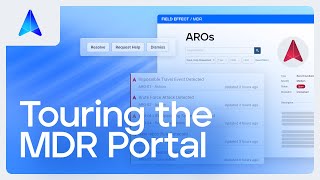
Touring the MDR Portal
Field Effect

Intega IT transforms managed security service with Field Effect MDR
Field Effect
YouTube returned 6 videos for “Field Effect”, and we withheld 2: 2 did not mention Field Effect. Showing the 4 we can prove are about Field Effect.
Official links
Tools that pair well with Field Effect
Common stack mates teams adopt alongside Field Effect, with the specific reason each pairing earns its keep.
Vectra AI
AI-native network detection and response that surfaces identity-based attacks and lateral movement across your enterprise.

ExtraHop
ExtraHop RevealX is network detection and response (NDR) that decrypts traffic and runs at 400 Gbps per sensor.

Coro
Coro unifies endpoint, email, cloud and network security into one AI-agent workspace platform that auto-remediates 95% of threats.
Alternatives to Field Effect
View all

Frequently Asked Questions
Categories
Used Field Effect? Help shape our editorial sentiment research.