
Findnlink
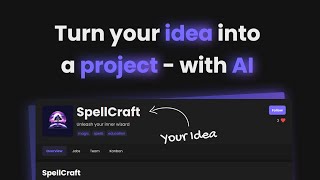
Findnlink turns a plain-language idea into a free AI-scaffolded project board — logo, roles, Kanban — in minutes.
If your idea lives in a notes app and you need something tangible to show a collaborator today, Findnlink does that quickly with a generated logo, role list and Kanban board. It is scaffolding, not a home. Treat the generated board as a starting artifact and expect to move to Trello, Notion or Linear once real work and real teammates arrive. As a free tool with no published roadmap, treat it as a cheap first move rather than infrastructure you build a company on.
Last checked 26m ago · cite: rightaichoice.com/tools/findnlink
- Solo founders with an idea but no team yet
- Side-project builders who want a board without PM setup
- Hackathon teams that need structure in under an hour
- Anyone validating an early-stage idea on a zero budget
- Established teams already running sprints in Jira, Linear, or Asana
- Anyone needing time tracking, reporting, or workload analytics
- Organizations with compliance, audit, or data-residency requirements
We scan live Reddit threads, YouTube comments, X posts, G2 reviews and other communities — and hand you an honest verdict in under a minute.
- Honest verdict, not marketing
- Real pros & cons from real users
- Attributed quotes with receipts
3 free scans · no card needed
Skip Findnlink if you need API access, reporting, time tracking, or integrations with the rest of your stack — the generated board will not carry you past the idea stage.
The board is free, but it has no reporting or time tracking, so the real cost shows up later as a migration into a paid project tool once the work gets real.
Findnlink sits at the free end of the project-tool market: it costs nothing where Trello, Notion and Linear ask for a subscription per seat. That makes it the cheapest possible first move for a solo founder or hackathon team, and a poor long-term bet for a team that will need paid depth a month or two in.
In short
Findnlink — Findnlink turns a plain-language idea into a free AI-scaffolded project board — logo, roles, Kanban — in minutes. Best for Solo founders with an idea but no team yet, Side-project builders who want a board without PM setup, Hackathon teams that need structure in under an hour. Free to use.
Viability Score
How well maintained and how widely used is Findnlink? Built from what the vendor actually publishes (docs, changelog, tutorials, integrations, pricing), whether the site is live, and how much real users discuss it. How we calculate this
Last calculated: October 2026
How we score →Key Features
- AI project creation from a plain-language idea description
- Automatic AI logo generation for new projects
- AI-suggested job postings and role definitions
- Built-in Kanban board for task tracking
- Community feed to surface projects and find collaborators
- Invite teammates to an existing project
- Share projects publicly for feedback
- No-code setup with no technical configuration required
- Idea-to-board scaffolding completed in minutes
- Free to use with no credit card required
About Findnlink
Findnlink is a free scaffolding tool for the front of the funnel: you describe a concept in plain language and it builds a structured project around that description. That means an AI-generated logo, suggested roles or role postings, and a Kanban board you can start moving cards on immediately — no template picking, no column configuration, no workspace admin. It is built for idea-stage founders, hackathon teams and side-project builders rather than teams already running sprints. From there it leans on a community layer: invite people you already know, or surface the project to a pool of people looking to join early-stage builds, which makes it part solo-founder tool and part collaborator matchmaking. The honest tradeoff is ceiling. The output is good enough to show a collaborator or pitch from a stage, and not deep enough to run a company on. When you need heavy collaboration, reporting or deep stack integration, this is a launch pad you graduate from rather than a home.
Behind the Verdict
The value here is narrow and real: removing the setup tax between "I have an idea" and "here is a project I can show someone." Most project tools assume you already know your columns, your roles and your naming — Findnlink generates all three from a sentence of description, plus a logo, which is the piece founders usually stall on because they have no designer and no budget. For a hackathon team or a solo builder validating a concept, that is twenty minutes saved and a much better story when you ask someone to join. The community layer is the second half of the pitch: because projects are public by default, you can surface a concept to people looking for early builds, which is a genuinely different model from the private-workspace tools. It is also the weakest link in practice — matchmaking only works if there are enough active people on the other side of it, so treat collaborator discovery as a bonus rather than a plan. The ceiling is the honest tradeoff. This is a scaffolding tool, not a project management suite; there is no API access, no time tracking, no reporting, and no deep integrations with the rest of a stack. That is fine at the idea stage and limiting a quarter later. If you are choosing between this and configuring Trello from scratch on a Saturday, the free scaffold is the cheaper first move — just go in expecting to graduate.
Researching Findnlink? Get your full AI stack in 60 seconds.
Free, no signup — tell us your goal and get tools matched to your budget & existing stack.
Real-world workflow fit
Concrete scenarios for the personas Findnlink actually fits — and what changes day-one when you adopt it.
You write a couple of sentences describing the idea, get back a project with a generated logo, a suggested role list and a starter Kanban board, then invite the one person you already know who might help.
Outcome: You leave with a link you can send and a board you can move cards on the same day, instead of an empty Trello workspace and a to-do list.
You create the project from a one-line pitch, take the generated roles as your division of labour, and share the public project link with the other teams and judges.
Outcome: Structure exists within the first hour, and the logo and board make the pitch deck look finished without any design work.
You scaffold the board, then surface the project in the community feed to see whether anyone bites on joining before you invest more weekends in it.
Outcome: You either get a collaborator or a clear signal that the concept is not pulling anyone in — either way you learn it cheaply.
Use Cases
- Generate a complete project board for your app idea in one pass
- Find co-founders or contributors for your startup concept
- Create a Kanban board and logo for a hackathon project
- Define team roles automatically from your idea description
- Share your project with the community to get feedback
- Move from a vague concept to an actionable plan fast
Limitations
- Findnlink is a scaffolding tool, not a full project management suite.
- It has no API access, no integrations with external services, and none of the advanced features you expect later — time tracking, custom fields, reporting.
- Community matching depends on the active user base, which may be sparse, so finding collaborators through the feed is not guaranteed.
- As a free product there is no clear roadmap or stated commitment to long-term support, so do not build critical process on top of it.
- If you need to run a project over an extended period with heavy collaboration, you will outgrow its simplicity quickly and should plan the migration before you start.
as of 2026-10-08
Verification history
We have re-verified Findnlink 9 times since . Each pass re-reads the vendor's own pages and re-checks every listed field against that evidence; passes where nothing had changed are marked as such.
- — re-verified summary, description, our verdict, our analysis, pricing model, pricing tiers, features, integrations, who it suits, who should skip it
- — re-checked, vendor evidence unchanged
- — re-checked, vendor evidence unchanged
- — re-checked, vendor evidence unchanged
- — re-checked, vendor evidence unchanged
- — re-checked, vendor evidence unchanged
Showing the 6 most recent of 9 verification passes.
Free to cite with attribution — this page re-verifies continuously.
Where the pricing makes sense
The company stage and team size where Findnlink's pricing actually pencils out — and where peers do it cheaper.
Findnlink sits at the free end of the project-tool market: it costs nothing where Trello, Notion and Linear ask for a subscription per seat. That makes it the cheapest possible first move for a solo founder or hackathon team, and a poor long-term bet for a team that will need paid depth a month or two in.
Setup time & first value
How long it actually takes to get something useful out of Findnlink — broken out by persona, not the marketing-page minute.
Solo founder or side-project builder: minutes — describe the idea, take the generated logo, roles and board, and start moving cards. Hackathon team: under an hour including invites, because there is no column or workflow configuration step. Teams expecting to connect their existing stack should budget far longer, because there is nothing to connect.
Tutorials & Learning
YouTube returned 6 videos for “Findnlink”, and we withheld 5: 5 could not be judged, because “Findnlink” is a single word that other videos use for other things. Showing the 1 we can prove is about Findnlink.
Official links
Tools that pair well with Findnlink
Common stack mates teams adopt alongside Findnlink, with the specific reason each pairing earns its keep.
Trello AI
Visual Kanban boards with Butler automation and an MCP server that links Trello to AI tools.

Design.com
Design.com turns text prompts into logos, websites, business cards, and social graphics you can edit by typing.

Monday.com
monday.com is an AI work platform where your team builds, deploys, and manages AI agents on the same boards they already work in.
Featured Head-to-Head Comparisons
Findnlink vs Truleo
Truleo and Findnlink serve completely different audiences. Truleo is a specialized intelligence platform for law enforcement, automating lead generation from siloed data (jail calls, body cameras) while reducing report writing time by 80%. Findnlink is a free, AI-powered project starter for solo founders and hobbyists, generating logos, job posts, and Kanban boards from an idea. Choose Truleo if you're in law enforcement; choose Findnlink if you're validating a side project.
Findnlink vs Locus Robotics
These tools serve entirely different purposes: Locus Robotics is a physical warehouse automation system for high-volume fulfillment, while Findnlink is a free AI-powered platform for ideation and team building. Unless you need robot-driven logistics, choose Locus for operational efficiency in warehouses; choose Findnlink for early-stage project scaffolding.
Findnlink vs Presto Voice
Choose Presto Voice if you own a QSR chain and need proven drive-thru AI to boost revenue and efficiency; it's enterprise-grade with high ROI. Choose Findnlink if you're a solo founder or hobbyist wanting to scaffold an idea into a project for free, with AI-generated logos and team roles.
Findnlink vs Jira
If you're a solo founder with a raw idea and zero budget, Findnlink is the fastest way to scaffold a project and find collaborators. But if you need enterprise-grade agile project management with deep DevOps integration and support for coding agents (as Jira's latest news highlights), Jira is the clear choice despite its cost and complexity.
Alternatives to Findnlink
View allTrello AI
Visual Kanban boards with Butler automation and an MCP server that links Trello to AI tools.

Design.com
Design.com turns text prompts into logos, websites, business cards, and social graphics you can edit by typing.

Monday.com
monday.com is an AI work platform where your team builds, deploys, and manages AI agents on the same boards they already work in.
Frequently Asked Questions
Best-of guides
Topics
Used Findnlink? Help shape our editorial sentiment research.