
Flock Freight
Flock Freight pools 2-3 loads into AI-optimized Shared Truckload, so you pay only for the space your freight uses
Worth pricing out if you routinely move 4-20 pallets on mainstream US lanes. The pooled model attacks the line item shippers hate most, paying for air in a half-empty trailer, while sidestepping LTL's slow, damage-prone handling. Test it on one lane you already run before committing volume: Flock's 20-22% savings are averages, and your results depend on how much density your lanes have.
Verified 3d ago · liveness 69/100 · cite: rightaichoice.com/tools/flock-freight
- Shippers moving 4-20 pallets on common US lanes who want truckload speed without a full trailer
- Teams comparing LTL against underutilized truckload and looking for a middle option
- Food and beverage, retail, building materials, machinery, and paper/plastics/packaging shippers
- Mid-to-large shippers with consistent, repeatable lanes where pooling density exists
- Businesses shipping occasional small parcels or single-pallet loads
- Shippers who already fill full truckloads on every lane
- Urgent or oversized freight that needs a single-occupancy truck
We scan live Reddit threads, YouTube comments, X posts, G2 reviews and other communities — and hand you an honest verdict in under a minute.
- Honest verdict, not marketing
- Real pros & cons from real users
- Attributed quotes with receipts
3 free scans · no card needed
Skip Flock Freight if your freight runs on remote or low-density lanes, if you already fill full truckloads on every lane, or if you need urgent single-occupancy trucks rather than pooled capacity.
Choosing 'No Flexibility' on pickup dates means you pay the full rate — the 1-day or 2-day flexible pickup window is what unlocks the deeper discounts.
Flock Freight prices by quote rather than a published rate card, so the real comparison is your lane versus what your incumbent LTL and dry van carriers bid. It is built for mid-to-large shippers with enough repeatable volume to pool — if you only ship a few loads a month, the density advantage and the setup effort behind TMS integration won't pay you back.
In short
Flock Freight — Flock Freight pools 2-3 loads into AI-optimized Shared Truckload, so you pay only for the space your freight uses. Best for Shippers moving 4-20 pallets on common US lanes who want truckload speed without a full trailer, Teams comparing LTL against underutilized truckload and looking for a middle option, Food and beverage, retail, building materials, machinery, and paper/plastics/packaging shippers. Contact Sales pricing.
No head-to-head comparison for Flock Freight yet — the alternatives below are the closest matches we list.
What's new in Flock Freight
Checked yesterdayAcross the latest 3 updates: 3 news mentions.
How Shippers Saved 32% from Illinois to Texas with Shared Truckload
Flock Freight case study: shippers cut 32% on Illinois-to-Texas lanes using shared truckload instead of standard LTL or full truckload.
How Shippers Saved 38% from Southern California to Dallas with Shared Truckload
Case study claims 38% savings on Southern California to Dallas lanes via Flock Freight's shared truckload model.
Freight Market Update for Q3 2026: Rate Inflation and the Rising Cost of Shipping Air
Flock Freight Q3 2026 market update covers freight rate inflation and higher costs for shipping air in truckload capacity.
What people actually say about Flock Freight — is it worth it?
We ran a structured research pass across product reviews, community discussions, and post-purchase forum threads to surface the patterns vendors won't publish themselves. Below: the recurring strengths, the hidden costs people mention most, and the cohort that consistently regrets adopting this tool.
7 mentions across 3 sources (Hacker News, YouTube, Lemmy) · researched Aug 11, 2026.
Average across the 3 sources that answered — each source counts once, not each post.
- +22% savings vs underutilized truckload, a clear cost benefit for shippers.
- +70% faster transit time compared to LTL, improving supply chain speed.
- +97%+ on-time performance and 99.3% damage-free, high reliability levels.
- +Linear-foot and pallet pricing ensures you pay only for used space.
- +FlockDirect offers instant spot rates, streamlining the booking process.
- −Very few community reviews, making it hard to gauge long-term reliability.
- −Ineffective for full truckload shippers or low-density lanes.
- −Learning curve for linear-foot pricing may intimidate new users.
- −No pricing transparency—'contact us' only could deter small shippers.
- −Tracking updates reported as occasionally delayed in one review.
- • No public pricing; potential minimum volume commitments not disclosed.
- • Integration setup may incur consulting fees depending on TMS complexity.
Viability Score
How well maintained and how widely used is Flock Freight? Built from what the vendor actually publishes (docs, changelog, tutorials, integrations, pricing), whether the site is live, and how much real users discuss it. How we calculate this
Last calculated: October 2026
How we score →Key Features
- AI-powered freight pooling across Flock Freight's entire customer network
- Shared Truckload brokerage combining 2-3 shipments per truck
- Linear-foot and pallet-based pricing so shippers pay only for space used
- FlockDirect guaranteed terminal-free Shared Truckload service
- Quick single-page instant quote builder in the Flock Platform
- Guided step-by-step quote builder with prompts along the way
- Side-by-side comparison of FlockDirect, Full Truckload and Standard LTL
- Flexible 1-day or 2-day pickup dates that can unlock lower rates
- Additional services, vehicle type and load bar / strap selection at quote time
- Optional additional insurance added during quoting
- One-click re-quote of past shipments from Quote History
- Shipment tracking with shareable receiver email and link
- TMS integration for quoting and booking inside existing systems
- Real-time shipment tracking powered by Project44
- Carrier Platform with STL AddOns for load matching and booking
About Flock Freight
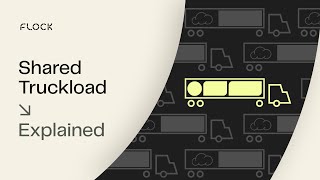
Flock Freight is a US Shared Truckload freight brokerage that uses AI-powered pooling to combine 2-3 shipments from thousands of shippers into one efficient truck. You buy linear feet or pallets instead of a whole trailer, which puts Shared Truckload between slow multi-touch LTL and a half-empty dry van. It's built for shippers who quote and book freight regularly and want cost savings without losing truckload-style speed. The Flock Platform lets you run an instant quote in Quick (single page) or Guided (step-by-step) mode, compare FlockDirect, Full Truckload and Standard LTL side by side, re-quote past shipments in a click from Quote History, and share live tracking with a receiver by email or link. FlockDirect is the guaranteed terminal-free shared truckload option, which matters when repeated LTL handling damages your product. A TMS integration path covers quoting and booking inside existing systems, and real-time tracking runs through Project44. Flock's published figures include 20-22% average savings versus truckload, a 70% reduction in transit time versus LTL, 99.3% damage-free shipments and 97%+ on-time delivery. Those are the vendor's own numbers, so validate them on your lanes. A September 3, 2026 case study logged 38% savings on a Southern California to Dallas lane, and a July 28, 2026 market update framed Shared Truckload as a hedge against Q3 2026 rate inflation. The fit is a shipper moving roughly 4-20 pallets on common US lanes, or loads over 44 linear feet where full truckload pricing stops making sense. Dedicated LTL buys coverage but adds transit time and touches; a booked dry van buys speed at full-trailer cost. Shared Truckload only earns its middle seat where network density lets the pooling engine combine loads.
Behind the Verdict
Flock Freight's pitch is narrower than it sounds, and that's a feature. The pooling engine only pays off when your lanes carry enough shared-truckload volume for the network to combine loads, so consistent repeatable lanes win and spotty remote ones usually won't. We'd reach for this when the choice is between LTL that takes a week and damages cartons, and a dry van you only half fill. Stacking FlockDirect against Standard LTL and Full Truckload in the same quote screen makes that trade visible in minutes, which is the fastest way to see whether STL actually beats what you're doing now. The one-click re-quote from Quote History is the sleeper feature for anyone running the same lanes weekly. Where it bites: thin freight. If your shipments don't align with network density, or you need a truck to yourself for oversized or specialized loads, the pooling model has nothing to combine and you'll fall back to standard truckload anyway. Biggest caveat on the numbers: 20-22% savings, 70% faster than LTL and the 38% Southern California to Dallas result all come from Flock's own reporting or case studies. Treat them as directional and re-measure on your own freight before you build a budget around them. The closest alternative is your incumbent LTL carrier on contracted rates, or a traditional broker for full truckload. Flock's difference is buying partial trailer space with guaranteed terminal-free handling, not a full-service logistics replacement. Teams needing a single provider for parcels, drayage and international freight will still need other vendors.
Researching Flock Freight? Get your full AI stack in 60 seconds.
Free, no signup — tell us your goal and get tools matched to your budget & existing stack.
Real-world workflow fit
Concrete scenarios for the personas Flock Freight actually fits — and what changes day-one when you adopt it.
You have 12 pallets moving on a lane you run every week and your current dry van quote is priced for a full trailer. You open the Flock Platform, run the Quick quote with pickup date, origin and destination, add the shipment items, and compare FlockDirect against Full Truckload and Standard LTL side by side.
Outcome: You see whether pooling on that lane beats what you pay today, and you can switch the pickup date to the 1-day or 2-day flexible window to see how much further the rate drops. If the lane works, you re-quote it next week with Quote Again in a few clicks.
You want evidence before you move volume, not after. You pull the Shared Truckload Rate Index for your lanes and read the 2026 ROI of Shared Truckload study, then run quotes on your three highest-volume lanes to compare against contracted LTL and truckload rates.
Outcome: You get lane-level numbers you can put in front of finance, and you know which of your lanes have the density for pooling before committing any freight to it.
Your driver is deadheading a return leg. You sign into the Carrier Platform, look for STL AddOns on lanes near the empty miles, and book a load that fits the existing route.
Outcome: The empty miles get filled instead of burned, which adds revenue to a trip you were already running and reduces the fuel cost of the return.
Use Cases
- Save 20% or more on truckload shipments by pooling with other freight on the same lane.
- Reduce LTL transit times by 70% using Shared Truckload for 4-20 pallet shipments.
- Book a full trailer for loads over 44 linear feet when you don't want to pool.
- Cut empty miles for your fleet by picking up STL AddOns through the Carrier Platform.
- Automate spot rate quoting, tendering and tracking by integrating FlockDirect with your TMS.
- Share live shipment status with a receiver via email or link from the Tracking tab.
- Re-quote a lane in a few clicks with Quote Again to test new pickup dates and rates.
- Lower your carbon footprint by consolidating multiple shipments into one truckload.
Limitations
- Flock's public material names no underlying AI model, so the technology powering its pooling and optimization cannot be verified from the outside.
- Savings figures cited (20% average versus truckload, 38% on a Southern California to Dallas case-study lane) are Flock's own reporting, so treat them as directional rather than audited outcomes on your lanes.
- Shared Truckload is positioned for 4-20 standard-size pallet shipments, and booking at scale is delivered through TMS integrations (e2open, Oracle OTM) or the Flock Platform.
as of 2026-10-13
Verification history
We have re-verified Flock Freight 21 times since . Each pass re-reads the vendor's own pages and re-checks every listed field against that evidence; passes where nothing had changed are marked as such.
- — re-verified summary, description, our verdict, our analysis, pricing model, pricing tiers, features, integrations, who it suits, who should skip it
- — re-verified summary, description, our verdict, our analysis, pricing model, pricing tiers, features, integrations, who it suits, who should skip it
- — re-verified summary, description, our verdict, our analysis, pricing model, pricing tiers, features, integrations, who it suits, who should skip it
- — re-verified summary, description, our verdict, our analysis, pricing model, pricing tiers, features, integrations, who it suits, who should skip it
- — re-verified summary, description, our verdict, our analysis, pricing model, pricing tiers, features, integrations, who it suits, who should skip it
- — re-verified summary, description, our verdict, our analysis, pricing model, pricing tiers, features, integrations, who it suits, who should skip it
Showing the 6 most recent of 21 verification passes.
Free to cite with attribution — this page re-verifies continuously.
12-month cost
Project the real annual outlay, including the implied monthly cost when only an annual tier is published.
Vendor list price only. Add-on usage, seat overages, and contract minimums are surfaced under Hidden costs & gotchas.
Where the pricing makes sense
The company stage and team size where Flock Freight's pricing actually pencils out — and where peers do it cheaper.
Flock Freight prices by quote rather than a published rate card, so the real comparison is your lane versus what your incumbent LTL and dry van carriers bid. It is built for mid-to-large shippers with enough repeatable volume to pool — if you only ship a few loads a month, the density advantage and the setup effort behind TMS integration won't pay you back.
Setup time & first value
How long it actually takes to get something useful out of Flock Freight — broken out by persona, not the marketing-page minute.
On the Flock Platform, a first quote is a same-session task: fill in the Quick single-page form, generate rates and you have numbers back immediately — call it under 30 minutes once you have pallet dimensions and addresses in front of you. Teams wiring FlockDirect into a TMS should expect a project rather than an afternoon, and carriers picking up STL AddOns through the Carrier Platform have the
Switching to or from Flock Freight
How to bring data in from common predecessors and how to get it back out — written for the switcher, not the buyer.
- →From dedicated LTL: run a Flock quote on a lane where LTL transit time is hurting you, compare FlockDirect against your current LTL rate, and move the lanes that win.
- →From underutilized dry van: quote the same load as Shared Truckload in the Flock Platform and see whether pooling beats the full-trailer price you are paying now.
- →From spreadsheets and email quoting: log in to the Flock Platform, use the Quick or Guided quote builder, and keep every quote and order in Quote History instead of a inbox.
- →From a TMS-only workflow: connect FlockDirect through your TMS integration so quoting, tendering and tracking stay inside the system your team already uses.
- ↗To a dedicated LTL carrier: move lanes where pooling density never materialized or where LTL coverage is cheaper than the pooled rate you were quoted.
- ↗To a full truckload broker: shift lanes where your volume grew past 44 linear feet and reserving the whole trailer is now the cheaper option.
- ↗To managing freight in-house: keep Quote History exports and the Shared Truckload Rate Index numbers so you can benchmark your own contracted rates against the market.
Integrations
Resources & Guides
- Resourceflockfreight.com
Flock Platform User Guide
Helpful link from flockfreight.com
- Resourceflockfreight.com
Carrier Platform User Guide
Helpful link from flockfreight.com
- Resourceflockfreight.com
Shipper’s Guide to Preparing for NMFC Code Changes in 2025
Helpful link from flockfreight.com
- Resourceflockfreight.com
The Hidden Costs of Less Than Truckload Shipping
Helpful link from flockfreight.com
- Resourceflockfreight.com
Why Shared Truckload scales better with Flock’s technology
Helpful link from flockfreight.com
- Resourceflockfreight.com
How to Avoid Cargo Fraud and Theft
Helpful link from flockfreight.com
- Resourceflockfreight.com
How to Choose the Right Freight Carrier
Helpful link from flockfreight.com
Tutorials & Learning


Official links
Tools that pair well with Flock Freight
Common stack mates teams adopt alongside Flock Freight, with the specific reason each pairing earns its keep.

Optimal Dynamics
Transportation Decision System that automates truckload dispatch, bid analysis, and agentic freight procurement for enterprise carriers

Loadsmart
Loadsmart pairs an AI-native TMS with dock scheduling and named freight agents that execute load-to-cash workflows.

Transfix
AI freight TMS for brokers and 3PLs with custom cost models built on your own data
Alternatives to Flock Freight
View all
Optimal Dynamics
Transportation Decision System that automates truckload dispatch, bid analysis, and agentic freight procurement for enterprise carriers


Frequently Asked Questions
Categories
Topics
Used Flock Freight? Help shape our editorial sentiment research.