
Full Stack Ai
Open-source AI CLI that scaffolds full-stack Next.js apps from a single prompt.
Worth a look if you already live in Next.js and want a typed, Prisma-backed starter in the time it takes to type a sentence. The tradeoff is rigidity: one fixed stack, generated code that needs a human pass before it ships, and a project early enough that rough edges are expected. Treat it as a time-saver on greenfield prototypes, not as a production delivery system.
Verified 4d ago · liveness 66/100 · cite: rightaichoice.com/tools/full-stack-ai
- Solo founders who want a working Next.js MVP before the weekend ends
- Hackathon teams racing a submission deadline
- Next.js developers tired of re-assembling the same tRPC + Prisma boilerplate
- Builders who prefer reviewing open-source generator code over a hosted black box
- Non-developers who aren't comfortable in a terminal
- Projects needing a backend runtime or frontend beyond the fixed Next.js stack
- Teams with an existing monorepo template and established conventions
We scan live Reddit threads, YouTube comments, X posts, G2 reviews and other communities — and hand you an honest verdict in under a minute.
- Honest verdict, not marketing
- Real pros & cons from real users
- Attributed quotes with receipts
3 free scans · no card needed
Skip Full Stack AI if you need a code generator that supports a custom backend framework, interactive code editing, or a no-code interface—or if you're building an app outside the Next.js/TypeScript/Prisma stack.
OpenAI API usage: each generation consumes tokens from your own API key, so costs scale with the number of prompts and the complexity of the app you request.
At $0 for the open-source CLI, Full Stack AI has no direct cost beyond your OpenAI API usage—making it cheaper than hosted code generators like v0 (which offer limited free tiers) or Cursor's AI plans. For solo developers who are comfortable with the CLI and want to keep costs minimal, it's an excellent value; teams with larger budgets might prefer a managed service that handles more of the debugging.
In short
Full Stack Ai — Open-source AI CLI that scaffolds full-stack Next.js apps from a single prompt. Best for Solo founders who want a working Next.js MVP before the weekend ends, Hackathon teams racing a submission deadline, Next.js developers tired of re-assembling the same tRPC + Prisma boilerplate. Free to use.
What people actually say about Full Stack Ai — is it worth it?
We ran a structured research pass across product reviews, community discussions, and post-purchase forum threads to surface the patterns vendors won't publish themselves. Below: the recurring strengths, the hidden costs people mention most, and the cohort that consistently regrets adopting this tool.
87 mentions across 6 sources (Hacker News, YouTube, Product Hunt, Stack Overflow, GitHub, Lemmy) · researched Aug 19, 2026.
Average across the 6 sources that answered — each source counts once, not each post.
- +Open-source and completely free, unlike paid boilerplate services.
- +Generates a full Next.js stack with TypeScript, Tailwind, Prisma, tRPC, and more.
- +Private API key ensures your code stays local.
- +Saves hours of boilerplate setup — one prompt to 100 files.
- +Built on Kirimase, a mature scaffolding tool.
- −Installation fails on some systems due to shell syntax errors.
- −Generated code may require manual env setup and debugging.
- −Limited customer support — relies on GitHub issues.
- −Potential for generated code to be incomplete or buggy.
- −Requires an OpenAI API key, incurring usage costs.
- • OpenAI API key required, so you pay per generation based on OpenAI's usage rates.
- • Potential time debugging installation and generated code.
Viability Score
How well maintained and how widely used is Full Stack Ai? Built from what the vendor actually publishes (docs, changelog, tutorials, integrations, pricing), whether the site is live, and how much real users discuss it. How we calculate this
Last calculated: September 2026
How we score →Key Features
- Generate a full-stack Next.js app from a single natural-language prompt
- Run from the terminal with npx fsai gen "<your app description>"
- Outputs TypeScript across the generated codebase
- Preconfigured Tailwind CSS styling
- Prisma ORM wired to a Postgres database
- tRPC endpoints for typed client-server calls
- Authentication included in the generated app
- Stripe payments scaffolded into the project
- Resend transactional email integration included
- Uses your own OpenAI API key for generation
- Open-source generator you can read, fork, or self-host
- Project comes ready to install and launch locally
About Full Stack Ai
Full Stack AI is a command-line generator that turns a plain-English prompt into a runnable Next.js codebase. You set an OpenAI API key, run `npx fsai gen "Build a clone of Twitter called StackPrompt."`, and it writes out a project already wired with TypeScript, Tailwind, Prisma, Postgres, tRPC, authentication, Stripe, and Resend — the exact stack the vendor lists on its homepage. The intent is to skip a day of setup and land on something you can actually start editing. It's aimed at solo builders: founders validating an idea over a weekend, hackathon teams on a clock, and Next.js developers who already know this stack and don't want to hand-assemble it again. Because it's open source, you can read the generator, fork it, or run it locally without a hosted account. What you get is a scaffold, not an app. The framework choice is fixed — Next.js plus the listed libraries — so anything needing a different backend runtime, a separate Python service, or a heavily customized data layer means adapting the output by hand. Expect to tidy auth flows, edge cases, and business logic the prompt didn't spell out. The competitive set is crowded and moving fast: create-t3-app covers a similar Next.js stack as a static starter, and this year's news cycle is full of full-stack AI coding plays from much larger vendors. Full Stack AI's angle is narrow and cheap — prompt-to-scaffold on your own machine, no subscription attached.
Behind the Verdict
The honest pitch for Full Stack AI is narrow: it removes the first hour of a Next.js project. If you've ever spent an afternoon wiring tRPC routers, a Prisma schema, and Stripe before writing a single feature, you know exactly what that hour is worth. Pick it when the project fits the stack it ships. A CRUD app, a SaaS landing-plus-dashboard, a hackathon submission with a deadline tonight — these are the cases where prompting a scaffold beats clicking through a setup guide. An OpenAI API key is the only prerequisite, and since the CLI is open source you can inspect exactly what it's about to write before you commit to it. Pass when your architecture diverges. If you need a non-Next.js frontend, a separate backend service, or a data layer that isn't Prisma plus Postgres, you'll spend more time ripping out the generated assumptions than you saved. Teams with shared coding conventions and an existing monorepo template usually get more from their own starter kit. The closest comparison is create-t3-app, which assembles a comparable Next.js and tRPC foundation without an LLM in the loop. The difference is where the decisions get made: create-t3-app asks you questions, Full Stack AI guesses from your prose and is sometimes wrong about your intent. That guessing is the feature and the risk. In practice, budget a review pass. Generated authentication, payment, and email wiring should be read line by line before any real user touches it — that's true of every AI scaffolder and it's true here. The generator's job ends where your judgment begins. The market around this is loud right now, with well-funded teams shipping full-stack AI coding tools and new frameworks claiming the whole app lifecycle. Full Stack AI doesn't try to win that fight. It's a small, inspectable CLI
Researching Full Stack Ai? Get your full AI stack in 60 seconds.
Free, no signup — tell us your goal and get tools matched to your budget & existing stack.
Real-world workflow fit
Concrete scenarios for the personas Full Stack Ai actually fits — and what changes day-one when you adopt it.
You have a new CRM concept and want to validate it quickly. You run `npx fsai gen """Build a CRM called Pipelines with user authentication, contact tracking, and Stripe billing."""`. The CLI generates a full Next.js app with Prisma schema and Stripe integration.
Outcome: Within minutes, you have a deployable MVP with auth and payments, ready to push to Vercel for early user feedback.
The hackathon kicks off in two hours, and your team needs a full-stack app with a leaderboard and team chat. You describe the app including authentication and database, and the CLI scaffolds the entire stack.
Outcome: You skip the usual setup grind and focus on customizing the generated code, getting a demo version live well before the deadline.
You want to understand how tRPC, Prisma, Stripe, and NextAuth fit together. You generate a sample 'todo' app and study the generated code.
Outcome: You learn the standard project structure and integration patterns, giving you a reference template for future projects.
Use Cases
- Scaffold a Twitter clone with auth and Stripe billing
- Create a SaaS landing page with blog and email subscription
- Build a project management app with team collaboration
- Prototype an e-commerce store with product catalog and checkout
- Generate a forum with user profiles and threaded comments
Models Under the Hood
as of 2026-09-23
Limitations
- Full Stack AI requires an OpenAI API key and consumes tokens for each generation.
- The generated project is limited to the predefined Next.js stack; there's no option to configure the stack or choose alternative frameworks.
- Since the project is in early development, generated code may contain bugs or omissions that require manual fixing, particularly for complex business logic or edge cases.
- The tool is command-line based, so it's not suitable for non-technical users.
- Additionally, self-hosting the generator requires you to manage your own API key and infrastructure.
as of 2026-09-08
Verification history
We have re-verified Full Stack Ai 8 times since . Each pass re-reads the vendor's own pages and re-checks every listed field against that evidence; passes where nothing had changed are marked as such.
- — re-verified summary, description, our verdict, our analysis, pricing model, pricing tiers, features, integrations, who it suits, who should skip it
- — re-verified summary, description, our verdict, our analysis, pricing model, pricing tiers, features, integrations, who it suits, who should skip it
- — re-verified summary, description, our verdict, our analysis, pricing model, pricing tiers, features, integrations, who it suits, who should skip it
- — re-checked, vendor evidence unchanged
- — re-verified summary, description, our verdict, our analysis, pricing model, pricing tiers, features, integrations, who it suits, who should skip it
- — re-verified summary, description, our verdict, our analysis, pricing model, pricing tiers, features, integrations, who it suits, who should skip it
Showing the 6 most recent of 8 verification passes.
Free to cite with attribution — this page re-verifies continuously.
12-month cost
Project the real annual outlay, including the implied monthly cost when only an annual tier is published.
Vendor list price only. Add-on usage, seat overages, and contract minimums are surfaced under Hidden costs & gotchas.
Plans compared
For each published Full Stack Ai tier: who it actually fits, and what it adds vs. the previous tier. Cross-reference the cost calculator above for projected annual outlay.
Open Source
$0/mo
Ideal for
Any developer or founder who wants a free, self-hosted code generator and is comfortable with CLI tools and OpenAI API costs.
What this tier adds
Starting free tier: includes the entire CLI with no usage limits beyond your own OpenAI key, plus full source code on GitHub.
Where the pricing makes sense
The company stage and team size where Full Stack Ai's pricing actually pencils out — and where peers do it cheaper.
At $0 for the open-source CLI, Full Stack AI has no direct cost beyond your OpenAI API usage—making it cheaper than hosted code generators like v0 (which offer limited free tiers) or Cursor's AI plans. For solo developers who are comfortable with the CLI and want to keep costs minimal, it's an excellent value; teams with larger budgets might prefer a managed service that handles more of the debugging.
Setup time & first value
How long it actually takes to get something useful out of Full Stack Ai — broken out by persona, not the marketing-page minute.
For a developer with Next.js familiarity: under 5 minutes if you already have Node and an OpenAI API key—just run `npx fsai gen`. If you need to set up the environment and obtain an API key, expect 15-30 minutes total. The generated project runs after installing dependencies and setting environment variables for database and Stripe keys.
Integrations
Resources & Guides
Tutorials & Learning

Build and Deploy a Full-Stack AI App (Completely Free)
JavaScript Mastery
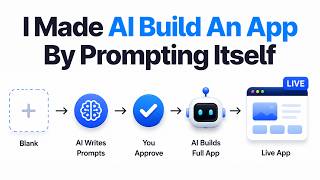
Learn AI Engineering in 2026 | Build a Full Stack AI Websites with Agents
JavaScript Mastery

AI Course for Developers – Build AI-Powered Apps with React
Programming with Mosh
YouTube returned 6 videos for “Full Stack Ai”, and we withheld 3: 3 did not mention Full Stack Ai. Showing the 3 we can prove are about Full Stack Ai.
Official links
Tools that pair well with Full Stack Ai
Common stack mates teams adopt alongside Full Stack Ai, with the specific reason each pairing earns its keep.

Replit Agent
Replit Agent turns a plain-English prompt into a runnable full-stack app inside your browser, then deploys it to a live URL.
Bolt.new
Bolt.new is a chat-based AI app builder that turns a prompt into a deployed full-stack web app.

MarsX
Open-source dev platform uniting AI, NoCode, Code, and reusable MicroApps.
Featured Head-to-Head Comparisons
Full Stack Ai vs Spider Cloud
Choose Full Stack AI if you need to rapidly prototype a full-stack Next.js MVP with auth, payments, and database—it's free and generates boilerplate from a single prompt. Choose Spider Cloud if you need high-volume, reliable web scraping for AI agents or RAG pipelines, with pay-as-you-go pricing and advanced features like Browser AI commands.
Full Stack Ai vs Temporal Ai
Full Stack AI and Temporal AI serve completely different needs. If you're a solo developer wanting to quickly bootstrap a full-stack Next.js MVP with boilerplate included, Full Stack AI is the free, open-source CLI for you. If you need to orchestrate complex, long-running workflows that must survive failures—especially AI agent pipelines—Temporal’s durable execution platform (trusted by OpenAI and Replit) is the industrial-strength choice. They're complementary rather than competitive.
Full Stack Ai vs Voyage Ai
These tools solve completely different problems. Full Stack AI is a free CLI that scaffolds a production-ready Next.js app with auth, payments, and database—perfect for solo founders and hackers who need to ship an MVP fast. Voyage AI is an enterprise-grade embedding and reranker service for building accurate RAG pipelines, with domain-specific models and compliance certifications. Choose based on whether you need to generate a web app or optimize retrieval for large language models.
Full Stack Ai vs Replit Agent
If you're a Next.js developer looking to skip boilerplate and prototype quickly, Full Stack AI is a lean, open-source choice. But for a broader, browser-based experience with deployment and collaboration built-in, Replit Agent's recent upgrades (custom instructions, Slack integration, lower prices) make it a compelling all-in-one platform for rapid building at any skill level.
Alternatives to Full Stack Ai
View all
Replit Agent
Replit Agent turns a plain-English prompt into a runnable full-stack app inside your browser, then deploys it to a live URL.

Frequently Asked Questions
Best-of guides
Used Full Stack Ai? Help shape our editorial sentiment research.