Gaianet Node
Run and monetize decentralized AI agents on your own hardware.
Gaianet Node delivers genuine decentralized AI agent hosting with an OpenAI-compatible API, but it's not plug-and-play. Choose it if you value data sovereignty and token rewards; skip it if you need a turnkey solution with a mature agent library. Compare with Ollama for local model running or Together AI for managed inference if you prefer less setup.
Verified 13d ago · liveness 44/100 · cite: rightaichoice.com/tools/gaianet-node
- Privacy-conscious organizations wanting data sovereignty
- Developers building decentralized AI applications
- Node operators seeking to earn token rewards
- Hobbyists exploring self-hosted AI agents
- Non-technical users needing plug-and-play setup
- Enterprise teams requiring SLAs and support
- Users wanting a large library of pre-built agents
We scan live Reddit threads, YouTube comments, X posts, G2 reviews and other communities — and hand you an honest verdict in under a minute.
- Honest verdict, not marketing
- Real pros & cons from real users
- Attributed quotes with receipts
3 free scans · no card needed
Skip Gaianet Node if you need a plug-and-play AI solution with a large library of pre-built agents and dedicated support, or if you're not comfortable managing your own hardware and CLI setup.
Gaianet Node is free for self-hosters, but you pay with your own hardware and time. Cheaper than managed APIs if you already have the infrastructure, but more expensive in effort than plug-and-play services.
In short
Gaianet Node — Run and monetize decentralized AI agents on your own hardware. Best for Privacy-conscious organizations wanting data sovereignty, Developers building decentralized AI applications, Node operators seeking to earn token rewards. Free to use.
What people actually say about Gaianet Node — is it worth it?
We ran a structured research pass across product reviews, community discussions, and post-purchase forum threads to surface the patterns vendors won't publish themselves. Below: the recurring strengths, the hidden costs people mention most, and the cohort that consistently regrets adopting this tool.
1 mentions across 1 source (Hacker News) · researched Jul 3, 2026.
Average across the 1 source that answered — each source counts once, not each post.
- +Free to use with no upfront costs.
- +Decentralized architecture ensures censorship resistance.
- +Supports popular open-source models like Llama and Mistral.
- +Users maintain data sovereignty with self-hosted nodes.
- +Token-based incentives for node operators.
- −Very little community feedback to assess real-world performance.
- −Initial setup requires CLI and technical expertise.
- −No established user base or reliable support channels.
- −Token economy unproven with no evidence of rewards.
- −Potential reliability issues in decentralized networks.
- • Hardware or cloud instance cost for running a node
- • Potential fees for token transactions if monetized
Viability Score
How well maintained and how widely used is Gaianet Node? Built from what the vendor actually publishes (docs, changelog, tutorials, integrations, pricing), whether the site is live, and how much real users discuss it. How we calculate this
Last calculated: September 2026
How we score →Key Features
- Decentralized agent hosting
- Install and run nodes via CLI
- Custom AI model deployment (Llama, DeepSeek, Qwen)
- Token-based rewards for operators
- Agent marketplace for sharing and discovery
- Privacy-preserving data handling
- Open-source node software
- Multi-model support
- Monetization of AI agents
- Censorship-resistant network
- OpenAI-compatible API endpoint
- Knowledge base for specialized inference
- Fine-tune and deploy at scale
- Pre-order Gaia AI Phone
About Gaianet Node
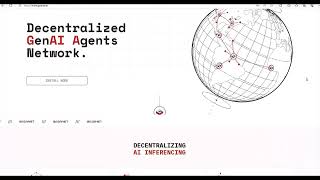
Gaianet Node is a platform for building and running decentralized AI agents. Unlike centralized AI services, you deploy agents on your own hardware or cloud instances, maintaining full data sovereignty and avoiding dependence on a single provider. The network uses an open-source node software that anyone can install via CLI, and it supports popular models like Llama, DeepSeek, and Qwen. Agents are accessed through an OpenAI-compatible API, making integration straightforward for existing applications. A token-based economy rewards node operators and agent creators, fostering a community-driven ecosystem. Gaianet is best suited for developers and organizations that prioritize privacy, censorship resistance, and autonomy over convenience. The platform's agent marketplace allows sharing and discovering agents, but the ecosystem is still early-stage, with a smaller library of pre-built agents compared to centralized alternatives. It's a solid choice for those willing to invest time in setup for greater control.
Behind the Verdict
Gaianet Node positions itself as a decentralized alternative to centralized AI platforms, letting you run and monetize AI agents on your own hardware. The core appeal is data sovereignty: your prompts and data stay on machines you control, free from vendor lock-in or censorship. For developers who are comfortable with CLI tools and managing their own infrastructure, this is a compelling trade-off. The OpenAI-compatible API is a smart move, lowering the integration barrier for existing applications. You can spin up agents that speak the same protocol as OpenAI's API, which means your existing code can switch to a self-hosted endpoint with minimal changes. The token-based economy is another differentiator, potentially rewarding operators and creators, but its long-term value depends on network adoption. The agent marketplace is still in its early days, so you won't find the same breadth of pre-built agents as on centralized hubs. Realistically, Gaianet Node is for tinkerers and privacy-focused builders, not for teams needing a managed service with SLAs. If you don't want to babysit a node, you'll be better served by a provider like Together AI or a local runtime like Ollama. For those who stick with it, the reward is genuine control and the feeling of participating in a grassroots AI movement.
Researching Gaianet Node? Get your full AI stack in 60 seconds.
Free, no signup — tell us your goal and get tools matched to your budget & existing stack.
Real-world workflow fit
Concrete scenarios for the personas Gaianet Node actually fits — and what changes day-one when you adopt it.
You want to run a private AI assistant that never sends data to the cloud.
Outcome: Install Gaianet Node on your own server, deploy a Llama model, and access it via the OpenAI-compatible API, keeping all data on your hardware.
You have spare compute capacity and want to earn token rewards.
Outcome: Install the node software, add models, and start earning rewards for hosting agents, potentially monetizing your hardware.
You want to create and sell custom AI agents.
Outcome: Develop an agent, add a knowledge base, and list it in the marketplace, reaching users who prefer decentralized options.
Use Cases
- Run your own private AI assistant on your hardware
- Deploy a chatbot for customer support without data leaks
- Create and sell custom AI agents in the marketplace
- Participate in decentralized AI compute networks
- Self-host AI models for personal projects
Models Under the Hood
as of 2026-09-08
Limitations
- Nodes require at least 8GB RAM and stable internet.
- The network is still early, so agent discovery and reliability are limited compared to centralized services.
- No dedicated support plan for free users.
as of 2026-09-01
Verification history
We have re-verified Gaianet Node 8 times since . Each pass re-reads the vendor's own pages and re-checks every listed field against that evidence; passes where nothing had changed are marked as such.
- — re-checked, vendor evidence unchanged
- — re-checked, vendor evidence unchanged
- — re-checked, vendor evidence unchanged
- — re-checked, vendor evidence unchanged
- — re-checked, vendor evidence unchanged
- — re-verified summary, description, our verdict, our analysis, pricing model, pricing tiers, features, integrations, who it suits, who should skip it
Showing the 6 most recent of 8 verification passes.
Free to cite with attribution — this page re-verifies continuously.
12-month cost
Project the real annual outlay, including the implied monthly cost when only an annual tier is published.
Vendor list price only. Add-on usage, seat overages, and contract minimums are surfaced under Hidden costs & gotchas.
Plans compared
For each published Gaianet Node tier: who it actually fits, and what it adds vs. the previous tier. Cross-reference the cost calculator above for projected annual outlay.
Community
$0/mo
Ideal for
Solo homelab users and hobbyists wanting to run and monetize AI agents on their own hardware without upfront costs
What this tier adds
Free entry point; you get full access to node software, models, and marketplace, but must supply your own hardware and support
Where the pricing makes sense
The company stage and team size where Gaianet Node's pricing actually pencils out — and where peers do it cheaper.
Gaianet Node is free for self-hosters, but you pay with your own hardware and time. Cheaper than managed APIs if you already have the infrastructure, but more expensive in effort than plug-and-play services.
Setup time & first value
How long it actually takes to get something useful out of Gaianet Node — broken out by persona, not the marketing-page minute.
For developers familiar with CLI and Docker, you can have a basic node running within an hour. Less technical users may spend a few hours or more getting comfortable with the setup and configuration.
Switching to or from Gaianet Node
How to bring data in from common predecessors and how to get it back out — written for the switcher, not the buyer.
- ↗To Ollama: If you only need local model running without network complexities, Ollama offers a simpler single-machine experience.
- ↗To Together AI: For managed inference with minimal setup, Together AI provides a hosted API without the need to run your own node.
Integrations
Resources & Guides
Tutorials & Learning


Official links
Featured Head-to-Head Comparisons
Gaianet Node vs Spider Cloud
For AI teams needing fast, structured web data for RAG or LLM tools, Spider Cloud is the clear winner with its cheap per-page pricing, rich integrations, and new Browser AI commands. Gaianet Node appeals to decentralization purists but lacks the turnkey data extraction and integration ecosystem most AI builders require.
Gaianet Node vs Temporal Ai
Choose Temporal AI if you need mission-critical reliability for AI agents and multi-step workflows, with automatic retries and enterprise support. Choose Gaianet Node if you prioritize decentralization, privacy, and want to run agents on your own infrastructure without vendor lock-in. Temporal is production-ready with SLAs; Gaianet is for community-driven, sovereign AI hosting.
Gaianet Node vs Presto Voice
Presto Voice and Gaianet Node serve entirely different needs. Presto Voice is a specialized enterprise solution for QSR chains to automate drive-thru ordering and boost revenue, with proven results and high-end integrations. Gaianet Node is a free, open-source platform for developers to run decentralized AI agents, offering privacy and token rewards. Choose Presto if you run multiple drive-thrus and want measurable ROI; choose Gaianet if you’re technical and value autonomy over out-of-box convenience.
Popular in Agent Frameworks & Orchestration

Temporal AI
Open-source durable execution platform that keeps long-running workflows and AI agents alive through crashes, retries, and flaky APIs.


Frequently Asked Questions
Used Gaianet Node? Help shape our editorial sentiment research.