
GenAI Showcase
MongoDB Atlas stores vector embeddings next to operational data, so RAG apps skip the sync pipeline.
Atlas earns its place when embeddings and operational data belong together, because the sync pipeline you delete is the component that usually breaks. The retrieval stack is genuinely current rather than bolted on: native vector search, hybrid retrieval, and rerank-3 arrived September 30, 2026, and Atlas Agent Engine moved into public preview. Pass if you have no operational data to sit next to, or if your core queries live in strict relational joins.
Verified 5d ago · liveness 63/100 · cite: rightaichoice.com/tools/genai-showcase
- Developers building RAG and semantic search who want embeddings stored next to operational data
- Teams already running MongoDB that want to add AI retrieval without a separate vector database
- Architects consolidating operational, search, and analytics workloads onto one multi-cloud platform
- Startups prototyping AI applications on the free 512MB tier before scaling to Dedicated clusters
- Teams whose core queries depend on complex multi-table joins and strict relational semantics
- Projects that need only a similarity index and no operational database alongside it
- Organizations that don't control their operational data store and can't consolidate onto Atlas
We scan live Reddit threads, YouTube comments, X posts, G2 reviews and other communities — and hand you an honest verdict in under a minute.
- Honest verdict, not marketing
- Real pros & cons from real users
- Attributed quotes with receipts
3 free scans · no card needed
Skip MongoDB Atlas if you need only a similarity index over a small dataset and have no operational data to consolidate — a free single-purpose vector store gets you there with far less setup.
MongoDB Search, Vector Search, Stream Processing, Data Federation, and Atlas Charts each bill separately from your cluster rate — a $56.94/month Dedicated cluster is not your total bill.
Atlas covers a wide range: a free 512MB tier for learning, Flex at $0.011/hour (capped at $30/month) for prototypes, Dedicated from $0.08/hour ($56.94/month) for production, and Enterprise Advanced by quote for self-managed. That undercuts managed commercial search platforms on the cluster side, but because Search, Vector Search, Stream Processing, and Charts bill as separate add-ons, a mid-size team running heavy retrieval can end up above a bundled all-in-one contract from a larger vendor.
In short
GenAI Showcase — MongoDB Atlas stores vector embeddings next to operational data, so RAG apps skip the sync pipeline. Best for Developers building RAG and semantic search who want embeddings stored next to operational data, Teams already running MongoDB that want to add AI retrieval without a separate vector database, Architects consolidating operational, search, and analytics workloads onto one multi-cloud platform. Free to start; paid plans from $0.011/mo.
What's new in GenAI Showcase
Checked 5 days agoAcross the latest 9 updates: 3 feature updates, 3 launches and 3 news mentions.
MongoDB details Intelligent Workload Management for Atlas cluster availability
MongoDB published guidance on Atlas Intelligent Workload Management, covering how clusters behave when demand exceeds safe processing capacity.
MongoDB 9.0 observability capabilities detailed
MongoDB outlined 9.0 observability features aimed at correlating database telemetry with the rest of the stack to cut troubleshooting time.
Queryable Encryption prefix, suffix and substring queries now GA
MongoDB Queryable Encryption extends beyond equality and range to prefix, suffix and substring queries, now generally available for production workloads.
MongoDB 9.0 positioned as major database release
MongoDB published its 9.0 release narrative, framing the version around removing long-standing stack tradeoffs. Vendor claims up to 2x higher throughput.
Atlas Agent Engine powers internal AI strategy, MongoDB says
MongoDB's CIO described using Atlas Agent Engine internally, positioning the database as an enterprise AI control point.
MongoDB announces agentic ecosystem partner updates
Partner updates from MongoDB.local NYC focus on moving AI applications from prototype to reliable production deployments.
Everything announced at MongoDB.local NYC 2026
MongoDB.local NYC 2026 wrapped with product and platform announcements spanning database, search and agent tooling.
rerank-3 and native reranking introduced for retrieval
MongoDB introduced rerank-3 and native reranking to address retrieval quality problems in agent context engineering.
MongoDB pitches Intelligent Data Platform for the AI era
MongoDB framed its platform positioning around AI-era data workloads, tying together Atlas, Vector Search and agent tooling.
What people actually say about GenAI Showcase — is it worth it?
We ran a structured research pass across product reviews, community discussions, and post-purchase forum threads to surface the patterns vendors won't publish themselves. Below: the recurring strengths, the hidden costs people mention most, and the cohort that consistently regrets adopting this tool.
1 mentions across 1 source (GitHub) · researched Jul 3, 2026.
Average across the 1 source that answered — each source counts once, not each post.
- +Native vector search eliminates need for separate vector database.
- +Seamless integration with existing MongoDB operational data.
- +Multi-cloud deployment across AWS, Azure, and GCP.
- +Flexible document model fits diverse AI application schemas.
- +Generous free tier for prototyping AI features.
- −Vector search performance lags behind specialized vector databases.
- −Potential cost escalation for large-scale vector workloads.
- −Vendor lock-in to MongoDB ecosystem.
- −Documentation for AI-specific features still maturing.
- −Limited community feedback outside GitHub repository.
- • Vector index usage can incur additional storage and compute costs
- • Data transfer out of cloud providers charged separately
- • Advanced security features (e.g., VPC peering) may require higher tiers
Viability Score
How well maintained and how widely used is GenAI Showcase? Built from what the vendor actually publishes (docs, changelog, tutorials, integrations, pricing), whether the site is live, and how much real users discuss it. How we calculate this
Last calculated: October 2026
How we score →Key Features
- Native vector search over embeddings stored alongside operational data
- Full-text search with relevance ranking
- Hybrid search combining vector and lexical retrieval
- Native reranking with rerank-3 for agent context quality
- Voyage AI embedding and reranking models
- Atlas Agent Engine to build, deploy, and govern agents in production (public preview)
- Atlas App Connections for one-click secure access by AI coding tools
- MongoDB Atlas Managed MCP Server
- Atlas Infinite with decoupled compute and storage, up to 128TB per HA shard (public preview)
- Intelligent Workload Management guidance for clusters under heavy demand
- MongoDB 9.0 observability correlating database telemetry across the stack
- Queryable Encryption with prefix, suffix and substring queries (GA)
- Atlas Stream Processing for high-volume, high-velocity event data
- Atlas Data Federation querying cloud object storage without copying data
- Atlas SQL Interface and Connectors for SQL-based BI tools
About GenAI Showcase
MongoDB Atlas is a fully managed, multi-cloud developer data platform that runs your operational database and your AI retrieval stack in one place, on AWS, Azure, or Google Cloud. Instead of copying documents into a separate vector store, you keep embeddings in the same collection as the records they describe. For retrieval-augmented generation and semantic search, that drops an entire synchronization component out of the architecture. The retrieval layer is where MongoDB has been shipping fastest. Atlas includes native vector search, full-text search with relevance ranking, hybrid search blending vector and lexical retrieval, and native reranking, with rerank-3 introduced September 30, 2026 to sharpen the context an agent reads. Voyage AI supplies embedding and reranking models separately from the database. Atlas Agent Engine is now in public preview as the way to build, deploy, and govern agents in production, and MongoDB's own CIO has described running internal enterprise AI on it. Atlas App Connections gives AI coding tools one-click secure access to cluster data. On the infrastructure side, the vendor announcement on the signup page pairs Atlas Infinite with MongoDB 9.0, a release MongoDB frames around removing long-standing stack tradeoffs, with vendor claims of up to 2x higher throughput. Atlas Infinite decouples compute from storage and scales to 128TB per HA shard with sub-second scaling triggers. October 2026 releases added Intelligent Workload Management guidance for clusters under heavy demand, MongoDB 9.0 observability that correlates database telemetry with the rest of the stack, and Queryable Encryption reaching GA for prefix, suffix, and substring queries. Who it suits: developers already on MongoDB, teams that got a vector store working in a prototype and now need it beside production data, and architects who would rather buy one platform than wire together three. If all you want is a similarity index and nothing else, a single-purpose vector
Behind the Verdict
The pitch for Atlas is architectural, not benchmark-driven: keep embeddings in the same collection as the records they describe and you never build the pipeline that copies documents into a vector store. We'd reach for it when a RAG prototype already has a MongoDB collection behind it. Your retrieval work stops being a second system to operate. Pick it when you are consolidating. A team running operational data on Atlas that adds semantic search gets one platform, one backup story, one set of credentials. Atlas App Connections also makes it easy to hand AI coding tools scoped cluster access, which is a smaller quality-of-life win than it sounds until you've managed that by hand. Pass when the only thing you need is a similarity index. A single-purpose vector database is cheaper and has less surface area, and paying for a general platform to use one index is a bad trade. Relational shops whose queries depend on multi-table joins and strict semantics should stay put too; this is a document model and the join story reflects it. The commercial picture is unusually legible for an AI-era platform. Free forever at $0/hour with 512MB, Flex at $0.011/hour capped around $30/month for prototypes, Dedicated from $0.08/hour starting near $56.94/month, and Atlas Infinite at $0.09/hour in public preview with storage up to 128TB per HA shard. You can size a real workload before anyone asks for a meeting, which matters when the alternative is guessing at vector-store throughput costs. Watch the elasticity claims. Sub-second scaling triggers and 1M+ IOPS burst are preview-stage numbers, and MongoDB's own October 8 guidance on Intelligent Workload Management is essentially an admission that demand can exceed safe processing capacity on a cluster. Budget for headroom, not for infinite
Researching GenAI Showcase? Get your full AI stack in 60 seconds.
Free, no signup — tell us your goal and get tools matched to your budget & existing stack.
Real-world workflow fit
Concrete scenarios for the personas GenAI Showcase actually fits — and what changes day-one when you adopt it.
You sign up for the free tier, create a collection holding both your documents and their embeddings, and query it with Atlas Vector Search — no separate vector store to stand up or sync.
Outcome: A working retrieval path in a single database, with the option to add hybrid search and native reranking once relevance becomes the bottleneck.
You move operational data onto a Dedicated cluster, leave cold records to Online Archive, query object storage through Atlas Data Federation, and layer Atlas Charts on top for reporting.
Outcome: Operational, retrieval, and analytical workloads on one multi-cloud platform instead of three contracts, with Atlas observability feeding your existing monitoring stack.
You build and deploy agents on Atlas Agent Engine, give your AI coding tool one-click secure access through Atlas App Connections, and adopt rerank-3 plus Voyage AI models to improve retrieval accuracy.
Outcome: Agents querying live operational data with governed access, rather than a copy of the data that drifts out of date.
Use Cases
- Build a RAG-based chatbot using Atlas Vector Search to retrieve relevant documents from your knowledge base.
- Deploy semantic product search on an e-commerce site using embeddings stored beside your product records.
- Implement real-time fraud detection by streaming transaction data through Atlas Stream Processing.
- Run production AI agents against live operational data using Atlas Agent Engine.
- Give AI coding tools secure one-click access to cluster data through Atlas App Connections.
- Query Atlas data directly from OpenAI ChatGPT Work via the Atlas Managed MCP Server.
- Create interactive dashboards with Atlas Charts to visualize customer behavior patterns.
- Migrate from a relational database to a flexible document model with Relational Migrator.
Limitations
- Atlas pricing is modular: the published cluster rates do not include MongoDB Search, Vector Search, Stream Processing, Data Federation, Charts, or support, each of which has its own pricing page.
- The free tier's 512MB and Flex's 5GB are prototyping capacities — production vector workloads with large embedding sets move to Dedicated quickly.
- Atlas Infinite, which decouples compute from storage for AI-scale workloads, is still public preview and not yet the option to standardize a launch on.
- The document model is a deliberate trade: teams whose core queries depend on complex multi-table joins and strict relational semantics are working against the grain, which is why Relational Migrator exists.
- Atlas App Connections, Agent Engine, and observability may require higher-tier plans or specific configurations.
as of 2026-10-02
Verification history
We have re-verified GenAI Showcase 8 times since . Each pass re-reads the vendor's own pages and re-checks every listed field against that evidence; passes where nothing had changed are marked as such.
- — re-verified summary, description, our verdict, our analysis, pricing model, pricing tiers, features, integrations, who it suits, who should skip it
- — re-verified summary, description, our verdict, our analysis, pricing model, pricing tiers, features, integrations, who it suits, who should skip it
- — re-verified summary, description, our verdict, our analysis, pricing model, pricing tiers, features, integrations, who it suits, who should skip it
- — re-verified summary, description, our verdict, our analysis, pricing model, pricing tiers, features, integrations, who it suits, who should skip it
- — re-verified summary, description, our verdict, our analysis, pricing model, pricing tiers, features, integrations, who it suits, who should skip it
- — re-checked, vendor evidence unchanged
Showing the 6 most recent of 8 verification passes.
Free to cite with attribution — this page re-verifies continuously.
12-month cost
Project the real annual outlay, including the implied monthly cost when only an annual tier is published.
Vendor list price only. Add-on usage, seat overages, and contract minimums are surfaced under Hidden costs & gotchas.
Plans compared
For each published GenAI Showcase tier: who it actually fits, and what it adds vs. the previous tier. Cross-reference the cost calculator above for projected annual outlay.
Free
$0/hour
Ideal for
Developers learning MongoDB or validating that Atlas Vector Search fits a small prototype before committing budget.
What this tier adds
Starting tier — free forever with 512MB of storage on shared RAM and shared vCPU across AWS, Azure, and Google Cloud.
Flex
$0.011/hour (up to $30/month)
Ideal for
Teams running application development and testing where traffic is unpredictable and you don't want to over-provision a cluster.
What this tier adds
Adds on-demand burst capacity and 5GB of storage over Free, priced at $0.011/hour up to $30/month.
Dedicated
$0.08/hour (starts at $56.94/month)
Ideal for
Production applications with sophisticated workload requirements that have outgrown shared infrastructure.
What this tier adds
Adds dedicated clusters from 10GB to 4TB storage, 2GB to 768GB RAM, and 2 to 96 vCPUs, starting at $0.08/hour ($56.94/month).
Atlas Infinite (Public Preview)
$0.09/hour
MongoDB Enterprise Advanced
Contact Sales
Ideal for
Organizations that must run MongoDB on-premises or in their own private cloud under a commercial license.
What this tier adds
Self-managed deployment with Enterprise Server, Ops Manager, Cloud Manager, Kubernetes Operator, enterprise security, BI integration, and consultative support — priced by quote.
Where the pricing makes sense
The company stage and team size where GenAI Showcase's pricing actually pencils out — and where peers do it cheaper.
Atlas covers a wide range: a free 512MB tier for learning, Flex at $0.011/hour (capped at $30/month) for prototypes, Dedicated from $0.08/hour ($56.94/month) for production, and Enterprise Advanced by quote for self-managed. That undercuts managed commercial search platforms on the cluster side, but because Search, Vector Search, Stream Processing, and Charts bill as separate add-ons, a mid-size team running heavy retrieval can end up above a bundled all-in-one contract from a larger vendor.
Setup time & first value
How long it actually takes to get something useful out of GenAI Showcase — broken out by persona, not the marketing-page minute.
The free 512MB tier is a signup-and-go path: you can create a cluster and load data in minutes through the Atlas registration flow. Getting a working vector search index over your own embeddings is a same-day task for a developer already comfortable with MongoDB. Standing up production retrieval alongside your operational data — sizing a Dedicated cluster, layering MongoDB Search, and configuring
Switching to or from GenAI Showcase
How to bring data in from common predecessors and how to get it back out — written for the switcher, not the buyer.
- →From a standalone vector database: move embeddings into the same collections as your operational documents and query them with Atlas Vector Search, removing the sync job between stores.
- →From a relational database: use Relational Migrator to map tables to collections and move workloads to the document model.
- →From self-managed MongoDB: lift and shift to Atlas, then move cold data to Online Archive and add Data Federation for object storage.
- →From a separate full-text search engine: replace it with MongoDB Search on Atlas, which the pricing page positions against alternative search solutions.
- ↗To a self-managed MongoDB deployment: Enterprise Advanced or Community Edition runs the same engine on your own infrastructure if you need to leave the managed platform.
- ↗To a dedicated vector database: if retrieval is your only workload, export embeddings and drop the operational side of Atlas.
- ↗To a relational warehouse: use the Atlas SQL Interface and Connectors to query Atlas data from SQL-based tools during a transition.
Integrations
Resources & Guides
Tutorials & Learning
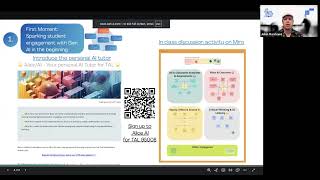
Teaching with GenAI showcase - Julien Marchand
UTS Education Portfolio
Teaching with GenAI showcase - Luis Lozano Paredes
UTS Education Portfolio

Teaching with GenAI showcase - Phoebe Bailey
UTS Education Portfolio
YouTube returned 6 videos for “GenAI Showcase”, and we withheld 3: 3 did not mention GenAI Showcase. Showing the 3 we can prove are about GenAI Showcase.
Official links
Tools that pair well with GenAI Showcase
Common stack mates teams adopt alongside GenAI Showcase, with the specific reason each pairing earns its keep.

pgvector
pgvector brings open-source vector similarity search to Postgres so embeddings live next to your relational data.

Zilliz Cloud Serverless
Zilliz Cloud Serverless is a managed serverless vector database on Milvus, with auto-scaling compute and tiered storage for GenAI apps.

Pinecone
Pinecone is a managed vector database and knowledge engine for RAG, semantic search, and agent retrieval.
Featured Head-to-Head Comparisons
Genai Showcase vs Spider Cloud
Choose GenAI Showcase if you need to build AI apps that search your own operational data with native vector + hybrid search. Choose Spider Cloud if your AI agents need real-time web data for context. They complement rather than compete: use both together for RAG pipelines that combine private data and web freshness.
Genai Showcase vs Temporal Ai
Choose GenAI Showcase if your primary need is a scalable database with built-in vector search for RAG apps, especially in multi-cloud environments. Choose Temporal AI if you need reliable, durable orchestration for AI agents or microservices that survive failures. They solve different problems, but for AI workflows requiring both data storage and orchestration, they can be complementary.
Genai Showcase vs Screenplayiq
If you're a developer building AI applications with retrieval-augmented generation (RAG), MongoDB Atlas (GenAI Showcase) is the clear winner—its native vector search, multi-cloud support, and recent hybrid search enhancements (2026) directly cut LLM costs. For screenwriters or studio executives needing data-driven script marketability predictions, ScreenplayIQ is a niche but effective tool. These products don't compete; choose based on whether your data is app-centric or narrative-centric.
Alternatives to GenAI Showcase
View all
pgvector
pgvector brings open-source vector similarity search to Postgres so embeddings live next to your relational data.
Zilliz Cloud Serverless
Zilliz Cloud Serverless is a managed serverless vector database on Milvus, with auto-scaling compute and tiered storage for GenAI apps.

Frequently Asked Questions
Used GenAI Showcase? Help shape our editorial sentiment research.