
Hands On Large Language Models
An illustrated O'Reilly guide by Jay Alammar and Maarten Grootendorst that teaches Python developers to build and refine large language models.
RAC recommends this book for Python developers and data scientists who learn by seeing and doing. The 275+ custom figures plus Jupyter notebooks on the companion GitHub repo make it the fastest route to running your own sentence-transformers semantic search or a RAG loop. Experts will find the transformer and tokenization chapters introductory; for the underlying mathematics, the original transformer papers or Goodfellow's Deep Learning go deeper. It is a static 2024 publication, so treat it as a foundations text and pair it with current model documentation for anything version-specific.
Verified 5d ago · liveness 69/100 · cite: rightaichoice.com/tools/hands-on-large-language-models
- Python developers wanting hands-on LLM skills
- Data scientists who need to understand transformers practically
- AI practitioners exploring RAG and fine-tuning
- Students who prefer a visual, code-first textbook
- Researchers seeking deep mathematics or unpublished techniques
- Learners who prefer video courses over written material
- Complete beginners with no Python experience
We scan live Reddit threads, YouTube comments, X posts, G2 reviews and other communities — and hand you an honest verdict in under a minute.
- Honest verdict, not marketing
- Real pros & cons from real users
- Attributed quotes with receipts
3 free scans · no card needed
Skip Hands-On Large Language Models if you already build transformers daily and need current model APIs, production serving internals, or advanced fine-tuning methods rather than visual foundations.
Buying the ebook only ($39.99) leaves you without the print copy that the $49.99 bundle includes, so decide before checkout.
At $39.99 for the ebook and $49.99 for print plus ebook, this sits in the standard O'Reilly technical-book band — cheaper than a multi-week paid course or a conference workshop, and comparable to peers like Build a Large Language Model (From Scratch). If budget is the constraint, the companion GitHub repository and the authors' free blogs cover overlapping ground.
In short
Hands On Large Language Models — An illustrated O'Reilly guide by Jay Alammar and Maarten Grootendorst that teaches Python developers to build and refine large language models. Best for Python developers wanting hands-on LLM skills, Data scientists who need to understand transformers practically, AI practitioners exploring RAG and fine-tuning. Plans from $39.99.
What people actually say about Hands On Large Language Models — is it worth it?
We ran a structured research pass across product reviews, community discussions, and post-purchase forum threads to surface the patterns vendors won't publish themselves. Below: the recurring strengths, the hidden costs people mention most, and the cohort that consistently regrets adopting this tool.
36 mentions across 4 sources (Hacker News, YouTube, GitHub, Lemmy) · researched Sep 1, 2026.
Average across the 4 sources that answered — each source counts once, not each post.
- +Over 275 custom figures make complex topics surprisingly visual and intuitive.
- +Practical Python labs using Hugging Face get you coding within minutes.
- +Great step-by-step coverage of semantic search and RAG for real use cases.
- +The companion GitHub repo with 28k+ stars is a goldmine of working examples.
- +Balances generative and representational models, not just one side.
- −Setup is plagued by dependency issues that break the code labs quickly.
- −Book text isn't in the GitHub repo, limiting cross-referencing while reading.
- −Some notebooks corrupted or fail to open in Colab right now.
- −Library versions mentioned are already outdated in places (e.g., langchain).
- −Math theory is light; advanced readers may want deeper derivations.
- • Time spent debugging environment issues, especially with Colab and dependencies.
- • Cost of GPU compute if running fine-tuning labs locally or on cloud.
Viability Score
How well maintained and how widely used is Hands On Large Language Models? Built from what the vendor actually publishes (docs, changelog, tutorials, integrations, pricing), whether the site is live, and how much real users discuss it. How we calculate this
Last calculated: October 2026
How we score →Key Features
- Over 275 custom-made figures and diagrams
- Python code labs using Hugging Face and PyTorch
- Tokenization, embeddings and transformer architecture coverage
- Step-by-step semantic search with sentence-transformers
- Retrieval-augmented generation (RAG) implementation
- Fine-tuning large language models for custom tasks
- Building chatbots and conversational AI
- Deployment strategies for LLMs
- Balanced generative and representational model applications
- Visual timeline of LLM development
- Interactive Jupyter notebooks on the companion GitHub repository
- References to key research papers and historical context
- Companion website with supplementary resources
- Written by Jay Alammar and Maarten Grootendorst
About Hands On Large Language Models
Hands-On Large Language Models is an O'Reilly book by Jay Alammar (Director and Engineering Fellow at Cohere) and Maarten Grootendorst (author of BERTopic, KeyBERT and PolyFuzz) that teaches LLMs through more than 275 custom-made figures and practical Python labs. It is written for Python developers and data scientists who want working code rather than paper-by-paper theory. Chapter coverage runs from tokenization and transformer architecture through sentence embeddings and semantic search with sentence-transformers, retrieval-augmented generation (RAG), fine-tuning, and chatbot construction, ending with deployment strategies. Every concept is paired with a diagram and a runnable example, and the companion GitHub repository hosts interactive Jupyter notebooks so you can execute the code as you read. The book deliberately balances generative and representational applications, so you learn how models like GPT generate text and also how sentence embeddings drive search and classification. Endorsements come from Andrew Ng, Nils Reimers (creator of sentence-transformers), Josh Starmer, Luis Serrano and Leland McInnes. If you want a math-heavy, paper-by-paper treatment this is not the right purchase, but for a visual, code-first entry point it is unusually well structured.
Behind the Verdict
The distinguishing feature of this book is not its topic list — RAG, fine-tuning, embeddings and chatbots are covered everywhere by now — but the density of its visual explanations. More than 275 figures are custom-drawn rather than lifted from papers, and a running timeline of LLM development gives you historical context that most tutorials skip. The labs are concrete: semantic search built on sentence-transformers, a retrieval-augmented generation pipeline over your own knowledge base, fine-tuning a small open model for a domain task, and a chatbot that maintains context. Because the repo ships interactive Jupyter notebooks, you can modify the examples rather than retype them. The author pairing is a genuine signal — Jay Alammar's AI blog is one of the most widely read visual explainers in machine learning, and Maarten Grootendorst maintains BERTopic, KeyBERT and PolyFuzz, so the representational side of the book is written by someone who ships embedding-based tooling. Weaknesses are real and worth stating. It is a 2024 print and ebook product, not a living platform, so nothing in it tracks the model releases, API pricing or interface changes of the last two years; you will need the vendors' own current docs for anything version-bound. It covers concepts rather than a single proprietary model, which is a strength for durability and a weakness if you wanted a guided tour of one specific API. And the code assumes you are already comfortable in Python and Jupyter — this is not a first programming book. Where it fits: a developer or data scientist who has used an LLM API and now wants to understand what is happening underneath and how to build search and RAG on top. Where it does not: researchers wanting unpublished techniques, and anyone who prefers video courses.
Researching Hands On Large Language Models? Get your full AI stack in 60 seconds.
Free, no signup — tell us your goal and get tools matched to your budget & existing stack.
Real-world workflow fit
Concrete scenarios for the personas Hands On Large Language Models actually fits — and what changes day-one when you adopt it.
You read the tokenization and embedding chapters, then open the companion Jupyter notebooks and run the sentence-transformers semantic search lab against a folder of your own PDFs.
Outcome: You end the first week with a working semantic search prototype and a mental model of how embeddings represent meaning.
You follow the retrieval-augmented generation chapters to wire a vector store to a language model and answer questions over an internal knowledge base.
Outcome: You have a demonstrable RAG pipeline you can show stakeholders and extend with your own retrieval tuning.
You work through the fine-tuning labs on a small open model, adapting it to domain-specific text, then read the deployment chapter before putting it behind an API.
Outcome: You can judge whether fine-tuning or prompting is the right tool for a given task and ship a monitored endpoint.
Use Cases
- Build a semantic search engine over your own documents using sentence embeddings.
- Fine-tune a small open language model on domain-specific text.
- Create a retrieval-augmented question-answering system over a private knowledge base.
- Develop a chatbot that maintains context with transformer-based models.
- Learn tokenization and transformer internals by running the book's Jupyter notebooks.
- Deploy a language model behind an API with monitoring practices from the final chapters.
Models Under the Hood
as of 2026-09-29
Limitations
- The book is a static 2024 publication, not a continuously updated platform, so it does not track model releases or API changes from 2025 onward.
- Code examples assume basic Python proficiency and familiarity with Jupyter notebooks.
- It teaches concepts across open and proprietary models rather than one vendor's API in depth.
- Its transformer and tokenization chapters are introductory for readers who already work with these architectures.
as of 2026-10-03
Verification history
We have re-verified Hands On Large Language Models 8 times since . Each pass re-reads the vendor's own pages and re-checks every listed field against that evidence; passes where nothing had changed are marked as such.
- — re-checked, vendor evidence unchanged
- — re-checked, vendor evidence unchanged
- — re-checked, vendor evidence unchanged
- — re-checked, vendor evidence unchanged
- — re-verified summary, description, our verdict, our analysis, pricing model, pricing tiers, features, integrations, who it suits, who should skip it
- — re-checked, vendor evidence unchanged
Showing the 6 most recent of 8 verification passes.
Free to cite with attribution — this page re-verifies continuously.
12-month cost
Project the real annual outlay, including the implied monthly cost when only an annual tier is published.
Vendor list price only. Add-on usage, seat overages, and contract minimums are surfaced under Hidden costs & gotchas.
Plans compared
For each published Hands On Large Language Models tier: who it actually fits, and what it adds vs. the previous tier. Cross-reference the cost calculator above for projected annual outlay.
Ebook Only
$39.99
Ideal for
Developers who want the diagrams and code labs immediately and read on a screen or tablet
What this tier adds
Starting tier — full ebook access with all 275+ illustrations and the companion code labs
Print + Ebook Bundle
$49.99
Ideal for
Developers and students who annotate a physical reference and want the digital copy for searching
What this tier adds
Adds the paperback copy on top of the ebook, illustrations and code
Where the pricing makes sense
The company stage and team size where Hands On Large Language Models's pricing actually pencils out — and where peers do it cheaper.
At $39.99 for the ebook and $49.99 for print plus ebook, this sits in the standard O'Reilly technical-book band — cheaper than a multi-week paid course or a conference workshop, and comparable to peers like Build a Large Language Model (From Scratch). If budget is the constraint, the companion GitHub repository and the authors' free blogs cover overlapping ground.
Setup time & first value
How long it actually takes to get something useful out of Hands On Large Language Models — broken out by persona, not the marketing-page minute.
Reading a chapter and running its notebook takes roughly 30-60 minutes if your Python environment is ready; standing up the semantic search or RAG lab end to end is a half-day including dependency installs. Setting up a fresh environment with PyTorch, Hugging Face and Jupyter is the main startup cost.
Switching to or from Hands On Large Language Models
How to bring data in from common predecessors and how to get it back out — written for the switcher, not the buyer.
- →From video courses: use the book as the written reference alongside the notebooks you already run.
- →From vendor API tutorials: start at the tokenization and embedding chapters to build the conceptual base the tutorials skip.
- →From the authors' blog posts: the book consolidates and sequences material that previously appeared as separate visual explainers.
- ↗To the original transformer and RAG papers: once the book's chapters feel introductory, the cited papers are the natural next step.
- ↗To vendor API documentation: move here for current model names, context windows and pricing the 2024 edition cannot cover.
- ↗To deeper mathematics texts such as Goodfellow's Deep Learning: the path for readers who want the theory behind the diagrams.
Resources & Guides
Tutorials & Learning
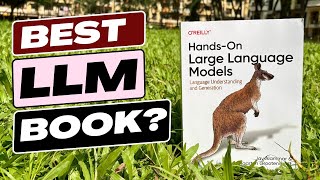
YouTube returned 6 videos for “Hands On Large Language Models”, and we withheld 5: 5 did not mention Hands On Large Language Models. Showing the 1 we can prove is about Hands On Large Language Models.
Official links
Tools that pair well with Hands On Large Language Models
Common stack mates teams adopt alongside Hands On Large Language Models, with the specific reason each pairing earns its keep.

OpenAI o
OpenAI o1 is the 2024 reasoning model that thinks in chains of thought before answering — now reachable only on ChatGPT Plus and Pro under Legacy models, or

LLMs From Scratch
A code-first Manning book that walks you through building a GPT-2 class LLM in PyTorch, line by line, without using existing LLM libraries

Hello Agents
Free 16-chapter Datawhale tutorial that teaches you to build AI agents in Python from first principles
Featured Head-to-Head Comparisons
Hands On Large Language Models vs Surge Ai
These tools serve completely different needs. Hands-On Large Language Models is a static educational resource for individuals wanting to learn LLM fundamentals through visual diagrams and code. Surge AI is a dynamic enterprise platform providing expert human feedback for training and evaluating frontier AI. Choose the book if you're a learner; choose Surge if you're building or safety-testing production systems.
Hands On Large Language Models vs Praktika
Hands-On Large Language Models and Praktika serve completely different needs. Choose Hands-On if you want to master the technical side of LLMs through code and diagrams. Choose Praktika if you want to practice speaking a language with AI tutors. They are not direct competitors.
Alternatives to Hands On Large Language Models
View all
OpenAI o
OpenAI o1 is the 2024 reasoning model that thinks in chains of thought before answering — now reachable only on ChatGPT Plus and Pro under Legacy models, or

LLMs From Scratch
A code-first Manning book that walks you through building a GPT-2 class LLM in PyTorch, line by line, without using existing LLM libraries

Hello Agents
Free 16-chapter Datawhale tutorial that teaches you to build AI agents in Python from first principles
Frequently Asked Questions
Categories
Best-of guides
Used Hands On Large Language Models? Help shape our editorial sentiment research.