
Insilico Medicine
Generative AI drug discovery suite spanning target ID, molecule design, biologics and clinical trial prediction.
Insilico is one of the few generative AI drug discovery platforms whose claims are underwritten by its own clinical-stage assets — TNIK cleared IND and advanced, USP1 went to Exelixis, KAT6 and KIF18A to Menarini. Buy it when you want target-to-clinic coverage from a single vendor and you have the computational biology bench to drive PandaOmics, Chemistry42, Generative Biologics and inClinico. Skip it if your need is one stage of the funnel, or if you want a published price before you talk to
Verified 10h ago · liveness 69/100 · cite: rightaichoice.com/tools/insilico-medicine
- Pharma R&D teams wanting generative AI across target ID, molecule design, biologics and clinical prediction from one vendor
- Biotechs generating novel molecules fast and open to licensing or co-developing assets with Insilico
- Large enterprises automating target discovery and hit-to-lead with computational biology staff in place
- Longevity and aging researchers using the PreciousGPT models and aging-driven target discovery
- Small labs that only need basic molecular docking or a single-step cheminformatics tool
- Teams without computational biology or bioinformatics expertise to run PandaOmics and Chemistry42
- Groups whose only need is clinical trial data analysis with no upstream discovery work
We scan live Reddit threads, YouTube comments, X posts, G2 reviews and other communities — and hand you an honest verdict in under a minute.
- Honest verdict, not marketing
- Real pros & cons from real users
- Attributed quotes with receipts
3 free scans · no card needed
Skip Pharma.ai if you only need one stage of the pipeline — molecular docking, a single ADMET filter, or clinical data analysis — or if you have no computational biology staff to interpret PandaOmics and Chemistry42 output.
Pharma.ai is priced for enterprise pharma and funded biotech R&D budgets, where a multi-module generative discovery suite is compared against building an internal platform or running several point-solution vendors.
In short
Insilico Medicine — Generative AI drug discovery suite spanning target ID, molecule design, biologics and clinical trial prediction. Best for Pharma R&D teams wanting generative AI across target ID, molecule design, biologics and clinical prediction from one vendor, Biotechs generating novel molecules fast and open to licensing or co-developing assets with Insilico, Large enterprises automating target discovery and hit-to-lead with computational biology staff in place. Contact Sales pricing.
No head-to-head comparison for Insilico Medicine yet — the alternatives below are the closest matches we list.
What's new in Insilico Medicine
Checked 7 days agoAcross the latest 1 update: 1 feature update.
What people actually say about Insilico Medicine — is it worth it?
We ran a structured research pass across product reviews, community discussions, and post-purchase forum threads to surface the patterns vendors won't publish themselves. Below: the recurring strengths, the hidden costs people mention most, and the cohort that consistently regrets adopting this tool.
5 mentions across 2 sources (Hacker News, Lemmy) · researched Aug 18, 2026.
Average across the 2 sources that answered — each source counts once, not each post.
- +End-to-end coverage from target ID to clinical prediction is unique.
- +Validated with multiple candidates, including a Phase III TNIK inhibitor.
- +Generative AI designs novel small molecules and antibodies.
- +Backed by massive deals like $2.75B from Eli Lilly.
- +Integrates with RDKit, OpenBabel, and cloud providers.
- −Enterprise-only pricing and non-public costs exclude smaller labs.
- −High skill requirement; not for teams without computation expertise.
- −Sparse independent user reviews make reliability hard to judge.
- −No free tier or public trial limits adoption.
- −Late-stage pipeline failures could overshadow AI strengths.
- • No public pricing; implementation, consulting, and support fees likely negotiated separately
- • May require internal computational biology staff to extract value
Viability Score
How well maintained and how widely used is Insilico Medicine? Built from what the vendor actually publishes (docs, changelog, tutorials, integrations, pricing), whether the site is live, and how much real users discuss it. How we calculate this
Last calculated: October 2026
How we score →Key Features
- PandaOmics multimodal target discovery and prioritization
- PandaOmics Box, a deployable variant of the target discovery module
- Chemistry42 de novo small molecule generation
- Alchemistry physics-based relative binding free energy engine
- ADMET and off-target optimization computed on the fly
- MDFlow end-to-end molecular simulation workflows
- Retrosynthesis prediction of synthetic routes for molecular structures
- MolSpace visualization of generations against public data
- Model Training to build a state-of-the-art model on your own data
- Generative Biologics for antibody and biomolecule discovery and optimization
- inClinico clinical trial design and outcome prediction
- Science42:DORA multi-agent generative research assistant
- Nach01 multimodal natural and chemical languages foundation model
- Precious1GPT / Precious2GPT / Precious3GPT multi-omics age prediction and target ID
- Virtual Aging Cell multi-agent virtual cell with biological age as a core condition
About Insilico Medicine
Insilico Medicine is both a generative AI drug discovery software vendor and a drug developer, and that combination is the pitch. Its Pharma.ai suite covers an entire discovery arc through named modules: PandaOmics for multimodal target discovery and prioritization, Chemistry42 for de novo small molecule generation with on-the-fly ADMET and off-target optimization, Generative Biologics for antibody and biomolecule engineering, and inClinico for clinical trial design and outcome prediction. Biology 42, Medicine 42 and Science 42 are the branded groupings under which those modules sit. The stack reaches beyond modeling. A Data Warehouse standardizes cross-application data flow, Life Star 2 provides an automated lab operating environment, and Science42:DORA acts as a multi-agent generative research assistant. Insilico's own pipeline runs on the same platform, so TNIK for idiopathic pulmonary fibrosis, USP1 for BRCA-mutated cancer (out-licensed to Exelixis), and KAT6 and KIF18A (both out-licensed to Menarini) validate capabilities with clinical progress rather than a benchmark score alone. Longevity work runs parallel: Precious1GPT, Precious2GPT and Precious3GPT handle multi-omics age prediction and target ID, with Virtual Aging Cell modeling biological age as a core condition. Buyers are pharma R&D groups, biotechs and longevity researchers with computational biology headcount already in place, not a lab that needs one docking run. Against point tools like a standalone ADMET predictor or cheminformatics package, Insilico sells breadth from target to IND plus a partner pipeline to license from.
Behind the Verdict
The line between AI drug discovery software and AI drug discovery pipelines has thinned, and Insilico sits on the interesting side of it. It sells Pharma.ai modules to other companies while running programs of its own through the same stack. That matters for buyers because the validation story is clinical, not a leaderboard. TNIK for IPF had IND clearance and advanced into the clinic; USP1 was out-licensed to Exelixis; KAT6 and KIF18A went to Menarini. Several other programs from MAT2A and TEAD to NLRP3, GLP-1R and Pan-KRAS are listed as available for licensing, which means a buyer can evaluate a partner as well as a vendor.Where this fits: a pharma R&D group that wants one relationship covering target identification, hit-to-lead, lead optimization and trial design. Chemistry42 does the generative chemistry work with supporting engines — Alchemistry for physics-based relative binding free energy, MDFlow for simulation workflows, Retrosynthesis for synthetic routes, MolSpace for visualizing generations against public data, and Model Training for models built on proprietary data. If your team already runs RDKit, OpenBabel or PyMOL, the interoperability notes mean you are not ripping up an existing cheminformatics stack to adopt it.When to pass. If your entire problem is docking, or a single ADMET prediction, cheaper point tools will do the job and you will not use 80% of Pharma.ai. Procurement is a custom contract, so anyone needing a card-and-go checkout is in the wrong place.We would also flag the practical caveats. This is enterprise software with onboarding, deployment and data-integration work; the Data Warehouse
Researching Insilico Medicine? Get your full AI stack in 60 seconds.
Free, no signup — tell us your goal and get tools matched to your budget & existing stack.
Real-world workflow fit
Concrete scenarios for the personas Insilico Medicine actually fits — and what changes day-one when you adopt it.
You load internal multi-omics and literature evidence into PandaOmics to rank targets for a fibrosis program, cross-check the shortlist against the company's own TNIK precedent, then hand the top target to medicinal chemistry.
Outcome: A prioritized, evidence-backed target list you can defend at a go/no-go meeting instead of a spreadsheet of expression fold-changes.
You generate novel scaffolds in Chemistry42, rank binding with Alchemistry, check routes with Retrosynthesis, and compare the series against public chemistry in MolSpace.
Outcome: A ranked series with routes and ADMET flags ready for synthesis, compressed from weeks of manual enumeration.
You run candidate designs and patient populations through inClinico to predict trial outcomes and stratify enrollment before committing to a protocol.
Outcome: A trial design and stratification plan with quantitative failure-risk signal to take into the protocol review.
Use Cases
- Identify and prioritize novel targets for fibrosis from multi-omics data with PandaOmics, as done for TNIK.
- Generate and optimize small molecule inhibitors with Chemistry42 and rank them with Alchemistry free energy calculations.
- Plan synthetic routes for generated molecules with Retrosynthesis before committing wet-lab chemistry.
- Design and optimize antibodies and biomolecules with Generative Biologics for immuno-oncology programs.
- Predict clinical trial outcomes and stratify patients with inClinico to reduce trial failure risk.
- Run agentic multi-step research workflows on Pharma.AI tools through Model Context Protocol servers.
- Benchmark model capability across the discovery pipeline with MMAI Gym and ScienceAI Bench.
- License or co-develop therapeutic assets from Insilico's own pipeline.
Models Under the Hood
as of 2026-10-15
Limitations
- Pharma.ai assumes deep domain expertise in drug discovery and access to rich, well-curated data; the target discovery and generative chemistry modules lose much of their value without both.
- The commercial model is enterprise and custom-contracted, so module access, data handling terms and licensing rights are negotiated rather than self-served, and those terms determine what you actually get.
- Onboarding means integrating with your existing cheminformatics stack and data warehouse rather than working inside it.
- Several of the most interesting assets in Insilico's own pipeline are out-licensed or co-developed with third parties, so licensing opportunities depend on what remains available.
as of 2026-10-01
Verification history
We have re-verified Insilico Medicine 19 times since . Each pass re-reads the vendor's own pages and re-checks every listed field against that evidence; passes where nothing had changed are marked as such.
- — re-checked, vendor evidence unchanged
- — re-verified summary, description, our verdict, our analysis, pricing model, pricing tiers, features, integrations, who it suits, who should skip it
- — re-verified summary, description, our verdict, our analysis, pricing model, pricing tiers, features, integrations, who it suits, who should skip it
- — re-checked, vendor evidence unchanged
- — re-verified summary, description, our verdict, our analysis, pricing model, pricing tiers, features, integrations, who it suits, who should skip it
- — re-verified summary, description, our verdict, our analysis, pricing model, pricing tiers, features, integrations, who it suits, who should skip it
Showing the 6 most recent of 19 verification passes.
Free to cite with attribution — this page re-verifies continuously.
Where the pricing makes sense
The company stage and team size where Insilico Medicine's pricing actually pencils out — and where peers do it cheaper.
Pharma.ai is priced for enterprise pharma and funded biotech R&D budgets, where a multi-module generative discovery suite is compared against building an internal platform or running several point-solution vendors.
Setup time & first value
How long it actually takes to get something useful out of Insilico Medicine — broken out by persona, not the marketing-page minute.
Expect a multi-week enterprise onboarding: tenant setup, data warehouse configuration and loading your omics and chemistry data before PandaOmics or Chemistry42 produce meaningful output. Individual modules are usable sooner once your data is in, but the first genuinely useful result is usually weeks in, not days.
Switching to or from Insilico Medicine
How to bring data in from common predecessors and how to get it back out — written for the switcher, not the buyer.
- →From in-house cheminformatics scripts: port scoring and enumeration steps into Chemistry42 engines rather than reimplementing them, then keep RDKit and OpenBabel in the loop for compatibility.
- ↗To point-solution cheminformatics vendors: export generated structures and ADMET annotations into standard formats, since RDKit and OpenBabel interoperability is documented.
Integrations
Resources & Guides
Tutorials & Learning
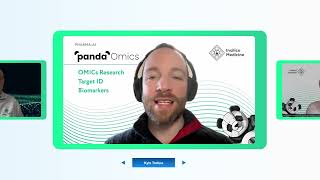
Introduction to Insilico Medicine's Free Course on Disease Modeling and Target Identification
Insilico Medicine
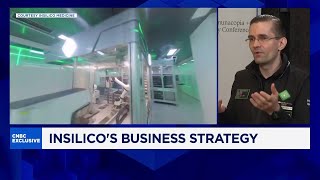
InsilicoのCEOが語る、AI創薬がいかにして承認までの期間を大幅に短縮するか
CNBC International Live
Virtual Aging Cell from Insilico Medicine
Insilico Medicine
YouTube returned 6 videos for “Insilico Medicine”, and we withheld 1: 1 did not mention Insilico Medicine. Showing the 5 we can prove are about Insilico Medicine.
Official links
Tools that pair well with Insilico Medicine
Common stack mates teams adopt alongside Insilico Medicine, with the specific reason each pairing earns its keep.

Owkin
Owkin's K Pro is an autonomous AI scientist agent for biopharma R&D, turning multimodal patient data into drug discovery and clinical trial

Iktos
Iktos pairs generative AI with robotic lab automation to compress small-molecule drug discovery.
Recursion Pharmaceuticals
Recursion runs AI drug discovery as a lab-in-the-loop engine — automated cellular imaging at scale feeding generative chemistry and a clinical pipeline.
Alternatives to Insilico Medicine
View all
Owkin
Owkin's K Pro is an autonomous AI scientist agent for biopharma R&D, turning multimodal patient data into drug discovery and clinical trial

Iktos
Iktos pairs generative AI with robotic lab automation to compress small-molecule drug discovery.
Recursion Pharmaceuticals
Recursion runs AI drug discovery as a lab-in-the-loop engine — automated cellular imaging at scale feeding generative chemistry and a clinical pipeline.
Frequently Asked Questions
Categories
Topics
Used Insilico Medicine? Help shape our editorial sentiment research.