Inworld AI
Inworld AI delivers realtime text-to-speech and speech-to-speech inference for consumer voice agents, with TTS-2 Flash hitting 50ms to
If voice quality and latency decide whether your users stay, Inworld's Realtime TTS-2 Flash is a serious contender — 50ms to first audio and bracketed direction that actually changes how a line reads. The Inference side sweetens it: one credit pool covers TTS, STT, and open LLMs at aggressive rates. Just don't buy it expecting a visual voice-builder; this is an API for teams with backend engineers.
Verified 6h ago · liveness 94/100 · cite: rightaichoice.com/tools/inworld-ai
- Companion and social apps where voice latency drives retention
- Language learning products needing steerable multilingual TTS
- Game and interactive media studios voicing NPCs and narration
- Voice agents that need STT, LLM, and TTS from one credit pool
- Non-developers who want a no-code voice builder with a script editor
- Batch pre-rendered TTS jobs where realtime latency is irrelevant
- Teams without backend engineers to wire audio pipelines
We scan live Reddit threads, YouTube comments, X posts, G2 reviews and other communities — and hand you an honest verdict in under a minute.
- Honest verdict, not marketing
- Real pros & cons from real users
- Attributed quotes with receipts
3 free scans · no card needed
Skip Inworld if nobody on your team writes backend code or if you only need batch TTS where 100ms latency is irrelevant — the value here is realtime steering and inference, not a drag-and-drop voice builder.
Overage past your included credits is charged at your plan rate, so a traffic spike lands directly on your invoice rather than being absorbed by the tier.
Inworld prices for engineering teams that meter voice by the character and hour. The free On-Demand tier and $25/mo Creator plan suit prototyping and small projects; $100/mo Builder and $300/mo Developer fit growing production apps; $1,500/mo Growth ($12.50/1M chars, $0.10/hr STT) is where compliance add-ons and 30,000 custom voices begin. Yearly billing adds two months free. It undercuts the $100/1M chars Inworld attributes to ElevenLabs and the $0.46/hr it attributes to Deepgram.
In short
Inworld AI — Inworld AI delivers realtime text-to-speech and speech-to-speech inference for consumer voice agents, with TTS-2 Flash hitting 50ms to. Best for Companion and social apps where voice latency drives retention, Language learning products needing steerable multilingual TTS, Game and interactive media studios voicing NPCs and narration. Free to start; paid plans from $25/mo.
No head-to-head comparison for Inworld AI yet — the alternatives below are the closest matches we list.
What's new in Inworld AI
Checked 7 days agoAcross the latest 1 update: 1 launch.
What people actually say about Inworld AI — is it worth it?
We ran a structured research pass across product reviews, community discussions, and post-purchase forum threads to surface the patterns vendors won't publish themselves. Below: the recurring strengths, the hidden costs people mention most, and the cohort that consistently regrets adopting this tool.
30 mentions across 4 sources (Hacker News, YouTube, Product Hunt, Lemmy) · researched Aug 30, 2026.
Average across the 4 sources that answered — each source counts once, not each post.
- +TTS-2 achieves 100ms TTFB, dramatically faster than rivals like ElevenLabs.
- +Priced 25x cheaper than competitors, with STT at $0.10/hour on Growth.
- +Zero-markup LLM routing to 220+ models provides flexibility and cost control.
- +Voice cloning from just 15 seconds of audio, with 15+ language support.
- +Text-based voice design enables intuitive, production-ready voice creation.
- −Free tier limitations frustrate users; YouTube comments report broken access.
- −Limited independent reviews; most buzz is hype from creators, not deep analysis.
- −Documentation and support may not match mature competitors like ElevenLabs.
- −API latency claims are impressive but not independently verified by users.
- −Focus on game characters in PH may scare off enterprise developers.
- • Potential overage charges for exceeding free tier limits.
- • Costs for LLM tokens passed through, even though markup is zero.
- • Data transfer or egress fees for high-volume audio streaming.
Viability Score
How well maintained and how widely used is Inworld AI? Built from what the vendor actually publishes (docs, changelog, tutorials, integrations, pricing), whether the site is live, and how much real users discuss it. How we calculate this
Last calculated: October 2026
How we score →Key Features
- Realtime TTS-2 text-to-speech with as low as 90ms to first audio
- Realtime TTS-2 Flash at 50ms to first audio for latency-critical agents
- Bracketed voice steering for tone, pace, volume, and pauses
- Instant voice cloning plus professional voice clones per tier
- Text-based voice design from a natural-language description
- Realtime STT-1 streaming transcripts under 70ms to final transcript
- STT voice traits: emotion, style, age, and accent
- Speech-to-speech over one WebSocket or WebRTC connection
- 204ms from turn closed to first audio on speech-to-speech
- Any LLM selectable per session for speech-to-speech agents
- Inworld Inference: hosted open models tuned from weights to kernels
- Up to 7.8× faster time to first token versus other providers of the same model
- Roughly 500 languages and dialects in Realtime TTS-2
- Audio downloads and adjustable speaking rate and pronunciation
- Character rollover: credits carry for 3 months
About Inworld AI
Inworld AI is a voice and inference platform for developers building consumer-facing AI: companions, language tutors, wellness coaches, voice agents, and game characters. The core is a first-party speech stack — Realtime TTS-2 for steerable, expressive text-to-speech and Realtime TTS-2 Flash for the lowest time-to-first-audio, plus Realtime STT-1 streaming transcription that returns emotion, style, age, and accent alongside the words. The steering is the differentiator. Drop bracketed directions like [warm and quietly moved] into your text and TTS-2 adjusts tone, pace, volume, and pauses on the fly. Voice cloning runs from short audio samples, voice design works from a written description, and one TTS-2 model covers roughly 500 languages and dialects without accent carryover. A speech-to-speech endpoint listens, reasons, and talks back on a single WebSocket or WebRTC connection, with any LLM chosen per session. Around the voice stack sits Inworld Inference, a hosted fleet of open models (Gemma, GLM, Qwen and others) that Inworld tunes from weights to kernels — the company claims nearly 40% below the median provider on the same model and up to 7.8× faster time to first token. LLM, TTS, and STT all bill from one credit pool, and serving runs across US, Europe, India, and Asia Pacific sites with SOC 2 Type II, HIPAA, and GDPR coverage. Positioning: Inworld is a developer platform that bundles voice synthesis, transcription, and LLM routing in one place, which puts it against ElevenLabs on voice and against multi-model gateways on inference. It is not a no-code voice builder — expect to write backend code and wire audio pipelines yourself.
Behind the Verdict
Where Inworld earns its keep is the latency-sensitive case. A companion app or a live tutor falls apart the moment the reply lags, and TTS-2 Flash's 50ms-to-first-audio target is aimed squarely at that. We'd reach for it first when the product is conversational and the voice has to feel present. The steering is the part that surprised us. Bracketed instructions embedded in the text — tone, pace, emotion — mean one voice model can carry a range of delivery without you juggling separate presets. For narrative games or language learning, where the same voice needs to sound encouraging one line and stern the next, that saves real engineering time. When to pass: if you need batch TTS for pre-rendered audio, latency is irrelevant and you're paying for capability you won't use. If nobody on the team writes backend code, the platform will frustrate you — there's no visual script editor here. And small launches that can't justify a monthly plan should stay on the pay-as-you-go tier until concurrency becomes the bottleneck. Closest alternative is ElevenLabs. Inworld's own comparisons put Eleven v4 at $80 per 1M characters against TTS-2 Flash at $5 on Enterprise, and its Coval-measured numbers show 58ms versus 183ms to first audio. Treat vendor-run benchmarks with the usual skepticism, but the direction is consistent enough to test yourself with your own scripts before committing. The Inference layer is the quiet second product. Hosting open models with tuned kernels, at rates Inworld tracks closely against other providers of the same weights, means you can consolidate voice and LLM billing in one place. That's convenient for cost tracking; it's not a reason to switch if you're already happy with your model provider. Watch the concurrency and credit mechanics. Credits equal
Researching Inworld AI? Get your full AI stack in 60 seconds.
Free, no signup — tell us your goal and get tools matched to your budget & existing stack.
Real-world workflow fit
Concrete scenarios for the personas Inworld AI actually fits — and what changes day-one when you adopt it.
Wire the Realtime API over WebSocket, pick a first-party TTS-2 voice, clone a host voice from 15 seconds of reference audio, and steer tone and pauses with bracketed instructions inside each scripted line.
Outcome: A full-duplex companion that responds under 100ms TTFB and stays emotionally consistent as the conversation turns.
Design distinct tutor voices from text descriptions, clone them cross-lingually so the same identity speaks 200+ languages without accent carryover, and route the conversational layer through the LLM Router with failover.
Outcome: One tutor persona that sounds native in every market the app launches in, without a separate voice pipeline per language.
Generate expressive NPC lines with per-line bracketed direction, use timestamp alignment to sync subtitles, and A/B test two LLM providers behind the Router for the dialogue layer.
Outcome: NPCs players describe as worth talking to, with subtitle sync handled by the TTS output rather than a separate pass.
Use Cases
- Add conversational NPCs with memory to a role-playing game
- Build a voice-first companion app with ongoing, emotionally engaging interaction
- Create a multilingual sales agent with real-time speech and tool calling
- Develop an educational tutor that adapts tone and language per student
- Deploy a customer support agent with full-duplex audio and mid-session tool calls
- Power voice-driven health and wellness coaching apps
- Enable real-time translation for a global user base
- A/B test LLM providers in production without a code rewrite
Models Under the Hood
as of 2026-10-16
Limitations
- On-Demand pay-as-you-go pricing is metered: TTS-2 at $25/1M characters, TTS-2 Flash at $15/1M, STT 1 at $0.15/hr, and LLM Inference from $0.07/1M tokens on open models.
- The free tier includes up to 70 minutes of TTS, 100 custom voices, and 2 professional voice clones with a commercial license.
- Higher paid tiers (e.g.
- Creator at $25/mo) unlock volume discounts, features, and higher limits, and 3 months of credit rollover is offered.
- GDPR and SOC 2 Type II apply on every plan.
as of 2026-10-01
Verification history
We have re-verified Inworld AI 22 times since . Each pass re-reads the vendor's own pages and re-checks every listed field against that evidence; passes where nothing had changed are marked as such.
- — re-verified summary, description, our verdict, our analysis, pricing model, pricing tiers, features, integrations, who it suits, who should skip it
- — re-verified summary, description, our verdict, our analysis, pricing model, pricing tiers, features, integrations, who it suits, who should skip it
- — re-verified summary, description, our verdict, our analysis, pricing model, pricing tiers, features, integrations, who it suits, who should skip it
- — re-verified summary, description, our verdict, our analysis, pricing model, pricing tiers, features, integrations, who it suits, who should skip it
- — re-verified summary, description, our verdict, our analysis, pricing model, pricing tiers, features, integrations, who it suits, who should skip it
- — re-verified summary, description, our verdict, our analysis, pricing model, pricing tiers, features, integrations, who it suits, who should skip it
Showing the 6 most recent of 22 verification passes.
Free to cite with attribution — this page re-verifies continuously.
12-month cost
Project the real annual outlay, including the implied monthly cost when only an annual tier is published.
Vendor list price only. Add-on usage, seat overages, and contract minimums are surfaced under Hidden costs & gotchas.
Plans compared
For each published Inworld AI tier: who it actually fits, and what it adds vs. the previous tier. Cross-reference the cost calculator above for projected annual outlay.
On-Demand
$0 pay as you go
Ideal for
Solo developers and small teams evaluating Inworld before committing — prototyping a voice feature with no monthly fee.
What this tier adds
Free entry point: up to 70 minutes of TTS included, 100 custom voices, Realtime API access, and 2,000-character TTS Playground limits.
Creator
$25/mo
Ideal for
Content creators and small projects with a steady monthly voice budget under a few hundred dollars.
What this tier adds
Adds $25 in monthly credits, up to 33% off TTS and STT rates, 500 custom voices, 40K-char Playground requests, and workspace sharing at $25/mo.
Builder
$100/mo
Ideal for
Growing projects and small teams running continuous production traffic with rising concurrency needs.
What this tier adds
Adds $100 in monthly credits, up to 40% off rates, 3,000 custom voices, and increased concurrency (50 concurrent requests) at $100/mo.
Developer
$300/mo
Ideal for
Production applications that need priority support and room to scale past 150 concurrent requests.
What this tier adds
Adds $300 in monthly credits, up to 47% off rates, 10,000 custom voices, priority email support, and professional voice cloning as an add-on at $300/mo.
Growth
$1,500/mo
Ideal for
Large deployments with compliance requirements — health, finance, or EU and India customer bases needing ZDR and a BAA path.
What this tier adds
Adds $1,500 in monthly credits, up to 53% off rates ($12.50/1M chars TTS-2, $0.10/hr STT), 30,000 custom voices, one professional voice clone, and ZDR/HIPAA add-ons at $1,500/mo.
Enterprise
Custom
Ideal for
Organizations negotiating volume rates, data residency, and SLA terms directly with Inworld.
What this tier adds
Adds custom pricing as low as $5/1M chars for TTS-2 and sub-$5 for TTS-2 Flash, price match, custom limits, SLA and DPA, EU and India data residency, and a dedicated AM with Slack channel.
Where the pricing makes sense
The company stage and team size where Inworld AI's pricing actually pencils out — and where peers do it cheaper.
Inworld prices for engineering teams that meter voice by the character and hour. The free On-Demand tier and $25/mo Creator plan suit prototyping and small projects; $100/mo Builder and $300/mo Developer fit growing production apps; $1,500/mo Growth ($12.50/1M chars, $0.10/hr STT) is where compliance add-ons and 30,000 custom voices begin. Yearly billing adds two months free. It undercuts the $100/1M chars Inworld attributes to ElevenLabs and the $0.46/hr it attributes to Deepgram.
Setup time & first value
How long it actually takes to get something useful out of Inworld AI — broken out by persona, not the marketing-page minute.
Developers typically get a first audio stream out of the docs quickstart in well under an hour — install the CLI, grab a key, and call Realtime TTS-2. A full-duplex speech-to-speech agent over the Realtime API with turn detection and tool calling is a few days of work. Teams without backend capacity should budget weeks, because there is no no-code path here.
Switching to or from Inworld AI
How to bring data in from common predecessors and how to get it back out — written for the switcher, not the buyer.
- →From ElevenLabs: move text to Inworld's Realtime TTS-2 endpoint and reuse bracketed direction, then compare per-1M-character rates on Creator or higher.
- →From Deepgram: point your STT calls at Inworld's single multi-provider Speech-to-Text API rather than changing transcription vendors per feature.
- →From a hand-rolled LLM gateway: replace provider keys with the Realtime Router to get zero markup, failover, and A/B testing.
- →From LiveKit or Vapi pipelines: swap in Inworld TTS-2 as the voice layer while keeping the existing agent orchestration.
- →From a legacy game TTS pipeline: generate NPC lines through the Inworld CLI and add timestamp alignment for subtitles.
- ↗To ElevenLabs: re-point TTS calls and rebuild bracketed voice direction, accepting a higher per-character rate.
- ↗To Deepgram: move STT off the multi-provider API and re-implement routing logic in your own gateway.
- ↗To a self-hosted TTS stack: export cloned voices and scripts, then rebuild latency and steering behavior in-house.
- ↗To a hyperscaler GPU deployment: replicate the inference layer and lose Router failover and A/B testing.
- ↗To a no-code voice builder: rebuild agent flows visually, sacrificing the Realtime API's mid-session function calling.
Integrations
Resources & Guides
- Resourceinworld.ai
Inworld AI Resources
Technical guides, benchmarks, tutorials, and best practices for building real-time AI and voice applications.
- Resourceinworld.ai
Inworld AI Blog: Build Better Conversational AI Experiences
Latest insights on realtime conversational AI, TTS, and runtime pipelines. Case studies, technical deep-dives, and product updates from Inworld.
- Documentationinworld.ai
Docs
Full product docs from inworld.ai
Tutorials & Learning
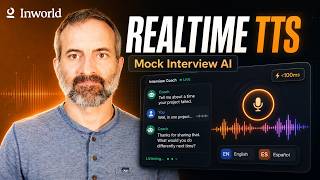
YouTube returned 6 videos for “Inworld AI”, and we withheld 5: 5 could not be judged, because “Inworld AI” is a single word that other videos use for other things. Showing the 1 we can prove is about Inworld AI.
Tools that pair well with Inworld AI
Common stack mates teams adopt alongside Inworld AI, with the specific reason each pairing earns its keep.

Fish Audio
Fish Audio delivers expressive AI text to speech and voice cloning, with emotion tags and a free S2.1 Pro TTS API.

Krisp Voice AI
Krisp Voice AI cancels call noise at the system level, converts accents in real time, and takes bot-free meeting notes.
ElevenLabs
ElevenLabs AI voice generator turns text into speech in 90+ languages, with cloning, dubbing, music and voice agents.
Alternatives to Inworld AI
View all
Fish Audio
Fish Audio delivers expressive AI text to speech and voice cloning, with emotion tags and a free S2.1 Pro TTS API.

Krisp Voice AI
Krisp Voice AI cancels call noise at the system level, converts accents in real time, and takes bot-free meeting notes.
ElevenLabs
ElevenLabs AI voice generator turns text into speech in 90+ languages, with cloning, dubbing, music and voice agents.
Frequently Asked Questions
Best-of guides
Used Inworld AI? Help shape our editorial sentiment research.