
Keras Hub
Keras-native pretrained models for BERT, ResNet and more, loadable in one line across TensorFlow, JAX and PyTorch backends.
Pick KerasHub if your stack is already Keras 3 and you want pretrained checkpoints without leaving it — from_preset plus .fit() is genuinely the whole learning curve, and switching KERAS_BACKEND between JAX, TensorFlow and Torch is a real differentiator. Treat it as a prototyping and research tool for now, not a stable production dependency: the project's own compatibility section says it may break compatibility at any time while in pre-release 0.y.z. If you need a broad model catalog, Hugging Face Transformers covers far more architectures; if you need a frozen API surface, wait for 1.0.
Verified 1d ago · liveness 61/100 · cite: rightaichoice.com/tools/keras-hub
- Keras 3 users who want pretrained checkpoints with minimal glue code
- Researchers prototyping on multiple backends (TensorFlow, JAX, PyTorch)
- Students learning transfer learning and fine-tuning
- Teams standardizing model code on the Keras 3 API
- Production systems that need a frozen, guaranteed-stable API before 1.0
- Teams that need a model catalog as broad as Hugging Face Transformers
- Environments where you cannot take a TensorFlow dependency for data preprocessing
We scan live Reddit threads, YouTube comments, X posts, G2 reviews and other communities — and hand you an honest verdict in under a minute.
- Honest verdict, not marketing
- Real pros & cons from real users
- Attributed quotes with receipts
3 free scans · no card needed
Skip KerasHub if you need a locked-down, stable API today or a model catalog well beyond Kaggle Models — its 0.y.z pre-release status means the project itself says compatibility may break at any time.
Installing keras-hub always pulls in TensorFlow for the tf.data preprocessing path, so your JAX or Torch environment grows by a full framework dependency.
KerasHub is free and open source — there is no paid tier to compare against. The real cost comparison is operational: it is cheaper in effort than hand-rolling Keras 3 model code, and it asks nothing of your wallet, but Hugging Face Transformers gives you a much larger catalog at the same zero price if breadth matters more than Keras-native integration.
In short
Keras Hub — Keras-native pretrained models for BERT, ResNet and more, loadable in one line across TensorFlow, JAX and PyTorch backends. Best for Keras 3 users who want pretrained checkpoints with minimal glue code, Researchers prototyping on multiple backends (TensorFlow, JAX, PyTorch), Students learning transfer learning and fine-tuning. Free to use.
What people actually say about Keras Hub — is it worth it?
We scanned public community sources for Keras Hub on Sep 1, 2026 and could not establish that the discussion we found is about this tool rather than something else sharing its name. Our own analysis of that scan says the posts were off-subject. Rather than publish a sentiment score built on the wrong subject, we publish nothing here and re-run the scan.
Viability Score
How well maintained and how widely used is Keras Hub? Built from what the vendor actually publishes (docs, changelog, tutorials, integrations, pricing), whether the site is live, and how much real users discuss it. How we calculate this
Last calculated: September 2026
How we score →Key Features
- Backend-agnostic training and inference via KERAS_BACKEND: "tensorflow", "jax" or "torch"
- One-line pretrained loading with Model.from_preset
- Image classification presets such as resnet_50_imagenet
- Text classification presets such as bert_base_en_uncased
- Fine-tuning through standard Keras APIs (.fit(), predict) on TensorFlow, JAX or PyTorch
- Keras 3 native components: keras.layers.Layer and keras.Model implementations
- Pretrained checkpoints hosted on Kaggle Models
- Preprocessing via the tf.data API
- Utility helpers like keras_hub.utils.decode_imagenet_predictions and keras.utils.get_file
- TensorFlow Datasets integration for benchmarks like imdb_reviews
- Stable package install via pip install --upgrade keras-hub
- Nightly package install via pip install --upgrade keras-hub-nightly
- Saved-model serialization support through Keras model saving
- Distributed training support on JAX, TensorFlow and PyTorch backends via Keras
- Free and open source under the keras-team organization on GitHub
About Keras Hub
KerasHub is a pretrained modeling library that sits directly on top of the Keras 3 API. It ships Keras 3 implementations of popular architectures — the quickstart shows ImageClassifier.from_preset("resnet_50_imagenet") for image prediction and BertClassifier.from_preset("bert_base_en_uncased") for sentiment analysis on IMDb reviews — paired with pretrained checkpoints hosted on Kaggle Models. Every component is a standard keras.layers.Layer or keras.Model, so if you already write Keras you already know the workflow: load with from_preset, fine-tune with .fit(), predict as usual. The library is backend-agnostic: set KERAS_BACKEND to "jax", "tensorflow" or "torch" and the same model code trains and runs inference on that backend. The one caveat the docs state plainly is that installing KerasHub always pulls in TensorFlow, because preprocessing uses the tf.data API — training itself can still happen on any backend. KerasHub is free and open source, installable via pip install --upgrade keras-hub or the nightly keras-hub-nightly package. It is in pre-release 0.y.z, so the project states it may break compatibility at any time, though it plans to follow Semantic Versioning with backwards-compatibility guarantees for code and saved models once stable. It fits developers and researchers already committed to Keras 3 who want pretrained checkpoints with minimal glue code, and it is narrower in catalog than Hugging Face Transformers.
Behind the Verdict
The pitch here is subtraction, not addition. KerasHub gives you Keras 3 implementations of well-known architectures plus pretrained checkpoints on Kaggle Models, and then gets out of the way. The quickstart is two short blocks: load resnet_50_imagenet into an ImageClassifier and predict an image, or load bert_base_en_uncased into a BertClassifier with num_classes=2 and call .fit() on the IMDb reviews dataset pulled via TensorFlow Datasets. Nothing new to learn about training loops, serialization, or callbacks — the developer guides cover those once for Keras and they apply unchanged. The multi-backend story is the part that separates it from a plain model zoo. Setting KERAS_BACKEND to "jax", "tensorflow" or "torch" changes where training and inference execute without touching your model code, which matters if you are benchmarking JAX against your existing TensorFlow setup or sharing code with a team standardized on Torch. The honest cost is stated in the installation docs: pip install keras-hub always pulls in TensorFlow for the tf.data preprocessing path, so your environment grows even if you train on JAX. That is a real dependency, not a footnote. Where it does not fit: the catalog is whatever lives on Kaggle Models, which is nothing like the breadth of Hugging Face Transformers, and the API is pre-release 0.y.z. The project says it plans Semantic Versioning and backwards-compatibility guarantees for both code and saved models, but until that lands you should pin versions and expect churn. Keras 2 users also need to migrate first. As a fast on-ramp to transfer learning inside Keras 3, it does its job with very little ceremony.
Researching Keras Hub? Get your full AI stack in 60 seconds.
Free, no signup — tell us your goal and get tools matched to your budget & existing stack.
Real-world workflow fit
Concrete scenarios for the personas Keras Hub actually fits — and what changes day-one when you adopt it.
pip install --upgrade keras-hub, then load ImageClassifier.from_preset("resnet_50_imagenet", activation="softmax") and call predict on an image loaded with keras.utils.get_file.
Outcome: Image predictions decoded into ImageNet labels within a single short script, no custom preprocessing code.
Set KERAS_BACKEND="jax" at the top of the script, keep the same BertClassifier.from_preset("bert_base_en_uncased", num_classes=2) code, and fine-tune on tfds-loaded imdb_reviews.
Outcome: Backend comparison without rewriting the model or training loop, at the cost of keeping TensorFlow installed for tf.data.
Hand students the Keras developer guides and the KerasHub quickstart and have them fine-tune a BERT classifier in a Colab notebook with GPU or TPU runtime.
Outcome: Students reach a working fine-tune in one session because from_preset and .fit() mirror the Keras API they already learned.
Use Cases
- Classify an image with a pretrained ResNet50 and decode the label with keras_hub.utils.decode_imagenet_predictions.
- Fine-tune BertClassifier on IMDb movie reviews with .fit() and predict on raw review text.
- Run the same model code on JAX instead of TensorFlow just by setting KERAS_BACKEND.
- Benchmark several architectures by changing the from_preset string.
- Use KerasHub models as standard Keras layers inside a larger multi-task pipeline.
- Teach transfer learning with Colab-runnable notebooks from the Keras developer guides.
Models Under the Hood
as of 2026-09-09
Limitations
- KerasHub is pre-release 0.y.z.
- The project's own compatibility section states it may break compatibility at any time while pre-release continues, and that APIs should not be considered stable — though it plans Semantic Versioning with backwards-compatibility guarantees for code and saved models later.
- Installing KerasHub always pulls in TensorFlow because preprocessing uses the tf.data API, even when training runs on JAX or Torch.
- Pretrained models are limited to the checkpoints published on Kaggle Models, and the pretrained models are provided "as is", without warranties of any kind.
as of 2026-09-27
Verification history
We have re-verified Keras Hub 7 times since . Each pass re-reads the vendor's own pages and re-checks every listed field against that evidence; passes where nothing had changed are marked as such.
- — re-checked, vendor evidence unchanged
- — re-verified summary, description, our verdict, our analysis, pricing model, pricing tiers, features, integrations, who it suits, who should skip it
- — re-checked, vendor evidence unchanged
- — re-checked, vendor evidence unchanged
- — re-verified summary, description, our verdict, our analysis, pricing model, pricing tiers, features, integrations, who it suits, who should skip it
- — re-verified summary, description, our verdict, our analysis, pricing model, pricing tiers, features, integrations, who it suits, who should skip it
Showing the 6 most recent of 7 verification passes.
Free to cite with attribution — this page re-verifies continuously.
Where the pricing makes sense
The company stage and team size where Keras Hub's pricing actually pencils out — and where peers do it cheaper.
KerasHub is free and open source — there is no paid tier to compare against. The real cost comparison is operational: it is cheaper in effort than hand-rolling Keras 3 model code, and it asks nothing of your wallet, but Hugging Face Transformers gives you a much larger catalog at the same zero price if breadth matters more than Keras-native integration.
Setup time & first value
How long it actually takes to get something useful out of Keras Hub — broken out by persona, not the marketing-page minute.
Keras 3 users: one pip install and a from_preset call — first predictions in minutes. JAX/Torch users: the same, plus awareness that TensorFlow is installed for tf.data preprocessing. Keras 2 users: add migration time for existing code before using KerasHub. Teams pinning versions for pre-release churn should budget a re-test pass on each upgrade.
Switching to or from Keras Hub
How to bring data in from common predecessors and how to get it back out — written for the switcher, not the buyer.
- →From Keras 2 code: run the Keras 2 to Keras 3 migration guide first, then replace bespoke model loading with from_preset calls.
- →From Hugging Face Transformers: port the model-loading line to keras_hub.models.*.from_preset, accepting a narrower catalog on Kaggle Models in exchange for native Keras layers.
- ↗To Hugging Face Transformers: swap from_preset loading for the Transformers equivalent when you need architectures outside the Kaggle Models catalog.
- ↗To hand-written Keras 3 models: keep the same keras.layers.Layer and keras.Model structure but replace from_preset with your own weights-loading code.
Integrations
Resources & Guides
- Resourcekeras.io
Keras Hub · Keras Hub
Helpful link from keras.io
- Guidekeras.io
Guides · Keras Hub
In-depth how-to from keras.io
- API Referencekeras.io
Keras Hub · Keras Hub
Methods, params, types from keras.io
- Resourcekeras.io
Getting Started · Keras Hub
Helpful link from keras.io
- Guidekeras.io
Guides · Keras Hub
In-depth how-to from keras.io
- Resourcekeras.io
Getting Started · Keras Hub
Helpful link from keras.io
Tutorials & Learning
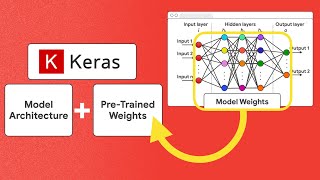
How to use KerasHub with Hugging Face
Google for Developers
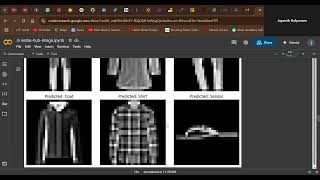
Image tasks using keras hub
jayanth kalyanam
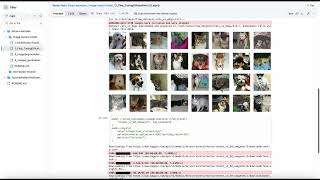
Keras Hub Image Classifier
Syeda Nida
YouTube returned 6 videos for “Keras Hub”, and we withheld 2: 2 did not mention Keras Hub. Showing the 4 we can prove are about Keras Hub.
Official links
Featured Head-to-Head Comparisons
Keras Hub vs Praktika
Praktika and Keras Hub serve completely different needs: one is a mobile language app for conversational practice, the other a Python library for multi-backend pretrained models. Your choice depends on whether you're learning a language or building AI models. If you're an intermediate language learner aiming to improve speaking fluency, Praktika's AI tutors and adaptive feedback are ideal. If you're a Keras developer needing quick access to pretrained models with TensorFlow, JAX, or PyTorch, Keras Hub's free, unified API is the way to go. There is no direct competition; pick the tool that matches your domain.
Keras Hub vs Surge Ai
Keras Hub is a free, developer-friendly model hub for Keras users, while Surge AI is a premium human-feedback platform for frontier AI alignment. Choose Keras Hub if you need fast access to pretrained models with minimal code; choose Surge AI if you require expert human graders for RLHF, red teaming, or complex benchmark evaluations. Surge AI's recent benchmarks (e.g., Riemann-bench, Antidote) emphasize its focus on pushing AI capabilities, whereas Keras Hub prioritizes simplicity and multi-backend support.
Popular in Foundation Models & LLM APIs

Reka
Reka builds omni models for real-time video reasoning that run on-device, not just in the cloud.

Poolside AI
Open-weight agentic coding models — Laguna XS 2.1 and Laguna S 2.1 — built for secure on-prem and air-gapped enterprise AI.

Frequently Asked Questions
Categories
Topics
Used Keras Hub? Help shape our editorial sentiment research.