
Langfuse Prompt Experiments
Langfuse Prompt Experiments links LLM tracing, prompt versioning, and evaluators so you can test prompts against real production data.
If you're instrumenting agents with OpenTelemetry and want tracing, prompt versioning, and evals sharing one data model, this is still the pick we'd reach for first over stitching separate tools together. Jev-as-a-judge plus a versioned evaluator API turns production scoring into something you automate rather than hand-roll. The catch is operational: self-hosting means running ClickHouse and Redis, and the free Hobby tier's 50k units and 2 seats only carry a proof of concept.
Verified 4d ago · liveness 84/100 · cite: rightaichoice.com/tools/langfuse-prompt-experiments
- AI engineering teams instrumenting agents with OpenTelemetry that need tracing, prompt experiments, and evals on one data model
- Teams that want prompt versioning and rollback wired directly to production traces instead of a separate eval stack
- Platform teams consolidating observability for multiple LLM apps under one workspace with RBAC and SSO
- Organizations that require self-hosting or MIT-licensed, data-portable tooling with S3 export
- Non-developer teams wanting a no-code LLM builder — the prompt, evaluator, and dataset surfaces assume engineering fluency
- Prototypes that never leave a laptop, where Hobby's 50k units, 2 seats, and 30-day retention already cover everything
- Teams with no appetite for infrastructure: self-hosting means running ClickHouse, Redis, and blob storage
We scan live Reddit threads, YouTube comments, X posts, G2 reviews and other communities — and hand you an honest verdict in under a minute.
- Honest verdict, not marketing
- Real pros & cons from real users
- Attributed quotes with receipts
3 free scans · no card needed
Skip Langfuse if your team has no engineering capacity to read traces or write score functions, or if you want a no-code LLM builder rather than an observability, prompt management, and eval platform.
Going past the 100k units/month included on Core or Pro adds $8 per additional 100k units, and high-volume agent loops burn through units fast — run the pricing calculator before you commit.
Hobby is genuinely free (no credit card), which makes Langfuse the cheapest credible option at proof-of-concept stage against LangSmith and Braintrust. Core at $29/mo is aimed at startup production use and undercuts most paid observability peers; Pro at $199/mo is where you're paying for retention, rate limits, and SOC2/ISO27001 reports. SSO pushes you to a $300/mo Teams add-on on top of Pro, and Enterprise at $2499/mo is where self-hosted-budget-conscious teams often switch back to running it
In short
Langfuse Prompt Experiments — Langfuse Prompt Experiments links LLM tracing, prompt versioning, and evaluators so you can test prompts against real production data. Best for AI engineering teams instrumenting agents with OpenTelemetry that need tracing, prompt experiments, and evals on one data model, Teams that want prompt versioning and rollback wired directly to production traces instead of a separate eval stack, Platform teams consolidating observability for multiple LLM apps under one workspace with RBAC and SSO. Free to start; paid plans from $29/mo.
What's new in Langfuse Prompt Experiments
Checked 5 days agoAcross the latest 10 updates: 2 feature updates, 7 changelog entries and 1 news mention.
Jev-as-a-judge in Langfuse Evaluators
Jev-based evals available in Langfuse: score production traffic at 40–400× lower cost than LLM judges.
Jev as a judge in Langfuse evaluators
Use TypeSafe's Jev decision model as a judge in Langfuse evaluators for calibrated scores at lower cost and latency than an LLM judge.
Using TypeSafe's Jev for evals
A decision model for routing, classification and eval verdicts, and how to score Langfuse traces with it.
Create alerts for evaluators
Score and cost alerts can be created directly from evaluator pages, with every alert linked to its evaluator.
Analyze thousands of observations with the Assistant
Langfuse Assistant can build datasets or dashboards, or run code over thousands of observations in a sandbox, continuing in the background.
Run evaluators on historical observations
Backfill scores for recent observations when an evaluator is attached to a rule.
Langfuse August Update
August ships: Langfuse v4, new evaluator setup flow, multi-modal evaluators, CLI 1.0 and a responsive timeline.
Build multi-message prompts and evaluate multi-modal inputs
Two new capabilities for LLM-as-a-Judge evaluators: multi-message prompts and multi-modal input evaluation.
Restore evaluator versions
Restore a previous evaluator version as a draft, review it, then save it as a new version.
Manage evaluators with the stable API
Create, version and manage evaluators and evaluation rules through stable, ID-based public APIs.
What people actually say about Langfuse Prompt Experiments — is it worth it?
We ran a structured research pass across product reviews, community discussions, and post-purchase forum threads to surface the patterns vendors won't publish themselves. Below: the recurring strengths, the hidden costs people mention most, and the cohort that consistently regrets adopting this tool.
28 mentions across 2 sources (YouTube, Product Hunt) · researched Aug 18, 2026.
Average across the 2 sources that answered — each source counts once, not each post.
- +Closes the loop on LLM development with structured prompt experiments.
- +Provides deep visibility into AI stack performance and cost.
- +Replaces manual, vibe-based evaluation with systematic, programmable checks.
- +Open-source core (MIT) avoids vendor lock-in and enables self-hosting.
- +Handles millions of traces with sub-second queries via ClickHouse backend.
- −Unclear whether all features are in self-hosted free tier.
- −Multi-turn conversation evaluation support is questionable.
- −Demo videos and tutorials quickly become outdated due to fast UI changes.
- −Audio quality in official tutorials is low and hard to follow.
- −New users face a steep learning curve to master prompt experiments.
- • Prompt Experiments may require a paid plan or separate add-on in the cloud version
- • Self-hosted version may lack some new features unless you pay for support or upgrades
- • Overages on Pro plan for observations beyond 500k/month
Viability Score
How well maintained and how widely used is Langfuse Prompt Experiments? Built from what the vendor actually publishes (docs, changelog, tutorials, integrations, pricing), whether the site is live, and how much real users discuss it. How we calculate this
Last calculated: October 2026
How we score →Key Features
- Hierarchical tracing of LLM calls, tool invocations, and retrieval steps
- Agent graph and session tracking for multi-turn chats
- OpenTelemetry-native instrumentation with native Python and TypeScript SDKs
- Token and cost tracking per trace, user, and session
- Prompt versioning with one-click deployments and rollbacks
- Prompt caching on the server and client side
- Playground that tests prompts on real production inputs and compares models side-by-side
- Prompt experiments with datasets, side-by-side result comparison, and webhooks
- Multi-message prompts and multi-modal input evaluation
- Jev decision-model judge scoring at 40–400× lower cost than an LLM judge
- Manage and version evaluators and evaluation rules via a stable ID-based public API
- Run evaluators on historical observations to backfill scores
- Restore a previous evaluator version as a draft
- Score and cost alerts created directly from evaluator pages
- In-app Langfuse Assistant that builds datasets and dashboards or runs code over thousands of observations
About Langfuse Prompt Experiments
Langfuse is an open-source (MIT) AI engineering platform that closes the loop between production and development: hierarchical traces capture every LLM call, tool invocation, and retrieval step; prompt management separates prompts from code with one-click deployments and rollbacks; evaluators score outputs; and prompt experiments let you compare models side-by-side on real production inputs. It's aimed at engineering teams whose agents have moved past the prototype stage and who need a single data model under tracing, prompts, and evals rather than three tools stitched together. The pieces you'll actually touch: the Playground, where you test prompts against production inputs and compare models; prompt experiments with datasets and versioned evaluators; and evaluation that runs LLM-as-a-judge, heuristic functions, or human review over live traffic and historical observations. Since late September 2026 you can attach TypeSafe's Jev decision model as a judge, scoring production traffic at a reported 40–400× lower cost than an LLM judge, and evaluators now support multi-message prompts and multi-modal inputs. Evaluators and evaluation rules are managed through a stable, ID-based public API, and you can restore a previous evaluator version as a draft. Langfuse v4 shipped in August 2026 with real-time dashboards and up to 165× faster performance on large projects. Instrumentation is OpenTelemetry-native, so any language or framework emitting OTel works, with native Python and TypeScript SDKs and 100+ integrations across LangChain, Vercel AI SDK, LiteLLM, OpenAI, Anthropic, and others. An in-app Assistant investigates production data and can build datasets, dashboards, or run code over thousands of observations in a background sandbox. Self-hosting runs on Docker Compose, Kubernetes, or Terraform across AWS, GCP, and Azure. The honest positioning: Langfuse is the widest-adopted open-source option in this category — 21 of the Fortune 50 use it, and it processes 90B+
Behind the Verdict
The reason we'd shortlist Langfuse for prompt experiments rather than a standalone eval toolset is that the prompt is a first-class object here. You version a prompt, attach it to an experiment, run it against test cases pulled from real traces, and score the output — then push the winning version to production with a rollback path. Nothing about that loop requires you to export data to a third system. When to pick it: you already emit OpenTelemetry traces, or you're willing to. The OTel-native design means less glue code and no framework lock-in — Python and TypeScript have native SDKs, and Java, Go, .NET, Ruby, PHP, and Swift can join through OTel instrumentation. When to pass: if nobody on the team wants to own ClickHouse, Redis, and blob storage. Managed cloud sidesteps that, but self-hosting is real infrastructure work. We'd also pass if your agents never leave a laptop — the Hobby plan's 50k units, 30-day data access, and 2 seats are, by design, a proof-of-concept ceiling. Watch the unit math before you commit to a high-volume agent loop. Core and Pro both include 100k units/month with additional usage at $8/100k units, discounted at volume via the pricing calculator. A chatty multi-step agent that fans out tool calls can burn units faster than a simple chat app, so run the calculator against your actual trace volume rather than a headcount. Where it bites: the evaluator surface is powerful but assumes engineering fluency — you're writing score configs and wiring APIs, not clicking a wizard. Human annotation exists (1 queue on Hobby, unlimited queues on Pro), so reviewers aren't locked out, but the platform's center of gravity is code. The closest alternative most teams weigh is a dedicated eval framework paired with a separate observability vendor. That's a
Researching Langfuse Prompt Experiments? Get your full AI stack in 60 seconds.
Free, no signup — tell us your goal and get tools matched to your budget & existing stack.
Real-world workflow fit
Concrete scenarios for the personas Langfuse Prompt Experiments actually fits — and what changes day-one when you adopt it.
You open the trace view in Langfuse, filter to the session where the agent started looping, and use the responsive Timeline to spot which tool call introduced the latency spike.
Outcome: You find the offending step in minutes rather than reading raw logs, attach a score alert so the same pattern pages you next time, and open the Langfuse Assistant to see whether the token spend for that trace is anomalous.
You version the new prompt in Prompt Management, deploy it behind a label to a staging environment, and run a prompt experiment in the Playground against real production inputs pulled from recent traces.
Outcome: Side-by-side results from two model variants show the new prompt scores higher on your chatbot evaluator, so you promote it to production with one click and can roll back instantly if quality dips.
You self-host Langfuse on Kubernetes, instrument each app via the OpenTelemetry SDKs, and give each product team a project inside one workspace with organization-level RBAC.
Outcome: One dashboard covers cost, latency, and quality across all three apps; you export raw data to your own S3 bucket so the warehouse team can join it with product analytics, and you're not locked into any one vendor's data model.
Use Cases
- Debug production LLM calls by examining full traces with latency and cost breakdowns.
- Manage prompts as code, version them, and deploy to different environments with one click.
- Run offline experiments against labeled datasets to compare prompt versions side-by-side.
- Set up LLM-as-a-judge or Jev-based evaluations to automatically score production traces.
- Collaborate with teammates on human annotation queues to create golden datasets for fine-tuning.
- Monitor cost, latency, and quality metrics with automated alerts via Slack or webhooks.
- Attach coding agents to prompts, traces, and evals via MCP and CLI 1.0.
- Track OpenAI Fast mode cost including GPT-5.6 long-context rates automatically.
Models Under the Hood
as of 2026-10-16
Limitations
- Langfuse is an open-source LLM observability, prompt management, and evaluation platform rather than a model itself; the evidence names third-party judge/decision models (OpenAI's gpt-6-luna, TypeSafe's Jev, SubQ Snap, Strands Decider) rather than a Langfuse-hosted model.
- The free Hobby plan includes 50k units/month, 30-day data access, and 2 users, with Core at $29/month and Pro at $199/month.
- Cloud and self-hosted (Docker, Kubernetes/Helm, Terraform) deployments are both offered, with SDKs for Python, JS/TS, and OpenTelemetry-native instrumentation.
as of 2026-10-03
Verification history
We have re-verified Langfuse Prompt Experiments 10 times since . Each pass re-reads the vendor's own pages and re-checks every listed field against that evidence; passes where nothing had changed are marked as such.
- — re-verified summary, description, our verdict, our analysis, pricing model, pricing tiers, features, integrations, who it suits, who should skip it
- — re-verified summary, description, our verdict, our analysis, pricing model, pricing tiers, features, integrations, who it suits, who should skip it
- — re-verified summary, description, our verdict, our analysis, pricing model, pricing tiers, features, integrations, who it suits, who should skip it
- — re-verified summary, description, our verdict, our analysis, pricing model, pricing tiers, features, integrations, who it suits, who should skip it
- — re-verified summary, description, our verdict, our analysis, pricing model, pricing tiers, features, integrations, who it suits, who should skip it
- — re-verified summary, description, our verdict, our analysis, pricing model, pricing tiers, features, integrations, who it suits, who should skip it
Showing the 6 most recent of 10 verification passes.
Free to cite with attribution — this page re-verifies continuously.
12-month cost
Project the real annual outlay, including the implied monthly cost when only an annual tier is published.
Vendor list price only. Add-on usage, seat overages, and contract minimums are surfaced under Hidden costs & gotchas.
Plans compared
For each published Langfuse Prompt Experiments tier: who it actually fits, and what it adds vs. the previous tier. Cross-reference the cost calculator above for projected annual outlay.
Hobby
$0/mo
Ideal for
Solo developer or a small team validating a proof of concept where 50k units/month and 30 days of retention are enough.
What this tier adds
Free entry point: all platform features with limits, 50k units/month, 30 days data access, 2 users, community support via GitHub, no credit card required.
Core
$29/mo
Ideal for
A startup running its first production LLM feature that has outgrown 2 seats and needs longer data access plus in-app support.
What this tier adds
Adds 100k units/month included (then $8/100k with volume discounts), 90 days data access, unlimited users, and in-app support — plus startup, EDU, and OSS discounts.
Pro
$199/mo
Ideal for
Scaling teams that need long retention, high ingestion and API rate limits, and SOC2/ISO27001 reports for a security review.
What this tier adds
Adds 3 years data access, data retention management, unlimited annotation queues, high rate limits, SOC2 and ISO27001 reports, HIPAA-ready region, and prioritized in-app support.
Pro + Teams Add-on
$300/mo
Ideal for
Mid-market or enterprise teams on Pro that need SSO brought under a corporate identity provider and support through a dedicated channel.
What this tier adds
Optional $300/mo add-on that layers SSO (e.g. Okta), SSO enforcement, fine-grained RBAC, and a dedicated Slack or MS Teams support channel onto Pro — usually tied to a yearly commitment.
Enterprise
$2499/mo
Ideal for
Large platform organizations that need audit logs, SCIM provisioning, custom rate limits, named support, and contract-level SLAs.
What this tier adds
Adds audit logs, SCIM API, custom rate limits, uptime and support SLAs with a named lead support engineer, custom volume pricing, architecture reviews, and billing via AWS Marketplace or invoice.
Where the pricing makes sense
The company stage and team size where Langfuse Prompt Experiments's pricing actually pencils out — and where peers do it cheaper.
Hobby is genuinely free (no credit card), which makes Langfuse the cheapest credible option at proof-of-concept stage against LangSmith and Braintrust. Core at $29/mo is aimed at startup production use and undercuts most paid observability peers; Pro at $199/mo is where you're paying for retention, rate limits, and SOC2/ISO27001 reports. SSO pushes you to a $300/mo Teams add-on on top of Pro, and Enterprise at $2499/mo is where self-hosted-budget-conscious teams often switch back to running it
Setup time & first value
How long it actually takes to get something useful out of Langfuse Prompt Experiments — broken out by persona, not the marketing-page minute.
Solo developer on Hobby: 10–20 minutes to install the SDK, connect OpenAI or LangChain, and see your first trace — the docs' 'Get Started with Tracing' walks it end to end. Small team adding prompt management and one LLM-as-a-judge evaluator: an afternoon. Platform team self-hosting on Kubernetes with Terraform, SAML SSO, and org-level RBAC: plan for a few days, mostly on ClickHouse and Redis
Switching to or from Langfuse Prompt Experiments
How to bring data in from common predecessors and how to get it back out — written for the switcher, not the buyer.
- →From LangSmith: re-instrument with the Langfuse OTel SDK or point existing OTel exporters at Langfuse, then recreate evaluators as Langfuse evaluators via the stable ID-based API.
- →From Helicone: keep your gateway in front (LiteLLM and OpenRouter are both supported), switch the destination to Langfuse, and rebuild alerts as evaluator-linked score and cost alerts.
- →From self-hosted Langfuse: export prompts as JSON, re-import in bulk into the new project or cloud workspace, then move historical traces via the batch export to blob storage and re-ingest.
- →From a hand-rolled logging stack: skip the rewrite — send your existing OpenTelemetry spans directly to Langfuse and layer evaluators on top of the traces you already emit.
- ↗To LangSmith: export traces and prompts via the Langfuse REST API and re-instrument LangChain apps against the LangSmith SDK; you lose the single data model for prompts and evals.
- ↗To Braintrust: export datasets and eval scores via the public API, then rebuild your experiments in Braintrust's eval workflow; you'll re-do evaluator versioning from scratch.
- ↗To self-hosted Langfuse: because everything is MIT-licensed and data-portable, you can migrate off Langfuse Cloud by standing up Docker Compose or Helm and re-ingesting via the OTel SDK.
- ↗To a from-scratch stack: query the REST API or the S3 blob export to pull raw traces and scores into your own warehouse, then retire the Langfuse workspace.
Integrations
Resources & Guides
- Documentationlangfuse.com
Docs · Langfuse Prompt Experiments
Full product docs from langfuse.com
- Documentationlangfuse.com
Get Started · Langfuse Prompt Experiments
Full product docs from langfuse.com
- Documentationlangfuse.com
Get Started · Langfuse Prompt Experiments
Full product docs from langfuse.com
- Documentationlangfuse.com
Model Based Evals · Langfuse Prompt Experiments
Full product docs from langfuse.com
- Documentationlangfuse.com
Get Started · Langfuse Prompt Experiments
Full product docs from langfuse.com
- Documentationlangfuse.com
Self Hosting · Langfuse Prompt Experiments
Full product docs from langfuse.com
- Resourcelangfuse.com
Academy · Langfuse Prompt Experiments
Helpful link from langfuse.com
- Guidelangfuse.com
Guides · Langfuse Prompt Experiments
In-depth how-to from langfuse.com
- Resourcelangfuse.com
Changelog · Langfuse Prompt Experiments
Helpful link from langfuse.com
- Resourcelangfuse.com
Support · Langfuse Prompt Experiments
Helpful link from langfuse.com
Tutorials & Learning
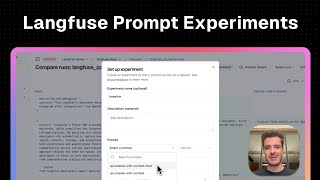
LangfuseがProduct Huntで実験を促進
Langfuse
10 min Walkthrough of Langfuse – Open Source LLM Observability, Evaluation, and Prompt Management
Langfuse
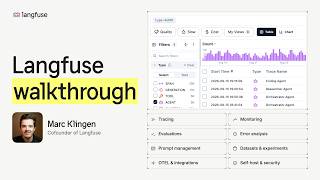
Langfuse Walkthrough - Full Demo of Agent Tracing, Evals, Experiments and Prompt Management
Langfuse
YouTube returned 6 videos for “Langfuse Prompt Experiments”, and we withheld 3: 3 did not mention Langfuse Prompt Experiments. Showing the 3 we can prove are about Langfuse Prompt Experiments.
Tools that pair well with Langfuse Prompt Experiments
Common stack mates teams adopt alongside Langfuse Prompt Experiments, with the specific reason each pairing earns its keep.

Athina AI
Athina AI is a collaborative AI development platform for managing prompts, running LLM evaluations, and monitoring production traces in one

Lilypad
Open-source OpenTelemetry tracing, versioning, and sessions for Python LLM apps—bring your own backend.
MLflow
Open source AI engineering platform for agent and LLM tracing, evaluation, prompt management, and ML lifecycle work.
Featured Head-to-Head Comparisons
Langfuse Prompt Experiments vs Spider Cloud
Langfuse Prompt Experiments wins for teams that need a full LLM engineering platform with prompt versioning, evaluation, and observability. Spider Cloud wins for developers who need fast, cheap web data for AI agents or RAG. If you're building LLM apps, pick Langfuse; if you need web content as input, Spider Cloud is essential.
Langfuse Prompt Experiments vs Voyage Ai
Choose Voyage AI if you need high-accuracy, domain-specific embeddings for RAG and have budget for enterprise pricing. Choose Langfuse Prompt Experiments if you're building LLM apps in production and need observability, prompt management, and evaluation—especially on a free or transparent pricing model.
Langfuse Prompt Experiments vs Temporal Ai
Temporal AI is the right choice if your core problem is reliably orchestrating durable, fault-tolerant workflows—especially for AI agents that must survive failures and long execution times. Langfuse Prompt Experiments is superior for teams focused deeply on LLM observability, prompt versioning, and evaluation, where robust tracing and experimentation are paramount. Choose based on whether your primary need is workflow durability or LLM lifecycle management.
Alternatives to Langfuse Prompt Experiments
View all

Frequently Asked Questions
Categories
Used Langfuse Prompt Experiments? Help shape our editorial sentiment research.