Lex Machina
Lex Machina turns court records into judge-level litigation analytics for case strategy and business development.
For the question 'how has this judge ruled on this motion' or 'what has opposing counsel actually resolved cases for,' Lex Machina still gives the most defensible answer set we've reviewed in legal analytics. Event-to-event Timing Events, motion metrics across 40+ motion types, and reversal rates on federal civil appeals since 2012 are hard to replicate, and the Protégé-powered Generative Analytics layer makes the data queryable in plain English. Just size it against a repeat litigation caseload — it rewards teams that query it constantly, and the depth here is not a substitute for Lexis+ research or drafting.
Last checked 3d ago · cite: rightaichoice.com/tools/lex-machina
- Litigators who need judge-specific motion outcomes, awarded damages, and case timing before filing or settling
- Corporate legal departments selecting and managing outside counsel with litigation data
- Large law firms defending pitches against competitors who also run the analytics
- Class action and appellate practices analyzing settlement trends, fees, and reversal rates
- Solo practitioners and small firms whose caseload won't justify a serious analytics subscription
- Transactional lawyers who rarely litigate and have no use for judge or counsel history
- Teams that mainly need legal research and drafting rather than structured litigation data
We scan live Reddit threads, YouTube comments, X posts, G2 reviews and other communities — and hand you an honest verdict in under a minute.
- Honest verdict, not marketing
- Real pros & cons from real users
- Attributed quotes with receipts
3 free scans · no card needed
Skip Lex Machina if your litigation caseload is occasional or concentrated in a state venue whose enhanced coverage you haven't verified — judge-level analytics only pay back when you query them repeatedly.
Lex Machina is enterprise legal analytics, so budget it like a specialty data subscription rather than a seat-based research tool, and expect the cost to be justified only by a repeat litigation caseload. Compare it against your existing Lexis+ research spend: if your team already pays for the LexisNexis research stack, that is the budget conversation to have first, since the two serve different jobs.
In short
Lex Machina — Lex Machina turns court records into judge-level litigation analytics for case strategy and business development. Best for Litigators who need judge-specific motion outcomes, awarded damages, and case timing before filing or settling, Corporate legal departments selecting and managing outside counsel with litigation data, Large law firms defending pitches against competitors who also run the analytics. Contact Sales pricing.
No head-to-head comparison for Lex Machina yet — the alternatives below are the closest matches we list.
What people actually say about Lex Machina — is it worth it?
We ran a structured research pass across product reviews, community discussions, and post-purchase forum threads to surface the patterns vendors won't publish themselves. Below: the recurring strengths, the hidden costs people mention most, and the cohort that consistently regrets adopting this tool.
5 mentions across 2 sources (Hacker News, Lemmy) · researched Sep 25, 2026.
Weighted by the 18 posts each of 2 sources contributed.
- +Unmatched federal coverage: all 94 district courts, 13 appellate courts, and PTAB in one platform
- +Protégé AI lets attorneys query 45M documents in plain language instead of complex filter chains
- +Judge-specific Legal Findings and damages data go beyond raw dockets significantly
- +Legal Entity Analytics reveals true litigation footprints across related corporate parties
- +Appeals Analytics with reversal rates is rare and genuinely useful for appellate strategy
- −Quote-based enterprise pricing is effectively inaccessible to solo and small-firm practitioners
- −Almost no candid public reviews exist, making pre-purchase validation difficult
- −Requires advanced skill level — not a tool a junior associate can pick up cold
- −Deep LexisNexis ecosystem integration creates meaningful switching costs
- −Competes against Westlaw Edge and Bloomberg Law which may cover lighter needs cheaper
- • No published pricing means you must complete a sales cycle before knowing cost
- • Bundling with broader LexisNexis products (Lexis+, Protégé) often inflates total spend
- • Onboarding and training time is a real internal cost given the advanced skill requirement
- • API integration may require developer hours not included in the subscription
Viability Score
How well maintained and how widely used is Lex Machina? Built from what the vendor actually publishes (docs, changelog, tutorials, integrations, pricing), whether the site is live, and how much real users discuss it. How we calculate this
Last calculated: October 2026
How we score →Key Features
- Generative Analytics powered by LexisNexis Protégé for prompt-based querying of structured litigation data
- Legal Findings linked to judgment events rather than buried in case PDFs
- State Court Motion Metrics for 40+ motion types by judge and court
- Event-to-event Timing Events showing how long courts take to reach case milestones
- Appeals Analytics with reversal rates for federal civil cases filed since 2012
- Class Action Analytics covering settlement damages, attorney fees, and class representative awards
- Legal Entity Analytics that reads signature blocks and groups related entities
- Judge analytics on the past behavior of 8K+ judges across federal and state courts
- Party and counsel analytics drawing on 149M+ party mentions and 146M+ counsel mentions
- Coverage of all 94 federal district courts, 13 courts of appeal, PTAB, and specialty venues
- Enhanced state court coverage plus 18M additional state cases for party analytics
- API integration for building custom products on the litigation dataset
- Data extracted from 45M customer-facing documents across more than ten million cases
- Litigation Reports library including the 2026 Product Liability Litigation Report
- Expert witness analytics spanning 6K+ expert witnesses
About Lex Machina
Lex Machina is LexisNexis's Legal Analytics platform, and it does one thing unusually well: it converts raw court documents into structured data on judges, parties, counsel, experts, and outcomes, so you can query behavior instead of guessing at it. Proprietary technology plus AI-assisted attorney review fills gaps in the underlying court records — the vendor reports 45M customer-facing documents across more than ten million cases, 8K+ judges, and 6K+ expert witnesses, with 146M+ counsel mentions and 149M+ party mentions, and party analytics drawing on an additional 18M state cases. Coverage runs across all 94 federal district courts, 13 courts of appeal, the PTAB, specialty venues, and various enhanced state courts. The value sits in the analysis layer rather than the document pile: Legal Findings are practice-specific findings linked to judgment events, State Court Motion Metrics quantify motion practice and timing for 40+ motion types by judge and court, and Timing Events show how long courts take to reach milestones in cases like yours. Specialist modules handle narrower questions. Appeals Analytics covers all civil cases filed in federal appellate courts since 2012 and surfaces reversal rates; Class Action Analytics breaks out settlement damages, attorney fees, and class representative awards so you can forecast budgets; Legal Entity Analytics reads signature blocks and groups related entities to map a party's full footprint. Generative Analytics, powered by LexisNexis Protégé, takes a natural-language prompt and returns structured litigation data, and an API lets teams build their own products on the dataset. It is aimed at litigators at large and small firms, corporate legal departments, insurers, courts and judges, and government legal teams — anyone answering who has this judge ruled, how long does this stage take, and what has opposing counsel actually resolved. It is analytics layered on a court database, not a research-and-drafting tool, and should be budgeted as such.
Behind the Verdict
Lex Machina's differentiation is not the document collection — it is the disambiguation work on top of it. The vendor describes proprietary technology plus AI-assisted attorney review that fills gaps in court records, and the payoff shows up in specific products: Legal Findings tied to judgment events rather than buried in PDFs, State Court Motion Metrics covering 40+ motion types broken out by judge and court, and Timing Events that answer how long a milestone actually takes in cases like yours. That last one is the quietly valuable piece for budgeting; Class Action Analytics compounds it by exposing settlement damages, attorney fees, and class representative awards so you can build a cost forecast rather than a guess. Appeals Analytics adds reversal rates for all civil cases filed in federal appellate courts since 2012, including outcomes from re-hearings and U.S. Supreme Court decisions — if you handle appellate strategy, that is a number most competitors don't publish. Legal Entity Analytics reads signature blocks and groups related entities, which matters when you're mapping a party's full footprint rather than the name on the caption. Coverage: all 94 federal district courts, 13 courts of appeal, PTAB, specialty venues, and various enhanced state courts, plus 18M additional state cases for party analytics. Note the word 'various' — state coverage is not uniform, and Lex Machina is best treated as federal-strong with state as a confirmed-per-venue add. The 2026 Product Liability Litigation Report is the visible output of the practice-specific report library; use those reports as a free sanity check on whether the data matches your practice area before you scope a subscription. Where it doesn't fit: this is analytics on a court database, not a research-and-drafting environment and not a docket checker. If your work is transactional, or your caseload is thin enough that you'd open it twice a quarter, the subscription won't pay back. It also rewards disciplined querying — judge-level findings and timing metrics can mislead if read as single numbers without context on how the underlying case population was assembled.
Researching Lex Machina? Get your full AI stack in 60 seconds.
Free, no signup — tell us your goal and get tools matched to your budget & existing stack.
Real-world workflow fit
Concrete scenarios for the personas Lex Machina actually fits — and what changes day-one when you adopt it.
Before drafting a motion to dismiss in a federal district court, you pull State Court Motion Metrics and judge analytics to see how your assigned judge has handled that motion type and how long rulings take.
Outcome: You calibrate the brief to the judge's demonstrated pattern and give your partner a realistic ruling timeline instead of a guess.
You run Legal Entity Analytics and counsel analytics against the firms on your panel to see actual case outcomes and resolution patterns rather than pitch decks.
Outcome: Outside counsel selection and rate negotiations get anchored to structured outcome data, and you can defend the panel decision to your GC.
You use Appeals Analytics reversal rates for federal civil cases filed since 2012, including re-hearing and U.S. Supreme Court outcomes, to pressure-test whether an appeal is worth the fee.
Outcome: You either commit to the appeal with a defensible probability of reversal or advise the client to settle on evidence rather than instinct.
Use Cases
- Checking how a specific judge has ruled on a motion type before you file
- Analyzing opposing counsel's record in similar patent cases
- Estimating case timeline and budget for a class action using settlement and timing data
- Identifying expert witnesses with favorable track records in your venue
- Benchmarking law firm performance for outside counsel selection
- Assessing litigation risk before filing for in-house counsel
- Tracking trade secret litigation trends for business development
- Using reversal rates from Appeals Analytics to evaluate appellate strategy
Models Under the Hood
as of 2026-08-30
Limitations
- Lex Machina is a litigation analytics platform and does not provide broader legal research, document drafting, or case management — you will still need a separate research and matter-management stack.
- State court coverage is described as various enhanced state courts plus 18M additional state cases for party analytics, so coverage is not uniform across every state venue; confirm your specific courts before relying on it.
- The analytics require training to interpret well; judge-level findings and timing metrics reward disciplined querying and can mislead if read as single numbers.
- It is not a docket-checking or document-retrieval tool — the value is in the analysis layer, which is what you are paying for.
as of 2026-10-19
Verification history
We have re-verified Lex Machina 21 times since . Each pass re-reads the vendor's own pages and re-checks every listed field against that evidence; passes where nothing had changed are marked as such.
- — re-verified summary, description, our verdict, our analysis, pricing model, pricing tiers, features, integrations, who it suits, who should skip it
- — re-verified summary, description, our verdict, our analysis, pricing model, pricing tiers, features, integrations, who it suits, who should skip it
- — re-verified summary, description, our verdict, our analysis, pricing model, pricing tiers, features, integrations, who it suits, who should skip it
- — re-verified summary, description, our verdict, our analysis, pricing model, pricing tiers, features, integrations, who it suits, who should skip it
- — re-checked, vendor evidence unchanged
- — re-checked, vendor evidence unchanged
Showing the 6 most recent of 21 verification passes.
Free to cite with attribution — this page re-verifies continuously.
Where the pricing makes sense
The company stage and team size where Lex Machina's pricing actually pencils out — and where peers do it cheaper.
Lex Machina is enterprise legal analytics, so budget it like a specialty data subscription rather than a seat-based research tool, and expect the cost to be justified only by a repeat litigation caseload. Compare it against your existing Lexis+ research spend: if your team already pays for the LexisNexis research stack, that is the budget conversation to have first, since the two serve different jobs.
Setup time & first value
How long it actually takes to get something useful out of Lex Machina — broken out by persona, not the marketing-page minute.
Expect meaningful onboarding rather than same-day value: a litigator who already knows the questions can get first answers from Generative Analytics in an afternoon, while a firm rolling it out across practices should budget time for training on Legal Findings and Timing Events interpretation, plus confirming which state venues are covered for your matters.
Switching to or from Lex Machina
How to bring data in from common predecessors and how to get it back out — written for the switcher, not the buyer.
- →From manual docket and PACER research: rebuild your recurring judge and counsel queries inside Legal Analytics, then use Timing Events to replace the timeline estimates you were keeping in spreadsheets.
- ↗To Lexis+ with Protégé: pair the research and drafting environment with Lex Machina's structured analytics rather than replacing one with the other — they answer different questions.
Resources & Guides
- Resourcelexmachina.com
Lex Machina
Helpful link from lexmachina.com
- Resourcelexmachina.com
Lex Machina Legal Analytics Software | LexisNexis
Lex Machina offers data-driven legal analytics on judges, courts, counsel, and parties to support legal strategy, case assessment, and outcomes. Get a free demo today.
- Learnlexmachina.com
Lex Machina Legal Analytics Software | LexisNexis
Lex Machina offers data-driven legal analytics on judges, courts, counsel, and parties to support legal strategy, case assessment, and outcomes. Get a free demo today.
- Resourcelexmachina.com
Lex Machina Legal Analytics Software | LexisNexis
Lex Machina offers data-driven legal analytics on judges, courts, counsel, and parties to support legal strategy, case assessment, and outcomes. Get a free demo today.
- Resourcelexmachina.com
Lex Machina Legal Analytics Software | LexisNexis
Lex Machina offers data-driven legal analytics on judges, courts, counsel, and parties to support legal strategy, case assessment, and outcomes. Get a free demo today.
- Guidelexmachina.com
Lex Machina Legal Analytics Software | LexisNexis
Lex Machina offers data-driven legal analytics on judges, courts, counsel, and parties to support legal strategy, case assessment, and outcomes. Get a free demo today.
- Tutoriallexmachina.com
Lex Machina Legal Analytics Software | LexisNexis
Lex Machina offers data-driven legal analytics on judges, courts, counsel, and parties to support legal strategy, case assessment, and outcomes. Get a free demo today.
- Resourcelexmachina.com
Lex Machina Legal Analytics Software | LexisNexis
Lex Machina offers data-driven legal analytics on judges, courts, counsel, and parties to support legal strategy, case assessment, and outcomes. Get a free demo today.
- Resourcelexmachina.com
Lex Machina Legal Analytics Software | LexisNexis
Lex Machina offers data-driven legal analytics on judges, courts, counsel, and parties to support legal strategy, case assessment, and outcomes. Get a free demo today.
- Resourcelexmachina.com
Lex Machina Legal Analytics Software | LexisNexis
Lex Machina offers data-driven legal analytics on judges, courts, counsel, and parties to support legal strategy, case assessment, and outcomes. Get a free demo today.
Tutorials & Learning
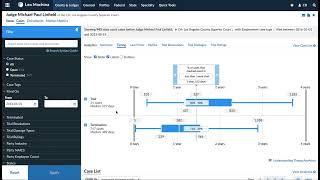
Legal Analytics for California State Court
LexisNexis Legal
Lex Machina Legal Analytics within Lexis®
LexisNexis Legal

What Lex Machina Can Do For You
LexisNexis Legal
YouTube returned 6 videos for “Lex Machina”, and we withheld 2: 2 did not mention Lex Machina. Showing the 4 we can prove are about Lex Machina.
Official links
Tools that pair well with Lex Machina
Common stack mates teams adopt alongside Lex Machina, with the specific reason each pairing earns its keep.

Paxton AI
Paxton AI is a legal AI assistant that grounds litigation research and drafting in your case's matter record.

Robin AI
Robin AI turns your contracts into a searchable conversation, with sourced answers, smart alerts, and team workspaces for enterprise legal teams.

Fileread
Fileread reads your full litigation production — text, images, handwriting — and cites every answer back to the source page.
Alternatives to Lex Machina
View all


Categories
Best-of guides
Topics
Used Lex Machina? Help shape our editorial sentiment research.