
Mecha Health
Radiology foundation models that turn medical images into complete draft reports for physician review.
Mecha Health attacks a harder problem than the flag-and-route crowd: it drafts the whole report, which is where radiologist time actually goes. The honest caveat is evidence. This is a $4.1M seed company (YC W25) whose publicly described performance work centers on Mecha Net v0.2 for chest X-ray reporting and a connectome-constrained effusion model — promising research, thin proof of generalist breadth. Pilot it if reporting turnaround is your bottleneck and your stack is DICOM/HL7 clean.
Verified 1h ago · liveness 69/100 · cite: rightaichoice.com/tools/mecha-health
- High-volume radiology departments where report turnaround time is the bottleneck
- Health systems standardizing report quality and structure across multiple sites
- Teleradiology groups paid per read that need faster draft-to-signoff
- Imaging centers wanting AI-assisted report drafting on routine chest X-ray and CT
- Radiologists who want to author every sentence themselves without an AI first draft
- Sites without DICOM-compatible PACS or HL7/FHIR infrastructure
- Use cases that require the AI to explain its diagnostic reasoning
We scan live Reddit threads, YouTube comments, X posts, G2 reviews and other communities — and hand you an honest verdict in under a minute.
- Honest verdict, not marketing
- Real pros & cons from real users
- Attributed quotes with receipts
3 free scans · no card needed
Skip Mecha Health if you need an autonomous reader whose reasoning you can audit, or if your imaging operation has no DICOM-compatible PACS or HL7 delivery path to receive the drafts.
PHI scrubbing, audit lineage, and single sign-on are built into the deployment, but standing up cloud or on-premise infrastructure with multi-region failover means real IT and networking work before the first report
Mecha Health prices on contact, so the cost question is a procurement conversation rather than a pricing page. That usually suits health systems and multi-site teleradiology groups that already budget per-read or per-study radiology AI spend and can absorb a pilot into an existing department line item. It fits worse for a single small imaging center with no dedicated AI budget, where a per-study triage tool from an established vendor may be easier to approve.
In short
Mecha Health — Radiology foundation models that turn medical images into complete draft reports for physician review. Best for High-volume radiology departments where report turnaround time is the bottleneck, Health systems standardizing report quality and structure across multiple sites, Teleradiology groups paid per read that need faster draft-to-signoff. Contact Sales pricing.
What's new in Mecha Health
Checked 9 days agoAcross the latest 1 update: 1 community discussion.
What people actually say about Mecha Health — is it worth it?
We scanned public community sources for Mecha Health on Jul 3, 2026 and could not establish that the discussion we found is about this tool rather than something else sharing its name. Our own analysis of that scan says the posts were off-subject. Rather than publish a sentiment score built on the wrong subject, we publish nothing here and re-run the scan.
Viability Score
How well maintained and how widely used is Mecha Health? Built from what the vendor actually publishes (docs, changelog, tutorials, integrations, pricing), whether the site is live, and how much real users discuss it. How we calculate this
Last calculated: October 2026
How we score →Key Features
- Generates complete radiology reports (findings, impression, structured sections) from images
- Modality-specific foundation models: Mecha XR for radiography and Mecha CT for CT
- Mecha Net v0.2 documented for chest X-ray report generation
- Single generalist model analyzing studies at the pixel and voxel level
- Supports X-ray, CT, and MRI modalities
- Sub-2-second median ingest time
- Automatic PHI scrubbing on ingest
- Editable draft reports delivered into PACS
- HL7/FHIR delivery with optional PDF output
- Native DICOM and HL7 support
- Cloud or on-premise deployment options
- SOC 2 Type II compliant and HIPAA-ready posture
- Human-in-the-loop review with role-based access controls
- Complete audit lineage and environment promotion
- Auto-scaling with multi-region failover
About Mecha Health
Mecha Health is an applied AI lab in San Francisco building foundation models purpose-built for radiology. The pitch is blunt: medical images in, complete reports out. A single generalist model analyzes studies at the pixel and voxel level, then auto-drafts findings, impression, and structured sections ready for a radiologist to edit and sign off. The model family is broken out by modality — Mecha XR for radiography and Mecha CT for computed tomography — with Mecha Net v0.2 documented for chest X-ray report generation. The workflow claim is speed: a radiologist triages, edits, and finalizes a report in roughly 60 seconds, with sub-2-second median ingest time and automatic PHI scrubbing on intake. Drafts land in PACS, and delivery works over HL7/FHIR with optional PDF output. The company positions this as assistive drafting rather than diagnostic replacement — the radiologist's judgment stays in the loop, with role-based access controls and complete audit lineage. Deployment is built for hospital IT rather than a weekend pilot: cloud or on-premise, SOC 2 Type II compliance and HIPAA-ready posture, environment promotion, auto-scaling with multi-region failover, and SSO/SAML. Native DICOM and HL7 mean it slots into an existing radiology stack instead of replacing it. The practical fits are high-volume departments and teleradiology groups that want to cut turnaround on common studies, not automate rare or complex reads. Mecha Health is seed-stage, backed by $4.1M from Valia Ventures and Y Combinator (YC W25), and is exhibiting at RSNA 2026 in Chicago. Against triage-and-flag vendors like Aidoc or Viz.ai, the difference is scope: they point at a finding, Mecha drafts the report.
Behind the Verdict
Most radiology AI draws a box around a nodule and calls it a day. Mecha Health writes the sentence a radiologist would have written, and that is a much more useful thing to sell into a department where reads are queued and turnarounds get measured. We'd reach for this when chest X-ray and routine CT volume is the pain point. The vendor's own number — roughly 60 seconds to triage, edit, and finalize — is the metric to test in a pilot, not the model architecture. Ask for edit distance on your own prior reports, not a demo on curated cases. Where it bites: generalization. The public research trail runs through Mecha Net v0.2 and a recent connectome-constrained network trained to classify pleural effusion on chest X-rays from sparse retinal inputs. Interesting science, narrow evidence base. Nothing in the sources shows validated coverage across rare pathology, pediatric imaging, or the long tail of complex multi-modality reads, so treat breadth as unproven until your own data says otherwise. The deployment story is unusually grown-up for a seed-stage company — cloud or on-premise, SSO/SAML, audit lineage, multi-region failover. That matters because hospital security review kills more deals than model accuracy does. If you cannot get through procurement on a staged rollout, the best draft engine in the world is irrelevant. Watch out for workflow fit. Draft-into-PACS works only if your radiologists actually want to edit rather than dictate. Some readers will accept a starting point; others will fight it. Run the pilot with the readers who are already complaining about turnaround, not the ones who bill the most. The closest alternative depends on what you're buying. If you want triage and prioritization, Aidoc or Viz.ai cover that ground. If you want speech-to-report,
Researching Mecha Health? Get your full AI stack in 60 seconds.
Free, no signup — tell us your goal and get tools matched to your budget & existing stack.
Real-world workflow fit
Concrete scenarios for the personas Mecha Health actually fits — and what changes day-one when you adopt it.
Overnight chest X-ray volume stacks up across several client hospitals. Studies land in the group's worklist, Mecha Health ingests each one in under two seconds, scrubs PHI, and drops a draft report with findings and impression back into PACS.
Outcome: Radiologists start each read from a draft instead of a blank template and finalize in roughly a minute, raising reads per shift on the highest-volume study type.
Three imaging sites produce reports in three different styles. The department deploys Mecha Health as an assistive drafting layer across all three, with role-based access controls, audit lineage, and SSO tied into existing identity.
Outcome: Report structure and phrasing become consistent across sites, and audit logs give the compliance team a record of what the model drafted versus what the radiologist changed.
ED ordering pressure means turnaround, not volume, is the constraint. Routine CT and X-ray studies route through Mecha Health for a same-minute draft while the radiologist triages the queue.
Outcome: Turnaround on common ED studies drops from hours to minutes, and the radiologist's attention goes to the complex cases that actually need it.
Use Cases
- Automate chest X-ray report drafting so radiologists spend time on complex reads.
- Cut report turnaround from hours to minutes in emergency departments.
- Standardize report structure and quality across multiple imaging sites in a health system.
- Raise reads per radiologist per shift without dropping documentation detail.
- Give remote teleradiologists a first draft they can finalize quickly.
- Slot AI-assisted reporting into an existing PACS workflow with minimal disruption.
Models Under the Hood
as of 2026-09-30
Limitations
- Mecha Health is a seed-stage company (YC W25, San Francisco) and its publicly documented performance update is limited to Mecha Net v0.2 for chest X-ray report generation, so generalization across anatomy, modality, and unusual presentations is not demonstrated.
- The vendor publishes a research journal with technical reports, evaluations, and qualitative case studies rather than broad benchmark results.
- The product is positioned as assistive drafting with human-in-the-loop physician review, not a diagnostic replacement, and deployment assumes existing DICOM/HL7 PACS infrastructure.
as of 2026-09-22
Verification history
We have re-verified Mecha Health 9 times since . Each pass re-reads the vendor's own pages and re-checks every listed field against that evidence; passes where nothing had changed are marked as such.
- — re-verified summary, description, our verdict, our analysis, pricing model, pricing tiers, features, integrations, who it suits, who should skip it
- — re-checked, vendor evidence unchanged
- — re-checked, vendor evidence unchanged
- — re-checked, vendor evidence unchanged
- — re-checked, vendor evidence unchanged
- — re-checked, vendor evidence unchanged
Showing the 6 most recent of 9 verification passes.
Free to cite with attribution — this page re-verifies continuously.
Where the pricing makes sense
The company stage and team size where Mecha Health's pricing actually pencils out — and where peers do it cheaper.
Mecha Health prices on contact, so the cost question is a procurement conversation rather than a pricing page. That usually suits health systems and multi-site teleradiology groups that already budget per-read or per-study radiology AI spend and can absorb a pilot into an existing department line item. It fits worse for a single small imaging center with no dedicated AI budget, where a per-study triage tool from an established vendor may be easier to approve.
Setup time & first value
How long it actually takes to get something useful out of Mecha Health — broken out by persona, not the marketing-page minute.
For a teleradiology group already running DICOM and HL7, expect days of interface and worklist configuration plus a validation pass on your own studies before drafts go into PACS. A health system adding SSO/SAML, audit lineage, and multi-site RBAC should plan on a longer onboarding project. An imaging center without existing DICOM/HL7 plumbing needs an infrastructure step first, since that is a
Switching to or from Mecha Health
How to bring data in from common predecessors and how to get it back out — written for the switcher, not the buyer.
- →From manual dictation into PACS: route studies through Mecha Health first so radiologists edit a draft rather than compose from scratch.
- →From a findings-only AI triage tool: keep the triage flag and add Mecha Health alongside it for full report drafting on common studies.
- →From a speech-recognition-only reporting workflow: layer Mecha Health's draft ahead of dictation so the radiologist edits instead of narrating the whole report.
- ↗To a triage-focused radiology AI vendor: if you decide the drafting layer is not ready and you only need prioritization, you would return to flag-and-prioritize workflows and lose the auto-drafted report.
- ↗To manual reporting: disabling the drafting layer returns radiologists to dictation and template work, and you would need to rebuild consistency across sites without the model's standardized output.
Integrations
Resources & Guides
Tutorials & Learning
Mecha Health's Foundation Models for Automated X-ray Analysis
Brave New World AI
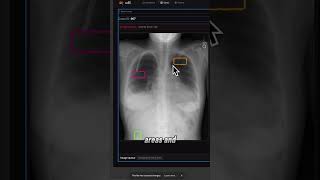
Scanning UX of an AI Radiology SaaS ~ UX Fix #34 ~ Mecha Health #bottomlineux #mechahealth #yc #ux
Saasfactor UX Design Agency
YouTube returned 6 videos for “Mecha Health”, and we withheld 4: 4 did not mention Mecha Health. Showing the 2 we can prove are about Mecha Health.
Official links
Tools that pair well with Mecha Health
Common stack mates teams adopt alongside Mecha Health, with the specific reason each pairing earns its keep.
Paige AI
FDA-cleared AI for cancer pathology: prostate, breast, GI and pan-cancer detection on H&E slides, plus Virchow foundation models for research.

Quibim
Cloud-based medical imaging platform that turns MRI, CT, and PET scans into regulatory-cleared quantitative imaging biomarkers.

Flatiron Health
Oncology real-world evidence platform turning patient data into AI-assisted cancer research insights.
Featured Head-to-Head Comparisons
Mecha Health vs Codametrix
If your goal is to slash medical coding costs and denials across a large health system, CodaMetrix is the proven choice with a 5:1 ROI. If you need to accelerate radiology reporting with AI-generated drafts, Mecha Health offers a faster path to first draft. They solve different problems—choose based on whether your pain point is coding or radiology throughput.
Mecha Health vs Isomorphic Labs
Choose Isomorphic Labs if you're a pharma giant needing AI-driven drug discovery partnerships with deep AlphaFold expertise. Choose Mecha Health if you're a hospital or teleradiology group seeking instant, AI-generated radiology reports. They serve entirely different markets, so the decision hinges on your domain: drug development vs. medical imaging.
Mecha Health vs Rapidsos
RapidSOS and Mecha Health serve completely different verticals. Choose RapidSOS if you're a public safety agency or enterprise needing AI-enhanced emergency response and dispatcher tools. Choose Mecha Health if you're a radiology department or health system seeking to automate report generation. There is no overlap; your decision hinges on your industry.
Alternatives to Mecha Health
View allPaige AI
FDA-cleared AI for cancer pathology: prostate, breast, GI and pan-cancer detection on H&E slides, plus Virchow foundation models for research.

Quibim
Cloud-based medical imaging platform that turns MRI, CT, and PET scans into regulatory-cleared quantitative imaging biomarkers.

Flatiron Health
Oncology real-world evidence platform turning patient data into AI-assisted cancer research insights.
Frequently Asked Questions
Categories
Best-of guides
Used Mecha Health? Help shape our editorial sentiment research.