
Meta Segment Anything Model 2
Meta's open-source promptable segmentation model for selecting and tracking objects in images and video
If your team writes Python and can host the model on your own GPU, SAM 2 is the most direct open-source route to promptable video segmentation: one click and the model carries an object's identity forward across frames instead of treating each frame as a fresh problem. The per-session memory module and frame-at-a-time streaming inference are the reasons to choose it over the original SAM, not the image segmentation, which closely resembles SAM. Read the release notes and the SA-V dataset page before committing engineering time; the demo is the fastest way to test click-to-track behaviour. Budget for integration work — this is a model and a demo, not an application.
Verified 3d ago · liveness 54/100 · cite: rightaichoice.com/tools/meta-segment-anything-model-2
- ML research teams with their own GPU infrastructure and Python codebase
- Video and VFX engineers automating object tracking or rotoscoping across clips
- Developers building segmentation into a larger image or video pipeline
- Teams that need an open-source, permissively licensed segmentation model they can self-host
- Users who need a ready-made desktop or mobile app — the release is a model and demo
- Teams without ML or coding experience to wire up inference
- Stills-only work where the original SAM already covers image segmentation
We scan live Reddit threads, YouTube comments, X posts, G2 reviews and other communities — and hand you an honest verdict in under a minute.
- Honest verdict, not marketing
- Real pros & cons from real users
- Attributed quotes with receipts
3 free scans · no card needed
Skip SAM 2 if you need a ready-made desktop or mobile editor, cannot host the model on your own GPU, or want managed serving without engineering overhead — this release is a model and a demo, and integration is your work.
SAM 2 is released as an open-source model under Meta's public release, so there is no licence fee for the pretrained weights, code, or the SA-V dataset. Your real cost is infrastructure: a GPU to run inference (or fine-tuning), plus the engineering time to wire the model into your pipeline. Compare that to commercial video segmentation or rotoscoping tools, where you pay per seat or per minute of processed footage; SAM 2 trades licence cost for self-hosting effort.
In short
Meta Segment Anything Model 2 — Meta's open-source promptable segmentation model for selecting and tracking objects in images and video. Best for ML research teams with their own GPU infrastructure and Python codebase, Video and VFX engineers automating object tracking or rotoscoping across clips, Developers building segmentation into a larger image or video pipeline. Free to use.
What's new in Meta Segment Anything Model 2
Checked 3 days agoAcross the latest 1 update: 1 launch.
What people actually say about Meta Segment Anything Model 2 — is it worth it?
We scanned public community sources for Meta Segment Anything Model 2 on Oct 17, 2026 and could not establish that the discussion we found is about this tool rather than something else sharing its name. Only 1 of the posts we fetched could be positively tied to Meta Segment Anything Model 2. Rather than publish a sentiment score built on the wrong subject, we publish nothing here and re-run the scan.
Viability Score
How well maintained and how widely used is Meta Segment Anything Model 2? Built from what the vendor actually publishes (docs, changelog, tutorials, integrations, pricing), whether the site is live, and how much real users discuss it. How we calculate this
Last calculated: October 2026
How we score →Key Features
- Promptable segmentation using clicks, boxes, or masks as input
- First unified model for segmenting objects across images and videos
- Per-session memory module tracks a selected object across video frames
- Tracks objects through temporary disappearance from view
- Mask correction by adding prompts on any video frame
- Select and track multiple objects within a single video
- Streaming architecture processes video frames one at a time
- Real-time interactive segmentation inference
- Strong zero-shot performance on objects, images, and videos unseen in training
- Trained on SA-V: ~600K+ masklets on ~51K videos, collected across 47 countries
- Pretrained model weights released publicly
- Inference and training scripts published
- SA-V video segmentation dataset open sourced
- Interactive demo for click-to-track object selection
- Extensible outputs: video object segmentation masks can feed other AI systems such as video generation models
About Meta Segment Anything Model 2
Meta Segment Anything Model 2 (SAM 2) is an open-source segmentation model from Meta FAIR you can use to select and track objects in both images and video. The input is a click, box, or mask on any image or frame, and the model returns the object mask. The main addition over the original SAM is a per-session memory module that keeps context about the target object between frames, so SAM 2 tracks the same object through a clip — even when it temporarily disappears from view — and you can refine the mask by adding another prompt on any frame. Applied to a still image, the memory module is empty and the model behaves like SAM. SAM 2 is the first unified model Meta released for segmenting objects across both images and videos, designed for efficient video processing with streaming inference to enable real-time, interactive applications. Meta reports strong zero-shot performance on objects, images, and videos not seen in training. The model was trained on the SA-V dataset, roughly 600K+ masklets on about 51K videos collected across 47 countries, which Meta open sourced alongside the pretrained weights, code, inference and training scripts, and an interactive demo. This is developer and research tooling, not a packaged app: realistic users are ML engineers building segmentation into a pipeline, video and VFX engineers automating object tracking or rotoscoping, and research teams that want to self-host and fine-tune with transparent training data.
Behind the Verdict
SAM 2 is best understood as research software, not a product. Meta's release is a set of pretrained weights, training and inference code, a dataset, and a demo. If you need a point-and-click desktop editor for rotoscoping, this release does not give you one. Where it earns its place is inside a pipeline: ML engineers who need promptable segmentation as a component, video and VFX teams automating object tracking across clips, and research groups that want an Apache-licensed model they can self-host and fine-tune on their own hardware. The per-session memory module is the defining capability — it lets SAM 2 hold onto an object's identity between frames even when the object briefly leaves the frame — and the streaming architecture (frames processed one at a time) is what makes real-time interactive segmentation plausible rather than a batch afterthought. Meta also open sourced the SA-V dataset, roughly 600K+ masklets on about 51K videos across 47 countries, with annotations that include whole objects, parts, and challenging occlusions, which matters if your team wants transparent training data for evaluation or fine-tuning. The honest limitations: you need programming skills and a GPU, integration into a product is your engineering work, segmentation quality degrades on extreme object deformation and thin structures such as wire frames, and real-time behaviour depends on the GPU you run it on. Interaction is prompt-driven (click, box, or mask), so accuracy on a given clip depends heavily on how you prompt and correct the model. The demo is the fastest way to judge whether the click-to-track behaviour fits your workflow before you invest engineering time; it is a legitimate first step, not a substitute for integration.
Researching Meta Segment Anything Model 2? Get your full AI stack in 60 seconds.
Free, no signup — tell us your goal and get tools matched to your budget & existing stack.
Real-world workflow fit
Concrete scenarios for the personas Meta Segment Anything Model 2 actually fits — and what changes day-one when you adopt it.
Clone the SAM 2 repo, download the pretrained weights, and run inference scripts on a sample clip to measure mask quality and latency on your own GPU before integrating.
Outcome: A working promptable segmentation step you can call from your pipeline, with a clear read on latency and mask quality on your footage.
Use the demo to test click-to-track on a shot, then wire SAM 2 into a script that takes a click prompt on the first frame and outputs tracked masklets across the clip for masking in post.
Outcome: Masklets you can hand off to a compositor, with a fraction of the manual frame-by-frame rotoscoping.
Run SAM 2 zero-shot on your own footage and compare against your baseline, then fine-tune on SA-V or your own annotated clips using the published training scripts.
Outcome: A benchmarked baseline plus a fine-tuned checkpoint for your domain, all self-hosted on your own GPU.
Use Cases
- Click once on a video frame and track an object across the whole clip for post-production
- Generate tracked masklets to use as training labels for a custom vision model
- Feed segmentation output into a video generation or editing model for precise object-level edits
- Build interactive tooling where a user refines a mask with additional prompts on any frame
- Segment objects in stills and video through one pipeline instead of two
- Research on zero-shot segmentation for unseen objects, domains, and footage
- Automate object tracking or rotoscoping across clips with a promptable model
- Evaluate SAM 2 zero-shot on your own footage before fine-tuning on SA-V
Models Under the Hood
as of 2026-09-09
Limitations
- SAM 2 is research software: you need programming skills and a GPU to run it, and there is no packaged end-user app in the release — integration into a product is your engineering work.
- Segmentation quality degrades on extreme object deformation and thin structures such as wire frames.
- Real-time behaviour depends on the GPU you run it on.
- Interaction is prompt-driven (click, box, or mask), so accuracy on a given clip still depends on how you prompt and correct the model.
as of 2026-10-14
Verification history
We have re-verified Meta Segment Anything Model 2 9 times since . Each pass re-reads the vendor's own pages and re-checks every listed field against that evidence; passes where nothing had changed are marked as such.
- — re-verified summary, description, our verdict, our analysis, pricing model, pricing tiers, features, integrations, who it suits, who should skip it
- — re-checked, vendor evidence unchanged
- — re-checked, vendor evidence unchanged
- — re-checked, vendor evidence unchanged
- — re-checked, vendor evidence unchanged
- — re-checked, vendor evidence unchanged
Showing the 6 most recent of 9 verification passes.
Free to cite with attribution — this page re-verifies continuously.
12-month cost
Project the real annual outlay, including the implied monthly cost when only an annual tier is published.
Vendor list price only. Add-on usage, seat overages, and contract minimums are surfaced under Hidden costs & gotchas.
Plans compared
For each published Meta Segment Anything Model 2 tier: who it actually fits, and what it adds vs. the previous tier. Cross-reference the cost calculator above for projected annual outlay.
Open Source
$0
Ideal for
ML engineers, video/VFX teams, and research groups that can self-host on their own GPU and want a promptable segmentation model with no licence fee
What this tier adds
Starting tier — pretrained SAM 2 weights, inference and training scripts, SA-V dataset, and demo, all released publicly; you supply the GPU and integration work
Where the pricing makes sense
The company stage and team size where Meta Segment Anything Model 2's pricing actually pencils out — and where peers do it cheaper.
SAM 2 is released as an open-source model under Meta's public release, so there is no licence fee for the pretrained weights, code, or the SA-V dataset. Your real cost is infrastructure: a GPU to run inference (or fine-tuning), plus the engineering time to wire the model into your pipeline. Compare that to commercial video segmentation or rotoscoping tools, where you pay per seat or per minute of processed footage; SAM 2 trades licence cost for self-hosting effort.
Setup time & first value
How long it actually takes to get something useful out of Meta Segment Anything Model 2 — broken out by persona, not the marketing-page minute.
For a Python-literate ML engineer with GPU access: an evening to clone the repo, download the pretrained weights, and run inference on a sample clip. The demo gives you click-to-track behaviour in minutes without any setup, which is the right first step. Integration into a production pipeline is a multi-day engineering project, not a configuration task.
Integrations
Resources & Guides
Tutorials & Learning
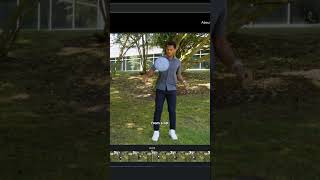
YouTube returned 6 videos for “Meta Segment Anything Model 2”, and we withheld 5: 5 did not mention Meta Segment Anything Model 2. Showing the 1 we can prove is about Meta Segment Anything Model 2.
Official links
Tools that pair well with Meta Segment Anything Model 2
Common stack mates teams adopt alongside Meta Segment Anything Model 2, with the specific reason each pairing earns its keep.

SAM 3 & 3D
SAM 3 segments every matching object in images and video from a text or visual prompt — free to try in the Segment Anything Playground.

Cerul
Cerul is semantic video search: ask in plain words, get the exact timestamped moment with citable evidence.

Reka
Reka builds omni models and edge infrastructure for real-time video reasoning on hardware you already own.
Featured Head-to-Head Comparisons
Meta Segment Anything Model 2 vs Storyfile
If you need authentic, interactive video avatars for a museum or legacy project, StoryFile is the clear choice—its recent CNN and museum deployments prove its real-world impact. If you need a free, open-source segmentation model for research or video editing, Meta SAM 2 is unbeatable. They serve entirely different purposes: one is a service for human-centric conversational AI, the other is an ML model for pixel-level segmentation.
Meta Segment Anything Model 2 vs The New Black
Choose The New Black if you're a fashion brand needing AI-generated designs with tech packs and virtual try-on. Choose Meta SAM 2 if you need open-source, real-time object segmentation for images/video in research or development. They serve completely different domains.
Meta Segment Anything Model 2 vs Splice
If you are a music producer seeking royalty-free samples and flexible rent-to-own plugins, Splice is your best bet with its vast library and DAW integration. If you need state-of-the-art, open-source segmentation for images and videos, Meta SAM 2 is the clear winner—free and real-time. Choose based on your domain: music vs. visual AI.
Alternatives to Meta Segment Anything Model 2
View all
SAM 3 & 3D
SAM 3 segments every matching object in images and video from a text or visual prompt — free to try in the Segment Anything Playground.


Frequently Asked Questions
Categories
Used Meta Segment Anything Model 2? Help shape our editorial sentiment research.