
Microsoft Dynamics 365 Supply Chain
Microsoft's ERP supply chain module — AI demand planning, procurement Copilot, and warehouse execution inside Dynamics 365
Pick Dynamics 365 Supply Chain Management when Microsoft cloud is already your foundation and you want planning, procurement, manufacturing, and warehouse execution sharing one data model with Copilot and agents layered on top. Minutes-long MRP runs plus bring-your-own-ML demand forecasting and Teams-based demand consensus are real differentiators against a generic ERP, and the embedded Power BI supplier scorecards save you a separate analytics build. Pass if you need a lightweight planner live in weeks, if you are not prepared to run on Microsoft cloud, or if the Procurement Agent is central to your business case — it is still in preview. Buyers comparing against SAP IBP or Blue Yonder
Verified 4h ago · liveness 74/100 · cite: rightaichoice.com/tools/microsoft-dynamics-365-supply-chain
- Medium to large enterprises already running Dynamics 365 Finance, Commerce, or Project Operations
- Demand planners who want AI forecasting with their own ML models plus forecast explainability
- Procurement teams wanting supplier risk visibility and policy-based pricing automation
- Manufacturers connecting IoT, mixed reality, and external MES data to the shop floor
- Small businesses without the budget or IT staff for an enterprise ERP rollout
- Companies outside Microsoft cloud that won't migrate to it
- Teams wanting a lightweight standalone planning tool without full ERP scope
We scan live Reddit threads, YouTube comments, X posts, G2 reviews and other communities — and hand you an honest verdict in under a minute.
- Honest verdict, not marketing
- Real pros & cons from real users
- Attributed quotes with receipts
3 free scans · no card needed
Skip Dynamics 365 Supply Chain Management if you need a planning tool live in weeks with no ERP implementation, or if your data estate is outside Microsoft cloud and you have no plan to move it.
Copilot and agent capabilities are licensed on top of the base Supply Chain Management subscription, so the AI features quoted on the product page are a separate line on your quote.
Dynamics 365 Supply Chain Management is enterprise ERP licensing, quoted per user through Microsoft or a partner rather than listed as a self-serve price. That places it alongside SAP and Oracle S/4HANA supply chain modules and well above mid-market planners or standalone forecasting tools. It makes financial sense when you are consolidating several point systems into one data model, not as a cheapest-option purchase.
In short
Microsoft Dynamics 365 Supply Chain — Microsoft's ERP supply chain module — AI demand planning, procurement Copilot, and warehouse execution inside Dynamics 365. Best for Medium to large enterprises already running Dynamics 365 Finance, Commerce, or Project Operations, Demand planners who want AI forecasting with their own ML models plus forecast explainability, Procurement teams wanting supplier risk visibility and policy-based pricing automation. Contact Sales pricing.
What people actually say about Microsoft Dynamics 365 Supply Chain — is it worth it?
We ran a structured research pass across product reviews, community discussions, and post-purchase forum threads to surface the patterns vendors won't publish themselves. Below: the recurring strengths, the hidden costs people mention most, and the cohort that consistently regrets adopting this tool.
14 mentions across 1 source (YouTube) · researched Aug 19, 2026.
Average across the 1 source that answered — each source counts once, not each post.
- +Comprehensive ERP covering demand to delivery with AI agents.
- +Demand forecasting with outlier handling improves planning accuracy.
- +Flexible MRP runs enable rapid supply planning in minutes.
- +Deep integration with Teams, Power BI, and Copilot Studio.
- +IoT and mixed reality enhance shop floor and asset management.
- −Users struggle to access dashboard or get system access initially.
- −Complex module structure confuses users; unclear which modules display.
- −Potential confusion between Dynamics AX and Dynamics 365 versions.
- −Requires commitment to Microsoft ecosystem for full value.
- −Steep learning curve for new users without prior Dynamics knowledge.
- • Licensing for additional users and modules
- • Costs for Azure services and Power Platform integration
- • Potential implementation and consulting fees
Viability Score
How well maintained and how widely used is Microsoft Dynamics 365 Supply Chain? Built from what the vendor actually publishes (docs, changelog, tutorials, integrations, pricing), whether the site is live, and how much real users discuss it. How we calculate this
Last calculated: October 2026
How we score →Key Features
- AI demand forecasting with your own machine learning models and external signals
- Forecast explainability, outlier handling, and automated demand reports
- Complete MRP runs in minutes for near-real-time supply planning
- Dynamic stock buffers and DDMRP to reduce stockouts
- Copilot-driven fulfillment with automated inventory placement
- Real-time demand plan consensus inside Microsoft Teams
- Copilot-assisted sourcing that assesses order-change impact and automates approvals
- Supplier risk workspace using past performance and product metrics
- Automated negotiated pricing via business-defined purchase policies
- Punch outs to external vendor catalogs for sourcing selection
- Embedded Power BI templates for vendor performance, lead times, and quality
- Discrete, process, and lean manufacturing production strategies
- IoT and mixed reality for connected factory operations
- External manufacturing execution system (MES) data integration
- Guided pick, pack, and ship with mobile scanning and cycle counting
About Microsoft Dynamics 365 Supply Chain
Dynamics 365 Supply Chain Management is Microsoft's ERP module for supply chain planning, procurement and sourcing, shop floor management, order management, warehouse operations, and asset management. It is aimed at medium-to-large manufacturers, distributors, and retailers, and it pays off most when you already run Dynamics 365 Finance, Commerce, or Project Operations, because supply chain transactions then sit in the same Microsoft cloud estate and data model. The planning layer is where the AI sits. Demand planning combines AI with your own machine learning models and external signals, adds forecast explainability and outlier handling, and automates reporting. Microsoft claims complete MRP runs finish in minutes rather than in overnight batches, which is what makes near-real-time reaction to demand shifts possible. Inventory uses dynamic stock buffers and DDMRP, with Copilot handling automated inventory placement to reduce stockouts, and demand plan consensus happens inside Microsoft Teams instead of a separate planning app. Procurement and execution carry the rest. Copilot helps buyers assess the impact of order changes and automate approvals, a single workspace surfaces supplier risk from past performance and product metrics, negotiated pricing applies automatically through business-defined purchase policies, and Power BI templates embedded in the product track vendor performance, lead times, and quality. Shop floor coverage spans discrete, process, and lean manufacturing, real-time production views, IoT and mixed reality for connected factories, and ingestion of external MES data. Warehousing covers guided pick-pack-ship, mobile scanning, cycle counting, and orchestration of material handling equipment; order management promises delivery dates from real-time inventory plus carrier API integration such as FedEx. Two agent paths matter. A prebuilt Procurement Agent automates supplier communications and delivery-risk triage, and it is in preview — treat it as an evaluation item rather than a production dependency.
Behind the Verdict
The strongest argument for this product is not any single feature — it is that demand signals, purchase orders, production orders, and warehouse tasks live in one place. When a forecast changes, the MRP run, the sourcing decision, and the pick wave all see the same number without an integration project in between. Microsoft's claim of complete MRP runs in minutes is the operational expression of that, and for a planner who currently waits on an overnight batch, it reframes what planning is for. The AI layer is unevenly mature, and you should buy it that way. Demand planning with your own machine learning models, forecast explainability, and outlier handling is a shipped capability with a clear workflow around it. Copilot for sourcing approvals and order-change impact assessment is a productivity layer on an existing approval process, so the risk of adopting it is low. The Procurement Agent — the piece that actually talks to suppliers and triages delivery risk — is in preview, so budget for evaluating it, not for depending on it. The ecosystem constraint is real. Teams-based demand consensus, Power BI supplier templates, Copilot Studio extensibility, and Azure IoT for the connected factory are all genuine advantages if you are already in Microsoft 365 and Azure. If you are not, each of those becomes a migration argument rather than a feature, and the integration payoff shrinks considerably. Likewise, this is an enterprise ERP: module configuration, legacy data migration, and user training are non-trivial, and no amount of Copilot changes that implementation shape. Warehouse execution is well covered for guided pick-pack-ship, mobile scanning, cycle counting, and material handling equipment orchestration; what a buyer should test in a pilot is whether the delivery-date promising against real-time inventory and carrier APIs matches your promise accuracy today.
Researching Microsoft Dynamics 365 Supply Chain? Get your full AI stack in 60 seconds.
Free, no signup — tell us your goal and get tools matched to your budget & existing stack.
Real-world workflow fit
Concrete scenarios for the personas Microsoft Dynamics 365 Supply Chain actually fits — and what changes day-one when you adopt it.
You load external signals and your own ML model into demand planning, review forecast explainability for the outlier weeks, and route the consensus plan to sales and finance in Microsoft Teams instead of emailing spreadsheets.
Outcome: A signed-off demand plan that finance and sales already saw, with the outliers and their causes documented in the same report.
An order change lands; Copilot shows which downstream orders and dates it affects, you approve the revised commitment through the automated approval flow, and negotiated pricing applies from the business-defined purchase policy.
Outcome: Fewer manual checks per change and a supplier risk view built from past performance rather than memory.
You orchestrate material handling equipment alongside mobile-scanning pick, pack, and ship workflows, and track stock with cycle counting and proactive replenishment.
Outcome: Guided outbound fulfillment that holds delivery dates with fewer people on the floor.
Use Cases
- Forecast demand with AI, your own ML models, and external signals, with automated outlier handling.
- Run complete MRP simulations in minutes to re-plan supply when demand shifts.
- Reach demand plan consensus across departments inside Microsoft Teams.
- Triage supplier delivery risk in a single workspace built from past performance and product metrics.
- Apply negotiated pricing automatically through business-defined purchase policies.
- Promise order delivery dates from real-time inventory and carrier API data such as FedEx.
- Guide warehouse pick, pack, and ship with mobile scanning and MHE orchestration.
- Connect the shop floor with IoT, mixed reality, and external MES data for real-time production views.
Models Under the Hood
as of 2026-10-15
Limitations
- The AI capability is embedded in the broader Dynamics 365 Supply Chain Management suite rather than sold as a standalone product, so you cannot buy the Copilot and agent layer in isolation.
- The Procurement Agent — the most prominent agentic feature — is still in preview, which means it is not a production dependency you should plan around yet.
- Full value assumes you adopt the wider Dynamics 365 stack and run on Microsoft cloud; the integration and AI payoff is materially smaller outside that environment.
- Deployments carry enterprise ERP weight: module configuration, data migration from legacy systems, and user training are non-trivial for teams without dedicated IT resources.
as of 2026-10-18
Verification history
We have re-verified Microsoft Dynamics 365 Supply Chain 20 times since . Each pass re-reads the vendor's own pages and re-checks every listed field against that evidence; passes where nothing had changed are marked as such.
- — re-verified summary, description, our verdict, our analysis, pricing model, pricing tiers, features, integrations, who it suits, who should skip it
- — re-verified summary, description, our verdict, our analysis, pricing model, pricing tiers, features, integrations, who it suits, who should skip it
- — re-verified summary, description, our verdict, our analysis, pricing model, pricing tiers, features, integrations, who it suits, who should skip it
- — re-verified summary, description, our verdict, our analysis, pricing model, pricing tiers, features, integrations, who it suits, who should skip it
- — re-verified summary, description, our verdict, our analysis, pricing model, pricing tiers, features, integrations, who it suits, who should skip it
- — re-verified summary, description, our verdict, our analysis, pricing model, pricing tiers, features, integrations, who it suits, who should skip it
Showing the 6 most recent of 20 verification passes.
Free to cite with attribution — this page re-verifies continuously.
Where the pricing makes sense
The company stage and team size where Microsoft Dynamics 365 Supply Chain's pricing actually pencils out — and where peers do it cheaper.
Dynamics 365 Supply Chain Management is enterprise ERP licensing, quoted per user through Microsoft or a partner rather than listed as a self-serve price. That places it alongside SAP and Oracle S/4HANA supply chain modules and well above mid-market planners or standalone forecasting tools. It makes financial sense when you are consolidating several point systems into one data model, not as a cheapest-option purchase.
Setup time & first value
How long it actually takes to get something useful out of Microsoft Dynamics 365 Supply Chain — broken out by persona, not the marketing-page minute.
Expect months, not days: a typical deployment needs module configuration, legacy data migration, and user training, usually with a Microsoft partner. If you already run Dynamics 365 Finance, adding Supply Chain Management to the same instance is materially faster than a greenfield rollout, because the data model and security are already in place.
Switching to or from Microsoft Dynamics 365 Supply Chain
How to bring data in from common predecessors and how to get it back out — written for the switcher, not the buyer.
- →From SAP ERP or S/4HANA: requires a partner-led data migration of master data, open POs, and inventory balances into the Dynamics 365 data model.
- →From a standalone demand planning tool: replace it with AI demand forecasting plus Teams-based consensus, keeping external signals as inputs.
- →From spreadsheets and email approvals: move sourcing approvals into the Copilot-assisted flow and negotiated pricing into business-defined purchase policies.
- →From a legacy WMS: migrate pick, pack, and ship workflows to guided mobile scanning with MHE orchestration.
- ↗To SAP IBP or similar standalone planning: export forecasting and MRP outputs, but expect to rebuild the Teams consensus process in the new tool.
- ↗To a mid-market ERP: viable only if you shed the Dynamics 365 Finance and Commerce adjacency that supplies much of the value here.
- ↗To a standalone warehouse management system: possible for warehouse execution, at the cost of splitting the shared data model.
Integrations
Resources & Guides
- Resourcedocs.microsoft.com
Dynamics 365 Supply Chain Management documentation
Discover how to make the most of Dynamics 365 Supply Chain Management with training, docs, and videos covering product capabilities and how-to articles. Learn how to build an adaptable, resilient supply chain that automatically reacts to challenges using real-time visibility, agi
- Resourcemicrosoft.com
Supply Chain Management | Microsoft Dynamics 365
Build supply chain resiliency with real-time visibility and AI-driven insights to mitigate supply chain issues with Dynamics 365 Supply Chain Management.
- Resourcecommunity.dynamics.com
Dynamics Community Forum Thread
Helpful link from community.dynamics.com
- Resourcemicrosoft.com
Support | Dynamics 365 | Microsoft
Helpful link from microsoft.com
Tutorials & Learning
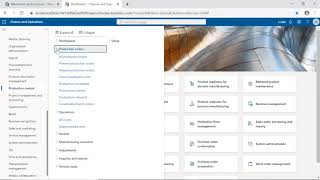
Microsoft Dynamics 365 Supply Chain Management Overview | Western Computer
Western Computer

Supply Chain Management Overview
Microsoft Dynamics 365
YouTube returned 6 videos for “Microsoft Dynamics 365 Supply Chain”, and we withheld 4: 4 did not mention Microsoft Dynamics 365 Supply Chain. Showing the 2 we can prove are about Microsoft Dynamics 365 Supply Chain.
Official links
Tools that pair well with Microsoft Dynamics 365 Supply Chain
Common stack mates teams adopt alongside Microsoft Dynamics 365 Supply Chain, with the specific reason each pairing earns its keep.

SAP IBP
SAP IBP is cloud supply chain planning software for SAP-native enterprises running S&OP, demand, supply, and inventory planning on SAP HANA.
Coupa AI
Coupa AI brings agentic spend management to procurement, finance, and supply chain on one source-to-pay platform.

Flexport AI
Flexport AI pairs predictive supply chain alerts with automated customs brokerage inside Flexport's own freight network
Featured Head-to-Head Comparisons
Alternatives to Microsoft Dynamics 365 Supply Chain
View all
SAP IBP
SAP IBP is cloud supply chain planning software for SAP-native enterprises running S&OP, demand, supply, and inventory planning on SAP HANA.
Coupa AI
Coupa AI brings agentic spend management to procurement, finance, and supply chain on one source-to-pay platform.

Flexport AI
Flexport AI pairs predictive supply chain alerts with automated customs brokerage inside Flexport's own freight network
Frequently Asked Questions
Categories
Best-of guides
Used Microsoft Dynamics 365 Supply Chain? Help shape our editorial sentiment research.