
Mlc Llm
Open-source compiler and deployment engine for running LLMs natively on web, mobile, desktop and cloud
MLC LLM is the pick when the requirement is native inference on hardware you control — a phone, a browser, a desktop, or your own server — rather than per-token API calls. MLCEngine's OpenAI-compatible REST server plus Python, JavaScript, iOS and Android SDKs mean you can swap a hosted endpoint for your own compiled engine without rewriting your client. It is a poor fit if you want a managed service with an SLA or a drag-and-drop app builder; the documented path goes through TVM installation, model compilation, weight conversion and packaging. For that audience, hosted APIs and managed inference endpoints remain the faster route.
Verified 3d ago · liveness 62/100 · cite: rightaichoice.com/tools/mlc-llm
- Developers shipping native LLM inference inside mobile apps
- Engineers self-hosting an OpenAI-compatible endpoint
- Teams that must keep model weights on their own hardware
- Researchers compiling and quantizing custom architectures
- Anyone wanting a no-code or drag-and-drop LLM app builder
- Teams needing a managed service with an SLA
- Beginners with no experience of ML compilation toolchains
We scan live Reddit threads, YouTube comments, X posts, G2 reviews and other communities — and hand you an honest verdict in under a minute.
- Honest verdict, not marketing
- Real pros & cons from real users
- Attributed quotes with receipts
3 free scans · no card needed
Skip MLC LLM if you want a managed LLM endpoint with an SLA and no build pipeline — the documented path runs through TVM installation, weight conversion and model compilation before you serve a single token.
You pay in engineering hours, not licence fees: the documented path starts with installing the TVM compiler, the MLC LLM Python package, Conda and GPU drivers before any model runs.
MLC LLM is an open-source project rather than a licensed product: there is no seat or usage fee, so the comparison is against per-token hosted APIs and managed inference endpoints. At low volume those hosted options are cheaper because your cost is close to zero and their setup is close to zero. The economics swing toward MLC LLM when you are serving enough traffic that metered tokens dominate the bill, or when you cannot send weights to a third party at all.
In short
Mlc Llm — Open-source compiler and deployment engine for running LLMs natively on web, mobile, desktop and cloud. Best for Developers shipping native LLM inference inside mobile apps, Engineers self-hosting an OpenAI-compatible endpoint, Teams that must keep model weights on their own hardware. Free to use.
What people actually say about Mlc Llm — is it worth it?
We scanned public community sources for Mlc Llm on Jul 3, 2026 and could not establish that the discussion we found is about this tool rather than something else sharing its name. Our own analysis of that scan says the posts were off-subject. Rather than publish a sentiment score built on the wrong subject, we publish nothing here and re-run the scan.
Viability Score
How well maintained and how widely used is Mlc Llm? Built from what the vendor actually publishes (docs, changelog, tutorials, integrations, pricing), whether the site is live, and how much real users discuss it. How we calculate this
Last calculated: October 2026
How we score →Key Features
- ML compilation for native performance
- MLCEngine unified inference engine
- OpenAI-compatible REST API
- Python SDK
- JavaScript SDK (WebLLM)
- iOS Swift SDK
- Android Kotlin/Java SDK
- CLI for model compilation and serving
- Custom model architecture support
- Quantization configuration tools
- Model weight conversion and packaging
- TVM compiler integration
- Cross-platform support (web, mobile, desktop, cloud)
- Microserving API for scalable serving
- Cross-engine orchestration patterns
About Mlc Llm
MLC LLM is an open-source machine learning compiler and deployment engine for large language models, aimed at developers and researchers who want to run LLMs natively on their own platforms instead of through a managed cloud API. The project's stated mission is to let everyone develop, optimize and deploy AI models natively on their own hardware. At the centre is MLCEngine, a unified inference engine that exposes an OpenAI-compatible API through a REST server plus Python, JavaScript, iOS and Android SDKs, all backed by the same compiler. The documented workflow runs from installation through compiling model libraries, converting and packaging model weights, defining new model architectures and configuring quantization, driven by CLI tooling and the TVM compiler stack. A Microserving API covers scalable serving, and cross-engine orchestration patterns let you compose services. The docs also link an MLC Course, an MLC Blog and the separate WebLLM project, and carry a dedicated MLC Chat App privacy page. This is not a no-code builder: it is a compiler-driven toolkit that assumes you supply your own model weights and are comfortable with command-line tooling and build environments.
Behind the Verdict
MLC LLM sits in an unusual place: it is a deployment engine, not a model and not a hosted service. The homepage and docs are explicit that the project compiles and runs code on MLCEngine, described as a unified high-performance LLM inference engine, and that the OpenAI-compatible API is available through a REST server and Python, JavaScript, iOS and Android SDKs — all backed by the same engine and compiler. That single-engine story is the real value: the same compiled artifact pattern can be targeted at a browser via WebLLM, at an iOS or Android app via the Swift and Kotlin/Java SDKs, and at server-side serving via the REST API and Microserving API. Where it earns its place is control. The documentation walks through compiling model libraries, converting model weights, compiling custom architectures, configuring quantization, and packaging libraries and weights into artifacts, with TVM as the underlying compiler dependency you install yourself. If you have a fine-tune you cannot send to a third party, or per-token economics that do not work at your volume, that toolchain is the point. The honest downsides are the ones the docs imply rather than hide. Documentation is versioned 0.1.0, which tells you the project is early and interfaces can move. Getting to a first running engine means installing the TVM compiler, the MLC LLM Python package, Conda, GPU drivers and SDKs, or a Wasm build environment if you are targeting the browser — that is a real setup cost before you see a token generated. Support is community-shaped: Discord, GitHub, an FAQ page, an MLC Course and an MLC Blog rather than a vendor support desk. And because it is an engine rather than a service, model choice, quantization choices and performance tuning are yours to make and yours to get wrong. Compare it to managed inference endpoints, where you trade control and per-token cost for someone else running the build pipeline. Compare it to the major hosted APIs, where you trade setup entirely for lock-in and metered billing. MLC LLM is the third option: no per-token fee, your weights stay on your hardware, and you accept the compilation work. Read the Introduction to MLC LLM tutorial end to end before committing, and check the MLC Chat App privacy page if you plan to ship on mobile.
Researching Mlc Llm? Get your full AI stack in 60 seconds.
Free, no signup — tell us your goal and get tools matched to your budget & existing stack.
Real-world workflow fit
Concrete scenarios for the personas Mlc Llm actually fits — and what changes day-one when you adopt it.
You install the MLC LLM Python package and TVM compiler, convert and compile a model into an artifact, then wire the iOS Swift SDK (or Android Kotlin/Java SDK) into your app so inference runs on-device.
Outcome: The app serves an LLM without a network call or per-token charge, with weights baked into your own build.
You compile your model and start MLCEngine's OpenAI-compatible REST server against the compiled artifact, then point your existing client code at your own endpoint.
Outcome: Existing OpenAI-style client integrations keep working while inference runs on your hardware.
You define a new model architecture and a quantization configuration, convert the weights, and compile the model libraries to benchmark them on your target hardware.
Outcome: You can iterate on architecture and quantization choices without depending on a vendor to support the model.
Use Cases
- Deploy a custom fine-tuned LLM as an OpenAI-compatible REST API on your own infrastructure
- Embed LLM inference in an iOS or Android app with the Swift or Kotlin/Java SDK
- Run an LLM locally on a desktop for privacy-sensitive work
- Compile an LLM to run in a browser with WebLLM
- Optimize a model for specific hardware through quantization and compilation
- Serve multiple requests at scale with the Microserving API
- Define and compile a new model architecture from scratch
Limitations
- This is a compiler and deployment engine, not a hosted model service — you supply and compile your own weights.
- Reaching a first working engine means installing the TVM compiler, the MLC LLM Python package, Conda and GPU drivers and SDKs (or a Wasm build environment for browser targets), then converting weights, compiling model libraries and packaging artifacts, all of which assumes comfort with CLI tooling.
- Documentation is versioned 0.1.0, so the project is early and interfaces may shift.
- Support lives in the docs, GitHub, Discord, the FAQ, the MLC Blog and the MLC Course rather than a vendor support desk.
as of 2026-10-08
Verification history
We have re-verified Mlc Llm 9 times since . Each pass re-reads the vendor's own pages and re-checks every listed field against that evidence; passes where nothing had changed are marked as such.
- — re-checked, vendor evidence unchanged
- — re-checked, vendor evidence unchanged
- — re-checked, vendor evidence unchanged
- — re-verified summary, description, our verdict, our analysis, pricing model, pricing tiers, features, integrations, who it suits, who should skip it
- — re-checked, vendor evidence unchanged
- — re-checked, vendor evidence unchanged
Showing the 6 most recent of 9 verification passes.
Free to cite with attribution — this page re-verifies continuously.
Where the pricing makes sense
The company stage and team size where Mlc Llm's pricing actually pencils out — and where peers do it cheaper.
MLC LLM is an open-source project rather than a licensed product: there is no seat or usage fee, so the comparison is against per-token hosted APIs and managed inference endpoints. At low volume those hosted options are cheaper because your cost is close to zero and their setup is close to zero. The economics swing toward MLC LLM when you are serving enough traffic that metered tokens dominate the bill, or when you cannot send weights to a third party at all.
Setup time & first value
How long it actually takes to get something useful out of Mlc Llm — broken out by persona, not the marketing-page minute.
Expect an evening to a few days before your first generated token: installing TVM, Conda, GPU drivers and the MLC LLM Python package comes first, then weight conversion and model library compilation. Browser targets via WebLLM add a Wasm build environment on top. Teams with existing C++/ML-compiler experience move faster; teams new to compiler toolchains should budget more.
Switching to or from Mlc Llm
How to bring data in from common predecessors and how to get it back out — written for the switcher, not the buyer.
- →From OpenAI API: run MLCEngine's OpenAI-compatible REST server against a compiled artifact so existing client code points at your endpoint.
- →From a managed inference endpoint: install the MLC LLM toolchain, compile your weights into an artifact, and self-host behind the same API shape.
- →From a desktop chat app: move to MLC Chat or a compiled engine build when you need your own weights and no network dependency.
- ↗To a hosted LLM API: rewrite calls against the provider's SDK if you no longer want to own compilation and serving.
- ↗To a managed inference endpoint: hand the weight conversion and compilation pipeline to the vendor and connect over its API.
Integrations
Resources & Guides
- Documentationllm.mlc.ai
Docs · Mlc Llm
Full product docs from llm.mlc.ai
- Documentationllm.mlc.ai
Quick Start · Mlc Llm
Full product docs from llm.mlc.ai
- Documentationllm.mlc.ai
Introduction · Mlc Llm
Full product docs from llm.mlc.ai
- Documentationllm.mlc.ai
Tvm · Mlc Llm
Full product docs from llm.mlc.ai
- Documentationllm.mlc.ai
Mlc Llm · Mlc Llm
Full product docs from llm.mlc.ai
- Documentationllm.mlc.ai
Rest · Mlc Llm
Full product docs from llm.mlc.ai
- Documentationllm.mlc.ai
Ios · Mlc Llm
Full product docs from llm.mlc.ai
- Documentationllm.mlc.ai
Faq · Mlc Llm
Full product docs from llm.mlc.ai
Tutorials & Learning
MLC LLM + React Native: On-Device AI Without the Pain
Callstack
MLC LLM: 複数のデバイスに LLM を展開できるようにする
WorldofAI
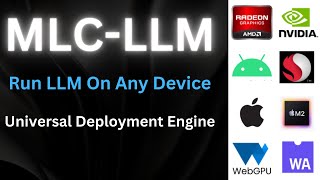
MLC-LLM - Run LLM Anywhere on Any Device
Fahd Mirza
YouTube returned 6 videos for “Mlc Llm”, and we withheld 3: 3 did not mention Mlc Llm. Showing the 3 we can prove are about Mlc Llm.
Official links
Tools that pair well with Mlc Llm
Common stack mates teams adopt alongside Mlc Llm, with the specific reason each pairing earns its keep.

RWKV Runner
Free, open-source desktop app for running and fine-tuning RWKV RNN language models locally with effectively unbounded context.

Predibase
Predibase: managed fine-tuning and multi-LoRA serving for open-source LLMs, now inside Rubrik.

Ollama
Ollama runs open-weight LLMs locally or in the cloud with one command and an OpenAI-compatible API.
Featured Head-to-Head Comparisons
Mlc Llm vs Spider Cloud
If you need to deploy your own LLM natively on any device (especially mobile) and you're comfortable with compilation toolchains, Mlc Llm is the free, open-source choice. But if your goal is to feed your AI agent or RAG pipeline with fresh, structured web data at scale, Spider Cloud's pay-as-you-go API with built-in anti-detection and AI-driven extraction is the practical pick. They solve different problems—choose based on whether you need inference or data.
Mlc Llm vs Voyage Ai
Choose Voyage AI if you need top-tier retrieval accuracy for enterprise RAG, especially in finance or legal, and are willing to pay for domain-specific embeddings and rerankers with long-context support. Choose MLC LLM if you want to deploy any LLM natively on mobile or edge devices with full control, for free, using ML compilation – perfect for privacy-first or self-hosted scenarios. Your budget and deployment target decide: cloud-based accuracy vs. on-device flexibility.
Mlc Llm vs Temporal Ai
If you're building durable, failure-resistant AI agents or orchestrating complex microservices with retries and human-in-the-loop, Temporal is the clear choice despite its freemium cost. If your priority is deploying large language models natively on mobile, web, or desktop with maximum performance and control, MLC LLM's free, compiler-driven approach is unmatched. These tools solve different problems, so pick based on whether your need is orchestration durability or cross-platform LLM deployment.
Mlc Llm vs Reka
If you need a free, open-source framework to deploy and optimize LLMs on any device with full developer control, choose MLC LLM. If your priority is real-time multimodal video analysis at the edge—especially for public sector or enterprise video archives—Reka’s Edge 2 and video APIs are purpose-built, but require a custom budget.
Alternatives to Mlc Llm
View all
RWKV Runner
Free, open-source desktop app for running and fine-tuning RWKV RNN language models locally with effectively unbounded context.


Frequently Asked Questions
Best-of guides
Used Mlc Llm? Help shape our editorial sentiment research.