
Nuro Drive
License the Nuro Driver for L4 autonomous driving across robotaxis, commercial fleets, and personal vehicles.
For an automaker or mobility platform that wants L4 without building a full autonomy org, Nuro is one of the few licensable stacks with real driverless mileage behind it. The 2026 signals are tangible — Houston robotaxi service with Uber and Lucid targeted for 2027, a German engineering base, a CPO hired for commercial launches. Go in knowing you're buying a multi-year integration program with regions and timelines largely set by Nuro's partners.
Verified 20h ago · liveness 77/100 · cite: rightaichoice.com/tools/nuro-drive
- Automakers that want L4 autonomy on their own vehicles without building it in-house
- Mobility platforms adding self-driving vehicles to an existing rider network
- Commercial fleet operators evaluating a vehicle-agnostic autonomy stack
- Companies assembling a robotaxi service across an operator, OEM, and autonomy supplier
- Buyers who want a turnkey robotaxi service with someone else running operations
- Teams committed to an end-to-end AV architecture rather than a modular one
- Startups with no vehicle platform, market, or distribution to plug the stack into
We scan live Reddit threads, YouTube comments, X posts, G2 reviews and other communities — and hand you an honest verdict in under a minute.
- Honest verdict, not marketing
- Real pros & cons from real users
- Attributed quotes with receipts
3 free scans · no card needed
Skip Nuro if you need an end-to-end AV architecture, want a turnkey robotaxi service where the vendor runs operations, or have no vehicle platform and distribution to plug a licensed stack into.
Deployment beyond Nuro's supported regions and test programs requires separate regulatory approvals that add timeline and legal cost before any commercial launch.
Licensing terms are negotiated through Nuro's sales team, so budget planning is a program-level conversation rather than a sticker price. That structure fits funded OEMs and mobility platforms with a vehicle program already in motion, and it sits in the same bracket as other L4 licensors such as Motional or Mobileye's robotaxi programs. Companies that just need driver-assist features are better served by cheaper ADAS suppliers.
In short
Nuro Drive — License the Nuro Driver for L4 autonomous driving across robotaxis, commercial fleets, and personal vehicles. Best for Automakers that want L4 autonomy on their own vehicles without building it in-house, Mobility platforms adding self-driving vehicles to an existing rider network, Commercial fleet operators evaluating a vehicle-agnostic autonomy stack. Contact Sales pricing.
No head-to-head comparison for Nuro Drive yet — the alternatives below are the closest matches we list.
What's new in Nuro Drive
Checked todayAcross the latest 5 updates: 5 news mentions.
Nuro Appoints Rajiv Bhatia as Chief Product Officer to Drive Commercial Launches and Platform Expansion
Nuro named Rajiv Bhatia Chief Product Officer, tied to commercial launches and platform expansion.
Production Validation: Evolving the Engineering Fleet
Nuro blog post on changes to its engineering validation fleet ahead of production deployment.
Meet the Nurons: Jack Guo, VP of Engineering, AI Platform
Profile of Jack Guo, Nuro's VP of Engineering for the AI Platform.
Empowering App Creators Across Nuro
Nuro research post on internal app creation tooling for its teams.
Meet the Nurons: Christa Quarles, Board Member
Profile of Nuro board member Christa Quarles.
What people actually say about Nuro Drive — is it worth it?
We ran a structured research pass across product reviews, community discussions, and post-purchase forum threads to surface the patterns vendors won't publish themselves. Below: the recurring strengths, the hidden costs people mention most, and the cohort that consistently regrets adopting this tool.
8 mentions across 2 sources (YouTube, Lemmy) · researched Oct 10, 2026.
Weighted by the 12 posts each of 2 sources contributed.
- +Over 2M autonomous miles with zero at-fault incidents is a strong, specific safety record
- +5+ years of driverless deployments across five cities, including Tokyo zero-shot driving
- +Vehicle-agnostic stack means automakers aren't locked into a single hardware platform
- +Modular non-end-to-end architecture pitched as easier to validate than monolithic approaches
- +Nuro Toolkit includes simulation tooling that flags determinism regressions automatically
- −No public pricing or self-serve trial — evaluation requires a sales conversation
- −Community feedback is overwhelmingly positive hype with almost no independent technical scrutiny
- −Pricing is opaque, making budget planning for licensees genuinely difficult
- −Integration complexity is high; this is an advanced, enterprise-grade stack, not a drop-in
- −Heavy reliance on Lucid and Uber partnerships concentrates roadmap risk
- • No published pricing means all costs are negotiated and hard to benchmark
- • Integration engineering effort is likely substantial and not included in typical quotes
- • Long sales cycle and legal negotiation time before any technical evaluation begins
Viability Score
How well maintained and how widely used is Nuro Drive? Built from what the vendor actually publishes (docs, changelog, tutorials, integrations, pricing), whether the site is live, and how much real users discuss it. How we calculate this
Last calculated: October 2026
How we score →Key Features
- Nuro Driver L4 self-driving system licensed to automakers and mobility providers
- Validated with 5+ years of driverless deployments and over 2M autonomous miles
- Zero at-fault incidents reported across driverless operations
- Vehicle-agnostic platform spanning robotaxis, commercial fleets, and personal vehicles
- Modular non-end-to-end architecture built for safety validation
- Nuro Toolkit for simulation, validation, and integration workflows
- Simulation tooling that automatically flags determinism regressions
- 65 mph highway driving capability, first deployed in Mountain View
- Perception model latency improved up to 15% with roughly 40% lower GPU usage
- Vision Transformer architecture for emergency vehicle detection
- Reinforcement learning for smoother pullover and pullout planning
- Rain intensity detection model that activates sensor clearing
- Zero-shot driving in new environments, demonstrated in Tokyo
- Autoresearch AI-accelerated research loops for faster development cycles (July 2026)
- Production-intent global robotaxi built with Lucid and Uber
About Nuro Drive
Nuro sells its autonomy stack as a license rather than running the whole service itself. The core product is the Nuro Driver, an AI-first L4 self-driving system that Nuro says is validated by 5+ years of driverless deployments and more than 2M autonomous miles with zero at-fault incidents. Buyers get the driver plus the Nuro Toolkit, a simulation and validation layer used during integration — including tooling that automatically flags determinism regressions so a change that breaks repeatability surfaces before it hits a vehicle. The platform is deliberately vehicle-agnostic: the same stack is pitched for robotaxis, commercial fleets, and personal vehicles, and Nuro argues its modular, non-end-to-end architecture is easier to validate and certify. Engineering detail Nuro publishes includes perception models with up to 15% lower latency and roughly 40% less GPU load, a Vision Transformer for emergency vehicle detection, and a rain-intensity model that triggers sensor clearing. The commercial shape is a triangle: Uber as the network, Lucid as the vehicle, Nuro as the driver. The Uber-Nuro-Lucid robotaxi service in Houston is targeted for 2027, and Nuro opened a European base in Germany in May 2026 with Munich listed as coming soon. Recent additions include Autoresearch AI-accelerated research loops (July 2026) and a new Chief Product Officer hired in October 2026 to drive commercial launches. This is aimed at automakers, mobility platforms, and fleet operators who want L4 capability without funding a decade-long in-house autonomy program. Waymo runs its own service rather than licensing; OEM programs cost years and billions. Nuro lands in between, selling a multi-year integration partnership rather than shrink-wrapped software.
Behind the Verdict
The question I'd ask first: do you need a driver, or a service? If you already have vehicles, a brand, and customers but no autonomy program, Nuro's licensing model is a rational shortcut. The 2M+ autonomous miles and zero at-fault incidents reported are the kind of track record that survives diligence, and the Toolkit's determinism-regression checks address the failure mode that quietly sinks AV integrations, where a model change breaks repeatability and nobody notices until road testing. Where it bites is the shape of the deal. Licensing terms run through sales conversations, so budget for a partnership negotiation, not a checkout page. Roadmap timing rides on Nuro's partners — the Houston robotaxi service with Uber and Lucid is targeted for 2027, and Munich is still listed as coming soon. Companies that need a specific market live next quarter should look elsewhere. Second caveat: architecture. Nuro's argument for a modular, non-end-to-end stack is about validation and certification, which matters if you're the one signing the safety case. Teams already committed to end-to-end AV architecture will find it a philosophical mismatch as much as a technical one. In practice, we'd reach for Nuro when you have a vehicle platform and distribution but want someone else to own the driver. The engineering signals from 2026 — perception latency down up to 15% at roughly 40% less GPU load, Autoresearch loops speeding development — suggest the stack is still improving, which is what you want in a multi-year partner. Compare against Waymo, which runs its own service and doesn't license, and against building in-house, which costs years and billions. Nuro sits between those. Our caveat is coverage: if your target deployment sits outside Nuro's supported regions and test
Researching Nuro Drive? Get your full AI stack in 60 seconds.
Free, no signup — tell us your goal and get tools matched to your budget & existing stack.
Real-world workflow fit
Concrete scenarios for the personas Nuro Drive actually fits — and what changes day-one when you adopt it.
You are integrating an L4 stack into a production EV program. You license the Nuro Driver and use the Nuro Toolkit to run sensor-configuration simulation and determinism regression checks before any public-road testing.
Outcome: You validate the integration in simulation first, catching regressions automatically rather than discovering them on the road.
You run a rider network and want self-driving supply. You work with the Nuro-Uber-Lucid triangle to plan a robotaxi deployment, targeting the Houston service announced for 2027 on the Lucid production-intent robotaxi.
Outcome: You add autonomous vehicles to an existing rider network without running your own autonomy R&D program.
You evaluate a vehicle-agnostic autonomy stack for delivery or commercial routes, using Nuro's 2M+ autonomous miles and zero at-fault incidents as the safety baseline in your diligence.
Outcome: You onboard a validated L4 stack and keep your existing fleet ownership and customer relationships.
Use Cases
- License the Nuro Driver to integrate L4 autonomy into a production electric vehicle.
- Deploy a robotaxi service on the Uber network using Nuro-powered Lucid vehicles, targeting Houston in 2027.
- Operate autonomous commercial delivery fleets with a validated zero-at-fault-incident safety record.
- Use Nuro Toolkit to simulate and validate sensor configurations for custom vehicle platforms.
- Test robotaxi passenger service in California under Nuro's CPUC permit.
- Evaluate zero-shot autonomy for expanding into new cities without full retraining.
Models Under the Hood
as of 2026-10-16
Limitations
- Nuro offers its autonomy stack as a licensed L4 system primarily to automakers and mobility providers rather than as a self-serve product.
- Real-world deployment depends on regulatory approvals and partnerships; the CPUC permit covers robotaxi passenger testing in California, and the Houston service with Uber and Lucid is targeted for 2027.
- Nuro's European base in Germany is still listed as 'coming soon'.
- Safety claims rest on 5+ years of driverless deployments and over 2 million autonomous miles with zero at-fault incidents.
as of 2026-09-30
Verification history
We have re-verified Nuro Drive 19 times since . Each pass re-reads the vendor's own pages and re-checks every listed field against that evidence; passes where nothing had changed are marked as such.
- — re-verified summary, description, our verdict, our analysis, pricing model, pricing tiers, features, integrations, who it suits, who should skip it
- — re-verified summary, description, our verdict, our analysis, pricing model, pricing tiers, features, integrations, who it suits, who should skip it
- — re-verified summary, description, our verdict, our analysis, pricing model, pricing tiers, features, integrations, who it suits, who should skip it
- — re-verified summary, description, our verdict, our analysis, pricing model, pricing tiers, features, integrations, who it suits, who should skip it
- — re-verified summary, description, our verdict, our analysis, pricing model, pricing tiers, features, integrations, who it suits, who should skip it
- — re-checked, vendor evidence unchanged
Showing the 6 most recent of 19 verification passes.
Free to cite with attribution — this page re-verifies continuously.
Where the pricing makes sense
The company stage and team size where Nuro Drive's pricing actually pencils out — and where peers do it cheaper.
Licensing terms are negotiated through Nuro's sales team, so budget planning is a program-level conversation rather than a sticker price. That structure fits funded OEMs and mobility platforms with a vehicle program already in motion, and it sits in the same bracket as other L4 licensors such as Motional or Mobileye's robotaxi programs. Companies that just need driver-assist features are better served by cheaper ADAS suppliers.
Setup time & first value
How long it actually takes to get something useful out of Nuro Drive — broken out by persona, not the marketing-page minute.
For an OEM integrating the Nuro Driver into a production vehicle: months of engineering, simulation, and validation through the Nuro Toolkit before public-road testing. For a mobility platform planning a robotaxi launch: a multi-year horizon, as the Houston Uber-Nuro-Lucid service is targeted for 2027. Expect licensing scoping to start through Nuro's sales and partnerships team rather than a
Switching to or from Nuro Drive
How to bring data in from common predecessors and how to get it back out — written for the switcher, not the buyer.
- →From an in-house autonomy program: license the Nuro Driver to replace or supplement internal L4 development, and run your sensor configurations through the Nuro Toolkit for validation.
- →From a pilot-only autonomy vendor: move onto a stack with 5+ years of driverless deployments and 2M+ autonomous miles behind it.
- →From a delivery-robot-only fleet: extend the same vehicle-agnostic L4 platform to robotaxi or personal-vehicle applications.
- ↗To Waymo: if you want to work with an operator that runs its own robotaxi service rather than licensing a stack to partners.
- ↗To an end-to-end AV architecture vendor: if your validation strategy requires a monolithic model instead of Nuro's modular design.
- ↗To an in-house autonomy program: if you decide vertical integration is worth the multi-year R&D investment.
Integrations
Resources & Guides
Tutorials & Learning
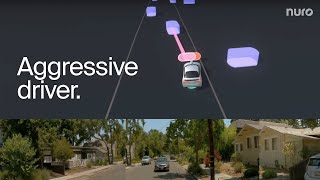
YouTube returned 6 videos for “Nuro Drive”, and we withheld 5: 5 did not mention Nuro Drive. Showing the 1 we can prove is about Nuro Drive.
Official links
Tools that pair well with Nuro Drive
Common stack mates teams adopt alongside Nuro Drive, with the specific reason each pairing earns its keep.

Carla
Open-source autonomous driving simulator with a Python API, ROS2 support, and Unreal Engine 5.5 rendering.

Congruent
Raw radar data — real or synthetic — feeding end-to-end autonomous driving stacks through your world model.

Wayve
Wayve AI Driver: mapless, vehicle-agnostic autonomy that learns to drive from data, from L2 to L4.
Alternatives to Nuro Drive
View all


Frequently Asked Questions
Categories
Topics
Used Nuro Drive? Help shape our editorial sentiment research.