
Okcash
Multichain open-source digital cash live on 9+ chains, with OK DAO governance, staking to 2048, and the OKai AI agent framework.
Okcash is a genuine long-runner: live since 2014, MIT-licensed, zero premine, no ICO, and deployed on nine chains with published contract addresses. If your priorities are self-custody, cross-chain utility, DAO voting, and a staking schedule the project says runs to 2048, it fits. If you trade size, want fiat on-ramps, easy exchange access, or a single-chain experience, look at established assets like Ethereum or BNB instead. Treat it as a small, community-run ecosystem, not a liquidity venue.
Verified 13d ago · liveness 70/100 · cite: rightaichoice.com/tools/okcash
- Multichain DeFi users who want one token usable across many chains
- Long-term stakers holding for a rewards schedule that runs to 2048
- Community governance participants who want DAO voting rights
- Developers building cross-chain DApps with smart contracts
- Traders who need deep liquidity, tight spreads, or centralized exchange listings for size
- Newcomers who want fiat on-ramps and one-click buying
- Users who want a polished single-chain app rather than managing nine networks
We scan live Reddit threads, YouTube comments, X posts, G2 reviews and other communities — and hand you an honest verdict in under a minute.
- Honest verdict, not marketing
- Real pros & cons from real users
- Attributed quotes with receipts
3 free scans · no card needed
Skip Okcash if you need deep liquidity, centralized-exchange order books or a one-click fiat on-ramp, or if managing gas tokens and wallets across nine separate chains is more overhead than you want.
Slippage on Uniswap is the real cost of entry — thin pools mean you can lose several percent on a larger buy or sell.
$OK itself has no subscription or seat pricing — you acquire it on Uniswap and pay network gas, which puts the real cost at the chain level rather than a vendor invoice. That makes it dramatically cheaper to hold than paid DeFi dashboards or $20-$100/mo trading terminals, but it also means there is no support contract, no SLA, and no billing relationship behind it. Budget for gas across nine chains rather than a monthly fee.
In short
Okcash — Multichain open-source digital cash live on 9+ chains, with OK DAO governance, staking to 2048, and the OKai AI agent framework. Best for Multichain DeFi users who want one token usable across many chains, Long-term stakers holding for a rewards schedule that runs to 2048, Community governance participants who want DAO voting rights. Free to use.
What people actually say about Okcash — is it worth it?
We scanned public community sources for Okcash on Jul 6, 2026 and could not establish that the discussion we found is about this tool rather than something else sharing its name. Our own analysis of that scan says the posts were off-subject. Rather than publish a sentiment score built on the wrong subject, we publish nothing here and re-run the scan.
Viability Score
How well maintained and how widely used is Okcash? Built from what the vendor actually publishes (docs, changelog, tutorials, integrations, pricing), whether the site is live, and how much real users discuss it. How we calculate this
Last calculated: October 2026
How we score →Key Features
- Multichain deployment across 9+ chains: BASE, Ethereum, BSC, Solana, Polygon, Arbitrum, Avalanche, Optimism, Fantom
- Published contract addresses for BASE, Ethereum, Polygon, Avalanche, Arbitrum, Optimism, Fantom, BSC and Solana
- Multichain staking with a stated rewards horizon running until 2048
- OK DAO governance for protocol proposals and upgrade votes
- OKai AI agent framework
- OK Power Send for multichain mass token sends and airdrops
- Discord tipping with $OK via Tip.cc on BASE and BSC
- Discord swapping with $OK via SelfSwap on BASE and BSC
- Chrome extension price tracker rated 4.9/5.0 on the project site
- Polygon community NFT badges: New Recruit, Community Leader, Millennium Donor, Rainmaker, Zealy Quest Master, HyperStake Pioneer
- Smart-contract DApp development for lending, gaming and other Web3 use cases
- Non-custodial wallets and self-custody staking pools
- Fixed 105 million max supply with zero premine and no ICO
- MIT-licensed open-source codebase
- OK Academy guides on staking, exchanges and multi-chain wallets
About Okcash
Okcash ($OK) is a multichain cryptocurrency that has been running since 2014 and now operates across 9+ blockchains: BASE, Ethereum, BSC, Solana, Polygon, Arbitrum, Avalanche, Optimism, and Fantom. Contracts are published on the site for BASE (0x979584b07E1e14C7718C9FdaB2E35Bbb5fec2c59), a shared Ethereum/Polygon/Avalanche/Arbitrum/Optimism/Fantom address (0xd3Ac016b1B8C80EeAdDe4D186A9138C9324e4189), BSC (0x523821d20a283d955f6205B4C9252779Cd0f964B), and Solana (HvPrYvgJiBtwUC7H4bi8L5bqnirFPWc2J9NdVy6UFiZm). Maximum supply is fixed at 105 million tokens, with zero premine and no ICO, and the code is released under the MIT license. The project's own tooling covers OK Power Send for multichain mass sends and airdrops, multichain staking that the site says runs until 2048, governance through OK DAO, Discord tipping via Tip.cc and swapping via SelfSwap on BASE and BSC, Polygon NFT badges for community ranks, and the OKai AI agent framework. A Chrome price tracker extension carries a 4.9/5.0 rating on the site. You buy $OK through Uniswap, which the site links directly. It is built for people who care more about self-custody, cross-chain reach, and long-running community governance than about deep order books or polished onboarding.
Behind the Verdict
Okcash's case rests on durability rather than novelty. A token that has been maintained since 2014 with no premine and no ICO, released under MIT, and now relayed across nine chains is a rare shape in crypto — most projects of that vintage are gone, and most multichain rollouts today arrive with a token sale attached. The published contract list is the most concrete thing the site offers: BASE at 0x979584b07E1e14C7718C9FdaB2E35Bbb5fec2c59, one shared address across Ethereum, Polygon, Avalanche, Arbitrum, Optimism and Fantom, BSC at 0x523821d20a283d955f6205B4C9252779Cd0f964B, and Solana at HvPrYvgJiBtwUC7H4bi8L5bqnirFPWc2J9NdVy6UFiZm. If you are verifying a token before you buy it, that list is where you start, and it is worth checking each address against the explorer of the chain you intend to use rather than trusting any single site.\n\nThe tooling is broader than most tokens of this size attempt. OK Power Send handles multichain mass transfers and airdrops, which is the unglamorous work that communities actually need; multichain staking is the long-term holder play with a stated horizon of 2048; OK DAO is the governance layer; Tip.cc and SelfSwap put tipping and swapping inside Discord on BASE and BSC, meeting a community where it already talks; the Polygon NFT badges (New Recruit, Community Leader, Millennium Donor, Rainmaker, Zealy Quest Master, HyperStake Pioneer) are a reputation system rather than a product; and the OKai framework is the AI-agent bet. A Chrome price tracker extension rated 4.9/5.0 on the site rounds out the surface. The OK Academy carries guides on staking across chains, buying and selling $OK via Uniswap and exchanges, and choosing Web3 wallets for multi-chain assets — a real self-custody primer, not a landing page.\n\nThe honest weaknesses are the usual ones for a long-tail multichain token. Liquidity, not tech, is the binding constraint: the site routes purchases to Uniswap, and depth on any single chain will be thin, so slippage on anything but small size is a real cost. Nine chains also means nine sets of gas tokens, bridges, and explorer quirks; the site does not claim to abstract that away, and you should expect to learn the chain you use. The AI-agent framework is directionally interesting but early — it sits alongside the DAO and the gaming pitch, and buyers should treat it as a work in progress rather than a reason to buy. Traders who need order books, market makers, or one-click fiat on-ramps will be frustrated; a newer entrant who wants a slick app and a support desk will be frustrated too. Where it does fit is the specific buyer who wants non-custodial keys, one token usable across many chains, a long staking horizon, and an actual vote in how the project evolves. On those terms it is one of the older options still standing, and it has earned a look — with position sizing that matches a thin-liquidity asset.
Researching Okcash? Get your full AI stack in 60 seconds.
Free, no signup — tell us your goal and get tools matched to your budget & existing stack.
Real-world workflow fit
Concrete scenarios for the personas Okcash actually fits — and what changes day-one when you adopt it.
You are distributing $OK to a few hundred Discord members across BASE and BSC. You load the token, paste the recipient list, and use OK Power Send to broadcast the transfers instead of sending one transaction at a time.
Outcome: Recipients get tokens on the chain of your choice in a handful of batched sends, and you keep a single record of the distribution.
You buy $OK on Uniswap, move it to a non-custodial wallet, then stake on the chain where you hold it — say BASE using the published BASE contract address — and stay staked for the long schedule the project states runs to 2048.
Outcome: You hold your own keys, earn staking rewards, and can still vote in OK DAO without moving the tokens to a custodian.
You deploy a lending or gaming contract against $OK on one of the supported chains, then use the Multichain Explorer and the published contract list to verify balances and activity on the other chains you support.
Outcome: One token contract relationship serves users on Ethereum, BSC, Solana and the rest, instead of you maintaining a separate asset per network.
Use Cases
- Send multichain airdrops or mass transfers with OK Power Send across BASE, Ethereum, BSC and Solana.
- Stake $OK on any of the 9+ supported chains to earn rewards the project says run until 2048.
- Vote on protocol upgrades and proposals through OK DAO governance.
- Build and deploy smart contracts for lending, gaming or other DApps on supported chains.
- Tip $OK to community members in Discord using Tip.cc on BASE and BSC.
- Swap $OK directly inside Discord via SelfSwap on BASE and BSC.
- Track $OK prices across chains with the Chrome price tracker extension.
- Earn Polygon NFT badges for community milestones and quests.
Limitations
- Buying $OK routes through Uniswap, so order-book depth is thin and slippage matters on larger trades.
- Operating across nine chains means you need the right gas token, bridge and explorer for each network, and the project does not abstract that away.
- Staking, DAO voting and DApp use are chain-specific, so you should know which contract you are interacting with — the published addresses differ by chain.
- The OKai agent framework, Web3 gaming and NFT badge system add surface area that takes time to learn.
- The site states staking rewards run until 2048; that is a stated schedule, not a guarantee.
as of 2026-10-04
Verification history
We have re-verified Okcash 7 times since . Each pass re-reads the vendor's own pages and re-checks every listed field against that evidence; passes where nothing had changed are marked as such.
- — re-checked, vendor evidence unchanged
- — re-checked, vendor evidence unchanged
- — re-checked, vendor evidence unchanged
- — re-checked, vendor evidence unchanged
- — re-checked, vendor evidence unchanged
- — re-verified summary, description, our verdict, our analysis, pricing model, pricing tiers, features, integrations, who it suits, who should skip it
Showing the 6 most recent of 7 verification passes.
Free to cite with attribution — this page re-verifies continuously.
Where the pricing makes sense
The company stage and team size where Okcash's pricing actually pencils out — and where peers do it cheaper.
$OK itself has no subscription or seat pricing — you acquire it on Uniswap and pay network gas, which puts the real cost at the chain level rather than a vendor invoice. That makes it dramatically cheaper to hold than paid DeFi dashboards or $20-$100/mo trading terminals, but it also means there is no support contract, no SLA, and no billing relationship behind it. Budget for gas across nine chains rather than a monthly fee.
Setup time & first value
How long it actually takes to get something useful out of Okcash — broken out by persona, not the marketing-page minute.
For a buyer: about 15-30 minutes to install a self-custody wallet, buy $OK on Uniswap, and confirm you are holding the right chain's contract address. For a staker: add 10-20 minutes to acquire the gas token and stake on your chosen chain. For an airdrop runner: budget an afternoon the first time you use OK Power Send, mostly for the recipient list.
Switching to or from Okcash
How to bring data in from common predecessors and how to get it back out — written for the switcher, not the buyer.
- →From a single-chain token: bridge or buy $OK on the chain you already use (BASE, Ethereum, BSC or Solana) and hold it in the same self-custody wallet.
- →From a centralized exchange holding: withdraw to a non-custodial wallet first, then stake or use it, since the project's tooling assumes self-custody.
- →From another staking position: unstake on the old protocol, bridge if needed, then stake $OK through the multichain staking platform on your chosen chain.
- ↗To a major asset like ETH or BNB: swap $OK back on Uniswap on whichever chain you hold it and bridge the proceeds to the network you prefer.
- ↗To a centralized venue: move $OK from your wallet to an exchange that lists it, check that the deposit network matches the chain you are sending from.
- ↗To a different DAO-governed token: exit the staking position on the chain where you staked, then swap on Uniswap.
Integrations
Resources & Guides
Tutorials & Learning
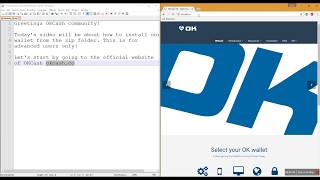
OK Tutorials: How to install Okcash wallet on Windows (from Zip file)
Okcash OK
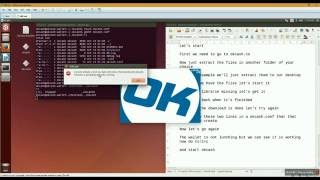
OK Tutorials: How to install Okcash wallet on Ubuntu Linux
Okcash OK
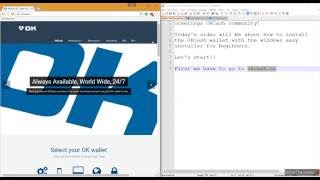
OK Tutorials: How to install Okcash wallet on Windows (Easy Installer)
Okcash OK
YouTube returned 6 videos for “Okcash”, and we withheld 2: 2 could not be judged, because “Okcash” is a single word that other videos use for other things. Showing the 4 we can prove are about Okcash.
Official links
Tools that pair well with Okcash
Common stack mates teams adopt alongside Okcash, with the specific reason each pairing earns its keep.

MarsX
Open-source dev platform that combines no-code, full-code, and AI with reusable full-stack MicroApps.

Sema4.ai
Enterprise AI agent platform for automating document-heavy back-office workflows in finance and compliance.

Causal
Lucanet's xP&A platform for unified financial and operational planning in one live model across HRIS, ERP, and CRM data.
Featured Head-to-Head Comparisons
Okcash vs Presto Voice
Presto Voice and Okcash serve completely different markets — one is a specialized drive-thru voice AI for QSR chains, the other a multichain cryptocurrency with AI and governance features. Choose Presto if you run a multi-location quick-service restaurant and want to automate order-taking, boost revenue via upselling, and integrate with existing POS/headset systems. Choose Okcash if you're a crypto user or developer seeking a long-established (since 2014) multichain token with staking, DAO, and AI agent capabilities, and prefer a free, decentralized solution.
Okcash vs Bitsgap
Bitsgap and Okcash serve entirely different purposes. Bitsgap is a trading automation platform for crypto traders who want to run bots across multiple exchanges; Okcash is a multichain cryptocurrency project focused on DeFi, staking, and development. Choose Bitsgap if you need hands-off trading tools and multi-exchange management. Choose Okcash if you believe in a community-driven, multichain digital cash ecosystem and want to stake long-term or build DApps.
Okcash vs Truleo
Truleo and Okcash serve entirely different domains with zero overlap. Truleo is a specialized AI platform for law enforcement, turning disconnected data (RMS, jail calls, BWC) into actionable leads and slashing report-writing time. Okcash is a decade-old multichain cryptocurrency focused on DeFi, staking, DAO governance, and Web3 development. Your choice depends purely on whether you run a police department or a multichain wallet.
Alternatives to Okcash
View all


Frequently Asked Questions
Best-of guides
Used Okcash? Help shape our editorial sentiment research.