
Palico Ai
Open-source integrated LLM stack for rapid prototyping to production.
Palico is a solid open-source pick for developers who want an integrated environment to iterate on LLM applications. Its hot-swappable components and built-in experimentation dashboard give it an edge over fragmented toolchains. It's self-hosted only, so you'll handle your own infrastructure. If you prefer managed services, consider LangSmith or Weights & Biases, but if you value control and customization, Palico is a strong choice.
Verified 6d ago · liveness 58/100 · cite: rightaichoice.com/tools/palico-ai
- LLM application developers building production-ready prototypes
- Teams wanting systematic experimentation to optimize accuracy, latency, and cost
- Developers seeking an open-source alternative to closed LLM development platforms
- Engineers needing deep observability into LLM requests
- Non-developers looking for a no-code solution
- Enterprise teams requiring managed hosting and SLAs without self-hosting
- Users needing pre-built UI components for customer-facing apps
We scan live Reddit threads, YouTube comments, X posts, G2 reviews and other communities — and hand you an honest verdict in under a minute.
- Honest verdict, not marketing
- Real pros & cons from real users
- Attributed quotes with receipts
3 free scans · no card needed
Skip Palico if you want a managed, no-ops platform, need no-code tools for non-developers, or require pre-built customer-facing UI components.
Self-hosting requires your own Docker infrastructure and ongoing maintenance, so factor in your team's time and cloud costs.
Palico is $0/mo and open-source, so the only cost is your infrastructure. That's cheaper than managed experimentation tools like LangSmith or Weights & Biases, which charge per-seat and usage. It fits developers and small teams who can self-host; larger enterprises may prefer managed tools despite the cost.
In short
Palico Ai — Open-source integrated LLM stack for rapid prototyping to production. Best for LLM application developers building production-ready prototypes, Teams wanting systematic experimentation to optimize accuracy, latency, and cost, Developers seeking an open-source alternative to closed LLM development platforms. Free to use.
What people actually say about Palico Ai — is it worth it?
We ran a structured research pass across product reviews, community discussions, and post-purchase forum threads to surface the patterns vendors won't publish themselves. Below: the recurring strengths, the hidden costs people mention most, and the cohort that consistently regrets adopting this tool.
6 mentions across 1 source (Lemmy) · researched Jul 3, 2026.
- +Hot-swappable components allow runtime changes without code modifications.
- +Built-in experiment dashboard for comparing model performance and prompts.
- +OpenTelemetry-based tracing provides deep observability for every request.
- +Docker-based deployment simplifies moving from dev to production.
- +Supports major model providers and vector databases out of the box.
- −Extremely sparse community feedback makes it hard to gauge real-world issues.
- −No clear evidence of production-scale reliability from actual users.
- −Documentation or community support may be lacking due to low adoption.
- −May require significant setup effort despite Docker ease.
- −Hot-swapping could introduce runtime instability if not carefully managed.
- • Infrastructure costs for self-hosting (servers, GPU if needed)
- • Time investment for setup and maintenance
Viability Score
How well maintained and how widely used is Palico Ai? Built from what the vendor actually publishes (docs, changelog, tutorials, integrations, pricing), whether the site is live, and how much real users discuss it. How we calculate this
Last calculated: September 2026
How we score →Key Features
- Hot-swappable components (models, prompts, vector DB) at runtime
- Playground chat UI for real-time preview
- Experimentation dashboard for defining and running evaluations
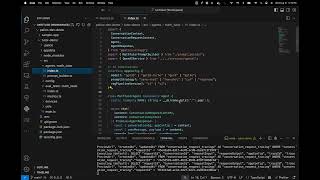
- OpenTelemetry-based logging and tracing for every request
- REST API for production deployment
- TypeScript SDK with type safety
- Docker-based self-hosting
- Integration with LangChain, LlamaIndex, Portkey
- Support for OpenAI, Anthropic, Cohere, Azure, AWS Bedrock, GCP Vertex
- Vector database support: Pinecone, PG Vector, Chroma
- Cookbooks for RAG, chatbot, AI text editor, article categorization, unstructured-to-JSON, text-to-SQL
- npx palico init CLI for quick project start
- Open-source under MIT license
About Palico Ai
Palico AI is an open-source, integrated LLM tech stack that accelerates the full lifecycle of AI application development—from prototyping to production deployment. It lets you build interchangeable application layers where components like models, prompts, and vector databases can be swapped at runtime without changing code, keeping you in flow. The platform includes a playground UI for real-time preview, an experimentation dashboard for defining and running evaluations, and OpenTelemetry-based logging and tracing for deep observability. Palico integrates with popular frameworks and services including LangChain, LlamaIndex, Portkey, OpenAI, Anthropic, Cohere, Azure, AWS Bedrock, and GCP Vertex, plus vector databases like Pinecone, PG Vector, and Chroma. Deployment is streamlined via Docker with a REST API and TypeScript SDK, making the jump from development to production straightforward. As an open-source tool (MIT license), you can self-host and customize everything. Cookbooks guide you through common use cases like RAG, chatbots, AI text editors, article categorization, unstructured-to-JSON conversion, and text-to-SQL. What sets Palico apart is its focus on an integrated, hot-swappable component architecture combined with built-in experimentation and observability, all within an open-source framework that avoids context switching between disjoint tools.
Behind the Verdict
Palico is designed for developers who live in the build-test-iterate loop. The standout is hot-swapping: you can change models, prompts, or even vector databases at runtime without editing code, which is rare and genuinely useful for A/B testing ideas. The experimentation dashboard plus OpenTelemetry tracing means you get both evaluation metrics and under-the-hood request logs in one place, removing the need to bolt together separate tools. The TypeScript SDK and REST API make it practical to move from prototype to production without rewriting. Weaknesses: It's developer-only—no no-code UI, so business users are out of luck. Self-hosting via Docker means you own ops and scaling; there's no managed cloud. The docs are thin beyond cookbooks, and the community is small, so you may need to dig into source code. Also, the hot-swap architecture assumes you structure your app a certain way; if you're locked into a non-open-source framework, it won't fit. Where it fits: a small engineering team that wants control and is comfortable running Docker. Where it doesn't: enterprises needing SLAs without ops burden, or non-developers. Compare to LangSmith or Weights & Biases for managed experimentation; Palico is the open-source alternative.
Researching Palico Ai? Get your full AI stack in 60 seconds.
Free, no signup — tell us your goal and get tools matched to your budget & existing stack.
Real-world workflow fit
Concrete scenarios for the personas Palico Ai actually fits — and what changes day-one when you adopt it.
You start a new project with npx palico init, follow the RAG cookbook, and swap between OpenAI and Anthropic models in the playground to test responses.
Outcome: You have a working RAG prototype with hot-swappable components and evaluation results within a day.
You define test cases in the experimentation dashboard, run evaluations across model versions, and compare latency/cost metrics.
Outcome: You identify the best-performing model and prompt setup, then deploy via REST API with trace visibility.
You self-host Palico with Docker, set up logging, and integrate with your existing LangChain codebase.
Outcome: Your team gets a controlled, customizable LLM development environment with observability, avoiding vendor lock-in.
Use Cases
- Build a Retrieval-Augmented Generation (RAG) application using a vector database and LLM.
- Create a chatbot with external memory that recalls previous conversations.
- Develop an AI text editor that summarizes, translates, and more.
- Scrape articles from a website, classify them, and extract metadata automatically.
- Convert unstructured documents (e.g., PDFs) to structured JSON format.
- Translate natural language queries into valid SQL statements.
- Systematically improve accuracy, latency, and cost through iterative experiments.
- Rapidly prototype and deploy LLM applications with hot-swappable components.
Models Under the Hood
as of 2026-08-31
Limitations
- Palico is an open-source LLM tech stack focused on rapid prototyping to production.
- It supports hot-swapping components and provides a playground UI, experimentation dashboard, and logging/tracing.
- Deployment is via REST API and Docker.
- The evidence does not specify particular model versions or usage limits.
as of 2026-08-19
Verification history
We have re-verified Palico Ai 7 times since . Each pass re-reads the vendor's own pages and re-checks every listed field against that evidence; passes where nothing had changed are marked as such.
- — re-checked, vendor evidence unchanged
- — re-checked, vendor evidence unchanged
- — re-checked, vendor evidence unchanged
- — re-checked, vendor evidence unchanged
- — re-checked, vendor evidence unchanged
- — re-verified summary, description, our verdict, our analysis, pricing model, pricing tiers, features, integrations, who it suits, who should skip it
Showing the 6 most recent of 7 verification passes.
Free to cite with attribution — this page re-verifies continuously.
12-month cost
Project the real annual outlay, including the implied monthly cost when only an annual tier is published.
Vendor list price only. Add-on usage, seat overages, and contract minimums are surfaced under Hidden costs & gotchas.
Plans compared
For each published Palico Ai tier: who it actually fits, and what it adds vs. the previous tier. Cross-reference the cost calculator above for projected annual outlay.
Open Source
$0/mo
Ideal for
Developers and small teams who want full control, are comfortable with Docker, and need a free, self-hosted LLM development stack.
What this tier adds
Starting tier: completely free with self-hosting, including all features—hot-swapping, playground, experimentation, and tracing—with no paid add-ons.
Where the pricing makes sense
The company stage and team size where Palico Ai's pricing actually pencils out — and where peers do it cheaper.
Palico is $0/mo and open-source, so the only cost is your infrastructure. That's cheaper than managed experimentation tools like LangSmith or Weights & Biases, which charge per-seat and usage. It fits developers and small teams who can self-host; larger enterprises may prefer managed tools despite the cost.
Setup time & first value
How long it actually takes to get something useful out of Palico Ai — broken out by persona, not the marketing-page minute.
For a developer with Docker and Node.js, you can have a project running in under an hour using npx palico init and a cookbook. Fastest path to first value is the playground UI, which takes minutes. Experimentation setup adds a few more hours to define test cases and run evaluations.
Switching to or from Palico Ai
How to bring data in from common predecessors and how to get it back out — written for the switcher, not the buyer.
- →From a manual toolchain (LangChain + custom scripts): Replace your scattered scripts with Palico's integrated stack, using cookbooks to structure your app.
- →From a managed platform like LangSmith: You'll need to self-host Palico and adapt your evaluation logic to Palico's experiment format.
- ↗To LangSmith: Export your evaluation data and re-create test cases in LangSmith's managed environment.
- ↗To a custom LangChain deployment: Since Palico is open-source, you can extract your components and prompts to build a bespoke solution.
Integrations
Resources & Guides
Tutorials & Learning

Official links
Tools that pair well with Palico Ai
Common stack mates teams adopt alongside Palico Ai, with the specific reason each pairing earns its keep.



Featured Head-to-Head Comparisons
Palico Ai vs Spider Cloud
Choose Spider Cloud if your main need is high-speed, low-cost web scraping for AI agents and RAG pipelines — its Rust engine and new Browser AI commands (Act, Extract, Observe) give you real-time structured data. Choose Palico AI if you're building and iterating on LLM applications (prototyping to production) and need hot-swappable components, experiment tracking, and deep observability. They solve entirely different problems, so your choice depends on whether you need data extraction or LLM workflow management.
Palico Ai vs Voyage Ai
Choose Voyage AI if your priority is domain-specific embedding accuracy (finance, legal, code) and you have enterprise budget. Choose Palico AI if you need an open-source, rapid prototyping environment to experiment with multiple LLMs and prompts before committing to a stack. They solve different problems — embeddings vs. iterative app development.
Palico Ai vs Temporal Ai
Choose Temporal AI if you need durable, crash-proof orchestration for AI agents or complex workflows—trusted by OpenAI for mission-critical tasks. Choose Palico AI if your priority is fast LLM prototyping with hot-swappable components and deep experiment tracking. They solve different problems: production reliability vs. rapid iteration.
Alternatives to Palico Ai
View allFrequently Asked Questions
Used Palico Ai? Help shape our editorial sentiment research.