
Pipeless
Open-source computer vision framework: write frame hooks in Python or Rust, Pipeless runs the multimedia pipeline.
Pipeless earns its place for teams that own their hardware and want the pipeline problem gone: frame hooks plus parallelization, five named inference runtimes, multi-stream RTSP/RTMP/HTTP, and runtime stream management via CLI or REST API. The July 2026 Pipeless Agents launch also gives you a shortcut for simple automations. It does not remove engineering — the docs assume Docker and stream-protocol fluency, and you supply the trained model. Price the $30 per camera/stream monthly commercial license before a large fleet, and compare against a managed vision API if you'd rather not run containers at all.
Verified 17h ago · liveness 74/100 · cite: rightaichoice.com/tools/pipeless
- Developers building real-time video analytics products who don't want to own a multimedia pipeline
- Teams deploying computer vision to edge devices, cameras and IoT hardware
- Engineers needing multi-stream RTSP/RTMP processing without vendor lock-in
- Startups prototyping a vision feature on their own infrastructure
- Non-developers who need a no-code vision builder or drag-and-drop UI
- Teams expecting built-in model training or data labeling tooling
- Buyers who want a managed hosting service or GUI control plane
We scan live Reddit threads, YouTube comments, X posts, G2 reviews and other communities — and hand you an honest verdict in under a minute.
- Honest verdict, not marketing
- Real pros & cons from real users
- Attributed quotes with receipts
3 free scans · no card needed
Skip Pipeless if you want a managed vision API or a drag-and-drop builder rather than writing Python or Rust frame hooks and running your own containers.
The commercial Pipeless License is $30 per camera/stream monthly, so a 50-camera deployment runs about $1,500/month — model that against a large fleet before committing.
The $30 per camera/stream monthly commercial license fits a startup or product team embedding Pipeless in something they sell with a handful to a few dozen feeds. It is a poor fit for very large fleets, where the per-stream multiplier dominates, and for teams with no GPU or ops budget — the open-source core is free, but the infrastructure and engineering it assumes are not.
In short
Pipeless — Open-source computer vision framework: write frame hooks in Python or Rust, Pipeless runs the multimedia pipeline. Best for Developers building real-time video analytics products who don't want to own a multimedia pipeline, Teams deploying computer vision to edge devices, cameras and IoT hardware, Engineers needing multi-stream RTSP/RTMP processing without vendor lock-in. Plans from $30/mo.
What's new in Pipeless
Checked todayAcross the latest 1 update: 1 launch.
What people actually say about Pipeless — is it worth it?
We ran a structured research pass across product reviews, community discussions, and post-purchase forum threads to surface the patterns vendors won't publish themselves. Below: the recurring strengths, the hidden costs people mention most, and the cohort that consistently regrets adopting this tool.
38 mentions across 5 sources (YouTube, Product Hunt, Bluesky, Stack Overflow, GitHub) · researched Jul 16, 2026.
Average across the 5 sources that answered — each source counts once, not each post.
- +Open-source and free to use under the hood.
- +Abstraction over complex multimedia pipelines saves development time.
- +Supports multiple protocols: RTSP, RTMP, HTTP, and files.
- +Event-driven, serverless-like frame hooks simplify logic.
- +Built-in multi-stream processing out of the box.
- −Multi-threading causes race conditions in stateful processing.
- −Multi-stream performance degrades heavily on limited hardware.
- −Installation frequently fails due to missing library dependencies.
- −Runtime errors like 'unable to set pipeline state' are common.
- −No built-in batch inference for multiple detections per frame.
- • May require cloud GPU or powerful local hardware for acceptable performance
- • No official support tiers; premium support may be needed for production
Viability Score
How well maintained and how widely used is Pipeless? Built from what the vendor actually publishes (docs, changelog, tutorials, integrations, pricing), whether the site is live, and how much real users discuss it. How we calculate this
Last calculated: October 2026
How we score →Key Features
- Write frame hooks in Python or Rust, mixing languages in one application
- Process any number of streams in parallel with multi-stream support
- Ingest and output over files, RTSP, RTMP and HTTP
- Add, edit or remove streams at runtime via CLI or REST API
- Automatic inference via ONNX Runtime, OpenVINO, CoreML, CUDA and TensorRT
- Run on CPU or GPU out of the box
- Load models from a URL/URI or a local file
- Set restart policies for camera failures and stream endings
- Low-code path reusing pre-built black boxes
- Pipeless Agents for vision-powered automations created in seconds (live July 2026)
- Deploy to cloud, edge, IoT or embedded hardware, including offline
- Containerized deployment via published container images
- Ready-made examples: YOLOv8 object detection, TensorFlow multi-pose estimation, watermarking
- Open-source core under the Pipeless License with no vendor lock-in
- Key-value store included for state between frame hooks
About Pipeless
Pipeless is an open-source framework for developers who need real-time video analysis in production without building the surrounding stack. You write self-contained frame hooks — short functions that take frame data and context — and Pipeless handles code parallelization, memory management, multimedia pipelines, model inference and multi-stream orchestration around them. Inputs and outputs cover files, RTSP, RTMP and HTTP, and multi-stream processing is out of the box, so several cameras run concurrently in one lightweight application. Streams can be added, updated or removed at runtime through the CLI or REST API, and restart policies bring a feed back after a camera failure or stream end. Inference is delegated to established runtimes — ONNX Runtime, OpenVINO, CoreML, CUDA and TensorRT — running on CPU or GPU, with models loaded from a URL/URI or a local file. You can write in Python and Rust, even mixing both in one application, or take the low-code path by reusing pre-built black boxes from the docs' example set (YOLOv8 object detection, TensorFlow multi-pose estimation, watermarking, ONNX Runtime candy filter). The July 2026 launch of Pipeless Agents adds a faster path for vision-powered automations you spin up in seconds rather than assembling a pipeline by hand. Deployment is your own cloud, edge, IoT or embedded hardware, including fully offline; the core is open source under the Pipeless License with no vendor lock-in. A commercial Pipeless License at $30 per camera/stream monthly adds the enterprise version with enhanced features, better performance and ongoing maintenance for embedding Pipeless in a product you sell.
Behind the Verdict
The pitch is narrow and honest: Pipeless replaces the plumbing around a model, not the model. On the homepage that plumbing is spelled out — code parallelization, multimedia pipelines, memory management, model inference and multi-stream management — and the docs frame the whole thing as serverless concepts applied to video, where frame events replace HTTP events to trigger your functions. That is the real differentiator. If you have written an RTSP ingest loop and fought with buffering and per-camera threads, the frame-hook contract is a welcome simplification, and runtime stream add/remove over the CLI or REST API is the kind of operational detail that matters when a camera gets swapped at 2am. Coverage of runtimes is broader than most in-house stacks: ONNX Runtime, OpenVINO, CoreML, CUDA and TensorRT, all on CPU or GPU out of the box, with model_uri pointing at a downloadable file or a local path (the homepage example even sets execution_provider to TensorRT inside process.json). Multi-language support is unusual and genuinely useful — Python for pre- and post-processing, Rust where the per-frame cost hurts, mixed in one app. What it is not is equally clear. There is no training or labeling tooling, no drag-and-drop builder, and no managed control plane; the docs tell you to start by running the examples, which sets the right expectation. You will own container images and deployment. If your team has never touched RTSP, budget real ramp-up time. The commercial picture is simple to state: an open-source core you can run on your own infrastructure, and a commercial license at $30 per camera/stream monthly that bundles the enterprise version, better performance and ongoing maintenance for embedding Pipeless in a product you sell. That math is fine at five or ten feeds and gets uncomfortable at a few hundred — model it against your fleet size before you commit. There is also a Get started pack: 10 hours of hands-on work with the team on your own product, contact for terms, which is the sensible way to evaluate before a rollout. The July 2026 Pipeless Agents release is the freshest signal that the project is still shipping rather than coasting on the open-source core.
Researching Pipeless? Get your full AI stack in 60 seconds.
Free, no signup — tell us your goal and get tools matched to your budget & existing stack.
Real-world workflow fit
Concrete scenarios for the personas Pipeless actually fits — and what changes day-one when you adopt it.
Point Pipeless at two RTSP cameras, set model_uri to a YOLOv8 ONNX file with TensorRT as the execution provider, and write one pre-process hook that resizes frames plus one post-process hook that draws bounding boxes.
Outcome: A running container processing both feeds in parallel in real time, with no hand-written multimedia pipeline or threading code to maintain.
Build a Pipeless application that reads from a local file or camera, runs pose estimation through the TensorFlow multi-pose example, and deploys as a container to embedded hardware that has no internet connection.
Outcome: Vision inference runs entirely on-device and offline, and restart policies bring the feed back automatically after a camera failure.
Add new streams and remove retired ones at runtime with CLI commands or REST API calls while the application keeps running.
Outcome: Camera changes no longer require a redeploy, and the same lightweight application keeps processing every active stream.
Use Cases
- Run real-time object detection and tracking across several live camera feeds at once
- Deploy pose estimation for exercise monitoring, gesture recognition or human-computer interaction
- Add watermarking or other frame-level post-processing to an existing video stream
- Detect specific objects, such as cats, in a video with a YOLOv8 model
- Feed real-time vision output into an existing IoT or industrial pipeline
- Build vision-powered automations quickly with Pipeless Agents instead of a custom pipeline
- Process multiple surveillance camera streams in parallel on your own hardware
- Run vision on embedded or edge devices with no internet connection
Models Under the Hood
as of 2026-10-15
Limitations
- You build applications by writing self-contained frame-hook functions in Python or Rust, and the docs point to running and editing the provided examples as the fastest way to start — so expect to write code, not configure a UI.
- Deployment is self-managed to your own cloud or edge infrastructure (containerized/Docker images), with no hosted service or dashboard described.
- Inference is delegated to the provided runtimes (ONNX Runtime, OpenVINO, CoreML, CUDA, TensorRT), so you supply and load an already-trained model; there is no training or labeling tooling in the product.
- Comfort with stream protocols such as RTSP, RTMP and HTTP, and with containers, is assumed.
- The commercial license is priced per camera/stream, so the cost scales linearly with the size of your fleet.
as of 2026-10-18
Verification history
We have re-verified Pipeless 8 times since . Each pass re-reads the vendor's own pages and re-checks every listed field against that evidence; passes where nothing had changed are marked as such.
- — re-verified summary, description, our verdict, our analysis, pricing model, pricing tiers, features, integrations, who it suits, who should skip it
- — re-verified summary, description, our verdict, our analysis, pricing model, pricing tiers, features, integrations, who it suits, who should skip it
- — re-checked, vendor evidence unchanged
- — re-verified summary, description, our verdict, our analysis, pricing model, pricing tiers, features, integrations, who it suits, who should skip it
- — re-verified summary, description, our verdict, our analysis, pricing model, pricing tiers, features, integrations, who it suits, who should skip it
- — re-verified summary, description, our verdict, our analysis, pricing model, pricing tiers, features, integrations, who it suits, who should skip it
Showing the 6 most recent of 8 verification passes.
Free to cite with attribution — this page re-verifies continuously.
12-month cost
Project the real annual outlay, including the implied monthly cost when only an annual tier is published.
Vendor list price only. Add-on usage, seat overages, and contract minimums are surfaced under Hidden costs & gotchas.
Plans compared
For each published Pipeless tier: who it actually fits, and what it adds vs. the previous tier. Cross-reference the cost calculator above for projected annual outlay.
Pipeless License
$30 per camera/stream monthly
Ideal for
Product teams embedding real-time vision into something they sell, typically with a handful to a few dozen camera streams.
What this tier adds
Starting commercial tier: enterprise version with enhanced features, better performance than the open-source core, and ongoing maintenance at $30 per camera/stream monthly.
Get started pack
Contact us
Ideal for
Teams evaluating Pipeless on their own product before committing to a per-stream license.
What this tier adds
Adds 10 hours of hands-on work with the Pipeless team for guided integration during evaluation, quoted on contact.
Where the pricing makes sense
The company stage and team size where Pipeless's pricing actually pencils out — and where peers do it cheaper.
The $30 per camera/stream monthly commercial license fits a startup or product team embedding Pipeless in something they sell with a handful to a few dozen feeds. It is a poor fit for very large fleets, where the per-stream multiplier dominates, and for teams with no GPU or ops budget — the open-source core is free, but the infrastructure and engineering it assumes are not.
Setup time & first value
How long it actually takes to get something useful out of Pipeless — broken out by persona, not the marketing-page minute.
A developer who already knows Docker and RTSP reaches a first working frame hook in roughly an hour by running and editing one of the docs' examples. Budget a day to get multi-stream input, a chosen inference runtime and post-processing wired for your own model; non-Docker teams should add several days for containers and stream protocols.
Switching to or from Pipeless
How to bring data in from common predecessors and how to get it back out — written for the switcher, not the buyer.
- →From a hand-rolled OpenCV/GStreamer pipeline: port your capture, resize and draw logic into pre-process and post-process hooks and let Pipeless handle parallelization and multi-stream management.
- →From a serverless function setup: the mental model maps directly — frame events replace HTTP events, and your processing code moves into hook functions.
- →From a cloud vision API: replace the API call in your hook with a local runtime (ONNX Runtime, OpenVINO, CoreML, CUDA or TensorRT) and a model loaded from model_uri.
- ↗To a managed vision API: move your pre- and post-processing logic back into application code and call the vendor endpoint per frame, trading control for hosting.
- ↗To a custom pipeline: export the frame-processing logic from your hooks into your own OpenCV/GStreamer service, accepting responsibility for parallelization and multi-stream handling.
- ↗To a full platform with training and labeling: keep Pipeless for inference at the edge and send frames out to the platform only for data collection and retraining.
Integrations
Resources & Guides
Tutorials & Learning
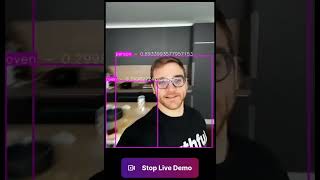
YouTube returned 6 videos for “Pipeless”, and we withheld 5: 5 could not be judged, because “Pipeless” is a single word that other videos use for other things. Showing the 1 we can prove is about Pipeless.
Official links
Featured Head-to-Head Comparisons
Pipeless vs Spider Cloud
Spider Cloud and Pipeless serve completely different domains: Spider Cloud extracts web data for AI/LLM applications, while Pipeless processes video frames for computer vision. Choose Spider Cloud if you need real-time web content for RAG or AI agents; choose Pipeless if you're building vision apps on edge devices. They are not competitors and can even complement each other in a larger AI stack.
Pipeless vs Voyage Ai
If you need high-accuracy text retrieval for enterprise RAG with compliance requirements, Voyage AI is the clear choice despite opaque pricing. If you're building real-time computer vision applications and prefer an open-source framework that handles streams and inference out of the box, Pipeless is unmatched for developer velocity. They serve completely different domains, so your decision hinges on modality: text embeddings vs. video processing.
Pipeless vs Temporal Ai
If you are building AI agents or multi-step microservices that must survive crashes and retries, choose Temporal AI — it’s the industry standard for durable execution with tight AI framework integrations. If your focus is real-time video analytics on edge devices, Pipeless offers a streamlined containerized framework for frame-by-frame processing. Choose the tool that matches your core problem: workflow reliability vs. vision processing.
Popular in Computer Vision

Reka
Reka builds omni models and edge infrastructure for real-time video reasoning on hardware you already own.

Mineral (Alphabet X)
Per-plant crop intelligence platform from Alphabet's X, now acquired by Driscoll's and John Deere

Tractable AI
Tractable uses computer vision AI to turn vehicle photos into certainty-scored repair estimates for insurers, repairers, and recyclers.
Frequently Asked Questions
Categories
Topics
Used Pipeless? Help shape our editorial sentiment research.