
Real Time Latent Consistency Model
Open-source Hugging Face Space by radames demoing real-time image-to-image editing with Latent Consistency Models plus ControlNet.
The code is the artifact, here, not the hosted demo. LCM plus ControlNet in a single Diffusers pipeline remains a pattern worth copying for latency-sensitive image tooling, and the Files tab hands you a working reference with 629 likes behind it. But the live Space returns "Scheduling failure: not enough hardware capacity" today, so fork it and run it on your own GPU instead of building anything on the public URL. If you want a maintained hosted image tool rather than reference code, this is the wrong link.
Verified 1d ago · liveness 75/100 · cite: rightaichoice.com/tools/real-time-latent-consistency-model
- Researchers studying accelerated diffusion and few-step inference
- Developers who want reference code for an LCM plus ControlNet pipeline
- Teams planning to self-host a real-time image-to-image demo on their own GPUs
- Educators demonstrating how step reduction affects diffusion latency
- Anyone who needs a working hosted demo today — the Space fails to schedule hardware
- Production or commercial workloads that depend on consistent uptime
- Buyers comparing support, SLAs, or vendor accountability
We scan live Reddit threads, YouTube comments, X posts, G2 reviews and other communities — and hand you an honest verdict in under a minute.
- Honest verdict, not marketing
- Real pros & cons from real users
- Attributed quotes with receipts
3 free scans · no card needed
Skip this Space if you need a hosted tool with an uptime commitment — it currently fails to schedule hardware, so you would be forking the app files and running them on your own GPU instead.
The free Space gets shared infrastructure, and the page's "not enough hardware capacity" error is what that looks like in practice — a demo you cannot rely on for a deadline.
The Space itself is free to fork and has no price of its own. What you actually pay is the platform underneath: Hugging Face PRO at $9/mo for GPU hardware options on Spaces, or Enterprise at custom pricing if you need pooled seats and per-resource-group access control. Solo developers prototyping fit PRO; anything with an uptime requirement should budget for your own GPU host.
In short
Real Time Latent Consistency Model — Open-source Hugging Face Space by radames demoing real-time image-to-image editing with Latent Consistency Models plus ControlNet. Best for Researchers studying accelerated diffusion and few-step inference, Developers who want reference code for an LCM plus ControlNet pipeline, Teams planning to self-host a real-time image-to-image demo on their own GPUs. Free to start; paid plans from $9/mo.
What's new in Real Time Latent Consistency Model
Checked yesterdayAcross the latest 3 updates: 2 feature updates and 1 pricing change.
Live resource usage on Jobs
Job pages now show a Resources panel with live CPU, RAM, GPU and VRAM usage updated every couple of seconds, which helps diagnose why a Space cannot get hardware.
Hugging Face is now on Google Cloud Marketplace
Organizations can subscribe with their Google Cloud account so Inference Providers, Endpoints, Spaces, Jobs and Team or Enterprise seats land on their existing cloud bill.
Granular Feature Access
Feature access can now be controlled per resource group instead of organization-wide, so you can leave Jobs open while restricting Endpoints to admins.
What people actually say about Real Time Latent Consistency Model — is it worth it?
We ran a structured research pass across product reviews, community discussions, and post-purchase forum threads to surface the patterns vendors won't publish themselves. Below: the recurring strengths, the hidden costs people mention most, and the cohort that consistently regrets adopting this tool.
38 mentions across 3 sources (YouTube, Bluesky, GitHub) · researched Jul 15, 2026.
Average across the 3 sources that answered — each source counts once, not each post.
- +Real-time image generation with impressively low latency when it works.
- +Demonstrates cutting-edge LCM acceleration reducing inference steps.
- +Hugging Face Space makes it easy to try online without local install.
- +Open-source codebase allows developers to experiment and modify.
- +Supports ControlNet conditioning for guided image generation.
- −Hugging Face Space often shows runtime error due to hardware limits.
- −Local installation is difficult, especially on macOS and newer GPUs.
- −Webcam selection fails in some browsers like Brave and Chrome.
- −ControlNet and Lora features are broken for many users.
- −No official setup guide or YouTube tutorials for installation.
- • Local deployment requires expensive GPU hardware (e.g., RTX 3080 or 4090) for real-time performance.
Viability Score
How well maintained and how widely used is Real Time Latent Consistency Model? Built from what the vendor actually publishes (docs, changelog, tutorials, integrations, pricing), whether the site is live, and how much real users discuss it. How we calculate this
Last calculated: October 2026
How we score →Key Features
- Real-time image-to-image generation
- Latent Consistency Model (LCM) acceleration for few-step inference
- ControlNet conditioning for prompt-guided edits of an existing image
- Few-step diffusion sampling via LCM distillation
- Interactive web interface hosted on Hugging Face Spaces
- Built on the Diffusers library
- Open-source app files you can fork and self-host
- Runs on Hugging Face Spaces shared infrastructure
- Deployable on PRO or Enterprise GPU hardware
- Community tab with 629 likes and 14 posts
- Currently returns a scheduling failure on the free tier
- Public Files tab exposing the app source
About Real Time Latent Consistency Model
Real-Time Latent Consistency Model is an open-source Hugging Face Space by an individual developer, radames, that demonstrates real-time image-to-image generation by pairing Latent Consistency Model acceleration with ControlNet conditioning. Instead of a full multi-step diffusion pipeline, it relies on LCM distillation to cut inference to a handful of steps, so a prompt change lands on screen fast enough to feel interactive, and ControlNet lets the prompt steer the edit of an image you already have. The app is built on the Diffusers library and runs as a standard Hugging Face Space, so it inherits the platform's hosting model rather than shipping its own. The project page carries 629 likes and a community tab with 14 posts. Right now the hosted instance does not start: the page shows a runtime error, "Scheduling failure: not enough hardware capacity," with no container logs available. That is an infrastructure symptom on the free shared tier, not a defect in the pipeline code. Who is it for? Developers and researchers who want to read, fork, or replicate an accelerated diffusion pipeline, and educators who need a concrete LCM plus ControlNet reference. End users looking for a stable interactive art toy will not get one from the public URL. Treat the app files as the artifact and the demo as optional. Note that the Free / PRO / Enterprise tiers on the Hugging Face pricing page belong to the platform, not to this Space.
Behind the Verdict
Start with the thing that matters: the public URL is not working. As of this scrape the Space shows a runtime error — "Scheduling failure: not enough hardware capacity" — and the container logs section returns a fetch error, so there is nothing to debug from the page itself. That is a shared-infrastructure symptom on the free tier, not evidence the pipeline is broken, but it does mean you cannot evaluate the demo by clicking it. What you can evaluate is the approach. The Space combines two ideas that fit together well. Latent Consistency Model distillation shrinks the number of sampling steps a diffusion model needs, which is exactly what makes prompt-to-image feel responsive instead of batch-like. ControlNet adds conditioning on an existing image, so your text prompt edits structure you already chose rather than generating from nothing. Together they are the standard recipe for real-time image-to-image, and seeing it wired up in one Diffusers app is genuinely useful if you are building something similar. The distribution model is Hugging Face Spaces, which means the Space inherits the platform's resource allocation, hardware options, and availability rather than promising anything of its own. There is no API endpoint documented for this Space, no paid tier specific to it, no SLA, and no support contract — the author is an individual, not a company. If you need uptime guarantees or vendor accountability, this is not a vendor; it is a demo. The strongest use is as teaching material and as a starting point. Fork the app files, read how few-step sampling is configured, swap in your own ControlNet weights, and host it on hardware you control or on a paid Hugging Face tier where you can actually get a GPU. Educators get a clean before/after for what step reduction does to diffusion latency. Researchers get a readable reference implementation. Where it does not fit: production workloads, anything with an uptime requirement, and non-technical users who want a finished editing app they can hand to a designer. The current error state makes that last point concrete rather than theoretical.
Researching Real Time Latent Consistency Model? Get your full AI stack in 60 seconds.
Free, no signup — tell us your goal and get tools matched to your budget & existing stack.
Real-world workflow fit
Concrete scenarios for the personas Real Time Latent Consistency Model actually fits — and what changes day-one when you adopt it.
You open the Files tab, clone the app, and run it against a GPU you already pay for, since the public Space is stuck in a scheduling failure.
Outcome: You get a working few-step LCM plus ControlNet pipeline you can instrument and benchmark without depending on shared capacity.
You walk a class through the pipeline config, changing the step count and showing how output appears faster as the LCM schedule tightens.
Outcome: Students see concretely what distillation buys in latency, using a readable open-source reference rather than a black box.
You feed in your own base image and prompts to see how strongly ControlNet steers structure before committing to the technique in a product.
Outcome: You learn the conditioning behaviour from the code and from your own self-hosted runs, not from a demo that may not be online.
Use Cases
- Fork the app files and stand up your own real-time image-to-image demo on GPU hardware you control
- Teach diffusion acceleration by showing how few-step LCM sampling changes latency versus a full pipeline
- Prototype low-latency prompt-driven edits for an interactive art installation
- Test ControlNet conditioning behaviour on an image you supply before committing to a stack
- Study a working Diffusers reference implementation of LCM plus ControlNet in one pipeline
Models Under the Hood
as of 2026-10-18
Limitations
- The Space currently returns a runtime error, "Scheduling failure: not enough hardware capacity," so the demo may be unreliable or unavailable, and error logs could not be fetched from the page.
- Availability and performance are governed by Hugging Face Spaces shared resource allocation.
- No dedicated API endpoint or paid tier for this specific Space is documented, and it is maintained by an individual author rather than a company with a support contract.
as of 2026-10-17
Verification history
We have re-verified Real Time Latent Consistency Model 9 times since . Each pass re-reads the vendor's own pages and re-checks every listed field against that evidence; passes where nothing had changed are marked as such.
- — re-checked, vendor evidence unchanged
- — re-verified summary, description, our verdict, our analysis, pricing model, pricing tiers, features, integrations, who it suits, who should skip it
- — re-verified summary, description, our verdict, our analysis, pricing model, pricing tiers, features, integrations, who it suits, who should skip it
- — re-verified summary, description, our verdict, our analysis, pricing model, pricing tiers, features, integrations, who it suits, who should skip it
- — re-verified summary, description, our verdict, our analysis, pricing model, pricing tiers, features, integrations, who it suits, who should skip it
- — re-verified summary, description, our verdict, our analysis, pricing model, pricing tiers, features, integrations, who it suits, who should skip it
Showing the 6 most recent of 9 verification passes.
Free to cite with attribution — this page re-verifies continuously.
12-month cost
Project the real annual outlay, including the implied monthly cost when only an annual tier is published.
Vendor list price only. Add-on usage, seat overages, and contract minimums are surfaced under Hidden costs & gotchas.
Plans compared
For each published Real Time Latent Consistency Model tier: who it actually fits, and what it adds vs. the previous tier. Cross-reference the cost calculator above for projected annual outlay.
Free
$0/mo
Ideal for
Developers and educators who only need to read or fork the open-source app; the public demo runs on shared infrastructure when capacity allows.
What this tier adds
Starting tier — $0/mo, shared Hugging Face Spaces infrastructure, no dedicated GPU and no guarantee the Space will schedule.
PRO
$9/mo
Ideal for
Solo developers who want to self-host this pipeline on Hugging Face GPU hardware options rather than their own machine.
What this tier adds
Adds a personal PRO account with access to PRO-tier GPU hardware options and higher resource allocations than the free shared tier.
Enterprise
Custom
Ideal for
Teams that need pooled seats, centralized billing, and per-resource-group access control around self-hosted ML demos.
What this tier adds
Adds team and enterprise seats, granular feature access per resource group, Enterprise support, and billing through Google Cloud Marketplace.
Where the pricing makes sense
The company stage and team size where Real Time Latent Consistency Model's pricing actually pencils out — and where peers do it cheaper.
The Space itself is free to fork and has no price of its own. What you actually pay is the platform underneath: Hugging Face PRO at $9/mo for GPU hardware options on Spaces, or Enterprise at custom pricing if you need pooled seats and per-resource-group access control. Solo developers prototyping fit PRO; anything with an uptime requirement should budget for your own GPU host.
Setup time & first value
How long it actually takes to get something useful out of Real Time Latent Consistency Model — broken out by persona, not the marketing-page minute.
Forking and running the app locally: an afternoon if you already have a GPU environment and Diffusers installed. Reading the pipeline code to understand the LCM and ControlNet wiring: under an hour. Clicking the public URL for an instant demo: not currently possible while the Space is stuck on a scheduling failure.
Switching to or from Real Time Latent Consistency Model
How to bring data in from common predecessors and how to get it back out — written for the switcher, not the buyer.
- →From a full multi-step Stable Diffusion pipeline: swap the scheduler for an LCM schedule and drop step count, keeping your existing ControlNet weights.
- →From a closed hosted image editor: fork the open-source app files and replicate the edit flow on hardware you control.
- ↗To a maintained hosted image platform: export nothing — there is no persistent data here; rebuild the flow in the target product.
- ↗To your own Diffusers deployment: copy the app files from the Space's Files tab and run them under your own serving stack.
Resources & Guides
- Documentationhuggingface.co
Diffusers · Real Time Latent Consistency Model
Full product docs from huggingface.co
- Documentationhuggingface.co
Spaces · Real Time Latent Consistency Model
Full product docs from huggingface.co
- Documentationhuggingface.co
Docs · Real Time Latent Consistency Model
Full product docs from huggingface.co
- Resourcehuggingface.co
Main · Real Time Latent Consistency Model
Helpful link from huggingface.co
Tutorials & Learning

Real Time Latent Consistency Model | DANIEL PIKL
Daniel Pikl
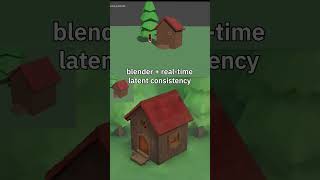
Blender + Real Time Latent Consistency
IndividualKex

Diving Deep into the Real-Time Latent Consistency Model The realm of artificial intelligence and mac
phill ai
YouTube returned 6 videos for “Real Time Latent Consistency Model”, and we withheld 1: 1 did not mention Real Time Latent Consistency Model. Showing the 5 we can prove are about Real Time Latent Consistency Model.
Official links
Tools that pair well with Real Time Latent Consistency Model
Common stack mates teams adopt alongside Real Time Latent Consistency Model, with the specific reason each pairing earns its keep.
Pixlr
Pixlr is a free browser-based AI photo editor and image generator with 20+ AI editing tools plus AI video and audio generation.

Overchat AI
One $14.99/mo subscription bundling 50+ chat, image and video models plus 100+ mini AI apps on web, iOS and Android.

Picsart
Picsart packs 180+ AI image, video, and audio models into one creative subscription with built-in editing.
Featured Head-to-Head Comparisons
Real Time Latent Consistency Model vs Adobe Firefly Services
If you're an enterprise needing scalable, compliant generative AI APIs with commercial safety, Adobe Firefly Services is the clear choice despite its usage cost. For researchers or hobbyists exploring real-time diffusion on a budget, the Real Time Latent Consistency Model offers open-source code and a free demo, but expect instability and no support for production.
Real Time Latent Consistency Model vs The New Black
These tools serve completely different needs. If you run a fashion brand and need to generate garments, model images, and tech packs for production, The New Black is your all-in-one solution. If you're an AI researcher or developer looking to experiment with fast diffusion models and ControlNet in real time, the free LCM Space offers a glimpse into cutting-edge techniques, albeit with stability issues. Don't pick one expecting to do the other's job.
Real Time Latent Consistency Model vs Qoves
If you want a data-driven, non-surgical beauty plan tailored to your face, QOVES is your tool—it's paid but research-backed. If you're a developer or researcher exploring real-time diffusion models, the Real Time Latent Consistency Model is a free, open-source demo, though its stability on the free tier is limited. Pick based on whether your goal is personal improvement or technical experimentation.
Alternatives to Real Time Latent Consistency Model
View allPixlr
Pixlr is a free browser-based AI photo editor and image generator with 20+ AI editing tools plus AI video and audio generation.

Overchat AI
One $14.99/mo subscription bundling 50+ chat, image and video models plus 100+ mini AI apps on web, iOS and Android.

Frequently Asked Questions
Categories
Topics
Used Real Time Latent Consistency Model? Help shape our editorial sentiment research.