
Remoroo
Remoroo is an industrial robot manipulation platform that learns dexterous tasks from a sentence and proves each skill with an auditable
Remoroo sells the verification step, not the demo — held-out tests and an auditable success rate are the genuine differentiator, and the free first robot plus free re-verification lowers the cost of finding out whether it works on your cell. At $6,000 per verified skill and $2,500 per robot per year from robot two, the math only closes on tasks that recur or need an audit trail. If you need joint-level trajectory control, this is not your tool.
Verified 1h ago · liveness 63/100 · cite: rightaichoice.com/tools/remoroo
- Industrial integrators deploying dexterous manipulation without scripting cells
- Manufacturers running high-mix production where motion varies too much to hard-code
- R&D labs that need repeatable, verifiable manipulation skills with an audit trail
- Multi-cell operations wanting drift detection and free skill re-verification
- Projects needing per-joint trajectory control or low-level motion scripting
- One-off tasks where a $6,000 verified skill never amortizes
- Hobbyist or low-budget setups without industrial arms to bring into service
We scan live Reddit threads, YouTube comments, X posts, G2 reviews and other communities — and hand you an honest verdict in under a minute.
- Honest verdict, not marketing
- Real pros & cons from real users
- Attributed quotes with receipts
3 free scans · no card needed
Skip Remoroo if you need per-joint trajectory control, low-level motion scripting, or if your task is a one-off that will never amortize a $6,000 verified skill.
Every verified skill costs $6,000, so a cell with six recurring tasks is a $36,000 certificate bill on top of robot hardware.
The free first robot and first skill make entry genuinely zero-cost, which undercuts traditional integrator quotes for a pilot cell. At scale the model is $6,000 per verified skill plus $2,500 per robot per year from robot two, flattening to a fleet license at 20+ robots — cheaper than per-seat robot-programming platforms for a mid-size high-mix shop, but harder to justify than a one-time integrator contract if your task mix rarely changes.
In short
Remoroo — Remoroo is an industrial robot manipulation platform that learns dexterous tasks from a sentence and proves each skill with an auditable. Best for Industrial integrators deploying dexterous manipulation without scripting cells, Manufacturers running high-mix production where motion varies too much to hard-code, R&D labs that need repeatable, verifiable manipulation skills with an audit trail. Free to start; paid plans from $2,500/yr.
What's new in Remoroo
Checked 6 days agoAcross the latest 1 update: 1 news mention.
What people actually say about Remoroo — is it worth it?
We scanned public community sources for Remoroo on Oct 18, 2026 and could not establish that the discussion we found is about this tool rather than something else sharing its name. Only 2 of the posts we fetched could be positively tied to Remoroo. Rather than publish a sentiment score built on the wrong subject, we publish nothing here and re-run the scan.
Viability Score
How well maintained and how widely used is Remoroo? Built from what the vendor actually publishes (docs, changelog, tutorials, integrations, pricing), whether the site is live, and how much real users discuss it. How we calculate this
Last calculated: October 2026
How we score →Key Features
- Autonomous robot setup and self-calibration using the robot's own cameras
- Self-learns robot geometry and establishes safe motion limits before moving
- Natural language task input — one sentence is the entire interface
- Practices on the real cell attempt after attempt with nobody driving
- No teach pendant, scripting, or cell programming required
- Verifies each skill on held-out tests the robot never practiced
- Measured, auditable success rate per verified skill
- 90-day guarantee on every verified skill
- Drift detection with automatic retraining and always-free re-verification
- First robot, setup, calibration, and first verified skill free
- Pay-per-outcome pricing: $6,000 per verified skill
- Per-robot yearly service from robot 2 at $2,500/robot/yr
- Flat fleet license at 20+ robots
- CLI-driven robot setup and skill training via remoroo run
- Agent-driven setup and training in the Studio
About Remoroo
Remoroo brings industrial arms and cameras into service without a teach pendant or cell programming. The robot's own cameras do the setup: it locates its arms and cameras, self-calibrates, learns its own geometry, and establishes safe motion limits before it moves. From there the interface is one sentence — "clear the table into the black box" — and the robot practices the task on the real cell, attempt after attempt, with nobody driving and no teleoperation loop. The part buyers should actually scrutinize is verification. Every run ends on held-out tests the robot never practiced, producing a measured success rate you can audit — not a demo reel. That certificate carries a 90-day guarantee, and when the cell changes the skill notices the drift, retrains, and re-verifies for free, permanently. It is aimed at integrators, high-mix manufacturing cells, and R&D labs where motion varies too much to hard-code but the work still has to hold up in production. Commercially it is pay-per-outcome rather than per-seat. Your first robot, its setup, calibration, and first verified skill cost nothing; each additional verified skill runs $6,000; every robot from the second costs $2,500 per robot per year for setup, monitoring, drift recovery, and re-verification, flattening into a fleet license at 20+ robots. A CLI path (remoroo run) and an agent-driven Studio cover setup and training, and there are separate agent credit plans for autonomous engineering that Remoroo explicitly notes robotics never uses. Positioning is narrow on purpose. If your project needs per-joint trajectory control or low-level motion scripting, Remoroo is the wrong layer — stay with your existing motion stack. Where it competes is against traditional integration quotes for repeatable dexterous work: fewer engineering weeks, a number you can point at, and free re-verification instead of a new change-order every time the cell shifts.
Behind the Verdict
The honest question with any robot-learning vendor is whether the skill still works on Tuesday. Remoroo's answer — train on the real cell unattended, then prove it on held-out tests you never practiced — is the part worth paying for, and it's why the per-skill price is defensible in a way that per-seat software pricing rarely is. We'd pick this when the task is dexterous, varied, and recurring: kitting, assembly, inspection, table clearing where the object poses shift constantly. High-mix cells with frequent changeovers are the sweet spot, because drift detection plus free re-verification turns a changeover from a change-order into a retraining run. We'd pass when the job is a one-off. A $6,000 certificate that ships once and never runs again doesn't amortize, and a fixed hard-coded motion path is cheaper and more predictable. Same answer if you need per-joint trajectory control or low-level scripting — Remoroo deliberately abstracts that away, and fighting the abstraction is not a good use of anyone's quarter. Against a traditional integrator quote, the comparison isn't feature-for-feature. It's engineering weeks versus a measured success rate, and a support contract versus automatic drift recovery. Run both numbers on a specific cell before deciding; the answer flips depending on how often the task recurs. Two practical caveats. First, you need industrial arms and cameras worth bringing into service — this is not a hobbyist setup. Second, the agent credit plans on the pricing page look like they belong to a different product line; Remoroo itself says robotics never uses them, so ignore them when building your cost model and budget on robots plus verified skills instead. The 90-day guarantee is the real risk reducer here. Use the free first robot and first skill
Researching Remoroo? Get your full AI stack in 60 seconds.
Free, no signup — tell us your goal and get tools matched to your budget & existing stack.
Real-world workflow fit
Concrete scenarios for the personas Remoroo actually fits — and what changes day-one when you adopt it.
A client cell needs a cable-routing task automated and the client has no appetite for a multi-week programming engagement. You point the robot's cameras at the cell, run remoroo run from the CLI, and let the agent bring the rig into service with connection, calibration, safety, and motion limits set automatically.
Outcome: The first robot is in service and the first skill is trained and verified at no cost, giving you a working proof point for the client before any invoice is raised.
A kitting task runs six variants a week and changeovers keep breaking the existing programmed routines. You describe each variant in a sentence, let the robot practice unattended on the real cell, and run it against held-out tests it never practiced on.
Outcome: Each variant gets an auditable measured success rate with a 90-day guarantee, and when the cell layout shifts the skill detects the drift, re-trains, and re-verifies for free.
You need repeatable, documented manipulation skills for a research program. You use the Studio agent for autonomous setup and let experiments run overnight, tracking demand-paged memory and time budgeting as the agent works through attempts.
Outcome: You get verified skills with measured success rates you can cite in papers and internal reviews, and any configuration the agent can't reach is visible in the CLI reference and Guardrails docs.
Use Cases
- Automating dexterous manipulation in high-mix production lines where changeovers are frequent
- Deploying robotic cells in R&D labs without traditional programming expertise
- Prototyping new manipulation tasks from a natural language description
- Keeping performance consistent in production as the cell layout drifts over time
- Auditing robot skill success rates for quality assurance and compliance
Models Under the Hood
as of 2026-10-18
Limitations
- Remoroo requires a real robot and physical cell and learns by practicing on real hardware, with no teleoperation and no teach pendant.
- Pricing is $6,000 per verified skill and $2,500 per robot per year from the second robot, with a flat fleet license at 20+ robots, which can be prohibitive for small-scale use.
- Tasks are given as a single natural-language sentence and skills must be proven on held-out tests with an auditable measured success rate, and effectiveness depends on the robot's cameras for self-calibration.
- Agent credit plans are billed per autonomous engineering hour (1 credit = 1 h Haiku-equivalent) with Sonnet 3x and Opus 5x multipliers, but robotics never uses these plans.
as of 2026-10-01
Verification history
We have re-verified Remoroo 10 times since . Each pass re-reads the vendor's own pages and re-checks every listed field against that evidence; passes where nothing had changed are marked as such.
- — re-checked, vendor evidence unchanged
- — re-verified summary, description, our verdict, our analysis, pricing model, pricing tiers, features, integrations, who it suits, who should skip it
- — re-verified summary, description, our verdict, our analysis, pricing model, pricing tiers, features, integrations, who it suits, who should skip it
- — re-verified summary, description, our verdict, our analysis, pricing model, pricing tiers, features, integrations, who it suits, who should skip it
- — re-checked, vendor evidence unchanged
- — re-checked, vendor evidence unchanged
Showing the 6 most recent of 10 verification passes.
Free to cite with attribution — this page re-verifies continuously.
12-month cost
Project the real annual outlay, including the implied monthly cost when only an annual tier is published.
Vendor list price only. Add-on usage, seat overages, and contract minimums are surfaced under Hidden costs & gotchas.
Plans compared
For each published Remoroo tier: who it actually fits, and what it adds vs. the previous tier. Cross-reference the cost calculator above for projected annual outlay.
First Robot
$0
First Skill
$0
Per Verified Skill
$6,000
Ideal for
High-mix production teams with tasks that recur often enough to justify a certificate with a 90-day guarantee
What this tier adds
Adds task training until it works on your cell, held-out tests the robot never practiced, an auditable measured success rate, a 90-day guarantee, and free re-verification when the cell changes — at $6,000 per skill.
Per Robot (from robot 2)
$2,500/robot/yr
Ideal for
Multi-cell operations running two to nineteen robots that need setup, monitoring, and drift recovery handled for them
What this tier adds
Adds full service for one year per additional robot at $2,500 per robot per year: setup and calibration, continuous monitoring, drift recovery, and free re-verification of every skill it runs; at 20+ robots it becomes a flat fleet license.
Where the pricing makes sense
The company stage and team size where Remoroo's pricing actually pencils out — and where peers do it cheaper.
The free first robot and first skill make entry genuinely zero-cost, which undercuts traditional integrator quotes for a pilot cell. At scale the model is $6,000 per verified skill plus $2,500 per robot per year from robot two, flattening to a fleet license at 20+ robots — cheaper than per-seat robot-programming platforms for a mid-size high-mix shop, but harder to justify than a one-time integrator contract if your task mix rarely changes.
Setup time & first value
How long it actually takes to get something useful out of Remoroo — broken out by persona, not the marketing-page minute.
Integrators and manufacturing engineers with a bolted-down arm can expect the agent-driven setup — connection, calibration, safety, and motion limits — to run in the Studio with no manual teach-pendant work; Remoroo's docs frame the first experiment as roughly a five-minute walkthrough, with real training time following. R&D labs should budget for overnight practice runs, since skills train
Switching to or from Remoroo
How to bring data in from common predecessors and how to get it back out — written for the switcher, not the buyer.
- →From teach-pendant programming: bring the arm into service with the Remoroo agent, which handles connection, calibration, and safe motion limits instead of hand-taught waypoints.
- →From hand-coded cell scripts: describe the task in one sentence and let the robot practice on the real cell, replacing the script with a verified skill and an auditable success rate.
- →From integrator engagements: start with the free first robot and first verified skill to prove the task before committing to $6,000 per additional skill.
- ↗To per-joint motion scripting: if you need joint-level trajectory control rather than a learned, verified skill, Remoroo's sentence-as-interface model is the wrong fit and you'd move to a lower-level robot programming
- ↗To one-off task automation: for a task that will never recur, a $6,000 verified skill does not amortize, so a traditional integrator or manual process stays cheaper.
- ↗To custom sensor integration: if your application needs sensors the platform doesn't cover, you'd migrate to a bespoke integration rather than the cameras-only setup path.
Integrations
Resources & Guides
- Documentationremoroo.com
Docs · Remoroo
Full product docs from remoroo.com
- Quickstartremoroo.com
Install · Remoroo
Get up and running fast from remoroo.com
- Quickstartremoroo.com
Your First Experiment · Remoroo
Get up and running fast from remoroo.com
- Documentationremoroo.com
Your First Robot · Remoroo
Full product docs from remoroo.com
Tutorials & Learning
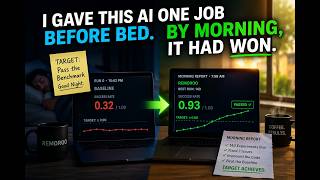
I Gave This AI One Job Before Bed. By Morning, It Had Won.
Remoroo
We Let an AI Run Experiments Overnight. It Solved BipedalWalkerHardcore
Remoroo
YouTube returned 6 videos for “Remoroo”, and we withheld 4: 4 could not be judged, because “Remoroo” is a single word that other videos use for other things. Showing the 2 we can prove are about Remoroo.
Official links
Tools that pair well with Remoroo
Common stack mates teams adopt alongside Remoroo, with the specific reason each pairing earns its keep.

Solo Cli
Open-source Python SDK and CLI for training and deploying physical AI models — VLA and SLM — from managed cloud compute to real robot hardware.

Mbodi AI
Mbodi AI lets your floor staff teach industrial robots new skills by describing the task and demonstrating it — no code, no reprogramming downtime.

Rhoda AI
Rhoda AI builds video-predictive robot foundation models that learn heavy industrial manipulation from a single human demo.
Featured Head-to-Head Comparisons
Remoroo vs Locus Robotics
These tools serve entirely different needs. Remoroo is for deep tech teams who want to automate code experiments overnight, while Locus Robotics is for warehouse operators seeking flexible AMR automation. Choose based on your domain: code optimization vs. physical fulfillment.
Remoroo vs Presto Voice
Remoroo and Presto Voice serve completely different domains. Remoroo is a powerful tool for deep tech teams wanting to automate code experimentation and optimize ML models overnight. Presto Voice is a proven voice AI solution for QSR chains to automate drive-thru ordering and boost revenue. Your choice depends on whether you need to improve code metrics or restaurant operations.
Remoroo vs Truleo
Choose Truleo if you're a law enforcement agency drowning in siloed data and need automated lead generation, jail call analysis, and faster report writing. Choose Remoroo if you're a deep tech team automating metric-driven code experiments and model optimization. They serve completely different needs.
Alternatives to Remoroo
View all
Solo Cli
Open-source Python SDK and CLI for training and deploying physical AI models — VLA and SLM — from managed cloud compute to real robot hardware.

Frequently Asked Questions
Categories
Best-of guides
Used Remoroo? Help shape our editorial sentiment research.