Semantic Scholar
Free AI-powered research tool for searching 238 million scientific papers, with TLDR summaries and citation graphs.
Semantic Scholar earns its place as a free starting point for literature discovery, and the citation graph plus TLDR summaries are what set it apart from a plain search box. Ask This Paper, Topic pages and Skimming Highlights make triage faster than reading abstracts one by one. But this is a discovery layer, not a research system: it does not manage references or generate bibliographies, so budget for Zotero or Zotero's equivalents alongside it, and expect to fall back to PubMed or Google Scholar when your field is thinly indexed. Treat Semantic Reader as a beta, not a finished product.
Verified 9d ago · liveness 76/100 · cite: rightaichoice.com/tools/semantic-scholar
- Researchers needing free, fast first-pass literature discovery
- Students searching papers and summaries without a database subscription
- Developers building scholarly apps on a documented, no-cost API
- Anyone who wants TLDR summaries to triage large result sets
- Users who need built-in reference management and bibliography generation
- Teams needing role-based collaborative literature review workflows
- Researchers who require offline desktop access
We scan live Reddit threads, YouTube comments, X posts, G2 reviews and other communities — and hand you an honest verdict in under a minute.
- Honest verdict, not marketing
- Real pros & cons from real users
- Attributed quotes with receipts
3 free scans · no card needed
Skip Semantic Scholar if you need reference management and bibliography generation in the same tool, since it stores libraries and folders but leaves citation formatting for a dedicated reference manager.
If you built annotations inside Semantic Reader using Hypothesis, that integration was retired on January 31st, 2024, so you must log into Hypothesis or install its browser extension to recover your notes.
Semantic Scholar is operated by the Allen Institute for AI and is free to search and free to create an account for. The practical comparison is not price but scope: free discovery here pairs well with a paid reference manager for bibliographies, and with subscription databases such as PubMed-adjacent tools or Google Scholar when your field is thinly indexed. For developers, the free API removes a line item that hosted scholarly search services would otherwise charge for.
In short
Semantic Scholar — Free AI-powered research tool for searching 238 million scientific papers, with TLDR summaries and citation graphs. Best for Researchers needing free, fast first-pass literature discovery, Students searching papers and summaries without a database subscription, Developers building scholarly apps on a documented, no-cost API. Free to use.
What's new in Semantic Scholar
Checked 9 days agoAcross the latest 5 updates: 3 feature updates and 2 changelog entries.
Semantic Reader: Hypothesis integration to be removed January 31st, 2024
After collecting user feedback, Ai2 decided Hypothesis was not the right fit for Semantic Reader. Annotations remain accessible by logging into Hypothesis directly or via its browser extension.
Ask This Paper: ask questions about a paper and get AI-generated answers
Paper pages now include an Ask This Paper section where you pick a suggested question or type your own and get an answer with supporting statements from the paper. Tested only on English-language papers and available on limited papers.
Topic pages for Computer Science fields
Topic pages collect AI-generated definitions, often-cited papers, recent papers and related topics so you can get a quick overview of a Computer Science topic from a paper page.
Semantic Reader citation cards moving to a purely PDF-based pipeline
Ai2 began switching Semantic Reader citation cards from a legacy LaTeX-based pipeline to a PDF-based one, expecting to expand available papers from about 500,000 to roughly 5 million.
Copy a shared library folder to your own library in one click
You can now copy a folder shared by a colleague into your own library with one click, letting you build your own list and turn on Research Feeds from it.
What people actually say about Semantic Scholar — is it worth it?
We ran a structured research pass across product reviews, community discussions, and post-purchase forum threads to surface the patterns vendors won't publish themselves. Below: the recurring strengths, the hidden costs people mention most, and the cohort that consistently regrets adopting this tool.
81 mentions across 6 sources (Hacker News, YouTube, Product Hunt, Bluesky, Stack Overflow, Lemmy) · researched Jul 25, 2026.
Average across the 6 sources that answered — each source counts once, not each post.
- +AI search is more relevant than Google Scholar's broad results.
- +TLDR summaries speed up paper screening significantly.
- +Completely free with no paywall for core features.
- +API enables automated citation checking and literature review agents.
- +Covers 236 million papers across all scientific fields.
- −Search and API can be frustratingly slow.
- −Recommender system is too narrow and not helpful.
- −Missing data from ACM and some subscription-based publishers.
- −Lacks built-in citation manager for reference collection.
- −No collaboration or sharing features for teams.
- • No paid tiers — entirely free; hidden cost is time spent wrangling missing metadata
Viability Score
How well maintained and how widely used is Semantic Scholar? Built from what the vendor actually publishes (docs, changelog, tutorials, integrations, pricing), whether the site is live, and how much real users discuss it. How we calculate this
Last calculated: October 2026
How we score →Key Features
- Search 238,391,193 papers from all fields of science
- AI-generated TLDR summaries for fast paper triage
- Citation graph for tracing references and citing papers
- Ask This Paper: AI-generated answers with supporting statements from the paper
- Semantic Reader augmented reading interface (beta, select papers)
- Personalized citation cards based on your library connections
- Skimming Highlights labeled Goal, Method and Result
- Topic pages with AI-generated definitions and key papers (Computer Science)
- Venue pages for browsing all papers from a conference or journal
- Trending Papers across Biology, CS, Medicine, Physics and Psychology
- Author profiles with claimed pages and Gravatar profile pictures
- Library with one-click shared folder copying and folder sharing
- Research Feeds on saved papers and folders
- Public API with paper search, improved documentation and stability
- Citation export in BibTeX, MLA, APA and Chicago formats
About Semantic Scholar
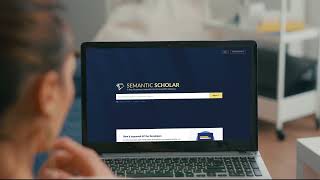
Semantic Scholar is a free, AI-powered search tool for scientific literature, built and operated by the Allen Institute for AI (Ai2). The homepage states you can search 238,391,193 papers from all fields of science. Each paper page is enriched with citation graphs you can trace forwards and backwards, author profiles, and TLDR summaries — short AI-generated overviews that help you decide whether a paper is worth reading in full. Semantic Reader is an augmented reading interface, offered in beta for select papers, that layers contextual citation cards and skimming highlights onto the PDF. Semantic Reader's citation-card pipeline moved from a LaTeX-based process to a purely PDF-based one, which the release notes said would expand coverage from roughly 500,000 papers toward about 5 million. Other shipped features include Ask This Paper (AI-generated answers with supporting statements from the paper, English-language papers only and limited availability), Topic pages collecting AI-generated definitions and key papers, Venue pages for browsing everything published at a conference or journal, Trending Papers across Biology, Computer Science, Medicine, Physics and Psychology, Award-Winning Papers lists, and Skimming Highlights labeled Goal, Method and Result. A free account lets you save papers, build libraries, share folders with collaborators, copy a shared folder to your own library in one click, and turn on Research Feeds. Developers get an API offering paper search, and the homepage explicitly advertises the API as improved with better documentation and increased stability. Semantic Scholar does not host paywalled full text and is not a citation manager — pair it with a reference tool for bibliographies.
Behind the Verdict
Where Semantic Scholar is strong: the corpus is large and free to search (the homepage lists 238,391,193 papers), and every paper page comes with structured context rather than a bare PDF link. Citation graphs let you walk backwards to foundational work and forwards to follow-up research; author profiles add a second axis for tracking a lab or researcher; TLDR summaries compress the triage step. Semantic Reader's citation cards are the most genuinely novel piece — they augment citations inside a paper based on whether the cited work is already in your library or is cited by something in your library, so a literature review starts to feel prioritized rather than alphabetical. Release-note work on the PDF-based pipeline and Skimming Highlights (Goal, Method, Result labels, with adjustable count and opacity) shows the reading interface is being actively developed rather than left as a demo. Where it is weak: Semantic Reader remains beta and limited to select papers, and even after the pipeline change the target was roughly 5 million papers out of a 238 million corpus. Ask This Paper is restricted to English-language papers and limited availability. The release notes show the platform is willing to remove features — the Hypothesis annotation integration was retired on January 31st, 2024, with existing annotations left in Hypothesis — so build workflows on core search and citation features rather than on any single experimental layer. Coverage depth varies by domain; the platform is explicit about spanning all fields of science while indexing depth differs. And it is deliberately not a citation manager: libraries and shared folders exist, but bibliography generation is not its job. Where it fits: researchers and students who want a free discovery pass before committing to a deeper database, and developers who want a scholarly search API with documented paper search. Where it doesn't: teams that need shared collaborative review workflows with roles and permissions, anyone needing offline desktop access, and fields such as humanities or niche subdisciplines where indexing is thin.
Researching Semantic Scholar? Get your full AI stack in 60 seconds.
Free, no signup — tell us your goal and get tools matched to your budget & existing stack.
Real-world workflow fit
Concrete scenarios for the personas Semantic Scholar actually fits — and what changes day-one when you adopt it.
Search a natural-language query, scan the TLDR summaries to cut the result set, then open the most promising papers and read the citation cards to see which cited works are already in their library.
Outcome: A shortlist of papers with a citation trail attached, before committing hours to full reads.
Use the API's paper search and the published documentation to wire paper lookup into a side project, then test stability against real queries.
Outcome: A working paper-search feature without paying for a hosted scholarly index.
Open the relevant Topic page for AI-generated definitions and most-cited papers, then check Trending Papers and Research Feeds for new publications.
Outcome: A recurring scan of what the field is citing now, rather than a one-off search.
Use Cases
- Run a first-pass literature search with natural-language queries across 238 million papers
- Read a TLDR summary to decide whether a paper deserves a full read
- Trace a paper's citation graph forward and backward to map a research area
- Ask a paper a direct question and check the supporting statements it cites
- Skim English-language arXiv CS papers using Goal/Method/Result highlights
- Follow a topic page to see AI-generated definitions and the papers most cited for it
- Browse award-winning papers from AI, systems and HCI conferences
- Build a scholarly search app on the public API with paper search
Limitations
- Semantic Reader is in beta and covers only select papers; its citation-card pipeline expansion targets roughly 5 million papers against a 238 million paper corpus.
- Ask This Paper has been tested only on English-language papers and is available on limited papers.
- Topic pages cover Computer Science fields.
- The Annotation (Hypothesis) integration was removed from Semantic Reader on January 31st, 2024, so notes made there now live in Hypothesis rather than in Semantic Reader, and any workflow built on that integration is gone.
- Twitter authentication was discontinued due to a change in Twitter's API, and accounts created that way must migrate to email or Google, with Library folders needing manual preservation.
- Indexing depth varies by scientific domain, and the platform does not host paywalled full text.
as of 2026-09-29
Verification history
We have re-verified Semantic Scholar 18 times since . Each pass re-reads the vendor's own pages and re-checks every listed field against that evidence; passes where nothing had changed are marked as such.
- — re-verified summary, description, our verdict, our analysis, pricing model, pricing tiers, features, integrations, who it suits, who should skip it
- — re-verified summary, description, our verdict, our analysis, pricing model, pricing tiers, features, integrations, who it suits, who should skip it
- — re-verified summary, description, our verdict, our analysis, pricing model, pricing tiers, features, integrations, who it suits, who should skip it
- — re-verified summary, description, our verdict, our analysis, pricing model, pricing tiers, features, integrations, who it suits, who should skip it
- — re-verified summary, description, our verdict, our analysis, pricing model, pricing tiers, features, integrations, who it suits, who should skip it
- — re-verified summary, description, our verdict, our analysis, pricing model, pricing tiers, features, integrations, who it suits, who should skip it
Showing the 6 most recent of 18 verification passes.
Free to cite with attribution — this page re-verifies continuously.
12-month cost
Project the real annual outlay, including the implied monthly cost when only an annual tier is published.
Vendor list price only. Add-on usage, seat overages, and contract minimums are surfaced under Hidden costs & gotchas.
Plans compared
For each published Semantic Scholar tier: who it actually fits, and what it adds vs. the previous tier. Cross-reference the cost calculator above for projected annual outlay.
Free
$0/mo
Ideal for
Researchers, students and developers who want free literature discovery across 238 million papers plus API paper search, without a subscription
What this tier adds
Free entry point — the only published tier; includes search, TLDR summaries, citation graphs, libraries and API access under the API License Agreement
Where the pricing makes sense
The company stage and team size where Semantic Scholar's pricing actually pencils out — and where peers do it cheaper.
Semantic Scholar is operated by the Allen Institute for AI and is free to search and free to create an account for. The practical comparison is not price but scope: free discovery here pairs well with a paid reference manager for bibliographies, and with subscription databases such as PubMed-adjacent tools or Google Scholar when your field is thinly indexed. For developers, the free API removes a line item that hosted scholarly search services would otherwise charge for.
Setup time & first value
How long it actually takes to get something useful out of Semantic Scholar — broken out by persona, not the marketing-page minute.
For a student or researcher, search works instantly in any browser with no account — under five minutes to your first TLDR. Creating a free account to save papers, build libraries and turn on Research Feeds takes a few more minutes. Developers should budget an hour or two to read the API documentation and get paper search returning results in a test script.
Switching to or from Semantic Scholar
How to bring data in from common predecessors and how to get it back out — written for the switcher, not the buyer.
- →From Google Scholar: replicate your search terms in Semantic Scholar's natural-language search, then use citation graphs and TLDR summaries for triage that Google Scholar's list view doesn't provide.
- →From a manual PDF folder: search the specific titles, open each paper page, and save them into a library folder so citation cards can key off what's in your library.
- →From Hypothesis-based Semantic Reader annotating: log into Hypothesis directly or install the Hypothesis browser extension to keep using annotations after the integration was retired.
- ↗To a reference manager: export citations from a paper page in BibTeX, MLA, APA or Chicago format and import them there for bibliography generation.
- ↗To another search database: take the citation trails and topic pages you built here and re-run the queries where coverage in your field is deeper.
- ↗To Hypothesis: annotations made before the integration retired remain accessible by logging into Hypothesis directly or via its browser extension.
Resources & Guides
- Resourcesemanticscholar.org
AI for science | Ai2
We’re using AI to develop better ways to search for and keep up with the latest knowledge, accelerating scientific breakthroughs.
- API Referencesemanticscholar.org
Api
Methods, params, types from semanticscholar.org
- Resourcesemanticscholar.org
Frequently Asked Questions
Helpful link from semanticscholar.org
Tutorials & Learning


Official links
Tools that pair well with Semantic Scholar
Common stack mates teams adopt alongside Semantic Scholar, with the specific reason each pairing earns its keep.

Paper Notes
Paper Notes compresses 26,000+ AI conference papers into free five-minute summaries, sorted by conference and subfield.
SciSpace
SciSpace is an end-to-end academic research platform for finding, reading, extracting, and writing up scientific literature with AI help.
Elicit
Semantic search over 138M papers and 545K clinical trials, with a cited research agent that writes evidence reviews you can defend.
Featured Head-to-Head Comparisons
Consensus vs Semantic Scholar
If you need synthesized, cited answers for a research question—especially in medicine or STEM—Consensus is the evidence-filtering workhorse. But if your priority is unrestricted, free search across a larger corpus with developer-friendly API access and quick TLDR summaries, Semantic Scholar is the no-brainer. Choose Consensus for depth and consensus visualization; choose Semantic Scholar for breadth and zero cost.
Elicit vs Semantic Scholar
For rigorous evidence synthesis, Elicit's PRISMA-compliant workflow and citation-grounded artifacts justify the $39/mo. But if your priority is free, fast discovery across 237M papers—or you're building tools—Semantic Scholar's API and TLDRs are unbeatable. Choose Elicit for deep systematic reviews, Semantic Scholar for breadth and budget.
Glarity vs Semantic Scholar
Choose Glarity if you need to summarize videos, pages, and PDFs with translation and AI writing help. Pick Semantic Scholar for deep scientific paper discovery and API access. They serve different needs — one is a browser AI assistant, the other a specialized research search engine.
Lexis Ai vs Semantic Scholar
Semantic Scholar is ideal for researchers and developers needing free, broad scientific discovery with a robust API. Lexis+ AI dominates legal-specific tasks with authoritative content, drafting, and custom workflows, but comes at a premium. Choose based on domain: science vs. law.
Semantic Scholar vs Stilta
Don't let the 'AI search' label fool you — Stilta and Semantic Scholar serve completely different jobs. If you're a patent attorney needing defensible invalidity or infringement analysis, Stilta's agentic search with 100% prior-art recall is essential (but costs enterprise money). If you're a researcher or student exploring 236M+ papers, Semantic Scholar is unbeatable at free. Pick the tool that matches your workflow, not the category.
Researchcollab Ai vs Semantic Scholar
If you need a guided, collaborative pipeline from research question to draft with PRISMA and evidence tracking, ResearchCollab.ai is worth the investment despite limited free tier. For cost-free, quick discovery across all fields with API access, Semantic Scholar is unbeatable. Choose based on whether you prioritize structured writing workflows or zero-cost exploration.
Semantic Scholar vs Usertesting Ai
If you need to validate digital experiences with real human feedback and have budget for enterprise-grade UX research, UserTesting AI is the clear choice—its AI-assisted study creation and insights hub are unmatched. If you're a researcher or student seeking free, swift access to over 236 million scientific papers with AI summaries, Semantic Scholar is indispensable and costless. These tools serve entirely different needs; choose based on whether your primary data source is humans or published literature.
Dokko vs Semantic Scholar
If you need to dissect dense contracts or compliance documents with cross-references and then act on them via tools like Slack, Dokko is the specialized choice—though it costs. If you're a researcher hunting for scientific papers for free, Semantic Scholar is unbeatable. Pick by workflow, not by hype.
Llm Stats vs Semantic Scholar
If you're choosing an LLM for your app or research, LLM Stats gives you the real-time benchmark and pricing data you need to compare 300+ models. If you're a scientist or student hunting down papers, Semantic Scholar's free AI search and TLDR summaries are unmatched. They solve different problems, so pick the one that matches your workflow.
Mentorclone vs Semantic Scholar
If your work revolves around extracting knowledge from hours of YouTube lectures or tutorials, MentorClone’s chat-with-transcript approach saves massive time. But if you’re searching for peer-reviewed papers across all sciences, Semantic Scholar’s free AI-powered discovery and TLDR summaries are indispensable. For most researchers, Semantic Scholar is the daily driver; MentorClone is a niche sidekick for video-based learning.
Bible Ai vs Semantic Scholar
If you need a specialized, accessible Bible study tool with curated Q&A and multilingual support, Bible AI is your pick—it's free and purpose-built. If you're a researcher or developer needing a massive, free scientific paper index with an API, Semantic Scholar is the clear winner. There's no overlap in use cases, so your domain dictates the choice.
Semantic Scholar vs Tripleten Career Aptitude Test
If you're exploring tech careers without a clear direction, TripleTen's free aptitude test gives instant, psychology-based matches — perfect for beginners. For researchers or developers needing free access to millions of academic papers with AI summaries and API, Semantic Scholar is unmatched. They serve entirely different needs; choose based on whether you want career guidance or literature discovery.
Alternatives to Semantic Scholar
View allPaper Notes
Paper Notes compresses 26,000+ AI conference papers into free five-minute summaries, sorted by conference and subfield.
Frequently Asked Questions
Categories
Best-of guides
Topics
Used Semantic Scholar? Help shape our editorial sentiment research.