
SentinelOne Singularity
AI-native endpoint, identity, and cloud security on one agent that detects and responds to threats at machine speed
Buy Singularity if your SOC is buried and you want identity detection, managed threat hunting, and agentic triage inside one agent rather than stitched from three vendors — Commercial at $229.99 per endpoint per year is the tier that actually turns those on. Stay on Complete at $179.99 per endpoint per year if EPP/XDR plus cloud workload protection is enough. Skip it if you need basic malware coverage on a tight per-seat budget, because you'd be paying for capability you never switch on. Against CrowdStrike and Microsoft Defender, the differentiator is autonomous response and the amount of triage that lands off your analysts' plates.
Verified 1h ago · liveness 79/100 · cite: rightaichoice.com/tools/sentinelone-singularity
- Enterprises consolidating EDR, XDR, identity, and cloud security onto one agent
- SOC teams buried in alert volume that want autonomous triage and response
- Multi-cloud organizations on AWS, Azure, or GCP
- Regulated industries and federal agencies needing on-prem, air-gapped, or FedRAMP High deployment
- Small businesses with basic endpoint needs and tight budgets
- Teams that want a low-cost EDR without identity features or managed hunting
- Buyers expecting agentless endpoint protection
We scan live Reddit threads, YouTube comments, X posts, G2 reviews and other communities — and hand you an honest verdict in under a minute.
- Honest verdict, not marketing
- Real pros & cons from real users
- Attributed quotes with receipts
3 free scans · no card needed
Skip SentinelOne Singularity if you need solid malware coverage on a small fleet and will never switch on identity detection, managed hunting, or agentic triage — you'd be paying a per-endpoint premium for capability that sits idle.
Identity Detection & Response and Managed Threat Hunting are not in Singularity Complete, so choosing them means moving every endpoint from $179.99 to $229.99 per year — roughly $50 per endpoint annually, which is a
Published per-endpoint pricing at $179.99 (Complete) and $229.99 (Commercial) per endpoint per year puts Singularity in enterprise-EDR territory — above Microsoft Defender bundled into existing Microsoft licensing, and broadly in line with CrowdStrike Falcon list pricing. It fits organizations large enough to use identity detection and managed hunting; below roughly a few hundred endpoints the per-endpoint premium is hard to justify against a lightweight EDR.
In short
SentinelOne Singularity — AI-native endpoint, identity, and cloud security on one agent that detects and responds to threats at machine speed. Best for Enterprises consolidating EDR, XDR, identity, and cloud security onto one agent, SOC teams buried in alert volume that want autonomous triage and response, Multi-cloud organizations on AWS, Azure, or GCP. Plans from $179.99/yr.
What people actually say about SentinelOne Singularity — is it worth it?
We ran a structured research pass across product reviews, community discussions, and post-purchase forum threads to surface the patterns vendors won't publish themselves. Below: the recurring strengths, the hidden costs people mention most, and the cohort that consistently regrets adopting this tool.
8 mentions across 1 source (Bluesky) · researched Jul 16, 2026.
Average across the 1 source that answered — each source counts once, not each post.
- +Autonomous behavioral AI stops threats in real time without human input.
- +Single lightweight agent covers endpoint, cloud, and identity security.
- +Unified data lake simplifies security analytics and threat hunting.
- +Cloud workload protection supports AWS, Azure, and GCP natively.
- +Purple AI automates triage and response, reducing analyst fatigue.
- −Data Lake export is clunky—PowerQuery integration frustrates analysts.
- −High per-endpoint pricing strains budgets for small deployments.
- −Learning curve steep for teams not already using XDR platforms.
- −Third-party app marketplace depth lags behind CrowdStrike's ecosystem.
- −No major community forum or public roadmap transparency.
- • Potential extra fees for Purple AI usage beyond included quotas.
- • Integration marketplace items may incur separate licensing.
Viability Score
How well maintained and how widely used is SentinelOne Singularity? Built from what the vendor actually publishes (docs, changelog, tutorials, integrations, pricing), whether the site is live, and how much real users discuss it. How we calculate this
Last calculated: October 2026
How we score →Key Features
- Autonomous behavioral AI that detects and blocks threats in real time
- Real-time AI-automated response and remediation without analyst intervention
- Singularity Identity for credential misuse and identity-based attack detection (Commercial tier and above)
- Cloud workload protection across AWS, Azure, and Google Cloud
- AI-native SIEM built on a unified security data lake
- Purple AI generative AI for automated triage, correlation, and response
- AI Security Assistant that answers natural-language security questions
- Agentic AI SOC Analyst for automated triage (Enterprise tier)
- Managed Threat Hunting for proactive threat discovery (Commercial tier)
- 24/7 managed detection and response (MDR) services
- AI Security coverage for securing the AI tools the business relies on
- SaaS, on-premises, hybrid, and air-gapped deployment options
- FedRAMP High authorized for federal government deployments
- Advanced EPP controls including device and firewall control and remote shell
- Role-based access control and multi-tenant management
About SentinelOne Singularity
SentinelOne Singularity is an AI-native security platform that puts endpoint protection, identity threat detection, cloud workload security, and autonomous SOC work on a single lightweight agent. Behavioral AI watches attacks as they execute and triggers automated containment and remediation instead of leaving an alert for an analyst to pick up. The platform is sold as three published packages. Singularity Complete runs $179.99 per endpoint per year and covers EPP, EDR/XDR, advanced EPP controls (device and firewall control, remote shell), cloud workload protection, 14 days of data retention, and the AI Security Assistant. Singularity Commercial runs $229.99 per endpoint per year and adds Identity Detection & Response, 90-day data retention, and Managed Threat Hunting. Singularity Enterprise is quoted through sales and adds the Agentic AI SOC Analyst, full network visibility and forensics, and expert-led onboarding. A separate Singularity Control / Singularity Core line appears on the comparison sheet. Deployment flexes across SaaS, on-premises, hybrid, and air-gapped environments, and the federal offering is FedRAMP High authorized. Coverage is organized by industry — healthcare, financial services, federal, manufacturing, energy, transportation, higher education, K-12, retail, state and local government, plus an SMB and startups track. SentinelOne markets the platform as a Gartner EPP Leader six years running and a Leader in the 2026 IDC MarketScape for modern endpoint security, and IDC's inaugural SIEM MarketScape named it a Major Player. Where CrowdStrike and Microsoft Defender compete on breadth, Singularity competes on how much response work it removes from your analysts' queue — and you pay a per-endpoint premium for that.
Behind the Verdict
Singularity's case rests on consolidation and automation, not on being the cheapest agent on the machine. The single lightweight agent carries EPP, EDR/XDR, identity detection, and cloud workload protection, which is the pitch that resonates with a security team already running four consoles and a SIEM that needs feeding. What you actually get differs sharply by tier, and this is where most evaluations go wrong. At $179.99 per endpoint per year, Singularity Complete gives you AI-driven endpoint and cloud workload protection, real-time detection and response, advanced EPP controls including device and firewall control and remote shell, 14 days of data retention, and the AI Security Assistant. It does not include Identity Detection & Response or Managed Threat Hunting — those start at Commercial, $229.99 per endpoint per year, which also stretches data retention to 90 days. If identity-based intrusion is one of the reasons you're looking at SentinelOne, budget for Commercial from the start rather than planning a tier upgrade later. Enterprise adds the Agentic AI SOC Analyst, full network visibility and forensics, and expert-led onboarding and training, and it is quoted rather than published. That onboarding line matters more than it reads: a platform that automates containment and remediation needs tuning against your environment before you let it act, and buyers who skip guided deployment tend to run it in detect-only far longer than intended. The strengths are real. Behavioral AI that acts during execution rather than after is the core differentiator, and it is backed by third-party recognition the vendor can point to — a sixth consecutive Gartner EPP Magic Quadrant Leader placement for 2026, an IDC MarketScape Leader nod for modern endpoint security, a Major Player position in IDC's first SIEM MarketScape, and a SOC Platform Leader ranking in the 2026 Latio report. Deployment flexibility across SaaS, on-premises, hybrid, and air-gapped environments, plus FedRAMP High authorization, is broader than most competitors offer and is often the deciding factor for federal and regulated buyers. The weaknesses are equally concrete. Cost scales linearly with fleet size, so a 5,000-endpoint estate is a seven-figure annual line item before services. The capability gap between Complete and Commercial is not cosmetic — identity detection and managed hunting are two of the headline reasons to pick SentinelOne over a cheaper EDR, and they sit behind the higher per-endpoint rate. Running the platform well assumes security expertise; this is a console built for analysts, not for an IT generalist who also handles laptops. And the evidence available for this review does not cover licensing terms, quota specifics, or how the Singularity Control and Singularity Core packages compare — those need to come from a sales conversation. Where it fits: mid-to-large enterprises with a real SOC, multi-cloud estates on AWS, Azure, or Google Cloud, regulated industries, and
Researching SentinelOne Singularity? Get your full AI stack in 60 seconds.
Free, no signup — tell us your goal and get tools matched to your budget & existing stack.
Real-world workflow fit
Concrete scenarios for the personas SentinelOne Singularity actually fits — and what changes day-one when you adopt it.
Ransomware starts encrypting a clinical file server on a Friday night. The behavioral AI contains the process during execution, and the console shows the full execution chain with automated remediation already applied.
Outcome: The on-call analyst reviews a contained incident instead of waking the team to isolate hosts manually, and the 90-day retention on Commercial lets them walk back to the initial access point the following week.
Endpoint, cloud workload, and identity alerts are pulled into one Singularity console instead of separate EDR, CSPM, and identity tools, with existing Splunk and ServiceNow tickets flowing through the documented integrations.
Outcome: Fewer consoles to check and one data lake for investigation, which shortens the path from alert to root cause and simplifies onboarding for new analysts.
Singularity is deployed on-premises in an air-gapped environment under the FedRAMP High authorized federal offering, with agent policy and updates handled inside the enclave.
Outcome: The agency gets AI-driven endpoint and identity protection without sending telemetry outside its boundary, which is usually the constraint that rules out SaaS-only vendors.
Use Cases
- Detect and contain ransomware during execution with behavioral AI rather than after encryption starts
- Unify endpoint, cloud, and identity alerts into one XDR console instead of three tools
- Automate incident triage with Purple AI and agentic workflows to cut analyst queue depth
- Run deep forensics and remote remediation across thousands of endpoints from one console
- Protect cloud workloads and posture across AWS, Azure, and Google Cloud from the same agent
- Deploy in air-gapped or on-premises environments where SaaS-only security tools are not an option
- Give federal agencies FedRAMP High authorized endpoint and identity protection
Limitations
- Published pricing is per endpoint per year — $179.99 for Singularity Complete and $229.99 for Singularity Commercial — so total cost scales directly with fleet size, and Enterprise is quoted rather than listed.
- Identity Detection & Response and Managed Threat Hunting, two of the main reasons to choose SentinelOne, sit above Complete at the $229.99 Commercial rate.
- Running autonomous containment safely assumes dedicated security expertise; a team without analysts will likely run it in detect-only mode far longer than planned.
- The platform relies on a lightweight agent per device, so agentless endpoint protection is not the model.
- Licensing terms, quota specifics, and how the Singularity Control and Singularity Core packages compare were not available in the evidence used for this review and should come from a sales conversation.
as of 2026-10-18
Verification history
We have re-verified SentinelOne Singularity 107 times since . Each pass re-reads the vendor's own pages and re-checks every listed field against that evidence; passes where nothing had changed are marked as such.
- — re-checked, vendor evidence unchanged
- — re-checked, vendor evidence unchanged
- — re-checked, vendor evidence unchanged
- — re-verified summary, description, our verdict, our analysis, pricing model, pricing tiers, features, integrations, who it suits, who should skip it
- — re-checked, vendor evidence unchanged
- — re-checked, vendor evidence unchanged
Showing the 6 most recent of 107 verification passes.
Free to cite with attribution — this page re-verifies continuously.
12-month cost
Project the real annual outlay, including the implied monthly cost when only an annual tier is published.
Vendor list price only. Add-on usage, seat overages, and contract minimums are surfaced under Hidden costs & gotchas.
Plans compared
For each published SentinelOne Singularity tier: who it actually fits, and what it adds vs. the previous tier. Cross-reference the cost calculator above for projected annual outlay.
Singularity Complete
$179.99/yr per endpoint
Ideal for
Growing security teams with a few hundred to a few thousand endpoints that need EPP, EDR/XDR, and cloud workload protection from one agent, and can live with 14-day retention
What this tier adds
Starting published tier: AI-driven endpoint and cloud workload protection, real-time detection and response, advanced EPP controls (device and firewall control, remote shell), 14 days of data retention, and the AI Security Assistant
Singularity Commercial
$229.99/yr per endpoint
Ideal for
Teams investigating identity-based attacks and wanting proactive threat hunting rather than waiting on alerts, where 90-day retention matters for retrospective analysis
What this tier adds
Adds Identity Detection & Response, extends data retention from 14 to 90 days, and includes Managed Threat Hunting on top of everything in Complete
Singularity Enterprise
Custom
Ideal for
Global-scale organizations that want automated triage handled by agentic AI and need full network forensics plus guided deployment to get there fast
What this tier adds
Adds the Agentic AI SOC Analyst, full visibility and forensics for deep network data collection, and expert-led onboarding and training; priced by quote
Where the pricing makes sense
The company stage and team size where SentinelOne Singularity's pricing actually pencils out — and where peers do it cheaper.
Published per-endpoint pricing at $179.99 (Complete) and $229.99 (Commercial) per endpoint per year puts Singularity in enterprise-EDR territory — above Microsoft Defender bundled into existing Microsoft licensing, and broadly in line with CrowdStrike Falcon list pricing. It fits organizations large enough to use identity detection and managed hunting; below roughly a few hundred endpoints the per-endpoint premium is hard to justify against a lightweight EDR.
Setup time & first value
How long it actually takes to get something useful out of SentinelOne Singularity — broken out by persona, not the marketing-page minute.
Pilot on a few hundred endpoints via the lightweight agent is typically a same-week exercise, but expect weeks rather than days to first value: policy tuning and a detect-only period come before you let autonomous containment act. Enterprise-tier expert-led onboarding accelerates that materially; smaller teams without dedicated analysts should budget more time, not less.
Switching to or from SentinelOne Singularity
How to bring data in from common predecessors and how to get it back out — written for the switcher, not the buyer.
- →From Microsoft Defender for Endpoint: run Singularity in parallel on a pilot ring, compare detection coverage, then remove Defender agent policy ring by ring
- →From CrowdStrike Falcon: deploy the Singularity agent alongside Falcon, map existing exclusions and prevention policies before switching enforcement
- →From a legacy antivirus (Symantec, McAfee, Trend Micro): stage agent deployment in waves and remove the old agent only after the Singularity policy is verified per ring
- ↗To CrowdStrike Falcon: export detection and policy history before offboarding, since historical data retention does not transfer between platforms
- ↗To Microsoft Defender for Endpoint: consolidate if your estate is already fully Microsoft-licensed and the automation depth is not being used
Integrations
Resources & Guides
- Resourcesentinelone.com
SentinelOne - Get Support Now
Find answers through our Help Center, give us a call, or submit a ticket. At SentinelOne we are always-on and here to help.
- Resourcesentinelone.com
Resource Center | SentinelOne
Your go-to source for the latest SentinelOne digital content, from webinars to white papers, and everything in between.
- Resourcesentinelone.com
Platform Pricing & Packages | SentinelOne
Singularity™ enables teams to proactively resolve threats in real-time at the computing edge. Discover and compare our most feature-rich packages here.
- Resourcesentinelone.com
Cybersecurity Blog
SentinelOne's blog offers the latest news around cybersecurity, risk reduction, threat intelligence, and more. Sign up for our weekly digest to stay updated.
- Resourcesentinelone.com
SentinelOne Singularity XDR
Experience the future with the SentinelOne platform: the pinnacle of autonomous cybersecurity. Dive into solutions designed for modern threats. Try it now!
- Resourcesentinelone.com
SentinelOne | AI-Powered Enterprise Cybersecurity Platform
SentinelOne unifies AI-powered endpoint, cloud, identity, and data protection—enhanced by our Security Data Lake for seamless and efficient cybersecurity.
Tutorials & Learning
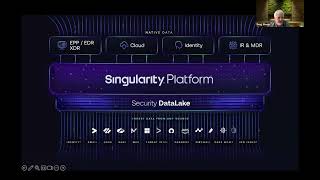
Endpoint Protection and Remediation with SentinelOne
IVOXY Consulting

SentinelOne Singularity Platform - Proactively resolve threats in real-time
SentinelOne
SentinelOne Singularity XDR: Resolve | Animated Explainer Video
Explainly
YouTube returned 6 videos for “SentinelOne Singularity”, and we withheld 2: 2 did not mention SentinelOne Singularity. Showing the 4 we can prove are about SentinelOne Singularity.
Official links
Tools that pair well with SentinelOne Singularity
Common stack mates teams adopt alongside SentinelOne Singularity, with the specific reason each pairing earns its keep.

Coro
Coro unifies endpoint, email, cloud and network security into one AI-agent workspace platform that auto-remediates 95% of threats.

CrowdStrike Falcon
CrowdStrike Falcon is a unified, AI-native endpoint, cloud and identity security platform built to stop breaches from one lightweight sensor

Acronis Cyber Protect
AI-native cyber protection platform combining backup, disaster recovery, endpoint security, and RMM for MSPs.
Featured Head-to-Head Comparisons
Alternatives to SentinelOne Singularity
View all
Coro
Coro unifies endpoint, email, cloud and network security into one AI-agent workspace platform that auto-remediates 95% of threats.

CrowdStrike Falcon
CrowdStrike Falcon is a unified, AI-native endpoint, cloud and identity security platform built to stop breaches from one lightweight sensor

Acronis Cyber Protect
AI-native cyber protection platform combining backup, disaster recovery, endpoint security, and RMM for MSPs.
Frequently Asked Questions
Categories
Best-of guides
Used SentinelOne Singularity? Help shape our editorial sentiment research.