Shift Technology is live · custom pricing · last verified 23 Oct 2026 · viability monitor

Shift Technology
Agentic AI for P&C insurers: fraud, coverage, subrogation, injury and claims process agents on one data network.
Pick Shift Technology when claims transformation is a multi-quarter programme and you want an agent per claim function rather than a single suspicious-claim flag. The July 2026 Shift Claims launch ties coverage, fraud, subrogation, injury and process agents into one end-to-end offering, and the August 2026 AXA five-year renewal across 15 countries plus the Covéa win in the same month show the approach holds at carrier scale. If you want a fast fraud score on a small book with no workflow change, a narrower vendor gets you there with far less integration work.
Verdict generatedVerified 7d ago · liveness 68/100 · cite: rightaichoice.com/tools/shift-technology
- Top-tier P&C insurers running full claims transformation across fraud, subrogation, and process
- Fraud investigation units that want autonomous case assignment plus guided investigation workflows
- Subrogation departments measured on recovery speed and demand-package throughput
- Insurers with multi-country claim volume and a dedicated data/IT team to run the integration
- Small insurers or MGAs with low claims volume and limited IT budget
- Teams that want only a standalone fraud score with no workflow or investigation guidance
- Organizations that require a human sign-off on every AI-driven determination
We scan live Reddit threads, YouTube comments, X posts, G2 reviews and other communities — and hand you an honest verdict in under a minute.
- Honest verdict, not marketing
- Real pros & cons from real users
- Attributed quotes with receipts
3 free scans · no card needed
Skip Shift Technology if you want a single fraud score bolted onto an unchanged claims workflow, or if you cannot staff a multi-quarter integration against your claims systems.
Running claims through several Shift agents multiplies the scope of integration work across your claims systems and the 100+ third-party data sources behind them — budget internal IT time, not just licence cost.
Shift sells to carriers that already run claims transformation budgets — the top 5 U.S. P&C insurers are named customers. That puts it alongside enterprise claims platforms rather than point fraud-scoring tools, which cost far less but cover one slice. Compare on total programme cost: licence plus integration plus handler retraining, across a multi-quarter rollout.
In short
Shift Technology — Agentic AI for P&C insurers: fraud, coverage, subrogation, injury and claims process agents on one data network. Best for Top-tier P&C insurers running full claims transformation across fraud, subrogation, and process, Fraud investigation units that want autonomous case assignment plus guided investigation workflows, Subrogation departments measured on recovery speed and demand-package throughput. Pricing is on request (custom quotes).
No head-to-head comparison for Shift Technology yet — the alternatives below are the closest matches we list.
What is Shift Technology?
Shift Technology — Agentic AI for P&C insurers: fraud, coverage, subrogation, injury and claims process agents on one data network. Best for Top-tier P&C insurers running full claims transformation across fraud, subrogation, and process, Fraud investigation units that want autonomous case assignment plus guided investigation workflows, Subrogation departments measured on recovery speed and demand-package throughput. Pricing is on request (custom quotes).
Shift Technology sells AI agents to Property & Casualty insurers, with each agent owning one slice of the claim rather than one model scoring everything. Coverage & Liability agents assess policy coverage and liability, the likelihood of agreement and evidence strength, then guide the final determination. Fraud & Risk agents score a claim for fraud, assign cases automatically, guide investigations and adapt fraud strategies as new patterns appear. Subrogation agents size up recovery opportunity, draft the initial demand package, review the third-party insurer's response and coach the handler through negotiation. Injury agents check whether medical billing applies to a claim, estimate medical duration and build a treatment plan; Process agents work on cycle time, loss mitigation and early flags on customer satisfaction risk. A separate Payment Integrity product serves healthcare payers.Underneath sits the Insurance Data Network, an agentic layer that reads cross-carrier claim history, synthesises what it finds and recommends next actions inside the handler's workflow. Shift cites 100% of the top 5 U.S. P&C insurers as customers, 4B+ policies, claims and documents analysed, 350M+ policyholders reached, 120+ customers across 30+ countries and 100+ third-party data sources. The product line is also available in German, Spanish, French and Japanese.The recent direction is scale-up rather than pivot: Shift Claims launched in July 2026 as an end-to-end agentic claims solution, AXA renewed for five years across 15 countries in August 2026, Covéa signed for fraud and risk management the same month, and Zach Haehn was named CTO.
Key features
- Coverage & Liability AI agents assess policy coverage, potential for agreement, and evidence strength
- Fraud & Risk agents score claims for fraud and automatically assign cases to investigators
- Autonomously adapt fraud strategies as new fraud patterns emerge
- Subrogation agents assess recovery opportunity and create the initial demand package
- Review third-party insurer responses and guide handler negotiation on subrogation claims
- Injury agents assess applicability of medical billing to a claim and estimate medical duration
- Injury agents develop an accurate treatment plan from claim medical data
- Process agents accelerate claim handling, mitigate loss, and flag customer satisfaction concerns early
- Insurance Data Network (IDN) agentic layer assesses cross-carrier claim history
- IDN synthesizes insights and recommends next actions for claims handlers
- Healthcare Payment Integrity AI for payment accuracy and plan savings
- Shift Claims end-to-end agentic claims solution (launched July 2026)
- Cross-carrier fraud pattern detection across multiple insurers' claim data
- Multi-language availability across German, Spanish, French, and Japanese
- Deployment across 30+ countries with 120+ insurance customers
Behind the verdict
Shift's pitch is organisational, not algorithmic. Most fraud vendors sell you a score; Shift sells you a set of named agents, each with a job description that maps to a desk in a claims department. Coverage & Liability agents produce a coverage and liability assessment with an evidence-strength score so an adjuster has something to agree or disagree with. Fraud & Risk agents score, assign and guide the investigation. Subrogation agents go further than detection — they draft the initial demand package and then sit with the handler to review the third-party insurer's reply and shape the negotiation. Injury and Process agents cover medical billing applicability, medical duration estimates, cycle time, loss mitigation and early warning on customer satisfaction. That breadth is the differentiator: you are not stitching four vendors for four slices of one claim. The second asset is the Insurance Data Network. Cross-carrier claim history is the kind of signal no single insurer can build alone, and 4B+ policies, claims and documents analysed across 120+ customers in 30+ countries is the reason it exists at all. It is also the honest limit of the product — the network's value scales with how much of your book runs through Shift and how many peer carriers participate. A small regional carrier joining the network gets less lift than AXA does. What you are buying is a restructuring, not an install. These agents recommend, assign and in some cases act, so your handlers' workflow has to change around them; insurers that require a human sign-off on every determination will find the value case harder. Expect integration work against claims systems and against the 100+ third-party data sources, and expect to staff it. Shift is candid that its customers are large carriers, and the August 2026 news reinforces that — a five-year AXA renewal across 15 countries, a Covéa fraud and risk deal, and a new CTO in Zach Haehn steering the agent roadmap. The competitive frame is narrower point tools for fraud, or claims platforms that added AI features. Shift's advantage is depth per claim function plus the shared data layer; its disadvantage is that depth costs money and calendar time. Decide based on whether you are reorganising claims work or just buying a score.
Limitations
- Shift Technology's agents are built for insurance only — P&C claims (coverage & liability, fraud & risk, subrogation, injury, process) and healthcare payment integrity — so they do not address general-purpose business workflows.
- The value proposition is explicitly enterprise-scale: the site cites the top 5 U.S.
- P&C insurers, 120+ customers and 30+ countries, implying integration work against an insurer's claims systems and third-party data sources.
- Several agents (fraud scoring and case assignment, subrogation demand packages, negotiation guidance) act or guide autonomously, so insurers requiring human sign-off on every determination must adapt their process.
- The Insurance Data Network's cross-carrier signal depends on network scale, so the lift is smallest for carriers with little of their book running through Shift.
- This run did not reach the vendor's integrations, documentation or release-notes pages, so nothing here should be read as a statement about connector coverage or release cadence.
as of 2026-10-18
Researching Shift Technology? Get your full AI stack in 60 seconds.
Free, no signup — tell us your goal and get tools matched to your budget & existing stack.
Is Shift Technology still active?
Shift Technology is live · custom pricing · last verified 23 Oct 2026 · viability monitor.
Viability score
How well maintained and how widely used is Shift Technology? Built from what the vendor actually publishes (docs, changelog, tutorials, integrations, pricing), whether the site is live, and how much real users discuss it. How we calculate this
Last calculated: October 2026
How we score →What's new in Shift Technology
Checked todayAcross the latest 4 updates: 1 launch and 3 news mentions.
Shift Technology Appoints Zach Haehn as Chief Technology Officer
Zach Haehn becomes CTO as Shift accelerates agentic AI development for insurance, putting a new technology leader over the agent roadmap.
Covéa chooses Shift Technology as strategic partner for fraud and risk management
Covéa selected Shift to strengthen fraud detection and operational efficiency using unified risk intelligence across its insurance operation.
Five-Year renewal of collaboration between Shift Technology and AXA
Shift and AXA renewed their AI partnership for five years, expanding fraud detection and claims efficiency across 15 countries.
Shift Technology Launches Shift Claims to Power Claims Transformation with Agentic AI
Shift Claims launched as an end-to-end agentic AI claims solution intended to streamline claims handling, reduce losses and improve customer satisfaction.
What do users say about Shift Technology?
What people actually say about Shift Technology — is it worth it?
We ran a structured research pass across product reviews, community discussions, and post-purchase forum threads to surface the patterns vendors won't publish themselves. Below: the recurring strengths, the hidden costs people mention most, and the cohort that consistently regrets adopting this tool.
ResearchedDiscussed by users across 3 sources (Hacker News, YouTube, Lemmy) · researched Oct 15, 2026.
Weighted by the 37 posts each of 3 sources contributed.
- +Covers six claim domains — fraud, coverage, subrogation, injury, process, payment integrity — where most vendors offer one
- +Insurance Data Network reads cross-carrier claim history, a genuine advantage no single carrier can replicate alone
- +Fraud agents auto-assign cases to investigators and adapt strategies as new fraud patterns emerge
- +Subrogation agents draft the initial demand package and coach handlers through third-party negotiation
- +Claims 100% of the top 5 US P&C insurers as customers, with 120+ insurers across 30+ countries
- −Not one of the 37 scraped posts actually discusses this product — zero usable public feedback
- −No Reddit, GitHub, Stack Overflow, Product Hunt, G2, or Trustpilot data returned at all
- −Pricing is 'contact us' with no published tiers, making budget scoping impossible upfront
- −Vendor positioning admits it competes on restructuring your claims operation, not on price
- −Agentic decisions across coverage and injury invite regulatory scrutiny with no public explainability detail
- • Implementation and workflow restructuring effort is explicitly part of the value proposition, not an add-on
- • Cross-carrier IDN benefits likely require data-sharing commitments that carry legal and competitive review costs
- • No public pricing means budget anchoring, multi-month procurement cycles, and unpredictable renewal terms
How we verified this
Every listed fact about Shift Technology— pricing, features, links, status — is re-read from the vendor's own pages by our verification pipeline and each change is logged with a date; the last pass ran on 23 Oct 2026. Pages mix model-assisted synthesis with human review; see how we verify.
Verification history
We have re-verified Shift Technology 20 times since . Each pass re-reads the vendor's own pages and re-checks every listed field against that evidence; passes where nothing had changed are marked as such.
- — changed switching in, hidden costs, summary, who should skip it, setup time, pricing fit, our verdict, switching out, description, limitations, integrations
- — changed who should skip it, features, description, integrations, who it suits, our verdict, summary
- — changed limitations
- — changed use cases, who it suits, description, our verdict, features, hidden costs, integrations, limitations, switching in, switching out, who should skip it, pricing fit, setup time, summary
- — changed SSL certificate
- — changed who it suits, description, summary, features, who should skip it, our verdict
Showing the 6 most recent of 20 verification passes.
Free to cite with attribution — this page re-verifies continuously.
How much does Shift Technology cost in 2026?
Shift Technology: Pricing is on request (custom quotes). Pricing last verified 23 Oct 2026.
Where the pricing makes sense
The company stage and team size where Shift Technology's pricing actually pencils out — and where peers do it cheaper.
Shift sells to carriers that already run claims transformation budgets — the top 5 U.S. P&C insurers are named customers. That puts it alongside enterprise claims platforms rather than point fraud-scoring tools, which cost far less but cover one slice. Compare on total programme cost: licence plus integration plus handler retraining, across a multi-quarter rollout.
Has Shift Technology's pricing changed?
No plan price for Shift Technology has moved since we began logging in Aug 2026; the pricing page is re-read on every verification pass.
Who should pick Shift Technology?
Pick Shift Technology if you are Top-tier P&C insurers running full claims transformation across fraud, subrogation, and process, Fraud investigation units that want autonomous case assignment plus guided investigation workflows, Subrogation departments measured on recovery speed and demand-package throughput, Insurers with multi-country claim volume and a dedicated data/IT team to run the integration.
Look elsewhere if you are Small insurers or MGAs with low claims volume and limited IT budget, Teams that want only a standalone fraud score with no workflow or investigation guidance, Organizations that require a human sign-off on every AI-driven determination, Buyers who cannot commit staff to a multi-quarter claims system integration.
Skip it if Skip Shift Technology if you want a single fraud score bolted onto an unchanged claims workflow, or if you cannot staff a multi-quarter integration against your claims systems.
GeneratedReal-world workflow fit
Concrete scenarios for the personas Shift Technology actually fits — and what changes day-one when you adopt it.
A claim comes in at first notice of loss. Fraud & Risk agents score it, assign it to a specialist investigator and open a guided investigation, while the Insurance Data Network checks cross-carrier claim history for patterns your own book cannot show.
Outcome: Suspicious claims reach an investigator in minutes rather than after manual triage, and fraud strategy updates as new patterns emerge instead of waiting for the next rules refresh.
The Subrogation agent flags recovery opportunity at the point of loss, drafts the initial demand package to the third-party insurer, then reviews that insurer's response and briefs the handler on the negotiation.
Outcome: More demand packages go out per handler per week, and negotiators walk into each call with the third party's response already analysed.
Coverage & Liability, Injury and Process agents run alongside the adjuster: coverage and liability assessments with evidence-strength scores, medical billing applicability and duration estimates, plus early flags on customer satisfaction risk.
Outcome: Shorter cycle time and fewer escalations, with adjusters reviewing an evidence-backed recommendation instead of assembling one from scratch.
Use cases
- Flag suspicious claims at first notice of loss and route the file to a specialized investigator
- Give adjusters AI-generated coverage and liability assessments with evidence-strength scoring for the final call
- Detect subrogation opportunity early and auto-draft the initial demand package to third-party insurers
- Coach subrogation negotiators through third-party insurer responses
- Validate medical billing applicability and build realistic treatment duration estimates on injury claims
- Cut claims cycle time and surface customer satisfaction risks before they escalate
- Analyze cross-carrier claim history in the Insurance Data Network to spot fraud patterns invisible inside one insurer's book
- Improve healthcare payment accuracy and plan savings for payer-side organizations
Setup time & first value
How long it actually takes to get something useful out of Shift Technology — broken out by persona, not the marketing-page minute.
Carrier-scale, multi-quarter work: the first agent in production typically follows integration against your claims systems and third-party data, plus handler workflow redesign. A single-country fraud deployment is the fastest path to value; multi-country rollouts like the 15-country AXA programme add per-market configuration time. Small teams should expect the integration, not the licence, to set
Switching to or from Shift Technology
How to bring data in from common predecessors and how to get it back out — written for the switcher, not the buyer.
- →From a standalone fraud-scoring tool: keep the score as an input, then layer Fraud & Risk agents on top for case assignment and guided investigation.
- →From manual subrogation triage: start with the Subrogation agent on new losses to generate demand packages, then extend it to third-party response review.
- →From spreadsheet-based coverage review: move Coverage & Liability assessments into the agent workflow so evidence-strength scoring is captured per claim.
- ↗To a point fraud-scoring vendor: export historical fraud outcomes and strategy rules, and expect to lose cross-carrier Insurance Data Network signal.
- ↗To an in-house claims model: you would need to rebuild coverage, subrogation, injury and process logic separately, since Shift's value is the breadth of agents on one data layer.
Resources & guides
Tutorials & Learning
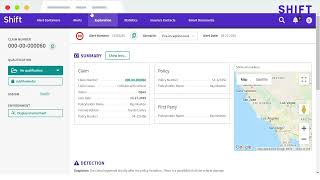
Shift Technology | Guidewire Demo
Shift Technology
How Shift Technology became a leader in AI for the insurance sector
OVHcloud

The Shift Technology story: Fixing insurers' issues ⚔️with Jeremy Jawish, CEO
Startupfood
YouTube returned 6 videos for “Shift Technology”, and we withheld 3: 3 did not mention Shift Technology. Showing the 3 we can prove are about Shift Technology.
Official links
What are the best Shift Technology alternatives?
The closest alternatives to Shift Technology we list are Layerup, Gradient AI and Tractable AI. Ranked by direct product-type match, not category overlap.
| Alternative | Pricing | Starts at | Last verified |
|---|---|---|---|
| Layerup | Contact Sales | Custom pricing | — |
| Gradient AI | Contact Sales | Custom pricing | — |
| Tractable AI | Contact Sales | Custom pricing | — |
Alternatives to Shift Technology
View all
Layerup
Layerup deploys long-horizon AI agents that complete insurance claims, underwriting, lending, and payments workflows end to end.

Gradient AI
Insurance-native decision intelligence for underwriting, workers' comp triage and claims reserving.

Tractable AI
Computer vision that turns vehicle photos into certainty-scored damage estimates for insurers, repairers, recyclers, and fleets.
Tools that pair well with Shift Technology
Common stack mates teams adopt alongside Shift Technology, with the specific reason each pairing earns its keep.

Layerup
Layerup deploys long-horizon AI agents that complete insurance claims, underwriting, lending, and payments workflows end to end.

Gradient AI
Insurance-native decision intelligence for underwriting, workers' comp triage and claims reserving.

Tractable AI
Computer vision that turns vehicle photos into certainty-scored damage estimates for insurers, repairers, recyclers, and fleets.
Frequently asked questions
Categories
Used Shift Technology? Help shape our editorial sentiment research.