
Sight Machine
Agentic manufacturing platform that turns plant data into agent-ready models and improves production every run.
Sight Machine is a strong fit if you run a large plant with real OT/IT complexity and process experts who can work alongside agents. Its Semantic Model plus MCP server publishing means findings flow into Microsoft Teams, NVIDIA Omniverse and Databricks instead of stopping at a dashboard, and Toyota Industries' paint shop work with Microsoft Azure is a credible reference. It is not an autonomous zero-touch system, and small shops without connected historians, MES or ERP get little from it. If your stack is thin, look at lighter MES analytics tools first.
Verified 15d ago · liveness 73/100 · cite: rightaichoice.com/tools/sight-machine
- Large manufacturers with complex OT/IT stacks
- Operations teams wanting AI recommendations without replacing existing systems
- Enterprises connecting plant floor data to supply chain and logistics
- Industry 4.0 programs pursuing continuous improvement via agents
- Small manufacturers with limited OT/IT infrastructure
- Shops without process experts to collaborate with agents
- Highly regulated industries requiring extensive validation of AI models
We scan live Reddit threads, YouTube comments, X posts, G2 reviews and other communities — and hand you an honest verdict in under a minute.
- Honest verdict, not marketing
- Real pros & cons from real users
- Attributed quotes with receipts
3 free scans · no card needed
Skip Sight Machine if you're a small shop without connected historians, MES or ERP, or if you have no process experts who can collaborate with agents on their findings.
Pricing is contact-only, so budgeting requires a sales conversation and there is no free plan to trial the platform before committing.
Sight Machine is contact-pricing only, aimed at large global manufacturers with multi-plant OT/IT estates rather than mid-market shops. There is no free tier or published seat cost to compare against. Lighter MES analytics and OEE tools cost far less but will not publish manufacturing intelligence into your enterprise agents. Enterprise AI platforms cost comparable amounts but lack the plant-floor semantic model.
In short
Sight Machine — Agentic manufacturing platform that turns plant data into agent-ready models and improves production every run. Best for Large manufacturers with complex OT/IT stacks, Operations teams wanting AI recommendations without replacing existing systems, Enterprises connecting plant floor data to supply chain and logistics. Contact Sales pricing.
What's new in Sight Machine
Checked yesterdayAcross the latest 4 updates: 1 feature update, 1 launch and 2 news mentions.
Sight Machine Launches Agentic Manufacturing Platform
Sight Machine launched an agentic manufacturing platform that monitors and improves plant operations on every production run.
Toyota Industries Deploys Sight Machine for Paint Shop on Azure
Toyota Industries adopted Sight Machine with Microsoft Azure to optimize paint shop processes.
Sight Machine Advances Autonomous Agents With AI Agent Crews
Sight Machine introduced AI agent crews, coordinating multiple autonomous agents for manufacturing tasks.
Sight Machine Named to Fast Company Most Innovative Companies 2026
Sight Machine was named to Fast Company's list of the World's Most Innovative Companies of 2026.
What people actually say about Sight Machine — is it worth it?
We scanned public community sources for Sight Machine on Jul 30, 2026 and could not establish that the discussion we found is about this tool rather than something else sharing its name. Our own analysis of that scan says the posts were off-subject. Rather than publish a sentiment score built on the wrong subject, we publish nothing here and re-run the scan.
Viability Score
How well maintained and how widely used is Sight Machine? Built from what the vendor actually publishes (docs, changelog, tutorials, integrations, pricing), whether the site is live, and how much real users discuss it. How we calculate this
Last calculated: September 2026
How we score →Key Features
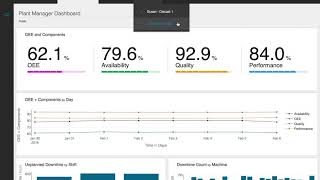
- Semantic Model maps physical plant into agent-ready structure
- Connects OT and IT systems: controls, historians, MES, ERP
- Turns raw industrial signals into production events and KPIs
- AI agents continuously investigate production and build industry-specific ML tools
- Validated findings become live recommendations for operations teams
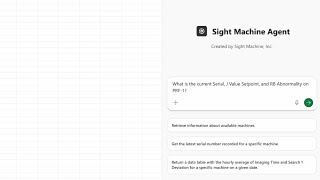
- Publishes manufacturing intelligence as an MCP server
- Enterprise agents integrate with Microsoft Teams, NVIDIA Omniverse, Databricks
- Two-way intelligence flow between plant floor and enterprise stack
- AI Agent Crews for multi-agent autonomous collaboration
- 24/7 agents on the line
- Deploys in days
- Real-time production monitoring and alerting
- Digital twin and simulation integration via NVIDIA Omniverse
- Dynamic production that responds continuously to realtime feedback
- OPC UA, MQTT and Modbus connectivity to plant equipment
About Sight Machine
Sight Machine is an agentic manufacturing platform for global manufacturers with complex OT/IT stacks. Its Semantic Model connects controls, historians, MES and ERP systems and maps your physical plant into one structured, agent-ready representation, turning raw signals into production events and KPIs. Agents then investigate production continuously, build industry-specific ML tools, and turn validated findings into live recommendations your operations teams act on. Enterprise Agents publish manufacturing intelligence as an MCP server so any enterprise agent can pull plant-floor AI, push findings into Microsoft Teams, run NVIDIA Omniverse simulations, or connect Databricks ML models. Sight Machine reports deployment in days, 10%+ output gains across 20+ industries, and 24/7 agents on the line, with AI Agent Crews adding multi-agent autonomous collaboration. It was named to Fast Company's Most Innovative Companies of 2026, is backed by NVentures, and Toyota Industries uses it with Microsoft Azure for paint shop innovation. Pricing is contact-only, and the platform works alongside your existing systems rather than replacing them.
Behind the Verdict
Sight Machine's pitch is narrower and more honest than most Industry 4.0 marketing: it does not claim to replace your MES or run your plant, it claims to make the data you already have legible to agents. The Semantic Model is the core of that — it connects controls, historians, MES and ERP systems and turns raw industrial signals into production events and KPIs that agents can reason over. From there, agents investigate production continuously, build industry-specific ML tools, and surface validated findings as live recommendations your operations team acts on. That human-in-the-loop step is deliberate: Sight Machine expects your process experts to collaborate with the agents, which is also why it is a poor fit for shops with no process expertise to contribute. The enterprise layer is where it differentiates from plant-floor analytics. Publishing manufacturing intelligence as an MCP server means any enterprise agent can pull plant-floor AI, and the documented paths into Microsoft Teams, NVIDIA Omniverse (for simulation and digital twin work) and Databricks ML models give the intelligence somewhere to go. AI Agent Crews, announced in April 2026, push toward multi-agent autonomous collaboration for optimization work. Toyota Industries' paint shop work with Microsoft Azure and the Fast Company Most Innovative Companies 2026 listing add real-world weight. The honest caveats: pricing is contact-only with no public tiers or free plan, deployment requires technical setup even at a 'days' timeline, and highly regulated industries needing extensive validation of AI models will want to scrutinize the agent decision path. It also requires existing OT/IT infrastructure — controls, historians, MES, ERP — to be worth deploying at all.
Researching Sight Machine? Get your full AI stack in 60 seconds.
Free, no signup — tell us your goal and get tools matched to your budget & existing stack.
Real-world workflow fit
Concrete scenarios for the personas Sight Machine actually fits — and what changes day-one when you adopt it.
Connect historians, MES and controls into the Semantic Model, then let 24/7 agents investigate production events and KPI drift to surface validated recommendations each shift.
Outcome: Operations teams act on live recommendations for dynamic golden runs and capture operator feedback as labeled data, tightening output run over run.
Publish Sight Machine's plant-floor intelligence as an MCP server so your existing enterprise agents can pull production context, and route findings into Microsoft Teams and Databricks ML models.
Outcome: Plant-floor AI drives firmwide optimization across supply chain, logistics and demand rather than stopping at the plant dashboard.
Use AI Agent Crews to coordinate multi-agent investigation of a complex production bottleneck, and run NVIDIA Omniverse simulations to test candidate changes before touching the line.
Outcome: Validated improvements are proposed with simulation backing, so changes can be rolled out with less trial-and-error on live equipment.
Use Cases
- Connect and stream real-time data from machines, lines and plants.
- Structure raw plant data into standardized AI-ready models for analytics.
- Let AI agents identify root causes of downtime automatically.
- Guide operators with dynamic golden runs and capture their feedback as labeled data.
- Build custom AI applications via natural language prompts without IT bottlenecks.
- Push plant-floor findings into Microsoft Teams so operations and supply chain act on them.
- Run production simulations with NVIDIA Omniverse and Databricks ML models.
- Benchmark enterprise-wide performance across multiple plants for continuous improvement.
Models Under the Hood
as of 2026-09-14
Limitations
- Sight Machine does not disclose the specific underlying AI models; it uses proprietary, industry-specific machine learning tools built by its agents.
- The platform requires integration with existing OT and IT systems such as controls, historians, MES and ERP, so it is only useful in manufacturing environments that already have those systems connected.
- Pricing is contact-only with no public tiers or free plan.
- Deployment requires technical setup even though the vendor aims to deploy in days.
- The human-in-the-loop model means you need process experts available to collaborate with the agents; teams expecting zero-touch autonomous operation will be disappointed.
- Enterprise value depends on the MCP server path being wired into your existing enterprise stack (Teams, Omniverse, Databricks, Fabric).
as of 2026-09-14
Verification history
We have re-verified Sight Machine 17 times since . Each pass re-reads the vendor's own pages and re-checks every listed field against that evidence; passes where nothing had changed are marked as such.
- — re-checked, vendor evidence unchanged
- — re-verified summary, description, our verdict, our analysis, pricing model, pricing tiers, features, integrations, who it suits, who should skip it
- — re-verified summary, description, our verdict, our analysis, pricing model, pricing tiers, features, integrations, who it suits, who should skip it
- — re-checked, vendor evidence unchanged
- — re-verified summary, description, our verdict, our analysis, pricing model, pricing tiers, features, integrations, who it suits, who should skip it
- — re-verified summary, description, our verdict, our analysis, pricing model, pricing tiers, features, integrations, who it suits, who should skip it
Showing the 6 most recent of 17 verification passes.
Free to cite with attribution — this page re-verifies continuously.
Where the pricing makes sense
The company stage and team size where Sight Machine's pricing actually pencils out — and where peers do it cheaper.
Sight Machine is contact-pricing only, aimed at large global manufacturers with multi-plant OT/IT estates rather than mid-market shops. There is no free tier or published seat cost to compare against. Lighter MES analytics and OEE tools cost far less but will not publish manufacturing intelligence into your enterprise agents. Enterprise AI platforms cost comparable amounts but lack the plant-floor semantic model.
Setup time & first value
How long it actually takes to get something useful out of Sight Machine — broken out by persona, not the marketing-page minute.
Sight Machine advertises deployment in days for plants with existing OT/IT connectivity. Realistic time-to-first-value depends on how many control systems, historians, MES and ERP sources you need mapped into the Semantic Model, and how quickly your process experts can start collaborating with the agents. Enterprises with clean, well-documented data pipelines will land closest to the claim;
Switching to or from Sight Machine
How to bring data in from common predecessors and how to get it back out — written for the switcher, not the buyer.
- →From spreadsheets and manual OEE tracking: connect historians, controls and MES so the Semantic Model can auto-generate production events and KPIs.
- →From a standalone plant historian: layer Sight Machine over OSIsoft PI, Wonderware or Kepware rather than replacing them.
- →From a generic enterprise AI pilot: publish Sight Machine manufacturing intelligence as an MCP server so existing enterprise agents gain plant-floor context.
- ↗To a lighter MES analytics tool: export production events and KPI definitions you built in the Semantic Model.
- ↗To a bespoke in-house data platform: use MCP server access to pull plant-floor intelligence into your own agent stack.
- ↗To a broader enterprise AI platform: Databricks ML models and Teams workflows already integrate, easing the data handoff.
Integrations
Resources & Guides
Tutorials & Learning
Official links
Tools that pair well with Sight Machine
Common stack mates teams adopt alongside Sight Machine, with the specific reason each pairing earns its keep.

Instabase
Enterprise agentic automation platform that turns multi-document packets into auditable, verifiable intelligence.
Hightouch
Warehouse-native CDP and agentic marketing platform that activates customer data across 300+ ad, CRM and lifecycle tools without copying it out of Snowflake or

Formula Bot
Better Analyst (formerly Formula Bot) turns plain-English questions into AI data analysis, charts, and dashboards.
Alternatives to Sight Machine
View all
Instabase
Enterprise agentic automation platform that turns multi-document packets into auditable, verifiable intelligence.
Hightouch
Warehouse-native CDP and agentic marketing platform that activates customer data across 300+ ad, CRM and lifecycle tools without copying it out of Snowflake or
Formula Bot
Better Analyst (formerly Formula Bot) turns plain-English questions into AI data analysis, charts, and dashboards.
Frequently Asked Questions
Best-of guides
Used Sight Machine? Help shape our editorial sentiment research.