
SoundHound for Restaurants
Voice-native AI that takes drive-thru, phone, SMS, kiosk and in-car orders for multi-location restaurant chains.
For multi-location QSR, this is the most complete voice-ordering stack we've reviewed, and the July 2026 Gartner MQ Leader placement plus named deployments at White Castle, Jersey Mike's, Five Guys, Casey's and Peet's back that up. The published numbers — 11% revenue lift, 85% faster service, up to 32% fewer errors — justify a serious evaluation at chain scale. If you only need a phone answered at one or two sites, or you're weighing plain phone-answering tools, you're paying for drive-thru acoustics and omnichannel routing you won't use.
Verified 3d ago · liveness 74/100 · cite: rightaichoice.com/tools/soundhound-for-restaurants
- Multi-location QSR chains with high drive-thru volume
- Fast-casual brands fielding more inbound phone calls than staff can answer
- Franchise groups that need identical voice ordering across every site
- Operators testing in-car ordering as a new revenue channel
- Single-location independents on a tight budget
- Fine dining where a human greeting is part of the product
- Operators without a POS or KDS able to accept an integrated order feed
We scan live Reddit threads, YouTube comments, X posts, G2 reviews and other communities — and hand you an honest verdict in under a minute.
- Honest verdict, not marketing
- Real pros & cons from real users
- Attributed quotes with receipts
3 free scans · no card needed
Skip SoundHound for Restaurants if you run one or two sites where a headset-wearing manager can still take the drive-thru order personally — the POS integration effort only pays back at real lane and call volume.
POS and kitchen display integration work is on you, and it's the step where most rollouts stall — budget internal IT time or a systems integrator before you sign anything.
Enterprise-quoted and scoped per deployment, so it's built for chains with a technology budget and a CIO or VP of IT to own the rollout — the same buyer profile as enterprise restaurant-tech stacks generally. If you're a single site or a handful of locations, the math rarely closes against simply staffing the phones.
In short
SoundHound for Restaurants — Voice-native AI that takes drive-thru, phone, SMS, kiosk and in-car orders for multi-location restaurant chains. Best for Multi-location QSR chains with high drive-thru volume, Fast-casual brands fielding more inbound phone calls than staff can answer, Franchise groups that need identical voice ordering across every site. Contact Sales pricing.
No head-to-head comparison for SoundHound for Restaurants yet — the alternatives below are the closest matches we list.
What people actually say about SoundHound for Restaurants — is it worth it?
We ran a structured research pass across product reviews, community discussions, and post-purchase forum threads to surface the patterns vendors won't publish themselves. Below: the recurring strengths, the hidden costs people mention most, and the cohort that consistently regrets adopting this tool.
11 mentions across 1 source (YouTube) · researched Jul 25, 2026.
Average across the 1 source that answered — each source counts once, not each post.
- +93% unassisted AI accuracy rate for order taking.
- +85% faster service times in drive-thru and phone channels.
- +11% reported revenue increase at AI-equipped locations.
- +Reduces food waste and voided checks through precise ordering.
- +Integrates with standard POS and Kitchen Display Systems.
- −Stumbles on nuanced order specifics like sizes and sides.
- −Public skepticism about replacing human jobs in restaurants.
- −Language and pronunciation support for non-English menus unproven.
- −Concurrent call capacity not transparent for high-volume peaks.
- −Enterprise-only pricing with no self-serve or small-business tier.
- • Integration and setup fees likely substantial
- • Hardware costs for drive-thru and in-store kiosks not included
- • Possibly long-term contract commitment
Viability Score
How well maintained and how widely used is SoundHound for Restaurants? Built from what the vendor actually publishes (docs, changelog, tutorials, integrations, pricing), whether the site is live, and how much real users discuss it. How we calculate this
Last calculated: October 2026
How we score →Key Features
- AI drive-thru order taking in noisy, real-world lanes
- Smart Answering for inbound phone orders
- SMS text ordering
- Mobile app voice ordering
- Voice-enabled self-service kiosk ordering
- In-car food ordering through vehicle voice assistants
- Polaris speech-to-text tuned for drive-thru noise, accents, and overlapping voices
- Real-time response LLM on the OASYS voice-native agentic platform
- Automatic upselling and context-based menu recommendations
- On-the-fly multilingual support with live language switching
- Employee Assist hands-free staff guidance via headset or tablet
- Voice Insights cross-location performance analytics from customer and employee interactions
- POS and menu system integration for direct order flow
- Kitchen display system (KDS) integration
- Brand voice and menu vocabulary customization that scales across locations
About SoundHound for Restaurants
SoundHound for Restaurants runs on OASYS, SoundHound's voice-native agentic platform for order-taking. It covers the channels a chain actually uses: drive-thru lanes, inbound phone answering, SMS, mobile apps, self-service kiosks, and in-car voice assistants. Orders flow into your existing point-of-sale and menu systems, and agents are tuned to your brand's menu vocabulary and tone consistently across locations. The speech stack is Polaris — SoundHound's speech-to-text engine paired with a real-time response LLM, built to pull orders out of noisy drive-thru audio, accents, and overlapping voices. SoundHound publishes an 11% revenue increase for OASYS customers versus locations without it, 85% faster service times, up to 32% fewer order errors, and $58,000 in annual turnover cost savings per location. Named customers include White Castle (where the agent answers to "Julia"), Jersey Mike's, Five Guys, Casey's, Church's Texas Chicken, Torchy's Tacos, Beef 'O' Brady's, and Peet's Coffee, with more than 1,000,000 customer interactions reported to date. Two non-ordering agents sit alongside: Employee Assist gives staff hands-free answers from training and operations material through headsets or tablets (Peet's Coffee cites roughly 90% of queries answered in about five seconds), and Voice Insights turns customer and employee interactions into cross-location performance data. In July 2026 SoundHound was named a Leader in the 2026 Gartner Magic Quadrant for Conversational AI Platforms. It fits multi-location QSR and fast-casual brands with real drive-thru or inbound call volume; it is overkill for a single-site independent.
Behind the Verdict
The thing SoundHound gets right that most voice-ordering vendors don't is that it treats the drive-thru lane as the hard problem. Polaris, the speech-to-text engine, is explicitly built for noisy audio, accents and overlapping voices — the exact conditions where a generic transcription model falls apart and an order comes back with the wrong number of sandwiches. Everything else in the platform (SMS, phone, kiosk, mobile app, in-car) rides on the same ordering brain, so a brand doesn't end up with five different voice experiences. The second differentiator is that OASYS is positioned as an integration layer, not a POS replacement. SoundHound says plainly that it integrates with your existing restaurant technology stack rather than ripping out your POS or kitchen systems. For a franchise group, that's the difference between a pilot and a rollout — but it also means the POS and KDS work is yours to carry, and that's where rollout timelines actually go sideways. Strengths, concretely: brand-tuned menu vocabulary and tone that scale across every location; automatic upselling based on what's already in the order; live multilingual switching; Employee Assist, which Peet's Coffee reports answers about 90% of staff queries in roughly five seconds; and Voice Insights, which turns the interaction log into cross-location performance data rather than leaving it as a call recording nobody audits. Where the honest caveats sit. The headline figures — 11% revenue increase, 85% faster service, up to 32% errors reduced, $58k turnover savings per location per year — are SoundHound's own customer benchmarks, not an independent audit. They're plausible and they're attributed to named chains, but treat them as vendor-reported. Advanced behavior including multilingual switching, tuned upsell logic and Voice Insights runs on cloud connectivity; stores with unreliable networks will see degraded performance, and that's a real constraint for older or rural locations. And the buyer profile is narrow by design — this rewards chains with genuine drive-thru or inbound call volume, and it's hard to justify for a single site. The 2026 Gartner MQ Leader recognition matters because it's the first piece of outside validation that isn't SoundHound publishing its own numbers. It doesn't replace a pilot, but it does mean you're not the first operator taking this bet.
Researching SoundHound for Restaurants? Get your full AI stack in 60 seconds.
Free, no signup — tell us your goal and get tools matched to your budget & existing stack.
Real-world workflow fit
Concrete scenarios for the personas SoundHound for Restaurants actually fits — and what changes day-one when you adopt it.
You point OASYS at your existing POS and menu, tune the menu vocabulary and upsell rules, then turn it on in the drive-thru during peak hours first.
Outcome: Lanes keep moving through the lunch rush without pulling a second body off the line, and the interaction log shows you where orders still get confused.
Inbound phone volume is outrunning the front counter, so you route calls to Smart Answering and keep the same voice agent answering SMS and app orders.
Outcome: Staff stop abandoning the counter to answer the phone, and every channel speaks with the same brand voice and menu.
New hires get Employee Assist on a headset or tablet and ask the handbook questions directly instead of interrupting a shift lead.
Outcome: Shorter ramp for new crew and fewer interruptions on the floor — Peet's Coffee reports about 90% of queries answered in roughly five seconds.
Use Cases
- Take drive-thru orders by voice to raise lane throughput during peak hours.
- Answer inbound phone orders automatically instead of pulling staff off the line.
- Let customers order by SMS, mobile app, or in-car assistant from the same voice platform.
- Give employees hands-free answers from training and operations material through a headset.
- Generate upsells automatically based on what is already in the order.
- Review cross-location interaction data to find where drive-thru performance degrades.
Models Under the Hood
as of 2026-10-16
Limitations
- OASYS is an enterprise deployment, not a plug-in: it depends on POS and KDS integration work, which is where most rollout delays come from, and it assumes high call or drive-thru volume to justify the effort.
- Advanced behavior — multilingual switching, brand-tuned upsell logic, Voice Insights analytics — runs on cloud connectivity, so stores with unreliable networks see degraded performance.
- The headline outcome figures (11% revenue increase, 85% faster service, up to 32% fewer errors, $58k annual turnover savings per location) are customer benchmark numbers SoundHound publishes itself rather than results from an independent audit.
as of 2026-10-19
Verification history
We have re-verified SoundHound for Restaurants 19 times since . Each pass re-reads the vendor's own pages and re-checks every listed field against that evidence; passes where nothing had changed are marked as such.
- — re-checked, vendor evidence unchanged
- — re-verified summary, description, our verdict, our analysis, pricing model, pricing tiers, features, integrations, who it suits, who should skip it
- — re-verified summary, description, our verdict, our analysis, pricing model, pricing tiers, features, integrations, who it suits, who should skip it
Showing the 6 most recent of 19 verification passes.
Free to cite with attribution — this page re-verifies continuously.
12-month cost
Project the real annual outlay, including the implied monthly cost when only an annual tier is published.
Vendor list price only. Add-on usage, seat overages, and contract minimums are surfaced under Hidden costs & gotchas.
Plans compared
For each published SoundHound for Restaurants tier: who it actually fits, and what it adds vs. the previous tier. Cross-reference the cost calculator above for projected annual outlay.
Enterprise
Contact sales
Ideal for
Multi-location QSR and fast-casual chains with dedicated restaurant-technology ownership and enough drive-thru or call volume to justify a scoped deployment.
What this tier adds
Single quoted enterprise engagement covering drive-thru, phone, SMS, kiosk and in-car channels — scoped by the sales team rather than sold as self-serve tiers.
Where the pricing makes sense
The company stage and team size where SoundHound for Restaurants's pricing actually pencils out — and where peers do it cheaper.
Enterprise-quoted and scoped per deployment, so it's built for chains with a technology budget and a CIO or VP of IT to own the rollout — the same buyer profile as enterprise restaurant-tech stacks generally. If you're a single site or a handful of locations, the math rarely closes against simply staffing the phones.
Setup time & first value
How long it actually takes to get something useful out of SoundHound for Restaurants — broken out by persona, not the marketing-page minute.
Expect a pilot measured in weeks, not days: the POS and KDS integration is the long pole, and SoundHound runs brand and menu tuning before launch. A single-site test can go live faster, but full chain rollout timing depends on how many POS variants your franchisees actually run.
Switching to or from SoundHound for Restaurants
How to bring data in from common predecessors and how to get it back out — written for the switcher, not the buyer.
- →From a human-staffed drive-thru and phone desk: start with one lane or one call queue, tune the menu vocabulary against real recordings, then expand site by site.
- →From a prior voice-ordering vendor: keep your POS and KDS in place and re-point the ordering layer at OASYS, then compare error rates on the same menu.
- ↗To a human-staffed line: orders go back to crew, and you keep the POS and KDS you already had — the voice layer is the only thing that comes out.
- ↗To a narrower phone-only answering tool: retain the POS integration but expect to lose drive-thru acoustics, multilingual switching and cross-location Voice Insights.
Resources & Guides
Tutorials & Learning
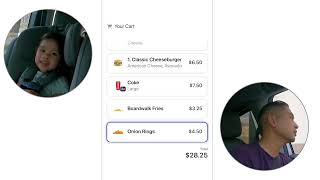
SoundHound for Restaurants - Voice AI with Dynamic Interaction
SoundHound AI
Demo: SoundHound for Restaurants Smart Answering — Never Miss a Call
SoundHound AI
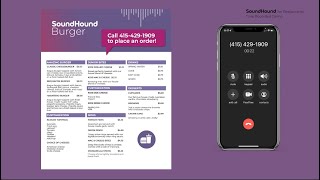
DEMO: SoundHound for Restaurants - Voice AI-Powered Restaurant Phone Ordering Solution
SoundHound AI
YouTube returned 6 videos for “SoundHound for Restaurants”, and we withheld 3: 3 did not mention SoundHound for Restaurants. Showing the 3 we can prove are about SoundHound for Restaurants.
Official links
Tools that pair well with SoundHound for Restaurants
Common stack mates teams adopt alongside SoundHound for Restaurants, with the specific reason each pairing earns its keep.

Converse Now
Voice AI that answers restaurant phone, drive-thru, text and kiosk orders in your brand's voice.

Certus AI
Certus AI is a restaurant phone agent that answers every call, takes orders item by item, and writes tickets straight into your POS.

Zavo
AI-native POS, payments, and hospitality management for multi-location restaurant groups
Alternatives to SoundHound for Restaurants
View all
Converse Now
Voice AI that answers restaurant phone, drive-thru, text and kiosk orders in your brand's voice.


Frequently Asked Questions
Best-of guides
Topics
Used SoundHound for Restaurants? Help shape our editorial sentiment research.