
Testzeus Hercules
Open-source AI testing agent that runs plain-English and Gherkin scenarios across UI, API, and Salesforce with self-healing locators.
For Salesforce-heavy teams, Hercules is the most credible open-source agentic QA option we have looked at. Unlimited users, environments, test creation, and reports remove the usual billing anxiety, and per-Scenario-Run metering means a failed test that the agent actually executed still counts — 100 scenarios across three environments is 300 runs. Team Cloud includes 1,000 runs/month with extras at $0.99/run and 15 parallel runs; Enterprise adds 30+ parallel runs, SSO/SCIM, private runners, and invoice billing. If you need native mobile testing or a full test-management suite, this is not it.
Verified 5d ago · liveness 74/100 · cite: rightaichoice.com/tools/testzeus-hercules
- Salesforce QA teams running recurring regression without per-seat fees
- QA engineers who want natural-language or Gherkin authoring instead of locator scripts
- Teams drowning in Selenium or Playwright maintenance that need self-healing execution
- Organizations testing Agentforce, Voice, or ServiceNow alongside core Salesforce
- Teams needing native iOS or Android app testing — Hercules targets web and enterprise apps
- Organizations that want script-level control over every assertion and locator
- Buyers looking for a full manual test-case management suite
We scan live Reddit threads, YouTube comments, X posts, G2 reviews and other communities — and hand you an honest verdict in under a minute.
- Honest verdict, not marketing
- Real pros & cons from real users
- Attributed quotes with receipts
3 free scans · no card needed
Skip Hercules if you need native iOS/Android app testing or full script-level control over every locator and assertion, or if your regression volume is so high that $0.99 per additional Scenario Run would outpace seat-based licensing.
Additional Scenario Runs beyond the 1,000 included in Team Cloud are $0.99 each, and the bill climbs quickly when you run 100 scenarios across 3 environments (300 runs per cycle).
Open source (self-hosted) is $0 in licensing with your own model API keys. Team Cloud fits growing Salesforce teams at 1,000 Scenario Runs/month, $0.99 per extra run, unlimited users, environments and reports, and 15 parallel runs. Enterprise is for large teams, ISVs and consultancies needing 30+ parallel runs, SSO/SCIM, private runners, invoice/PO billing and pooled annual volume pricing. Cheap versus per-seat QA platforms when your team is large and run volume moderate; expensive versus seat
In short
Testzeus Hercules — Open-source AI testing agent that runs plain-English and Gherkin scenarios across UI, API, and Salesforce with self-healing locators. Best for Salesforce QA teams running recurring regression without per-seat fees, QA engineers who want natural-language or Gherkin authoring instead of locator scripts, Teams drowning in Selenium or Playwright maintenance that need self-healing execution. Free to use.
What's new in Testzeus Hercules
Checked 5 days agoAcross the latest 5 updates: 5 news mentions.
TestZeus vs Hamming vs Cekura for AI Agent Testing
TestZeus compares its agent-testing harness against Hamming and Cekura, positioning Hercules in the emerging market for testing AI agents themselves.
Dreamforce 2026: The Leadership Guide to Trusting Agentforce
A leadership guide to building trust in Salesforce Agentforce ahead of Dreamforce 2026, aligning with Hercules' Agentforce testing coverage.
Why AI Browser Testing Needs a Determinism Layer
TestZeus argues that AI browser testing needs a determinism layer to make agentic results reliable, a signal of where the product's reliability work is heading.
Voice Agents Cannot Be Tested Like Chatbots
TestZeus argues voice agents require testing approaches distinct from chatbot QA, backing the Voice testing capability listed on the pricing page.
Mobile Testing Needs Agents, Not More Script
TestZeus makes the case for agent-driven mobile testing over larger script suites. Note that Hercules is currently positioned for web and enterprise apps, so treat this as the vendor's stated direction.
What people actually say about Testzeus Hercules — is it worth it?
We ran a structured research pass across product reviews, community discussions, and post-purchase forum threads to surface the patterns vendors won't publish themselves. Below: the recurring strengths, the hidden costs people mention most, and the cohort that consistently regrets adopting this tool.
10 mentions across 3 sources (Hacker News, Bluesky, GitHub) · researched Jul 6, 2026.
Average across the 3 sources that answered — each source counts once, not each post.
- +Open-source with no licensing fees reduces cost barrier.
- +No-code test authoring using plain English or Gherkin scenarios.
- +Multi-domain testing: UI, API, security, accessibility, visual.
- +Supports multiple AI models: OpenAI, Groq, Llama, Mistral, Anthropic.
- +Docker-native for easy CI/CD integration and reproducibility.
- −Fails to install on Windows due to uvloop dependency.
- −Lacks secure credential storage — no env variable or .env support.
- −Cannot run multiple feature files in a single execution.
- −Very few real-world case studies or independent validations.
- −Setup process can be confusing for non-Linux users.
- • Running large test suites may require paid AI model API keys
- • Infrastructure costs for Docker and CI/CD pipelines
- • Potential need for third-party tools to complement missing features
Viability Score
How well maintained and how widely used is Testzeus Hercules? Built from what the vendor actually publishes (docs, changelog, tutorials, integrations, pricing), whether the site is live, and how much real users discuss it. How we calculate this
Last calculated: October 2026
How we score →Key Features
- Zero-code test creation from natural language or Gherkin scenarios
- Autonomous self-healing execution that adapts to DOM changes
- UI and API scenario testing in a single run
- Salesforce UI testing grounded on platform terms like 'App Launcher'
- Salesforce Flow testing beyond debug mode
- Agentforce, Voice, ServiceNow, and other enterprise app testing
- 15+ built-in security tests per run
- Accessibility and visual testing checks
- Video recording and network log capture for every execution
- XUnit-format result output from Gherkin input
- Docker-native local or CI/CD pipeline deployment
- Model-agnostic: OpenAI, Groq, Llama, Mistral, or Anthropic
- Built-in tools for browsers, APIs, and databases
- Custom tool attachment for domain-specific test steps
- Multilingual test authoring and execution
About Testzeus Hercules
Testzeus Hercules is an open-source autonomous AI testing agent that executes UI, API, security, accessibility, and visual test scenarios written in plain English or Gherkin. It targets QA engineers, Salesforce admins, and product teams who are tired of rewriting Selenium or Playwright scripts every time a button moves. Instead of chasing locators, Hercules learns the workflow and auto-heals as the DOM shifts, then returns results in XUnit format. The agent ships with built-in tools for browsers, APIs, and databases, and accepts custom tools when your test needs something domain-specific. It is model-agnostic (OpenAI, Groq, Llama, Mistral, Anthropic), Docker-native for local or CI/CD execution, and multilingual. Every run is captured as video plus network logs, which makes "it worked on my machine" a much harder argument to win. Salesforce is the sharpest edge. Hercules is grounded on the platform, understands vocabulary such as "App Launcher", and can test beyond Flow debug mode, covering Agentforce, Voice, and ServiceNow. Pricing is deliberately seat-free: Team Cloud meters Scenario Runs rather than users, with unlimited test creation, environments, report viewing, and collaborators. Monthly predictability comes from the 1,000 included runs; annual customers can pool runs across release-heavy and quieter months. Against scripted tools like Selenium, Cypress, or Playwright, the pitch is that you describe what to test and Hercules figures out how — genuinely useful for teams drowning in script maintenance, especially inside the Salesforce ecosystem. It is the wrong pick if you need native mobile app testing or heavy manual test management.
Behind the Verdict
Hercules attacks the most expensive part of test automation: maintenance. Because the agent navigates by intent rather than locators, DOM changes stop breaking suites, and Testzeus claims this makes tests "much more reliable than Playwright, Selenium or Cypress" precisely because they are not affected by DOM shifts. That is the core value, and it is a real one for teams whose release train stalls on flaky regression suites. Strengths: open source with no licensing fees and full source access; model-agnostic across OpenAI, Groq, Llama, Mistral, and Anthropic; Docker-native so the same agent runs locally or in CI/CD; Gherkin in, XUnit out; built-in browser, API, and database tools plus custom tool attachment; 15+ security tests per run; video and network log evidence for every execution; multilingual authoring. The Salesforce grounding — understanding terms like "App Launcher" and testing beyond Flow debug mode, plus Agentforce, Voice, and ServiceNow coverage — is where it separates from general-purpose browser agents. The commercial model is the second differentiator. Users, environments, test creation, editing, refinement, maintenance, and reports are all unlimited; the meter only starts on formal autonomous execution, and queued-tests-that-never-start or runs blocked before execution do not count. That is unusually generous and removes the per-seat tax that makes broad QA collaboration expensive elsewhere. Weaknesses and honest caveats: the metering means cost tracks execution volume, not headcount, so a bloated regression suite run nightly across many environments gets expensive — 100 scenarios across three environments is 300 runs per cycle. Fair-use guardrails note that extremely long or specialized execution patterns may require splitting scenarios or moving to Enterprise. Parallelism is capped at 15 runs on Team Cloud. And the product is aimed at web and enterprise apps; native iOS/Android testing is not what it is built for, and it is not a manual test-case management suite. Where it fits: Salesforce-heavy QA organizations running recurring regression, release validation, and scheduled testing; teams with Agentforce, Voice, or ServiceNow in scope; consultancies and ISVs running autonomous QA across multiple orgs, where Enterprise's multiple workspaces, private runners, and scoped custom integrations matter. Where it does not: shops that need script-level control over every assertion and locator, teams wanting a full QA management platform, or very high-volume regression operations where per-run costs outpace seat licensing.
Researching Testzeus Hercules? Get your full AI stack in 60 seconds.
Free, no signup — tell us your goal and get tools matched to your budget & existing stack.
Real-world workflow fit
Concrete scenarios for the personas Testzeus Hercules actually fits — and what changes day-one when you adopt it.
Writes an end-to-end Salesforce release-validation scenario in Gherkin, connects sandbox and UAT environments, and schedules it ahead of each release window.
Outcome: Unlimited test creation plus 1,000 included Scenario Runs/month, with video and network logs attached to every run report for triage.
Replaces locator-based regression tests with intent-based scenarios and runs Hercules Docker-native inside the existing CI/CD pipeline.
Outcome: Suites stop breaking on DOM changes because the agent auto-heals toward the goal, and results come back in XUnit format for existing dashboards.
Sets up multiple workspaces and Salesforce orgs, uses private runners, and allocates pooled annual Scenario Runs across client release calendars.
Outcome: SSO/SCIM governance, custom retention, scoped custom integrations, and invoice/PO billing keep client work separated and procurement-friendly.
Use Cases
- Automate Salesforce regression testing with natural-language or Gherkin scenarios that survive DOM changes.
- Run 15+ security tests on your web application for less than the cost of a coffee.
- Execute cross-browser UI tests with video and network logs for debugging.
- Put autonomous testing into your CI/CD pipeline using the Docker-native agent.
- Validate Agentforce, Voice, and ServiceNow coverage alongside core Salesforce.
- Pool annual Scenario Runs so release-heavy months do not blow the QA budget.
- Give QA, admins, product, and business stakeholders unlimited access without seat fees.
Models Under the Hood
as of 2026-09-23
Limitations
- Team Cloud includes 1,000 Scenario Runs/month, extras at $0.99/run, and 15 parallel runs; Enterprise scales to 30+ parallel runs with custom monthly or annual run pools and volume pricing.
- A Scenario Run is one test scenario executed once — 100 scenarios across three environments counts as 300 runs — and a failed test still counts if execution started.
- Queued, cancelled, or blocked-before-execution tests do not count.
- Users, environments, test creation and maintenance, and run reports are unlimited on all plans.
- Testzeus notes a fair-use guardrail: extremely long or specialized execution patterns may require splitting scenarios or moving to Enterprise.
- The agent targets web and enterprise apps, so native mobile app coverage is out of scope.
as of 2026-10-02
Verification history
We have re-verified Testzeus Hercules 8 times since . Each pass re-reads the vendor's own pages and re-checks every listed field against that evidence; passes where nothing had changed are marked as such.
- — re-verified summary, description, our verdict, our analysis, pricing model, pricing tiers, features, integrations, who it suits, who should skip it
- — re-verified summary, description, our verdict, our analysis, pricing model, pricing tiers, features, integrations, who it suits, who should skip it
- — re-verified summary, description, our verdict, our analysis, pricing model, pricing tiers, features, integrations, who it suits, who should skip it
- — re-verified summary, description, our verdict, our analysis, pricing model, pricing tiers, features, integrations, who it suits, who should skip it
- — re-verified summary, description, our verdict, our analysis, pricing model, pricing tiers, features, integrations, who it suits, who should skip it
- — re-checked, vendor evidence unchanged
Showing the 6 most recent of 8 verification passes.
Free to cite with attribution — this page re-verifies continuously.
12-month cost
Project the real annual outlay, including the implied monthly cost when only an annual tier is published.
Vendor list price only. Add-on usage, seat overages, and contract minimums are surfaced under Hidden costs & gotchas.
Plans compared
For each published Testzeus Hercules tier: who it actually fits, and what it adds vs. the previous tier. Cross-reference the cost calculator above for projected annual outlay.
Open Source (Self-Hosted)
$0/mo
Ideal for
Engineers and small teams comfortable running Docker locally or in CI who want autonomous QA with no licensing fee and their own model keys.
What this tier adds
Starting tier: free self-hosted agent with no licensing fees and full source access — you pay only for your own model API usage.
Team Cloud
Talk to Sales
Ideal for
Growing Salesforce teams running recurring release validation and scheduled regression who want collaborators to be free and budgets predictable.
What this tier adds
Adds 1,000 included Scenario Runs/month, 15 parallel runs, unlimited users, environments, test creation, and reports versus fully self-managed open source.
Enterprise
Talk to Sales
Ideal for
Large Salesforce teams, ISVs and consulting firms scaling autonomous QA across multiple orgs, clients, and release calendars.
What this tier adds
Adds 30+ parallel Scenario Runs, org/workspace separation, SSO/SCIM, private runners, custom retention, and pooled annual volume pricing.
Where the pricing makes sense
The company stage and team size where Testzeus Hercules's pricing actually pencils out — and where peers do it cheaper.
Open source (self-hosted) is $0 in licensing with your own model API keys. Team Cloud fits growing Salesforce teams at 1,000 Scenario Runs/month, $0.99 per extra run, unlimited users, environments and reports, and 15 parallel runs. Enterprise is for large teams, ISVs and consultancies needing 30+ parallel runs, SSO/SCIM, private runners, invoice/PO billing and pooled annual volume pricing. Cheap versus per-seat QA platforms when your team is large and run volume moderate; expensive versus seat
Setup time & first value
How long it actually takes to get something useful out of Testzeus Hercules — broken out by persona, not the marketing-page minute.
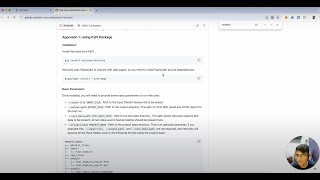
Setup is quoted at under 5 minutes using pip or Docker, with the core agent reachable in about three commands. Self-hosted users add their own model API keys (OpenAI, Groq, Llama, Mistral, or Anthropic). Team Cloud and Enterprise add onboarding and an assigned Forward Deployed Engineer, so first cloud-hosted value depends on how quickly you connect environments and port an existing scenario.
Switching to or from Testzeus Hercules
How to bring data in from common predecessors and how to get it back out — written for the switcher, not the buyer.
- →From Selenium: Rewrite the intent of each script as a plain-English or Gherkin scenario and let the agent locate elements instead of maintaining selectors.
- →From Playwright: Keep your CI invocation pattern and swap the runner for the Docker-native Hercules agent; results return in XUnit format.
- →From Cypress: Move browser flows into Gherkin scenarios and move API assertions into the same run rather than a separate spec layer.
- →From manual Salesforce regression: Capture existing test steps as scenarios and schedule them per release window instead of executing them by hand.
- →From mixed UI/API tooling: Consolidate into one agent with built-in browser, API, and database tools plus custom tool attachment.
- ↗To Playwright: Re-express scenarios as coded specs and regain explicit locator and assertion control, accepting renewed maintenance.
- ↗To Cypress: Port browser-only flows into JavaScript specs, losing the built-in Salesforce grounding and combined UI/API runs.
- ↗To a full test management suite: Keep Hercules for execution and layer a management platform on top for manual cases and traceability.
- ↗To per-seat QA platforms: Swap metered Scenario Runs for seat-based licensing if your execution volume is very high relative to headcount.
- ↗To an in-house agent harness: Fork the open-source agent and maintain your own prompt, tool, and determinism layer.
Integrations
Resources & Guides
Tutorials & Learning
TestZeus Hercules Setup Guide 🚀
TestZeus Official
TestZeus Hercules Gets MCP Superpowers
TestZeus Official

ソフトウェアテストにおけるエージェント型AI:TestZeus Herculesのご紹介
Software Testing by Daniel Knott
YouTube returned 6 videos for “Testzeus Hercules”, and we withheld 2: 2 did not mention Testzeus Hercules. Showing the 4 we can prove are about Testzeus Hercules.
Official links
Tools that pair well with Testzeus Hercules
Common stack mates teams adopt alongside Testzeus Hercules, with the specific reason each pairing earns its keep.

Testim
Testim is Tricentis's AI-driven test automation platform for Salesforce, web, and mobile apps, built around self-healing locators and agentic test authoring.

Spur
Spur is AI-agent QA testing for e-commerce — describe validation in plain English, and autonomous agents run it across web and native mobile.

MobileBoost
MobileBoost turns plain-English flow descriptions into self-healing iOS and Android end-to-end tests, with a Test Agent that verifies every pull request.
Featured Head-to-Head Comparisons
Testzeus Hercules vs Locus Robotics
Testzeus Hercules and Locus Robotics serve completely different domains—software testing vs. warehouse automation. Choose Testzeus Hercules if you need an open-source AI agent for no-code, autonomous testing of web apps (especially Salesforce); it excels with natural language test creation and CI/CD integration. Choose Locus Robotics if you operate a fulfillment center seeking 2-3x productivity gains via AMRs and a robots-as-a-service model; its Locus Array Physical AI reduces labor while handling dynamic order surges—but it's not for small, low-volume warehouses.
Testzeus Hercules vs Presto Voice
These tools serve completely different purposes. Testzeus Hercules is an open-source, no-code AI testing agent for QA teams (especially Salesforce), while Presto Voice is a drive-thru voice AI automation platform for QSR chains. Your choice depends on your domain: if you're in software testing, go with Testzeus Hercules; if you run a QSR drive-thru, choose Presto Voice. They don't compete.
Testzeus Hercules vs Truleo
If you're in software QA, especially Salesforce testing, Testzeus Hercules is a powerful open-source autonomous testing agent that eliminates scripting. If you're in law enforcement, Truleo is purpose-built to connect siloed data and generate case leads automatically. These tools serve entirely different domains; choose based on your industry.
Alternatives to Testzeus Hercules
View all
Testim
Testim is Tricentis's AI-driven test automation platform for Salesforce, web, and mobile apps, built around self-healing locators and agentic test authoring.

Spur
Spur is AI-agent QA testing for e-commerce — describe validation in plain English, and autonomous agents run it across web and native mobile.

MobileBoost
MobileBoost turns plain-English flow descriptions into self-healing iOS and Android end-to-end tests, with a Test Agent that verifies every pull request.
Frequently Asked Questions
Categories
Used Testzeus Hercules? Help shape our editorial sentiment research.