
TrueFoundry AI Gateway
TrueFoundry AI Gateway puts one governed, OpenAI-compatible endpoint in front of 1,600+ LLMs, with routing, quotas, guardrails and audit logging built in.
If you are running many models across many teams and someone in compliance keeps asking where the tokens go, TrueFoundry answers most of those questions out of the box. The MCP Registry, Virtual MCP Servers and tool approvals put it ahead of LiteLLM and Portkey on agent governance, and the VPC, on-prem and air-gapped deployment options are real rather than roadmap items. The catch is the shape of the bill: in the pricing page's own example, 7 users at $25/user/month with 1M requests comes to $355/month — $175 of seats and $180 of overage — so request volume, not headcount, drives the cost. Budget-conscious startups should price LiteLLM or Portkey first; you are paying here for governance
Verified 7d ago · liveness 84/100 · cite: rightaichoice.com/tools/truefoundry-ai-gateway
- Enterprise platform teams routing LLM traffic from many product groups through one governed endpoint
- ML leaders who need per-team cost attribution, quotas and audit trails on AI spend
- Regulated orgs requiring VPC, on-prem or air-gapped deployment with SOC 2, HIPAA and GDPR coverage
- Teams wiring agent tool calls to Slack, GitHub, Confluence or Datadog with OAuth2 and RBAC
- Solo developers who call one model and need no routing or governance layer
- Teams that want a fully free self-hosted proxy and will not pay per-user fees
- Buyers wanting a simple reverse proxy without quotas, RBAC or audit logging
We scan live Reddit threads, YouTube comments, X posts, G2 reviews and other communities — and hand you an honest verdict in under a minute.
- Honest verdict, not marketing
- Real pros & cons from real users
- Attributed quotes with receipts
3 free scans · no card needed
Skip TrueFoundry AI Gateway if you call one model from one app, or if your only real problem is request volume and you would rather self-host a free proxy than pay $25 per user per month for seats you don't need.
Gateway overage bites at $20 per additional 100k requests once your pooled 20k-per-user allowance runs out — and the pricing page's tier table says $15, so verify the rate you'll actually be billed.
Pro at $25 per user per month fits mid-size platform teams where the seat count stays modest but request volume grows — the pricing page's own example has 7 users driving 1M requests. It is more expensive up front than a raw self-hosted LiteLLM setup, and cheaper than building the equivalent RBAC, audit and MCP governance in-house or buying a full MLOps platform. Enterprise adds negotiated pricing for air-gapped, residency-specific deployments.
In short
TrueFoundry AI Gateway — TrueFoundry AI Gateway puts one governed, OpenAI-compatible endpoint in front of 1,600+ LLMs, with routing, quotas, guardrails and audit logging built in. Best for Enterprise platform teams routing LLM traffic from many product groups through one governed endpoint, ML leaders who need per-team cost attribution, quotas and audit trails on AI spend, Regulated orgs requiring VPC, on-prem or air-gapped deployment with SOC 2, HIPAA and GDPR coverage. Free to start; paid plans from $25/user/mo.
What's new in TrueFoundry AI Gateway
Checked 7 days agoAcross the latest 3 updates: 3 feature updates.
MCP Gateway Support
Added MCP Gateway to enable secure agent workflows with OAuth2, RBAC, and metadata policies, supporting tools like Slack, GitHub, Confluence, and Datadog.
Ask TFY Agent
Introduced Ask TFY, an AI agent providing live access to gateway internals for debugging and analysis, simplifying troubleshooting.
New Integrations: Wafer and HiddenLayer
Expanded provider and security options with integrations for Wafer (LLM provider) and HiddenLayer (security).
What people actually say about TrueFoundry AI Gateway — is it worth it?
We ran a structured research pass across product reviews, community discussions, and post-purchase forum threads to surface the patterns vendors won't publish themselves. Below: the recurring strengths, the hidden costs people mention most, and the cohort that consistently regrets adopting this tool.
15 mentions across 1 source (Product Hunt) · researched Jul 4, 2026.
Average across the 1 source that answered — each source counts once, not each post.
- +Unified API for 1600+ models — simplifies multi-model management.
- +Built-in governance: rate limits, cost budgets, PII and toxicity guardrails.
- +Semantic caching reduces latency and cost for repeated queries.
- +Smart routing with fallbacks increases reliability in production.
- +SOC 2, HIPAA, GDPR compliance for regulated industries.
- −Comparison to free alternatives like OpenRouter raises value questions.
- −Integration ease with existing agents not yet proven.
- −Tracing scope is unclear — users want more detail.
- −Pricing beyond free tier is undisclosed, causing uncertainty.
- −Beginner-friendly claim may be misleading for non-enterprise users.
- • Paid tier pricing is not publicly listed; unknown overage costs
Viability Score
How well maintained and how widely used is TrueFoundry AI Gateway? Built from what the vendor actually publishes (docs, changelog, tutorials, integrations, pricing), whether the site is live, and how much real users discuss it. How we calculate this
Last calculated: October 2026
How we score →Key Features
- Unified OpenAI-compatible API across 1,000+ models via named providers (marketing site claims 1,600+)
- REST endpoints for chat, completions, messages, embeddings, rerank, images, audio and video
- Audio APIs: transcription, translation and speech generation
- Batch APIs for large asynchronous workloads at batch pricing
- Native SDK compatibility with OpenAI and Anthropic client libraries
- Load balancing and fallbacks by weight, latency or priority with automatic retries
- Semantic and exact caching to cut cost and latency on repeat requests
- Self-hosted model serving via vLLM, SGLang, KServe and Triton with no SDK changes
- Rate limiting per user, per model and per application
- Cost- and token-based budgets with metadata filters and per-team cost attribution
- RBAC, SSO, audit logs, scoped API keys and centralized API key management
- Guardrails for PII, prompt injection and content moderation, with bring-your-own guardrail plugins
- MCP Registry to host, publish and discover MCP servers
- Centralized MCP auth — one API key reaches every MCP server and tool
- Virtual MCP Servers combining tools from multiple MCP servers into one
About TrueFoundry AI Gateway
TrueFoundry AI Gateway is a control plane that sits between your applications and every LLM provider you use. One OpenAI-compatible endpoint covers OpenAI, Anthropic's Claude, Google Gemini, AWS Bedrock, Azure OpenAI, Groq, Mistral, xAI, Cohere, Perplexity and a long list of others — the docs put it at 1,000+ models via named providers, while the marketing site claims 1,600+. It supports chat, completion, embedding, reranking, image, audio (transcribe, translate and speech generation), batch and video endpoints, so you stop wiring a new SDK for every model swap. Native SDK compatibility means drop-in support for the OpenAI and Anthropic client libraries. The gateway does the plumbing production AI quietly depends on: latency-, weight- or priority-based routing with automatic retries and failover, semantic caching to cut repeat spend, batch APIs at batch pricing, and self-hosted models riding the same path via vLLM, SGLang, KServe or Triton with no SDK changes. TrueFoundry claims sub-3ms internal latency, 99.99% uptime, 10B+ requests processed per month and an average 30% cost optimisation from smart routing and budget controls. Governance is the part buyers pay for. Rate limits per user, model or application, cost- and token-based budgets with metadata filters, RBAC, SSO, audit logs, and guardrail policies for PII, prompt injection and content moderation, with bring-your-own guardrail or plugin support. Observability is OpenTelemetry-compliant: token usage, latency, error rates, request volumes, plus full request/response logs tagged with metadata (user ID, team, environment) for cost attribution. The MCP side is where it has moved furthest past plain proxying: an MCP Registry to host, publish and discover servers, centralised MCP auth so one API key reaches every server and tool, Virtual MCP Servers that combine tools from multiple servers, tool approvals, and an Agent Registry plus a Skills Registry for versioned SKILL.md instructions. Ask TFY is a built-in agent for live debugging of gateway internals. It is aimed at platform and ML engineering teams inside larger organizations. Pricing: the Developer tier is $0/mo for up to 3 users and 10k requests per user per month. Pro is $25 per user per month with no user limit, 20k requests and tool calls per user per month pooled across the team, and overage at $20 per additional 100k requests (the pricing page's calculator is inconsistent on this, showing both $15 and $20 in places). Enterprise is custom. Crucially, high gateway traffic does not require buying more users — a small team can run millions of requests and simply pay overage.
Behind the Verdict
The honest framing is that TrueFoundry AI Gateway is two products wearing one name. The first is an LLM proxy: one OpenAI-compatible endpoint, native OpenAI and Anthropic SDK compatibility, routing by weight, latency or priority, semantic caching, batch APIs at batch pricing, and self-hosted models served alongside commercial ones. On that job it is competent and unremarkable next to LiteLLM or Portkey. The second product is the reason to pick it. Governance here extends all the way down to agent tool calls: an MCP Registry to host and discover servers, centralised MCP auth so a single API key reaches every tool, Virtual MCP Servers that fuse tools from different servers into one endpoint, and per-tool approvals. Add the Agent Registry, the Skills Registry of versioned SKILL.md files, budget rules with metadata filters, RBAC, SSO and audit logs, and you have policy coverage that lighter proxies simply do not attempt. OpenTelemetry-compliant metrics and traces plus metadata-tagged request logs make per-team cost attribution a configuration exercise rather than a project. Strengths, concretely: breadth of endpoints (chat, embeddings, rerank, images, audio transcription and speech, batch, video), genuinely flexible deployment (SaaS, VPC, on-prem, air-gapped), and an unusually complete MCP story. Weaknesses are worth naming. The Developer tier's 3-user and 10k-requests-per-user caps make it a toy for anything beyond a prototype. The pricing page contradicts itself on overage — the tier table says $15 per additional 100k requests while the calculator says $20 — so confirm the real rate with the vendor before you model spend. Model-provider charges and managed external guardrail charges sit outside the quoted price entirely, which means your gateway bill is never your AI bill. Where it fits: platform teams fielding requests from several product groups, regulated orgs that need residency control and audit trails, and anyone wiring agents to Slack, GitHub, Confluence or Datadog with real auth. Where it does not: one developer calling one model, a small team whose only worry is request volume and who would rather self-host a free proxy, or a company that wants a plain reverse proxy without quotas and RBAC layered on top. The '50% faster experimentation' and '15 min to productionisation' figures on the pricing page are vendor claims about the broader platform, not measured gateway benchmarks — treat them as marketing.
Researching TrueFoundry AI Gateway? Get your full AI stack in 60 seconds.
Free, no signup — tell us your goal and get tools matched to your budget & existing stack.
Real-world workflow fit
Concrete scenarios for the personas TrueFoundry AI Gateway actually fits — and what changes day-one when you adopt it.
Three product teams each call a different provider directly. You stand up TrueFoundry AI Gateway, create virtual models per team, set 20k-request budget rules with team metadata filters, and hand out scoped API keys.
Outcome: One endpoint and one cost dashboard replace three SDK integrations, and the per-team spend report is ready before the first invoice lands.
You deploy the gateway in your own VPC, point it at Azure OpenAI plus a self-hosted Mistral model on Triton, enable geo-aware routing for data residency and turn on PII guardrails.
Outcome: Prompts and responses never leave your domain, residency rules are enforced at the routing layer, and audit logs answer the security team's questions.
You need an agent to read Confluence, query Datadog and file GitHub issues. You register each server in the MCP Registry, combine them into one Virtual MCP Server, and issue a single API key for the agent.
Outcome: One credential reaches every tool, tool approvals gate write actions, and the Skills Registry keeps the agent's instructions versioned.
Use Cases
- Put one governed endpoint in front of 1,000+ models so every product team stops wiring its own provider SDK
- Route traffic by latency or weight and fail over automatically when a provider has an outage
- Attribute token spend per team and enforce cost-based budgets with metadata filters
- Block PII leaks, prompt injection and toxic output with configurable guardrail policies
- Expose self-hosted LLaMA, Mistral or Falcon models alongside commercial APIs through the same interface
- Give agents a single OAuth2-authenticated door to Slack, GitHub, Confluence and Datadog tools via MCP
- Combine tools from several MCP servers into one Virtual MCP Server for a specific agent
- Run large offline jobs through batch APIs at batch pricing instead of synchronous calls
Models Under the Hood
as of 2026-09-30
Limitations
- The Developer tier caps you at 3 users and 10k requests per user per month, which is fine for a prototype and nothing more.
- The pricing page contradicts itself on overage — the tier table lists $15 per additional 100k requests while the cost calculator uses $20 per 100k, so confirm the real rate before modelling spend.
- Model-provider charges and managed external guardrail charges are explicitly not included in any quoted price, so the gateway bill is never your whole AI bill.
- Some governance surface (custom and third-party guardrails, unlimited virtual models, MCP tool approvals, 30-day log retention, SSO and audit logs) is paid-tier only.
- Enterprise pricing is custom and air-gapped deployment sits behind it.
- Support depth also differs: Developer gets an in-app chat bot and Discord, while priority support with an SLA and a dedicated Slack channel is Enterprise.
- Vendors claims of 50% faster experimentation and 15 minutes to productionisation on the pricing page refer to the wider platform, not the gateway, and are not independently verified.
as of 2026-10-02
Verification history
We have re-verified TrueFoundry AI Gateway 7 times since . Each pass re-reads the vendor's own pages and re-checks every listed field against that evidence; passes where nothing had changed are marked as such.
- — re-verified summary, description, our verdict, our analysis, pricing model, pricing tiers, features, integrations, who it suits, who should skip it
- — re-verified summary, description, our verdict, our analysis, pricing model, pricing tiers, features, integrations, who it suits, who should skip it
- — re-verified summary, description, our verdict, our analysis, pricing model, pricing tiers, features, integrations, who it suits, who should skip it
- — re-verified summary, description, our verdict, our analysis, pricing model, pricing tiers, features, integrations, who it suits, who should skip it
- — re-verified summary, description, our verdict, our analysis, pricing model, pricing tiers, features, integrations, who it suits, who should skip it
- — re-verified summary, description, our verdict, our analysis, pricing model, pricing tiers, features, integrations, who it suits, who should skip it
Showing the 6 most recent of 7 verification passes.
Free to cite with attribution — this page re-verifies continuously.
12-month cost
Project the real annual outlay, including the implied monthly cost when only an annual tier is published.
Vendor list price only. Add-on usage, seat overages, and contract minimums are surfaced under Hidden costs & gotchas.
Plans compared
For each published TrueFoundry AI Gateway tier: who it actually fits, and what it adds vs. the previous tier. Cross-reference the cost calculator above for projected annual outlay.
Developer
$0/mo
Ideal for
A single engineer or a two-to-three person team prototyping an AI workflow who wants all 1,600+ models and basic observability without a credit card.
What this tier adds
Free entry point: 3 users, 10k requests per user per month, 5 model accounts, 5 MCP servers, built-in guardrails only, 7-day log retention, SaaS only.
Pro
$25/user/mo
Ideal for
A platform team shipping AI to production where several product groups need quotas, RBAC, audit logs and a VPC or on-prem install.
What this tier adds
Adds unlimited users, pooled 20k requests and tool calls per user per month, full custom and third-party guardrails, MCP tool approvals, up to 10 budget rules, 30-day log retention, SSO, audit logs and VPC/on-prem deployment.
Enterprise
Custom
Ideal for
Regulated organizations that need air-gapped deployment, custom data residency or a contractual SLA before they will run production AI on it.
What this tier adds
Adds advanced security and compliance controls, air-gapped deployment, custom data residency and log retention, plus priority support with an SLA, a dedicated Slack channel and dedicated onboarding.
Where the pricing makes sense
The company stage and team size where TrueFoundry AI Gateway's pricing actually pencils out — and where peers do it cheaper.
Pro at $25 per user per month fits mid-size platform teams where the seat count stays modest but request volume grows — the pricing page's own example has 7 users driving 1M requests. It is more expensive up front than a raw self-hosted LiteLLM setup, and cheaper than building the equivalent RBAC, audit and MCP governance in-house or buying a full MLOps platform. Enterprise adds negotiated pricing for air-gapped, residency-specific deployments.
Setup time & first value
How long it actually takes to get something useful out of TrueFoundry AI Gateway — broken out by persona, not the marketing-page minute.
A solo developer can point an OpenAI SDK at the gateway and route a first request in under 20 minutes, using the sandbox environment that needs no credit card. A platform team wiring SSO, RBAC, budget rules and a couple of virtual models should budget a day or two. Regulated deployments — VPC, on-prem or air-gapped with custom residency — are Enterprise engagements with a dedicated onboarding
Switching to or from TrueFoundry AI Gateway
How to bring data in from common predecessors and how to get it back out — written for the switcher, not the buyer.
- →From direct provider SDKs: swap the base URL and API key for the gateway endpoint, since it keeps OpenAI-compatible and Anthropic-compatible schemas.
- →From LiteLLM: keep the same OpenAI-style call pattern and move routing, budget and guardrail policy into the gateway's admin console.
- →From a Kong or Solo.io API gateway: delegate LLM-specific concerns (token budgets, semantic caching, model routing) to TrueFoundry and leave general traffic where it is.
- →From self-managed vLLM endpoints: register them as self-hosted models and route to them through the same virtual model as commercial providers.
- →From spreadsheets and per-provider dashboards: import team and environment metadata so existing cost-attribution groupings carry over to the gateway's tagging.
- ↗To LiteLLM: export your model list and re-declare routing rules in LiteLLM's config, accepting that MCP registries and agent approvals do not carry across.
- ↗To Portkey: rebuild guardrails and budget rules in Portkey's policy layer; OpenAI-compatible call sites stay largely unchanged.
- ↗To raw provider APIs: point SDKs back at each provider directly, and expect to lose centralised caching, quota enforcement and audit logging.
Integrations
Resources & Guides
Tutorials & Learning
TrueFoundry AI Gateway
TrueFoundry
TrueFoundry AI Gateway - Self-Host LLMs & GenAI Models, and Run Behind the AI Gateway | Product Demo
TrueFoundry
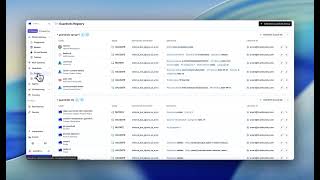
TrueFoundry AI Gateway | Enterprise-Grade AI Gateway | Product Deep-Dive Demo
TrueFoundry
YouTube returned 6 videos for “TrueFoundry AI Gateway”, and we withheld 1: 1 did not mention TrueFoundry AI Gateway. Showing the 5 we can prove are about TrueFoundry AI Gateway.
Official links
Tools that pair well with TrueFoundry AI Gateway
Common stack mates teams adopt alongside TrueFoundry AI Gateway, with the specific reason each pairing earns its keep.


Featured Head-to-Head Comparisons
Truefoundry Ai Gateway vs Spider Cloud
TrueFoundry AI Gateway is the right choice if you need to manage, govern, and observe multiple AI models at scale with enterprise controls. Spider Cloud is the ideal pick if your primary need is to feed real-time web data into AI agents or RAG pipelines efficiently and cheaply. They solve different problems; your decision hinges on whether you need model governance or web data extraction.
Truefoundry Ai Gateway vs Temporal Ai
Choose TrueFoundry AI Gateway if your priority is a unified API to access and govern hundreds of models with built-in cost control and observability — ideal for enterprise AI deployments. Choose Temporal AI if you need reliable, stateful orchestration for AI agents that survive failures and require human-in-the-loop — best for building robust, long-running workflows. Neither is a replacement for the other; pick based on your core requirement: gateway vs orchestration.
Truefoundry Ai Gateway vs Presto Voice
If you're building a multi-model AI pipeline for an enterprise needing governance, cost control, and observability, TrueFoundry AI Gateway is the clear choice. For a QSR chain seeking proven drive-thru voice automation to boost revenue, Presto Voice is purpose-built and unmatched. These tools serve completely different domains—choose based on your business function.
Alternatives to TrueFoundry AI Gateway
View all

Popular in LLM Gateways & Model Routers

OpenRouter Agents
One OpenAI-compatible API that routes any request across 500+ text, image, video, and audio models from 80+ providers.
Frequently Asked Questions
Topics
Used TrueFoundry AI Gateway? Help shape our editorial sentiment research.