
VectorRAG.Net
Embedded .NET vector search for RAG with LSH + exact rerank
VectorRAG.Net is a top pick for .NET teams needing embedded, low-latency vector search without external services. The LSH+exact rerank balances speed and accuracy well. But the lack of public pricing and changelog transparency could be a hurdle for some buyers. If you're committed to .NET and need deterministic performance, this is worth a look.
Verified 15d ago · liveness 62/100 · cite: rightaichoice.com/tools/vectorrag-net
- Quantitative developers building RAG pipelines in .NET
- Game AI programmers needing real-time semantic search
- Enterprise teams requiring in-process vector search without external services
- Researchers prototyping semantic search with high throughput demands
- Users seeking a managed cloud vector database service
- Non-.NET applications without interop capabilities
- Teams requiring zero-code, visual configuration interfaces
We scan live Reddit threads, YouTube comments, X posts, G2 reviews and other communities — and hand you an honest verdict in under a minute.
- Honest verdict, not marketing
- Real pros & cons from real users
- Attributed quotes with receipts
3 free scans · no card needed
Skip VectorRAG.Net if you need a managed cloud vector database with a UI, require multi-node distributed indexing out of the box, or are not working within the .NET ecosystem.
Pricing requires contacting the vendor; there are no public rates or free tier, so expect a custom quote that may include per-developer or per-deployment fees.
Pricing is not public—contact sales for a quote. This suits professional .NET teams that value performance over cost transparency; it's likely pricier than open-source alternatives like FAISS or Milvus but saves on infrastructure.
In short
VectorRAG.Net — Embedded .NET vector search for RAG with LSH + exact rerank. Best for Quantitative developers building RAG pipelines in .NET, Game AI programmers needing real-time semantic search, Enterprise teams requiring in-process vector search without external services. Contact Sales pricing.
What people actually say about VectorRAG.Net — is it worth it?
We ran a structured research pass across product reviews, community discussions, and post-purchase forum threads to surface the patterns vendors won't publish themselves. Below: the recurring strengths, the hidden costs people mention most, and the cohort that consistently regrets adopting this tool.
27 mentions across 2 sources (YouTube, GitHub) · researched Jul 6, 2026.
Average across the 2 sources that answered — each source counts once, not each post.
- +In-process execution eliminates network latency entirely.
- +LSH + exact rerank balances speed and accuracy.
- +SIMD acceleration and ArrayPool reduce GC pressure.
- +Built-in document chunking with configurable strategies.
- +Metadata filtering and hybrid vector+BM25 search.
- −Community is tiny; real-world feedback almost absent.
- −Pricing unknown; no free tier for evaluation.
- −.NET-only; locks out other language ecosystems.
- −No distributed or cloud-native deployment option.
- −Documentation depth not visible; learning by example.
- • No free tier; evaluation requires contacting sales.
- • Potential enterprise licensing costs for commercial use.
Viability Score
How well maintained and how widely used is VectorRAG.Net? Built from what the vendor actually publishes (docs, changelog, tutorials, integrations, pricing), whether the site is live, and how much real users discuss it. How we calculate this
Last calculated: September 2026
How we score →Key Features
- Random Hyperplane LSH approximate nearest neighbor search
- Exact reranking by dot product or cosine similarity
- Built-in document chunking with configurable strategies
- Metadata filtering support
- Hybrid search combining vector and BM25 text retrieval
- File-based persistence for index and data
- Runtime metrics for query latency and throughput
- ArrayPool integration to reduce GC pressure
- SIMD acceleration for supported operations
- Batch search and insertion APIs
- Deterministic random number generation
- Low-latency in-process execution
- NuGet integration
- .NET Standard 2.0+ and .NET 6+ support
- Extensible custom distance functions
About VectorRAG.Net
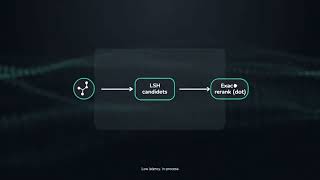
VectorRAG.Net is a .NET-native embedded vector database library engineered for high-speed semantic search and Retrieval-Augmented Generation (RAG). It runs in-process, eliminating network latency and external dependencies, making it ideal for real-time retrieval over millions of embeddings. The library uses Random Hyperplane LSH for fast candidate generation, followed by exact dot-product or cosine similarity reranking for accuracy. It targets professional .NET developers—quantitative developers, AI specialists, and game programmers—who need low-latency, deterministic data processing. Built by Principium, it's part of a suite of performance-critical components alongside QuantCore.Net for quantitative finance and GameAI.Net for game AI. The library leverages ArrayPool integration and SIMD acceleration where possible, minimizing garbage collection pressure and ensuring stable latency. It supports built-in document chunking with configurable strategies, metadata filtering, and optional hybrid search combining vector and BM25 text retrieval. File-based persistence lets you save and reload indexes, and runtime metrics expose query latency and throughput for monitoring. Batch APIs enable high-throughput insertion and search operations. Deterministic RNG ensures reproducible results across runs. Unlike external vector databases like Pinecone or Qdrant, VectorRAG.Net operates embedded within your application. It integrates via NuGet, requires no separate service, and is optimized for high-throughput, in-process retrieval. This design suits scenarios where every millisecond counts and architectural control is paramount—trading systems, game AI, and research tools that need predictable performance without external infrastructure. Positioned as a compute engine rather than a framework or service, VectorRAG.Net gives you direct control over performance characteristics. It's a strong fit for teams that already live in the .NET ecosystem and want to avoid the operational overhead of a separate vector database service.
Behind the Verdict
VectorRAG.Net is a specialized tool that excels in a narrow but critical niche: in-process vector search for .NET applications where performance and determinism are paramount. Its architecture, with LSH for candidate generation and exact reranking, is a well-known trade-off that delivers predictable latency at the cost of some recall precision, mitigated by the rerank step. The library's focus on .NET-native performance—using ArrayPool, SIMD, and zero-allocation patterns—aligns with the needs of quantitative finance, game AI, and real-time systems. It's not a general-purpose vector database; you won't get a management UI, cloud hosting, or distributed capabilities. But if you're building a trading engine that needs to search millions of embeddings in milliseconds, or a game that requires real-time semantic matching, this library is designed for you. The main drawbacks are the lack of transparent pricing—you must contact the vendor—and limited community/changelog visibility, which can be a risk for long-term support. Compared to external services like Pinecone or Qdrant, VectorRAG.Net eliminates network overhead and gives you full control, but you must handle infrastructure and scaling yourself. It's a powerful tool for the right audience, but it's not for everyone.
Researching VectorRAG.Net? Get your full AI stack in 60 seconds.
Free, no signup — tell us your goal and get tools matched to your budget & existing stack.
Real-world workflow fit
Concrete scenarios for the personas VectorRAG.Net actually fits — and what changes day-one when you adopt it.
Implementing a RAG pipeline for real-time risk analysis
Outcome: Embed VectorRAG.Net via NuGet, index options documents with built-in chunking and metadata filtering, and achieve millisecond retrieval for Q&A, improving decision speed.
Adding semantic search to game agent behavior
Outcome: Use VectorRAG.Net in-process to match agent observations against a library of actions, enabling responsive AI without external service latency.
Replacing external vector DB with embedded alternative for compliance
Outcome: Deploy VectorRAG.Net inside a .NET service to keep data on-premises, eliminate network calls, and maintain full control over retrieval performance.
Use Cases
- Implement semantic search over millions of document embeddings in a .NET trading system.
- Build a RAG pipeline for real-time document Q&A without external vector DB dependencies.
- Enable fast similarity matching for game AI agents using in-process vector search.
- Provide low-latency recommendation engine using approximate nearest neighbor search.
- Power metadata-filtered retrieval in a .NET enterprise search application.
Limitations
- VectorRAG.Net is an embedded .NET library, requiring integration into .NET applications.
- It is designed for developers with expertise in .NET and vector search concepts, emphasizing performance and low-level control.
- Pricing and licensing are not publicly detailed, and no free tier or trial is mentioned.
as of 2026-08-24
Verification history
We have re-verified VectorRAG.Net 6 times since . Each pass re-reads the vendor's own pages and re-checks every listed field against that evidence; passes where nothing had changed are marked as such.
- — re-checked, vendor evidence unchanged
- — re-checked, vendor evidence unchanged
- — re-checked, vendor evidence unchanged
- — re-verified summary, description, our verdict, our analysis, pricing model, pricing tiers, features, integrations, who it suits, who should skip it
- — re-verified summary, description, our verdict, our analysis, pricing model, pricing tiers, features, integrations, who it suits, who should skip it
- — re-verified summary, description, our verdict, our analysis, pricing model, pricing tiers, features, integrations, who it suits, who should skip it
Free to cite with attribution — this page re-verifies continuously.
Where the pricing makes sense
The company stage and team size where VectorRAG.Net's pricing actually pencils out — and where peers do it cheaper.
Pricing is not public—contact sales for a quote. This suits professional .NET teams that value performance over cost transparency; it's likely pricier than open-source alternatives like FAISS or Milvus but saves on infrastructure.
Setup time & first value
How long it actually takes to get something useful out of VectorRAG.Net — broken out by persona, not the marketing-page minute.
For a .NET developer, initial setup is quick—install NuGet, index vectors, and run queries within hours. Deep optimization like tuning LSH parameters and integrating SIMD may take a couple of days.
Switching to or from VectorRAG.Net
How to bring data in from common predecessors and how to get it back out — written for the switcher, not the buyer.
- →From FAISS or custom ANN code: wrap existing vector index with VectorRAG.Net API, re-index your embeddings, and adapt metadata filtering.
- ↗To Pinecone or Qdrant: export your index files, then re-upload to the cloud service and adjust query logic to their client SDKs.
Resources & Guides
Tutorials & Learning
YouTube returned 6 videos for “VectorRAG.Net”, and we withheld 5: 5 did not mention VectorRAG.Net. Showing the 1 we can prove is about VectorRAG.Net.
Official links
Featured Head-to-Head Comparisons
Vectorrag Net vs Spider Cloud
For developers building AI agents or RAG pipelines that need live web data, Spider Cloud is the clear choice with its fast crawling, structured outputs, and recent Browser AI commands. VectorRAG.Net is a specialized .NET library for in-process vector search, but it lacks web data retrieval and recent updates. Most buyers will benefit more from Spider Cloud's versatility and active development.
Vectorrag Net vs Screenplayiq
ScreenplayIQ and VectorRAG.Net serve completely different domains: ScreenplayIQ is for entertainment professionals seeking data-driven script analysis and box office forecasts, while VectorRAG.Net is a technical library for .NET developers building high-performance semantic search. Choose based on your industry—screenwriting or software engineering—as there is no direct feature overlap.
Vectorrag Net vs Temporal Ai
Choose Temporal AI if you need fault-tolerant orchestration for AI agents or multi-step workflows across any language; it's overkill for simple scheduled tasks. Choose VectorRAG.Net if you are a .NET developer needing blazing-fast, in-process vector search for RAG without external dependencies — but be prepared to build your own infrastructure for scalability.
Popular in Vector Databases & Retrieval

Voyage AI
Specialized embedding models and rerankers for high-accuracy enterprise RAG, with 32K-token context and multimodal support.

Nomic Embed
Open-source text embeddings plus agentic AEC workflows for drawing review and code compliance

Ragatouille
Train and use ColBERT late-interaction retrieval models in any RAG pipeline
Frequently Asked Questions
Categories
Best-of guides
Topics
Used VectorRAG.Net? Help shape our editorial sentiment research.