Viz.ai
Viz.ai is AI care coordination software that auto-detects stroke, cardiac, vascular and pulmonary disease from imaging and alerts the on-call specialist.
Viz.ai is a care coordination purchase with an imaging algorithm attached, not the reverse. If your lost time sits in the handoff between the scanner and the on-call neurointerventionalist, the LVO detection plus real-time phone alert in Viz Neuro Suite targets exactly that gap, and the documented 50+ FDA-cleared algorithm count across Neuro, Cardio, Vascular, Pulmonary, Trauma, Radiology and Oncology is the widest breadth we see in this category. A single-modality vendor such as a standalone LVO detector will win on nothing but price, and you should confirm that price directly. Treat the PACS/EMR integration as a project on the critical path, start with one service line, and prove the
Verified 1d ago · liveness 83/100 · cite: rightaichoice.com/tools/viz-ai
- Large health systems coordinating neuro, cardio, vascular and pulmonary service lines under one platform
- Stroke centers that need LVO and hemorrhage detection pushed to the on-call specialist fast
- Cardiology and vascular departments automating HCM, cardiac amyloidosis, ACS and PE detection
- Level I and Level II trauma centers standardizing communication against trauma guidelines
- Standalone imaging centers that only want image analysis without team alerting
- Small clinics without the IT staff to run a PACS and EMR integration project
- Single-specialty practices that would use one algorithm and ignore the rest of the platform
We scan live Reddit threads, YouTube comments, X posts, G2 reviews and other communities — and hand you an honest verdict in under a minute.
- Honest verdict, not marketing
- Real pros & cons from real users
- Attributed quotes with receipts
3 free scans · no card needed
Skip Viz.ai if you run a standalone imaging center that only wants image analysis and has no team-alerting workflow to plug into.
Viz.ai's pricing fits teams whose volume aligns with the published tiers. Compare against the alternatives listed below for stage-specific value.
In short
Viz.ai — Viz.ai is AI care coordination software that auto-detects stroke, cardiac, vascular and pulmonary disease from imaging and alerts the on-call specialist. Best for Large health systems coordinating neuro, cardio, vascular and pulmonary service lines under one platform, Stroke centers that need LVO and hemorrhage detection pushed to the on-call specialist fast, Cardiology and vascular departments automating HCM, cardiac amyloidosis, ACS and PE detection. Contact Sales pricing.
No head-to-head comparison for Viz.ai yet — the alternatives below are the closest matches we list.
What's new in Viz.ai
Checked yesterdayAcross the latest 2 updates: 2 news mentions.
Unlocking the Potential of AI in Lung Disease Diagnosis, Management, and Care Coordination
Viz.ai writes about Viz Pulmonary Suite's role in managing lung cancer, interstitial lung disease and other conditions, signalling continued investment in its pulmonary service line.
Fast, Predictable, Simple: Lessons from Viz.ai's Imaging Architecture
An engineering post describing backend changes to Viz.ai's imaging architecture aimed at making real-time detection faster and more predictable.
What people actually say about Viz.ai — is it worth it?
We ran a structured research pass across product reviews, community discussions, and post-purchase forum threads to surface the patterns vendors won't publish themselves. Below: the recurring strengths, the hidden costs people mention most, and the cohort that consistently regrets adopting this tool.
19 mentions across 3 sources (Hacker News, YouTube, App Store) · researched Aug 23, 2026.
Average across the 3 sources that answered — each source counts once, not each post.
- +50+ FDA-cleared algorithms for multi-specialty disease detection and workflow coordination
- +Real-time mobile and desktop alerts enable rapid team communication
- +Integrates with PACS, EMR, and Microsoft Cloud for Healthcare
- +Backed by peer-reviewed studies showing reduced time to treatment
- +24/7 on-call clinical specialist support adds a human safety net
- −Fails to show the area of concern in alerts, leading to false alarms
- −App can be unstable after updates, crashing and unusable
- −Onerous security features make the app difficult to use
- −Large storage footprint (1.5 GB) and no auto-clear of images
- −No macOS support, limiting accessibility
- • IT integration and maintenance costs are not included
- • Potential costs for additional training or dedicated support staff
Viability Score
How well maintained and how widely used is Viz.ai? Built from what the vendor actually publishes (docs, changelog, tutorials, integrations, pricing), whether the site is live, and how much real users discuss it. How we calculate this
Last calculated: October 2026
How we score →Key Features
- Over 50 FDA-cleared algorithms for suspected-disease detection from medical imaging
- Real-time mobile and desktop alerts to the on-call specialist within seconds
- Viz Neuro Suite: large vessel occlusion (LVO) detection from CT
- Viz Neuro Suite: CT perfusion (CTP) analysis
- Viz Neuro Suite: hemorrhage and cerebral aneurysm detection
- Viz Neuro Suite: hyperdensity measurements
- Viz Neuro Suite: post-acute stroke module
- Viz Cardio Suite: hypertrophic cardiomyopathy and cardiac amyloidosis detection from EKG and echo
- Viz Cardio Suite: acute coronary syndrome (ACS) detection
- Viz Vascular Suite: pulmonary embolism and aortic disease detection
- Viz Pulmonary Suite: lung cancer and interstitial lung disease detection
- Viz Trauma Suite: communication workflows aligned to trauma center guidelines
- Viz Radiology Suite for radiologist diagnostic and treatment acceleration
- Viz Oncology Suite
- Viz.ai One enterprise care coordination platform with Viz Assist workflow assistant
About Viz.ai
Viz.ai sells care coordination, not just detection. The platform runs more than 50 FDA-cleared algorithms across CT scans, EKGs, echocardiograms and other imaging data, flags a suspected finding automatically, and pushes a real-time alert to the on-call specialist's phone or desktop in seconds. For health systems, the alert plus the shared workflow is the product; the algorithm underneath is the entry ticket. The portfolio is organized by service line rather than by model. Viz Neuro Suite covers large vessel occlusion (LVO), CT perfusion (CTP), hemorrhage, hyperdensity measurements, cerebral aneurysm and post-acute stroke. Viz Cardio Suite handles hypertrophic cardiomyopathy, cardiac amyloidosis, acute coronary syndrome and post-acute stroke. Viz Vascular Suite addresses pulmonary embolism and aortic disease, while Viz Pulmonary Suite targets lung cancer and interstitial lung disease for pulmonary care teams. Viz Radiology Suite, Viz Trauma Suite and Viz Oncology Suite round out the clinical side, with pilot programs spanning oncology, cardiology, respiratory, neurology and osteoporosis. On the platform layer, Viz.ai One is the enterprise care coordination deployment and Viz Assist acts as a workflow assistant on top of it. Viz.ai documents integration with PACS, EMR and Microsoft Cloud for Healthcare, and runs a Microsoft Cloud for Healthcare pilot program. Viz Life Sciences is a separate partnership motion, building customized solutions for pharma and device companies around patient identification and clinical trial enrollment. Buyers are large hospitals, stroke networks and multi-department health systems rather than single clinics. Against single-modality imaging AI vendors, the honest comparison is workflow and alerting breadth across service lines, not raw detection accuracy on any one finding.
Behind the Verdict
The strongest argument for Viz.ai is breadth of workflow, not a single model's accuracy. One platform covers Viz Neuro Suite (LVO, CTP, hemorrhage, cerebral aneurysm, hyperdensity measurements, post-acute stroke), Viz Cardio Suite (HCM, cardiac amyloidosis, ACS, post-acute stroke), Viz Vascular Suite (pulmonary embolism, aortic disease), Viz Pulmonary Suite (lung cancer, interstitial lung disease), Viz Trauma Suite, Viz Radiology Suite and Viz Oncology Suite. A stroke network that starts with LVO can extend the same alerting pattern to PE or HCM without standing up a second vendor and a second integration. The second argument is the platform layer. Viz.ai One is the enterprise deployment and Viz Assist is a workflow assistant layered on top, so a multi-hospital system gets a shared view rather than a per-site tool. Viz.ai also documents a 24/7 on-call clinical specialist team alongside implementation and customer success, which matters more than it sounds: an alert nobody is prepared to act on at 3am is noise. Where it does not fit is equally clear. Standalone imaging centers that want image analysis without team alerting will pay for a coordination layer they never use. Small clinics without IT staff to run a PACS and EMR integration project are the wrong shape of customer. Single-specialty practices that would light up one algorithm and ignore the rest are over-buying. And radiology groups whose findings already reach the right clinician reliably are solving a problem they do not have. One engineering note from the vendor's own April 2026 write-up: Viz.ai has been reworking its imaging architecture for faster, more predictable real-time detection. That is the right thing to invest in, because in this category latency between scan and alert is the product. Viz Life Sciences is a different motion — customized partnership work with pharma and device companies on patient identification and trial enrollment rather than an off-the-shelf SKU. Do not evaluate it as a software license. Before signing, weigh three things: the PACS/EMR integration effort (which is the real deployment cost, not the license), how many service lines you will actually activate in year one, and whether your alert routing is ready for the volume. Start with LVO, measure door-to-alert and alert-to-treatment, then expand.
Researching Viz.ai? Get your full AI stack in 60 seconds.
Free, no signup — tell us your goal and get tools matched to your budget & existing stack.
Real-world workflow fit
Concrete scenarios for the personas Viz.ai actually fits — and what changes day-one when you adopt it.
You deploy Viz Neuro Suite on your CT pipeline so every suspected large vessel occlusion triggers an automatic alert to the on-call neurointerventionalist's phone within seconds, with the scan viewable on the same device.
Outcome: Detection and handoff collapse into one step instead of a call chain, and you get door-to-alert numbers to defend the program internally.
You extend the same alerting pattern to Viz Cardio Suite, screening EKGs and echoes for hypertrophic cardiomyopathy and cardiac amyloidosis so suspected cases reach the cardiologist without waiting in a reading queue.
Outcome: Conditions that normally surface incidentally get routed deliberately, on an integration you already built for stroke.
You scope a Viz.ai One deployment across several hospitals with Viz Assist on top, wiring PACS and EMR integration once and rolling out service lines in sequence rather than all at once.
Outcome: One platform contract and one integration project cover neuro, vascular and cardio instead of three separate point vendors.
Use Cases
- Automated LVO detection from CT with a real-time alert to the on-call stroke specialist's phone
- Multi-condition screening on a single chest CT (PE, aortic disease, coronary calcium)
- Health system-wide deployment of Viz.ai One with a shared view across hospitals
- AI-powered patient identification for life sciences clinical trials via Viz Life Sciences
- Rapid detection and triage of pulmonary embolism through Viz Vascular Suite
- Trauma center workflow automation and triage against trauma guidelines
- Radiology workflow optimization with automated measurements and specialist alerts
- Lung cancer and interstitial lung disease diagnosis support via Viz Pulmonary Suite
Models Under the Hood
as of 2026-10-16
Limitations
- Viz.ai is a care coordination platform for healthcare providers, not a patient-facing tool, and it depends on integration with hospital systems such as PACS and EMR.
- Its AI models are specialized for detecting specific conditions (stroke, aneurysm, pulmonary embolism and others), so the value depends on running it inside a workflow that can act on the alert.
- The platform is enterprise-grade and designed for health systems and networks, not small clinics, and deployment requires an IT integration project alongside the license.
- Life sciences engagements are customized partnership solutions rather than an off-the-shelf product.
- Breadth across seven suites also cuts the other way: if you only activate one algorithm, you are paying for a coordination layer your team never touches.
as of 2026-10-21
Verification history
We have re-verified Viz.ai 20 times since . Each pass re-reads the vendor's own pages and re-checks every listed field against that evidence; passes where nothing had changed are marked as such.
- — re-checked, vendor evidence unchanged
- — re-verified summary, description, our verdict, our analysis, pricing model, pricing tiers, features, integrations, who it suits, who should skip it
- — re-verified summary, description, our verdict, our analysis, pricing model, pricing tiers, features, integrations, who it suits, who should skip it
- — re-checked, vendor evidence unchanged
- — re-verified summary, description, our verdict, our analysis, pricing model, pricing tiers, features, integrations, who it suits, who should skip it
- — re-verified summary, description, our verdict, our analysis, pricing model, pricing tiers, features, integrations, who it suits, who should skip it
Showing the 6 most recent of 20 verification passes.
Free to cite with attribution — this page re-verifies continuously.
Where the pricing makes sense
The company stage and team size where Viz.ai's pricing actually pencils out — and where peers do it cheaper.
Viz.ai's pricing fits teams whose volume aligns with the published tiers. Compare against the alternatives listed below for stage-specific value.
Setup time & first value
How long it actually takes to get something useful out of Viz.ai — broken out by persona, not the marketing-page minute.
Setup time varies by use case. Solo users typically reach first value within an hour; teams should budget half a day for shared setup including integrations and access controls.
Integrations
Resources & Guides
Tutorials & Learning
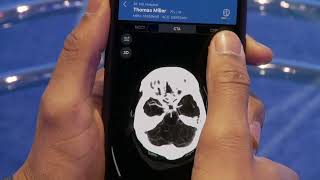
Viz.ai App Demo
Viz. ai

Viz.Ai Hands-on Demo
Junaid Kalia MD
Viz.ai: Revolutionizing Patient Care with AI
HealthTech Explorers
YouTube returned 6 videos for “Viz.ai”, and we withheld 2: 2 could not be judged, because “Viz.ai” is a single word that other videos use for other things. Showing the 4 we can prove are about Viz.ai.
Official links
Tools that pair well with Viz.ai
Common stack mates teams adopt alongside Viz.ai, with the specific reason each pairing earns its keep.

Aidoc
Enterprise clinical AI platform unifying radiology, cardiology, neurovascular and vascular care on one system.

Saama
AI clinical analytics platform that automates clinical data management, medical coding, and statistical submissions for pharma sponsors and

Harrison.ai
Clinical imaging AI that gives radiologists an assistive second read on chest X-ray, CT brain, and CT chest studies.
Alternatives to Viz.ai
View all
Aidoc
Enterprise clinical AI platform unifying radiology, cardiology, neurovascular and vascular care on one system.
Saama
AI clinical analytics platform that automates clinical data management, medical coding, and statistical submissions for pharma sponsors and

Harrison.ai
Clinical imaging AI that gives radiologists an assistive second read on chest X-ray, CT brain, and CT chest studies.
Frequently Asked Questions
Categories
Best-of guides
Topics
Used Viz.ai? Help shape our editorial sentiment research.