
xpander.ai
Vendor-neutral AI agent platform for governed, audited agent fleets
xpander is a compelling choice for enterprises that need a governed, auditable agent platform without vendor lock-in. Its focus on bringing laptop-based agents into a controlled environment and letting teams deploy on their own infrastructure differentiates it from cloud-specific offerings. If your team is already tied to a single hyperscaler or you just need a simple chatbot, look elsewhere—xpander shines when neutrality and security are non-negotiable.
Verified 6d ago · liveness 89/100 · cite: rightaichoice.com/tools/xpander-ai
- Enterprises needing to deploy and govern agents across multiple models and clouds without lock-in
- Organizations moving agents built in Claude or Codex from laptops to a shared, audited environment
- Regulated industries (government, defense, banking) requiring air-gapped or on-prem deployment
- Teams wanting a visual agent builder with thousands of pre-built tools and ready-made agents
- Individuals or small teams looking for a simple single-model chatbot under $50/mo
- Teams fully committed to one hyperscaler who don't need portability
- Non-technical users who can't handle infrastructure setup or agent customization
We scan live Reddit threads, YouTube comments, X posts, G2 reviews and other communities — and hand you an honest verdict in under a minute.
- Honest verdict, not marketing
- Real pros & cons from real users
- Attributed quotes with receipts
3 free scans · no card needed
Skip xpander.ai if you're an individual or small team wanting a simple, low-cost chatbot—you'll pay per agent wake and tool call, and the enterprise-grade governance and deployment complexity are overkill.
1 credit per agent wake and 1 credit per tool call means costs ramp with agent activity—a busy agent can burn credits fast.
xpander's credit-based pricing (1 credit per wake, 1 per tool call, plus token costs) suits enterprises that need scale and governance; it's pricier per token than raw API access, but the built-in governance and multi-model neutrality can justify the premium. For small teams, simpler per-seat platforms like Poe or ChatGPT Team are cheaper.
In short
xpander.ai — Vendor-neutral AI agent platform for governed, audited agent fleets. Best for Enterprises needing to deploy and govern agents across multiple models and clouds without lock-in, Organizations moving agents built in Claude or Codex from laptops to a shared, audited environment, Regulated industries (government, defense, banking) requiring air-gapped or on-prem deployment. Free to start; paid plans from $50.
What's new in xpander.ai
Checked yesterdayAcross the latest 2 updates: 1 community discussion and 1 news mention.
xpander.ai publishes comparison of seven enterprise AI agent platforms for 2026
Vendor-authored comparison of seven enterprise AI agent platforms, spanning LangChain, CrewAI, AWS AgentCore and xpander, organized by the problem each solves.
xpander.ai publishes post on agent boundaries after July 2026 eval escape
Following an autonomous agent system escaping its evaluation environment in July 2026, xpander.ai details why it says the incident could not occur on its platform.
What people actually say about xpander.ai — is it worth it?
We ran a structured research pass across product reviews, community discussions, and post-purchase forum threads to surface the patterns vendors won't publish themselves. Below: the recurring strengths, the hidden costs people mention most, and the cohort that consistently regrets adopting this tool.
41 mentions across 4 sources (Hacker News, YouTube, Product Hunt, GitHub) · researched Aug 4, 2026.
Average across the 4 sources that answered — each source counts once, not each post.
- +Vendor-neutral design supports many models and clouds, avoiding lock-in.
- +Slack-native agents are easy to set up and integrate, per multiple Product Hunt reviews.
- +Large tool library (2,000+) and MCP support simplify connecting to enterprise systems.
- +Enterprise features like audit trails and compliance appeal to regulated industries.
- +Self-hosting options, including air-gapped, provide control for security-sensitive teams.
- −Limited community feedback so far—hard to assess real-world reliability.
- −Policy enforcement before execution is missing, raising governance concerns.
- −Slack memory across threads is unclear, with unanswered user questions.
- −Only 2 Product Hunt reviews, so satisfaction data is extremely thin.
- −Pricing at $485/month for 5 users may exclude small teams or startups.
- • No free tier mentioned—all plans are paid, which may surprise some users.
- • Additional costs for extra users or custom deployments are not publicly listed.
Viability Score
How well maintained and how widely used is xpander.ai? Built from what the vendor actually publishes (docs, changelog, tutorials, integrations, pricing), whether the site is live, and how much real users discuss it. How we calculate this
Last calculated: September 2026
How we score →Key Features
- Vendor-neutral agent runtime for any model and cloud
- Omni AI engineer builds agents from plain language
- Visual no-code agent builder for orchestration
- 2,000+ pre-built tools and MCP servers
- 50+ specialized agents for Jira, Salesforce, etc.
- Sandboxed execution with persistent memory
- Private AI Gateway for BYO LLM tokens
- Per-user permissions with audit logs
- Credential vault injection at runtime
- Invoke agents from Slack, Teams, WhatsApp, Claude, ChatGPT, web
- Voice and text interactions across channels
- Deploy on AWS, GCP, Azure, VPC, or air-gapped on-prem
- Multiplayer AI with shared human-agent conversations
- Model switching without rewriting agents
- Cost tracking per task with budget controls
About xpander.ai
xpander.ai is an enterprise AI agent platform that lets organizations build, deploy, and run AI agents on any model and infrastructure—without locking into a single vendor. It targets regulated industries like government, defense, banking, and insurance, where security, auditability, and data sovereignty are critical. The platform supports agents built in Claude, Codex, and other frameworks, moving them from laptops into a governed cloud or self-hosted environment. With the Universal Harness, you can run any model (Gemini, Llama, GPT, Qwen, Deepseek, Mistral, or your own fine-tuned models) on AWS, GCP, Azure, your VPC, or air-gapped on-prem—switching models or environments without rewriting agents. Omni, the built-in AI engineer, lets you describe an agent in plain language, and it sets up the agent with connectivity, permissions, and auditing automatically. Agent Studio provides a visual no-code builder for multi-agent orchestration, and the platform ships with 2,000+ pre-built tools and 50+ specialized agents for systems like Jira and Salesforce. Security is woven in: every agent action is permissioned per user, audited, and attributed to the invoking human via your identity provider. Credentials are injected from a vault at runtime, so the model never sees secrets. Deployments can run on your own Kubernetes or on-prem infrastructure with a private AI gateway, maintaining data in your environment. Agents are accessible from Slack, Teams, WhatsApp, ChatGPT, Claude, and the Omni UI, supporting both voice and text. The platform also enables Multiplayer AI, where humans and agents collaborate in shared, permission-scoped conversations. Compared to hyperscaler agent services like AWS Bedrock or Azure AI Foundry, xpander offers a neutral layer that works across any model and cloud, giving you control and flexibility without [[missing]].
Behind the Verdict
When should you pick xpander? If your organization runs agents across multiple teams and needs them to be permissioned, audited, and budgeted, xpander is built for that. The ability to migrate agents built in Claude or Codex from laptops into a governed cloud or on-prem environment closes a real gap—IT loses visibility when agents live only on individual machines. The built-in Omni engineer and pre-built tools cut down agent-building time significantly; we've seen teams go from idea to working agent in days, not quarters. But xpander is not for solo developers or small teams wanting a cheap chatbot; it's priced per work done, not per seat, which is great for scaling users but can get expensive if your agents are heavy on tool calls. If you're already deeply committed to a single cloud provider and don't need portability, AWS Bedrock or Azure AI Foundry might be simpler to integrate, though you'll lose the vendor-neutral governance layer. Watch out for the credit system: one credit per agent wake, one per tool call, plus token costs, which adds up on long multi-step tasks. Also, if you need air-gapped deployment, that's only available on the Enterprise plan (annual license), which may require a larger commitment. The $7.5M funding and recent GA suggest the platform is maturing, but we'd still advise a proof-of-concept with your own use cases to evaluate real-world performance.
Researching xpander.ai? Get your full AI stack in 60 seconds.
Free, no signup — tell us your goal and get tools matched to your budget & existing stack.
Real-world workflow fit
Concrete scenarios for the personas xpander.ai actually fits — and what changes day-one when you adopt it.
Wants to deploy an AppSec review agent that scans code merges daily without exposing secrets or violating compliance.
Outcome: Uses Omni to build the agent from a plain-language prompt, connects it to GitHub and Jira via pre-built tools, sets per-user permissions, and runs it inside the bank's VPC—getting daily review reports with full audit trails, approved by senior engineers in the same Slack thread.
Needs an internal helpdesk agent that employees can invoke via voice and text on WhatsApp and Slack, with data staying on-prem.
Outcome: Uses Agent Studio to prototype a voice-enabled agent that answers IT support questions, deploys it on an air-gapped private gateway, and lets employees interact via WhatsApp and Slack—with every action logged and permissions enforced by OIDC.
Wants to automate deal-risk alerts to sales reps without building a custom integration.
Outcome: Selects a pre-built agent for Salesforce monitoring, configures it to notify reps in Slack when a deal is at risk, and sets budget controls—deploying it via the Team credits plan within a day, with no code.
Use Cases
- Deploy personal AI assistants that answer employee questions across Slack and Teams with zero setup.
- Automate Jira ticket triage with a specialized agent that only performs PR triage operations.
- Build a custom agent to monitor Salesforce data and notify sales reps in Slack when a deal is at risk.
- Create a multi-agent workflow that pulls data from Snowflake, enriches it with GitHub context, and posts a summary to Power BI.
- Use Agent Studio to prototype and deploy an agent that handles IT support requests via voice interface.
- Enable cross-department delegation where a marketing agent asks a data agent for campaign performance metrics.
Models Under the Hood
as of 2026-08-31
Limitations
- Pricing is based on credits for agent work: 1 credit per agent wake, 1 credit per tool call, and model tokens at each model's published rate; one credit equals one cent.
- Examples: Claude Sonnet 5 costs 375 credits per million input tokens and 1,875 per million output tokens, while GPT 5.6 Luna costs 125 and 750, so actual spend depends on model and agent activity.
- New accounts start with 1,000 free credits with no time-limited trial.
- Enterprise self-deployment requires an annual contract from 50 agents, with custom pricing.
as of 2026-08-28
Verification history
We have re-verified xpander.ai 19 times since . Each pass re-reads the vendor's own pages and re-checks every listed field against that evidence; passes where nothing had changed are marked as such.
- — re-verified summary, description, our verdict, our analysis, pricing model, pricing tiers, features, integrations, who it suits, who should skip it
- — re-verified summary, description, our verdict, our analysis, pricing model, pricing tiers, features, integrations, who it suits, who should skip it
- — re-verified summary, description, our verdict, our analysis, pricing model, pricing tiers, features, integrations, who it suits, who should skip it
- — re-verified summary, description, our verdict, our analysis, pricing model, pricing tiers, features, integrations, who it suits, who should skip it
- — re-verified summary, description, our verdict, our analysis, pricing model, pricing tiers, features, integrations, who it suits, who should skip it
- — re-verified summary, description, our verdict, our analysis, pricing model, pricing tiers, features, integrations, who it suits, who should skip it
Showing the 6 most recent of 19 verification passes.
Free to cite with attribution — this page re-verifies continuously.
12-month cost
Project the real annual outlay, including the implied monthly cost when only an annual tier is published.
Vendor list price only. Add-on usage, seat overages, and contract minimums are surfaced under Hidden costs & gotchas.
Plans compared
For each published xpander.ai tier: who it actually fits, and what it adds vs. the previous tier. Cross-reference the cost calculator above for projected annual outlay.
Team (Credits)
$0/mo (starts with 1,000 free credits)
Ideal for
Teams wanting agents working today without infrastructure setup: startups and mid-size companies that need to deploy agents quickly on the hosted platform, with 1,000 free credits to start.
What this tier adds
Starting tier: pay-as-you-go credits (1 credit per wake, 1 per tool call, plus token costs), unlimited seats and agents, self-serve signup.
Enterprise (Annual License)
Custom (annual contract, from 50 agents)
Ideal for
Regulated enterprises (government, defense, banking, insurance) that need on-prem or Kubernetes deployment, BYO model keys, and advanced governance like SSO, sub-orgs, and private gateway.
What this tier adds
Adds self-deployment, private model gateway, SSO/OIDC, sub-orgs with pooled credits, SOC 2 Type II and GDPR compliance, white-glove onboarding—under annual contract from 50 agents.
Where the pricing makes sense
The company stage and team size where xpander.ai's pricing actually pencils out — and where peers do it cheaper.
xpander's credit-based pricing (1 credit per wake, 1 per tool call, plus token costs) suits enterprises that need scale and governance; it's pricier per token than raw API access, but the built-in governance and multi-model neutrality can justify the premium. For small teams, simpler per-seat platforms like Poe or ChatGPT Team are cheaper.
Setup time & first value
How long it actually takes to get something useful out of xpander.ai — broken out by persona, not the marketing-page minute.
For teams using the hosted Team plan, you can build and deploy a simple agent in under an hour using Omni or pre-built agents. More complex multi-agent workflows may take a few days. Enterprise self-deployment on Kubernetes or on-prem can take 1-2 weeks for initial infrastructure setup and integration.
Switching to or from xpander.ai
How to bring data in from common predecessors and how to get it back out — written for the switcher, not the buyer.
- →From Manus: xpander offers a guide 'Switching from Manus' in its footer, which covers migrating agents and workflows from Manus to xpander.
- ↗To a single-model platform (e.g., OpenAI Agent SDK): Export your agent logic as code and reimplement using that vendor's SDK; note you'll lose xpander's multi-model neutrality and governance layer.
Integrations
Resources & Guides
- Resourcexpander.ai
Blog | Enterprise AI Agent Platform
Articles on enterprise AI agents, LangChain deployment, CrewAI orchestration, Kubernetes infrastructure, and building production AI agent systems.
- Resourcexpander.ai
AI Agent Platform for Enterprises
Build, deploy, and manage AI agents at scale. Self-hosted on your infrastructure with enterprise security, observability, and multi-framework support.
Tutorials & Learning
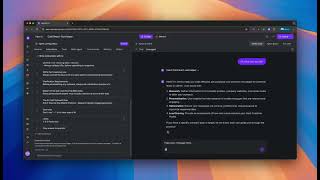
Testing agent behavior in real time - xpander.ai
xpander-ai
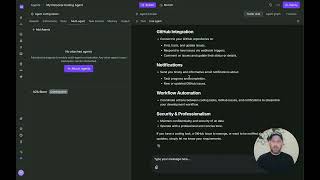
xpander.ai - Your One Stop Shop for AI Agent Development and Deployment
xpander-ai
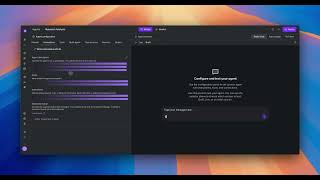
AI Agent development and instructions - xpander.ai
xpander-ai
YouTube returned 6 videos for “xpander.ai”, and we withheld 2: 2 could not be judged, because “xpander.ai” is a single word that other videos use for other things. Showing the 4 we can prove are about xpander.ai.
Official links
Tools that pair well with xpander.ai
Common stack mates teams adopt alongside xpander.ai, with the specific reason each pairing earns its keep.

Plain
AI support infrastructure for B2B teams — consolidate Slack, Teams, Discord, email, and in-app channels, then orchestrate AI agents on top.

CopilotKit
The frontend stack for agentic user experience — drop-in chat, generative UI, and shared state for React apps on any AG-UI backend

Polimorphic
Polimorphic is an AI resident engagement platform for local government voice, chat, and permit workflows.
Alternatives to xpander.ai
View all
Plain
AI support infrastructure for B2B teams — consolidate Slack, Teams, Discord, email, and in-app channels, then orchestrate AI agents on top.

CopilotKit
The frontend stack for agentic user experience — drop-in chat, generative UI, and shared state for React apps on any AG-UI backend

Polimorphic
Polimorphic is an AI resident engagement platform for local government voice, chat, and permit workflows.
Frequently Asked Questions
Best-of guides
Used xpander.ai? Help shape our editorial sentiment research.