
YiVal
No-code AI agent builder with RLHF/RLAIF and multimodal support.
YiVal is a solid pick if you’re non-technical and need to ship a GenAI app fast—its no-code agent builder and RLHF/RLAIF options give you real tuning power without writing code. The free tier and BYO key keep costs down, but teams needing deep customization or on-prem deployment should look at more flexible frameworks like LangChain.
Verified 2d ago · liveness 64/100 · cite: rightaichoice.com/tools/yival
- Non-programmers building custom AI agents
- Teams prototyping GenAI apps quickly
- Enterprises prioritizing compliance and privacy
- Researchers exploring prompt optimization and RLHF/RLAIF
- Users needing offline or local deployment
- Teams needing extensive custom model training
- Developers wanting raw API-only access
We scan live Reddit threads, YouTube comments, X posts, G2 reviews and other communities — and hand you an honest verdict in under a minute.
- Honest verdict, not marketing
- Real pros & cons from real users
- Attributed quotes with receipts
3 free scans · no card needed
Skip YiVal if you need offline or on-prem deployment, want to train custom models from scratch, require raw API-only access without a UI, or need a fully open-source solution.
Paid tiers require contacting sales for pricing, so you won't know costs until you reach out.
YiVal's freemium model with BYO key lets you start free and control costs by using your own API keys, making it cost-effective for small teams. Compared to LangChain, which is free but requires coding, YiVal's ease of use justifies the subscription for non-programmers. For heavy production usage at scale, consider enterprise platforms like Azure AI with more predictable enterprise pricing.
In short
YiVal — No-code AI agent builder with RLHF/RLAIF and multimodal support. Best for Non-programmers building custom AI agents, Teams prototyping GenAI apps quickly, Enterprises prioritizing compliance and privacy. Free to use.
What people actually say about YiVal — is it worth it?
We ran a structured research pass across product reviews, community discussions, and post-purchase forum threads to surface the patterns vendors won't publish themselves. Below: the recurring strengths, the hidden costs people mention most, and the cohort that consistently regrets adopting this tool.
30 mentions across 3 sources (YouTube, Bluesky, GitHub) · researched Jul 14, 2026.
- +Automates prompt engineering via plain English goals.
- +Offers three modes: Agent, Experiment, Production.
- +Supports RLHF and RLAIF for model fine-tuning.
- +Multimodal: text, image, video with audio/subtitles.
- +One-click performance reports for latency and cost.
- −Almost no real user reviews or community feedback.
- −GitHub has 18 open issues, potential bugginess.
- −No known integrations with popular tools.
- −Lack of third-party validation for enterprise use.
- −Health data roots may not apply to all domains.
- • API key costs if using own provider.
- • Potential overage fees for extensive usage.
- • Enterprise pricing likely high.
Viability Score
How well maintained and how widely used is YiVal? Built from what the vendor actually publishes (docs, changelog, tutorials, integrations, pricing), whether the site is live, and how much real users discuss it. How we calculate this
Last calculated: September 2026
How we score →Key Features
- No-code agent builder in plain English
- Agent mode for rapid prototyping in 30 minutes
- Experiment mode for iterative testing
- Production mode for deployment at scale
- RLHF (human labeling of model outputs)
- RLAIF (purely algorithmic labeling)
- Combination of RLHF and RLAIF for tuning
- Multimodal generation: text, image, video with audio and subtitles
- One-click performance reports (latency, cost, engagement, security)
- Built-in version control for prompts and models
- Prompt injection detection
- Hallucination detection
- Bias/fairness checks
- Bring your own API key or use platform keys
- Open-source repo for contributing optimization algorithms
About YiVal
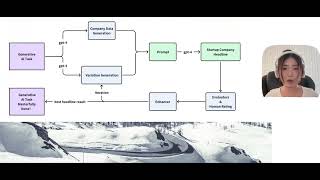
YiVal is an enterprise-grade generative AI application development platform that lets non-programmers create custom AI agents by describing goals in plain English. It streamlines the entire workflow through three modes: Agent mode for rapid prototyping, Experiment mode for iterative testing, and Production mode for deployment. Business analysts, researchers, and teams seeking cost-effective GenAI app development will find practical tools here. A key feature is support for reinforcement learning from human and AI feedback (RLHF/RLAIF), allowing you to choose human labeling, algorithmic labeling, or a combination. This lets you fine-tune agent performance while balancing cost and time. The platform includes a library of optimization algorithms based on recent research, with options to request new ones or contribute to the open-source repo. YiVal natively supports multimodal content generation, including text, images, and video with matched audio and subtitles, all in a single app. One-click performance reports track metrics like latency, cost, user engagement, system reliability, scalability, and security. Built-in version control acts as 'git for GenAI,' tracking prompts, model versions, and performance. Safety and privacy are prioritized, with roots in health data compliance and features like prompt injection detection and hallucination checks. Pricing is simple and flexible: a free playground tier for testing small ideas, plus three monthly subscription tiers with progressively higher usage quotas. Bring your own API key or use platform keys. Compared to more technical frameworks like LangChain, YiVal trades fine-grained control for ease of use, making it ideal for non-programmers.
Behind the Verdict
YiVal aims squarely at non-programmers who want to build custom AI agents without writing code. Its three modes—Agent, Experiment, and Production—provide a structured path from idea to deployment, which is a genuine strength for business analysts and researchers who need to validate concepts quickly. The Agent mode promises a tailored bot in 30 minutes, which is aggressive but realistic for simple use cases. The RLHF/RLAIF support is a standout feature: you can choose human labeling, algorithmic labeling, or a mix, giving you control over performance, cost, and time tradeoffs. This is rare in no-code platforms and is a differentiator. The library of optimization algorithms, based on cutting-edge research, adds depth, and you can request new ones or contribute to the open-source repo. Multimodal support—text, image, and video with matched audio and subtitles—is another differentiator, letting you generate rich content in a single app. One-click performance reports and built-in version control (git for GenAI) give you oversight without complexity. Safety and privacy are emphasized, with features like prompt injection detection and hallucination checks, reflecting the team's health data background. However, there are tradeoffs. YiVal is not for teams needing offline or local deployment; it's a cloud platform. It's not suited for those who want to train custom models from scratch; it's about orchestration and tuning, not model building. Developers who want raw API access without a platform UI will find the abstraction limiting. The pricing is simple but the paid tiers' costs are not transparent; you'll need to contact sales. The free tier is limited, so you may outgrow it quickly. Compared to LangChain, YiVal is easier but less flexible. If you need fine-grained control, LangChain is better; if you prioritize speed and ease, YiVal wins. For non-programmers, YiVal is a compelling choice, but it's not a universal solution.
Researching YiVal? Get your full AI stack in 60 seconds.
Free, no signup — tell us your goal and get tools matched to your budget & existing stack.
Real-world workflow fit
Concrete scenarios for the personas YiVal actually fits — and what changes day-one when you adopt it.
Needs to build a customer support chatbot without writing code.
Outcome: Describes the goal in plain English in Agent mode, gets a tailored bot in 30 minutes, then iterates in Experiment mode with RLHF to refine responses.
Wants to generate promotional videos with audio and subtitles.
Outcome: Uses the multimodal feature to create a video with matched audio and subtitles in a single app, then generates a performance report to measure engagement.
Tests different prompt optimization algorithms on a cost-efficient model.
Outcome: Uses the library of optimization algorithms, contributes a new algorithm to the open-source repo, and uses Experiment mode to compare performance across models.
Use Cases
- Build a customer support chatbot by describing its goals in plain English
- Generate marketing videos with automatically matched audio and subtitles
- Fine-tune a model for sentiment analysis using RLHF with your team's feedback
- Optimize prompts for cost-efficient deployment on cheaper LLMs
- Generate one-click performance reports comparing multiple prompt versions
- Prototype a multilingual content generator in under 30 minutes
Models Under the Hood
as of 2026-08-28
Limitations
- YiVal is a no-code platform designed for non-programmers, with agent, experiment, and production modes.
- It supports RLHF and RLAIF for performance tuning and multimodal content generation, including video with matched audio and subtitles.
- The platform emphasizes ease and speed, aiming to deliver a tailored bot in 30 minutes.
- Safety and privacy are noted, with roots in health data.
as of 2026-08-26
Verification history
We have re-verified YiVal 7 times since . Each pass re-reads the vendor's own pages and re-checks every listed field against that evidence; passes where nothing had changed are marked as such.
- — re-checked, vendor evidence unchanged
- — re-verified summary, description, our verdict, our analysis, pricing model, pricing tiers, features, integrations, who it suits, who should skip it
- — re-verified summary, description, our verdict, our analysis, pricing model, pricing tiers, features, integrations, who it suits, who should skip it
- — re-verified summary, description, our verdict, our analysis, pricing model, pricing tiers, features, integrations, who it suits, who should skip it
- — re-verified summary, description, our verdict, our analysis, pricing model, pricing tiers, features, integrations, who it suits, who should skip it
- — re-checked, vendor evidence unchanged
Showing the 6 most recent of 7 verification passes.
Free to cite with attribution — this page re-verifies continuously.
12-month cost
Project the real annual outlay, including the implied monthly cost when only an annual tier is published.
Vendor list price only. Add-on usage, seat overages, and contract minimums are surfaced under Hidden costs & gotchas.
Plans compared
For each published YiVal tier: who it actually fits, and what it adds vs. the previous tier. Cross-reference the cost calculator above for projected annual outlay.
Free
$0/mo
Ideal for
Solo non-programmers or small teams testing YiVal's agent builder and RLHF features on small ideas, familiarizing with the platform before committing.
What this tier adds
Free tier provides a playground with limited usage quota, letting you try core features like Agent mode and RLHF without paying.
Tier 1
Monthly subscription (price on request)
Ideal for
Individual professionals or small teams who have outgrown the free tier and need higher usage quotas for light production prototypes.
What this tier adds
First paid tier increases usage quota over Free, adds access to all core features, and allows bring-your-own-API-key to control costs.
Tier 2
Monthly subscription (price on request)
Ideal for
Growing teams that regularly use multimodal generation and experiment with different models, needing balanced quotas.
What this tier adds
Higher usage quota than Tier 1, still with all core features and BYO key, suitable for more frequent experimentation.
Tier 3
Monthly subscription (price on request)
Ideal for
Enterprises with high-volume production needs, requiring the highest usage quotas and consistent performance.
What this tier adds
Top tier offers the highest usage quota, ensuring scalability for large-scale deployments while retaining all features and BYO key.
Where the pricing makes sense
The company stage and team size where YiVal's pricing actually pencils out — and where peers do it cheaper.
YiVal's freemium model with BYO key lets you start free and control costs by using your own API keys, making it cost-effective for small teams. Compared to LangChain, which is free but requires coding, YiVal's ease of use justifies the subscription for non-programmers. For heavy production usage at scale, consider enterprise platforms like Azure AI with more predictable enterprise pricing.
Setup time & first value
How long it actually takes to get something useful out of YiVal — broken out by persona, not the marketing-page minute.
For non-programmers: You can get a basic agent running in Agent mode within 30 minutes. Experiment mode setup may take an hour or two to configure metrics and labels. Production deployment may take a few hours to set up scaling and monitoring.
Switching to or from YiVal
How to bring data in from common predecessors and how to get it back out — written for the switcher, not the buyer.
- →From LangChain: If you're a non-programmer using LangChain templates, YiVal's no-code environment can replace the coding approach for common use cases like chatbots.
- →From manual prompt engineering: If you're managing prompts in spreadsheets, YiVal's version control and Experiment mode centralize the process.
- ↗To LangChain: If you need more fine-grained control and are willing to code, you can export your prompts and model configurations from YiVal and reimplement in LangChain.
- ↗To enterprise platforms like Azure AI: If you need on-prem deployment or deeper integration, migrate to a cloud provider's AI services.
Resources & Guides
Tutorials & Learning

Official links
Tools that pair well with YiVal
Common stack mates teams adopt alongside YiVal, with the specific reason each pairing earns its keep.


Featured Head-to-Head Comparisons
Yival vs Truleo
Choose Truleo if you're in law enforcement and need to extract leads from siloed data sources like jail calls and body cameras. Choose YiVal if you're a non-programmer building GenAI apps and need automatic prompt engineering with RLHF and multimodal support. They serve entirely different domains, so your choice depends on whether you're solving law enforcement intelligence or general AI app development.
Yival vs Locus Robotics
Choose Locus Robotics if you run a warehouse and need physical automation to boost picking productivity 2-3x with flexible AMRs. Choose YiVal if you're a non-technical user building AI agents or optimizing prompts for GenAI apps and want a freemium, no-code platform. They solve entirely different problems—warehouse logistics vs. AI development.
Yival vs Presto Voice
If you operate a QSR chain aiming to automate drive-thru orders and boost revenue via upselling, Presto Voice is your purpose-built tool — evidenced by recent partnerships like Dairy Queen. For non-programmers building custom AI agents or optimizing prompts across modalities (text, image, video), YiVal offers a flexible, no-code platform with freemium entry. Choose Presto Voice for drive-thru automation ROI; choose YiVal for general GenAI app development.
Alternatives to YiVal
View allAutoGen Studio
Open-source, low-code GUI for prototyping multi-agent AI systems on Microsoft's AutoGen.
Frequently Asked Questions
Best-of guides
Used YiVal? Help shape our editorial sentiment research.