Temporal AI is live · free plan, paid from $50/1M actions · last verified 13 Nov 2026 · viability healthy

Temporal AI
Durable execution platform that keeps AI agents and long-running workflows alive through crashes, retries, and abandoned sessions.
Pick Temporal when a half-finished agent run or order pipeline costs real cleanup money and your team can absorb a deterministic programming model. The 2026-09-15 Standalone Activities GA lowers the entry bar for a durable job queue without full Workflow orchestration, and Serverless Workers on Cloud Run (public preview, 2026-10-05) and AgentCore (pre-release, 2026-09-18) trim infrastructure to babysit. Pass if your workload is simple cron or stateless request/response — Airflow or Argo will be
Verdict generatedVerified 22h ago · liveness 85/100 · cite: rightaichoice.com/tools/temporal-ai
- AI agent teams whose long-running runs must survive crashes and retries
- Platform engineering teams orchestrating multi-step microservices
- Financial and ledger systems needing Saga compensation
- Processes spanning days or weeks — fulfillment, CI/CD, model training
- Simple scheduled tasks or cron jobs where durability never gets exercised
- Stateless request/response APIs with no long-running state worth protecting
- Batch DAG pipelines where Airflow or Argo is simpler and cheaper to run
We scan live Reddit threads, YouTube comments, X posts, G2 reviews and other communities — and hand you an honest verdict in under a minute.
- Honest verdict, not marketing
- Real pros & cons from real users
- Attributed quotes with receipts
3 free scans · no card needed
Skip Temporal if your workload is a stateless request/response API or a simple cron job where a dead execution costs nothing — the durability machinery never fires and you pay only in added complexity.
Every Workflow, Activity, Timer, Signal, Query and Schedule operation is a billable Action at $50 per million, so a chatty agent that fires many small Activities raises your bill in direct proportion
Our price-reality note written Nov 8, 2026 quotes $150, which no longer matches the verified price table, so it is being re-reviewed and is not shown.
In short
Temporal AI — Durable execution platform that keeps AI agents and long-running workflows alive through crashes, retries, and abandoned sessions. Best for AI agent teams whose long-running runs must survive crashes and retries, Platform engineering teams orchestrating multi-step microservices, Financial and ledger systems needing Saga compensation. Free to start; paid plans from $50/1M actions.
What is Temporal AI?
Temporal AI — Durable execution platform that keeps AI agents and long-running workflows alive through crashes, retries, and abandoned sessions. Best for AI agent teams whose long-running runs must survive crashes and retries, Platform engineering teams orchestrating multi-step microservices, Financial and ledger systems needing Saga compensation. Free to start; paid plans from $50/1M actions.
Temporal is a durable execution platform for AI agents and long-running business workflows. You write logic in ordinary code using native SDKs for Go, Java, Python, TypeScript, .NET, PHP, Ruby, or Rust, and the Temporal Service persists the running state of every Workflow at each step. A crashed worker, a flaky API call, or a user who abandons a session mid-flow does not erase progress: execution resumes exactly where it stopped, with no checkpointing or recovery code to write. The programming model is deliberately the product. Activities wrap failure-prone calls and retry automatically with backoff, four timeout classes, and heartbeating. Signals, Queries, and Updates let you read and mutate a running execution mid-flight, while Workflow Streams add live interactivity and Saga compensation reads like try/catch. Durable Timers sleep for months, cron Schedules support backfill and Continue-As-New, and Worker Versioning pins Workflows so a deploy can't corrupt in-flight runs. The AI surface keeps expanding. The OpenAI Agents SDK and Google ADK run LLM and tool calls as durable Activities, Temporal published an architecture walkthrough of the Pi coding agent on its runtime (2026-10-08), and an AWS partnership post framed durable execution as the runtime for production AI workloads (2026-10-13). Standalone Activities went GA across six SDKs on 2026-09-15 as a lighter durable job-queue pattern with priority, fairness, Start Delay and lifecycle controls. Serverless Workers arrived for Google Cloud Run (public preview, 2026-10-05) and AWS Bedrock AgentCore (pre-release, 2026-09-18). The Rust SDK reached GA on 2026-09-04. It suits teams whose long-running executions cost real money when they die: agent platforms, order fulfillment, durable ledgers, CI/CD, model training. A stateless request/response API or a simple cron job never exercises the durability machinery. Open source and MIT-licensed, with Temporal Cloud as the managed path and $150 in credits for 90 days to
Key features
- Durable execution captures Workflow state at every step with no checkpointing or recovery code
- Native SDKs for Go, Java, Python, TypeScript, .NET, PHP, Ruby, and Rust
- Rust SDK generally available (2026-09-04)
- Activities retry automatically with backoff, four timeout classes, and heartbeating
- Signals, Queries, and Updates read and mutate running Workflows mid-flight
- Workflow Streams for real-time interactivity with running executions
- Durable AI agents via OpenAI Agents SDK and Google ADK running LLM and tool calls as Activities
- Standalone Activities as a durable job-queue pattern, GA across six SDKs (2026-09-15)
- Serverless Workers for Google Cloud Run, public preview (2026-10-05)
- Serverless Workers for AWS Bedrock AgentCore, pre-release (2026-09-18)
- Serverless Workers for AWS Lambda, public preview (2026-08-03)
- Native Task Queue priority and fair distribution, GA (2026-05-05)
- Durable Timers that sleep for months, plus cron Schedules with backfill and Continue-As-New
- Saga pattern via compensating transactions that read like try/catch
- Worker Versioning pins Workflows to their version; Replay tests validate against real histories
Behind the verdict
Temporal earns its keep in one situation: the execution outlives the process. Agent runs that span minutes or hours, order pipelines that touch five services, ledgers where a lost step means a reconciliation ticket. In those cases the durable execution model pays for itself the first time a worker dies mid-run and nothing is lost. We'd reach for it before hand-rolling a state machine or a retry queue, because the retries, timeouts, timers and signals are already in the SDK. The tradeoff is the model itself. Workflow code has to be deterministic — no direct clock reads, no untracked randomness. That constraint is what enables replay and recovery, but it is a real adjustment for developers used to imperative code. If your team won't internalize it, you'll fight the platform. 2026 widened the on-ramp. Standalone Activities going GA across six SDKs (2026-09-15) means you can get durable background jobs, priority and fairness, and Start Delay without adopting full Workflow orchestration. Serverless Workers on Cloud Run (public preview, 2026-10-05) and Bedrock AgentCore (pre-release, 2026-09-18) remove the worker-fleet babysitting for teams already on those clouds. The Rust SDK hit GA on 2026-09-04, useful if your agent runtime is performance-sensitive. Pricing is pay-as-you-go, starting at $50 per million actions, with $150 in credits for 90 days and no base monthly fee. Volume discounts bring actions down to $25 per million, and Business support is the greater of $500/mo or 10% of usage. There's no locked feature set behind upgrades, which matters when you're estimating cost against a long-running workload. When to pass: stateless request/response APIs, simple cron jobs, and batch DAG pipelines where Airflow or Argo is cheaper and simpler to run. Temporal's machinery
Limitations
- Temporal is a durable execution platform, not an AI model or model provider — it orchestrates and preserves long-running workflows and AI agents rather than producing model responses itself, and no underlying AI model is named in the evidence.
- Workflows live in code: failure-prone work (API calls, LLM/tool calls, network I/O) must be delegated to Activities, and the SDK path effectively requires engineering proficiency.
- Billing is usage-based — $50 per million actions on Pay-As-You-Go, with self-service volume discounts down to $25 per million, Active Storage at $0.042/GBhr and Retained Storage at $0.00105/GBhr — so a chatty agent that fires many Actions can raise cost materially, though there is no base monthly fee on Pay-As-You-Go.
- Some capabilities remain pre-release or public preview: Serverless Workers for AWS Bedrock AgentCore (pre-release) and Google Cloud Run (public preview), Custom Roles (pre-release), External Storage (public preview), and Projects (pre-release).
as of 2026-11-08
Researching Temporal AI? Get your full AI stack in 60 seconds.
Free, no signup — tell us your goal and get tools matched to your budget & existing stack.
Is Temporal AI still active?
Temporal AI is live · free plan, paid from $50/1M actions · last verified 13 Nov 2026 · viability healthy.
Viability score
How well maintained and how widely used is Temporal AI? Built from what the vendor actually publishes (docs, changelog, tutorials, integrations, pricing), whether the site is live, and how much real users discuss it. How we calculate this
Last calculated: November 2026
How we score →What's new in Temporal AI
Checked 5 days agoAcross the latest 5 updates: 3 feature updates and 2 news mentions.
Temporal and AWS: A partnership built for production-grade AI
Temporal publishes a post on its AWS partnership, framing durable execution as the runtime for production AI workloads.
The immortal life of Pi (Running the Pi coding agent on Temporal)
Architecture walkthrough showing the Pi coding agent running on Temporal's Durable Execution runtime. No product change.
Serverless Workers for Google Cloud Run are Available in Public Preview
Deploy Workers to a Cloud Run Worker Pool in your own GCP project; Temporal adds instances as work builds and scales to zero when the queue empties.
Cloud UI Strict Session Mode is now Generally Available
SAML-authenticated users get a 15-minute inactivity timeout and a 12-hour maximum session duration in the Cloud UI.
Standalone Activities for durable job processing are now Generally Available
GA across six SDKs, letting you run background jobs with durable execution, priority and fairness, Start Delay and lifecycle controls without building a job platform.
What do users say about Temporal AI?
What people actually say about Temporal AI — is it worth it?
We scanned public community sources for Temporal AI on Nov 7, 2026 and could not establish that the discussion we found is about this tool rather than something else sharing its name. Only 1 of the posts we fetched could be positively tied to Temporal AI. Rather than publish a sentiment score built on the wrong subject, we publish nothing here and re-run the scan.
How we verified this
Every listed fact about Temporal AI — pricing, features, links, status — is re-read from the vendor's own pages by our verification pipeline and each change is logged with a date; the last pass ran on 13 Nov 2026. Analysis is drafted with AI models and checked against our editorial standards before publishing; see how we verify.
Verification history
We have re-verified Temporal AI 126 times since . Each pass re-reads the vendor's own pages and re-checks every listed field against that evidence; passes where nothing had changed are marked as such.
- — changed link health
- — changed pricing page, features, description, pricing tiers, our verdict
- — changed features, use cases, who should skip it, setup time, pricing fit, pricing tiers, switching out, description, switching in, limitations, integrations, hidden costs, our verdict, who it suits
- — changed link health
- — changed SSL certificate
- — changed link health
Showing the 6 most recent of 126 verification passes.
Free to cite with attribution — this page re-verifies continuously.
How much does Temporal AI cost in 2026?
Temporal AI: Free to start; paid plans from $50/1M actions. Pricing last verified 13 Nov 2026.
Plans compared
Every published Temporal AI tier, its price as the vendor publishes it, who it fits, and what it adds over the tier below. The 12-month cost projection follows.
| Plan | Price | Billing | Who it's for |
|---|---|---|---|
| Free | Free | — | A developer or small team evaluating Temporal Cloud on a real Workflow before committing budgetAdds: Free entry point: $150 in credits for 90 days with no base monthly fee, no commitment, and SSO via SAML included |
| Pay-As-You-Go | From $50/1M actionsVendor: “Starting at $50 per million actions” | usage | Production teams with steady Workflow volume who want all platform features without a plan-based feature wallAdds: Moves from credits to metered billing at $50 per million actions, plus $0.042/GBhr Active Storage, $0.00105/GBhr Retained Storage, and self-service volume discounts |
| Business Support Add-On | $500/moVendor: “Greater of $500/mo or 10% of usage” | monthly | Teams running agents or fulfillment flows where a two-hour response window on a P0 incident is contractually requiredAdds: Adds a 2-hour P0 SLA and business-hours advanced technical support for the greater of $500/mo or 10% of usage, bundling 2.5M actions and 100 GB retained storage |
| Enterprise and Mission Critical | Custom | quote | Large organizations needing 24/7 coverage, a dedicated platform architect, and a negotiated commitAdds: Custom pricing with a 30-minute P0 SLA (15 minutes on Mission Critical), a private Slack channel, SCIM, and a bundle of 10M actions plus 400 GB retained storage |
12-month cost
Project the real annual outlay, including the implied monthly cost when only an annual tier is published.
Vendor list price only. Add-on usage, seat overages, and contract minimums are surfaced under Hidden costs & gotchas.
Our price-fit note written Nov 8, 2026 quotes $150, which no longer matches the verified price table, so it is being re-reviewed and is not shown.
Has Temporal AI's pricing changed?
No plan price for Temporal AI has moved since we began logging in Aug 2026; the pricing page is re-read on every verification pass.
Who should pick Temporal AI?
Pick Temporal AI if you are AI agent teams whose long-running runs must survive crashes and retries, Platform engineering teams orchestrating multi-step microservices, Financial and ledger systems needing Saga compensation, Processes spanning days or weeks — fulfillment, CI/CD, model training.
Look elsewhere if you are Simple scheduled tasks or cron jobs where durability never gets exercised, Stateless request/response APIs with no long-running state worth protecting, Batch DAG pipelines where Airflow or Argo is simpler and cheaper to run, Teams unwilling to write deterministic Workflow code (no direct clock reads or untracked randomness).
Skip it if Skip Temporal if your workload is a stateless request/response API or a simple cron job where a dead execution costs nothing — the durability machinery never fires and you pay only in added complexity.
GeneratedReal-world workflow fit
Concrete scenarios for the personas Temporal AI actually fits — and what changes day-one when you adopt it.
You wrap each LLM and tool call in an Activity inside the OpenAI Agents SDK or Google ADK integration, then let Temporal retry a flaky provider call with backoff instead of writing recovery code.
Outcome: An agent run that hits a provider outage resumes at the failed step rather than restarting from scratch, and you see the exact state in the Cloud UI.
You deploy Workers serverlessly to Cloud Run or Bedrock AgentCore and let Temporal watch the Task Queue, adding instances as work builds and scaling to zero when the queue empties.
Outcome: You remove the autoscaling infrastructure you used to babysit while keeping retries, timeouts, and Workflow history intact.
You model a multi-step transfer as a Workflow and each external call as an Activity, with Saga compensation written like try/catch for the rollback path.
Outcome: A failed step rolls back cleanly with a durable audit trail in the Event History, without a hand-rolled state machine.
Use cases
- Build crash-safe AI agents that survive network failures and abandoned sessions
- Run LLM and tool calls as durable Activities via the OpenAI Agents SDK or Google ADK
- Use Standalone Activities as a durable job queue with priority, fairness, and Start Delay
- Deploy workers serverlessly to Cloud Run, Lambda, or Bedrock AgentCore and scale to zero
- Orchestrate multi-step CI/CD pipelines with automatic retry and state recovery
- Implement financial transaction systems with compensating transactions (Saga pattern)
- Manage order fulfillment or onboarding flows that span days or weeks
- Run human-in-the-loop approvals that pause and resume without losing progress
Setup time & first value
How long it actually takes to get something useful out of Temporal AI — broken out by persona, not the marketing-page minute.
A single developer can run the open-source Temporal Service locally and get a first Workflow executing in an afternoon; expect a few days to a couple of weeks before a team is fluent in determinism constraints, Activity design, and Worker Versioning. Moving to Temporal Cloud is self-service: sign up, take the $150 credits, and point your Workers at a namespace.
Switching to or from Temporal AI
How to bring data in from common predecessors and how to get it back out — written for the switcher, not the buyer.
- →From a homegrown state machine or queue-plus-database reconciliation layer: rewrite the orchestration as a Workflow and push I/O into Activities, replacing manual retry code with built-in backoff and timeouts
- →From AWS Step Functions: move the state machine definition into code as a Workflow, keeping long waits as Durable Timers
- →From a cron-driven batch script: replace the cron entry with a Temporal Schedule and use Continue-As-New for runs that grow past history limits
- ↗To Airflow or Argo: if your pipelines are batch DAGs with no long-lived per-execution state, rebuild them as DAGs and retire the Workflow code
- ↗To a managed queue plus database: for simple fire-and-forget jobs, Standalone Activities or a plain queue removes the Workflow orchestration layer
Integrations
Resources & guides
- Resourcetemporal.io
Standalone Activities: Durable job processing, now in Public Preview
Temporal Standalone Activities are now in Public Preview, bringing durable job processing, retries, observability, and lifecycle control to Temporal Cloud.
- Resourcetemporal.io
Task Queue Priority and Fairness: Your Task Queue, your way
Task Queue Priority and Fairness are GA for all Temporal SDKs, helping teams prioritize critical work and prevent tenant starvation without custom infra.
Tutorials & Learning

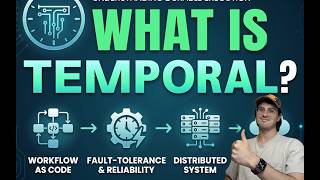
YouTube returned 6 videos for “Temporal AI”, and we withheld 4: 4 could not be judged, because “Temporal AI” is a single word that other videos use for other things. Showing the 2 we can prove are about Temporal AI.
What are the best Temporal AI alternatives?
The closest alternatives to Temporal AI we list are Trigger.dev, Inngest and GitNexus (Akon Labs). Ranked by direct product-type match, not category overlap.
| Alternative | Pricing | Starts at | Last verified |
|---|---|---|---|
| Trigger.dev | Freemium | Pricing not published | — |
| Inngest | Freemium | Pricing not published | — |
| GitNexus (Akon Labs) | Freemium | Pricing not published | — |
Alternatives to Temporal AI
View all
Trigger.dev
Trigger.dev runs durable AI agents and long-running background jobs in TypeScript with no execution timeout.

Inngest
Open source durable execution SDK for background jobs, workflow orchestration, and AI agents

GitNexus (Akon Labs)
GitNexus turns any codebase into a deterministic knowledge graph of call chains and execution flows that AI coding agents query through 7 MCP tools.
Tools that pair well with Temporal AI
Common stack mates teams adopt alongside Temporal AI, with the specific reason each pairing earns its keep.

Trigger.dev
Trigger.dev runs durable AI agents and long-running background jobs in TypeScript with no execution timeout.
Inngest
Open source durable execution SDK for background jobs, workflow orchestration, and AI agents

GitNexus (Akon Labs)
GitNexus turns any codebase into a deterministic knowledge graph of call chains and execution flows that AI coding agents query through 7 MCP tools.
Temporal AI vs its closest rival
Temporal AI's closest head-to-head is with Sentry — These are not substitutes, so there is no either/or decision here. If your pain is "something broke in production and I need errors, traces, logs, replay, and an AI agent to explain and patch it," buy Sentry. If your pain is "my multi-step agent or business process dies when a worker crashes and I need it to resume exactly where it stopped," buy Temporal. The overlap is small: both now speak to AI agent builders — Sentry observes agent conversations, tool calls, and spend via Agent Tracing, while Temporal makes those agent executions durable. Mature AI teams often run both, not one instead of the other. Budget-wise, treat them as separate line items, and watch Sentry's per-event/per-GB overage if you are high-volume. Verdict generated
Head-to-head comparisons
Sentry vs Temporal Ai
These are not substitutes, so there is no either/or decision here. If your pain is "something broke in production and I need errors, traces, logs, replay, and an AI agent to explain and patch it," buy Sentry. If your pain is "my multi-step agent or business process dies when a worker crashes and I need it to resume exactly where it stopped," buy Temporal. The overlap is small: both now speak to AI agent builders — Sentry observes agent conversations, tool calls, and spend via Agent Tracing, while Temporal makes those agent executions durable. Mature AI teams often run both, not one instead of the other. Budget-wise, treat them as separate line items, and watch Sentry's per-event/per-GB overage if you are high-volume.
GeneratedPostman vs Temporal Ai
This is not really a head-to-head — the two products sit in different layers of a stack, and almost nobody with a budget is choosing one over the other. Temporal answers 'how do I keep a multi-day agent or microservice workflow alive across crashes and retries'; Postman answers 'how do I design, test, mock, and govern the APIs my team ships.' If your problem is durable execution, orchestration, Saga compensation, or month-long timers, Temporal is the pick. If your problem is API lifecycle — collections, spec design, mocking, monitoring, governance — Postman is the pick. The realistic scenario is buying both, not picking between them.
GeneratedJira vs Temporal Ai
These are not competing products and you should not be choosing between them. Temporal is infrastructure: it keeps the code your system runs from losing progress when a worker dies or a session is abandoned. Jira is tooling for humans planning work: sprints, epics, roadmaps, and increasingly, a place to see what your coding agent changed. The honest buyer question is 'do I need durable execution, or do I need a work-tracking layer?' — most teams adopting AI agents eventually want both, and they pay for them out of entirely different budgets.
GeneratedVercel vs Temporal Ai
These aren't competitors — they're different layers of the stack. Temporal is the durability engine you reach for when executions span hours, days, or weeks and must survive crashes, retries, and abandoned sessions; it doesn't host your frontend or CDN. Vercel is where you ship the web app and agent surface, now bundling its own Workflow SDK and sandboxed agent infrastructure. A team building a long-running AI agent could plausibly use both: Temporal for durable state, Vercel for deployment and the AI Gateway. Choose Temporal if durability is the problem; choose Vercel if shipping a JS/TS product is.
GeneratedNetlify vs Temporal Ai
These aren't competitors, so there's no either/or to recommend. Pick Netlify if you need somewhere to deploy and host a fullstack web app — its Agent Runners, AI Gateway, Serverless Functions, managed Postgres, and Deploy Previews cover the whole ship-and-run loop, and the 2026 news (Cursor Origin repos building on Netlify, TypeSafe Jev in AI Gateway, clarifying questions in Agent Runners) all points at an agent-first hosting platform. Pick Temporal AI if you're writing backend logic that has to survive crashes and abandoned sessions — durable Workflows, Activities with backoff and heartbeating, Signals/Queries/Updates, and 8 SDKs. A team could use both, but nobody chooses one instead of the other.
GeneratedLift vs Temporal Ai
Verdict being re-reviewed against current pricing and data.
Mimo Code vs Temporal Ai
These aren't competitors — they solve different problems and only one of them is something you 'buy' in the ordinary sense. Pick MiMo-Code if you're a solo developer who wants a capable, free terminal coding agent right now with no subscription, no login, and open model weights you can inspect. Pick Temporal AI if you're building production AI agents or long-running workflows where a crashed worker, a flaky API call, or an abandoned session must not lose progress — and you need SSO, audit logs, and an SLA-backed support path. There is no scenario where a buyer shortlists both for the same budget line; the honest answer is that they live in different stacks, and some teams will legitimately use a coding agent like MiMo-Code to write code that runs on infrastructure like Temporal.
GeneratedUnbrowse vs Temporal Ai
If your AI agent needs to survive crashes and orchestrate multi-step workflows with automatic retries and rollbacks, Temporal is the clear choice — OpenAI and Lovable trust it. If your goal is to extract web data at speed and low cost by calling internal APIs instead of running browsers, Unbrowse delivers up to 70% coverage with 96% avoidance rate. Most technical buyers will need both: Temporal for durable orchestration, Unbrowse for efficient data ingestion.
GeneratedMobilecli vs Temporal Ai
Verdict being re-reviewed against current pricing and data.
Firebase vs Temporal Ai
These tools solve different problems, so don't treat this as a pick-one decision. Choose Temporal if your pain is a long-running backend process — an AI agent session, order fulfillment, CI/CD, model training — that must survive crashes and retries without you writing recovery code. Choose Firebase if your pain is standing up an app: auth, real-time sync, hosting, and now Gemini-backed AI features via Firebase AI Logic and Genkit. Mature teams often run both, but each one answers a distinct buyer question.
GeneratedKernel vs Temporal Ai
Verdict being re-reviewed against current pricing and data.
Fly Io vs Temporal Ai
These are not competitors — they're layers in the same stack. Temporal is for orchestrating long-running, stateful business processes (order fulfillment, Saga compensations, durable AI agent flows), while Fly.io sells raw compute: hardware-isolated Linux VMs that checkpoint themselves so sandboxed agents can restart where they left off. Most teams that need one don't need the other, though a sophisticated AI agent platform could conceivably use Fly.io Sprites as execution environments while Temporal coordinates the overall workflow. If you're building a coding agent or MCP server that needs a real computer, pick Fly.io. If you need guaranteed completion of multi-step workflows with retries and rollback, pick Temporal.
GeneratedFrequently asked questions
Our FAQ set (2 answers) written Nov 8, 2026 quotes $150, which no longer matches the verified price table, so it is being re-reviewed and is not shown.
Best-of guides
For makers of Temporal AI
- Get a Verified Listing for Temporal AI ($39): a written decision within 1 working day.
- Free listing for another tool: Free reviews are decided in order, within 3 weeks of the review starting.
Used Temporal AI? Help shape our editorial sentiment research.