
Astron Agent
Enterprise-grade visual workflow builder for orchestrating multi-agent AI systems
Astron Agent earns a qualified recommendation for enterprise teams that need governed, observable multi-agent workflows and are ready to pay for commercial licensing. Its visual builder, RBAC, and human-in-the-loop controls are genuinely useful for regulated environments. However, the contact-only pricing is a real barrier for small teams and even for mid-size orgs that want to run a proof-of-concept without a sales call. If you have budget and need governance, Astron is worth a serious look—compare against Azure AI Foundry or AWS Bedrock for managed options. If you're a developer or small team, LangChain or AutoGen give you a faster, cheaper start with more flexibility, though you'll own
Verified 15d ago · liveness 66/100 · cite: rightaichoice.com/tools/astron-agent
- Enterprise teams building production AI agents
- Developers needing commercial-friendly licensing
- Organizations requiring observability and governance
- Teams orchestrating multi-agent workflows
- Hobbyists or solo learners (pricing is contact-based)
- Teams needing a free tier or open-source flexibility
- Simple single-prompt chatbots (overkill)
We scan live Reddit threads, YouTube comments, X posts, G2 reviews and other communities — and hand you an honest verdict in under a minute.
- Honest verdict, not marketing
- Real pros & cons from real users
- Attributed quotes with receipts
3 free scans · no card needed
Skip Astron Agent if you're a solo developer, startup, or any team that needs a free tier, self-service trial, or a quick open-source start without a sales conversation—LangChain or AutoGen will get you moving faster with far less friction.
Contact-only pricing means you'll need a sales call and likely commit to a minimum contract before you can even test the platform, adding procurement delay to your evaluation.
Astron's contact-based pricing fits large enterprises that budget for managed governance and negotiate annual contracts. Compared to LangChain and AutoGen (free, open-source), Astron's total cost is orders of magnitude higher, but it buys RBAC, audit trails, and visual orchestration out of the box. For regulated teams, that trade-off is often worth it; for smaller teams, the open-source alternatives are far cheaper.
In short
Astron Agent — Enterprise-grade visual workflow builder for orchestrating multi-agent AI systems. Best for Enterprise teams building production AI agents, Developers needing commercial-friendly licensing, Organizations requiring observability and governance. Contact Sales pricing.
What people actually say about Astron Agent — is it worth it?
We ran a structured research pass across product reviews, community discussions, and post-purchase forum threads to surface the patterns vendors won't publish themselves. Below: the recurring strengths, the hidden costs people mention most, and the cohort that consistently regrets adopting this tool.
40 mentions across 4 sources (YouTube, Product Hunt, GitHub, Lemmy) · researched Aug 11, 2026.
Average across the 4 sources that answered — each source counts once, not each post.
- +Enterprise-grade governance: RBAC, audit logs, human-in-the-loop approvals.
- +Strong multi-agent orchestration with conditional branching and parallel execution.
- +Visual workflow builder simplifies complex agent design for teams.
- +Flexible multi-model support (GPT-4, Claude, Gemini) avoids lock-in.
- +Deep integrations with Slack, Jira, Salesforce, and more out-of-the-box.
- −Reported bug during workflow creation in deployment (GitHub issue).
- −43 open issues on GitHub indicate active but incomplete maturity.
- −No transparent pricing—'contact us' creates friction for evaluation.
- −Limited community chatter on Reddit/HN makes real-world success unclear.
- −Advanced skill level likely requires experienced developers to harness.
- • Enterprise pricing is opaque and likely expensive for small teams
- • Self-hosting requires infrastructure setup and maintenance effort
Viability Score
How well maintained and how widely used is Astron Agent? Built from what the vendor actually publishes (docs, changelog, tutorials, integrations, pricing), whether the site is live, and how much real users discuss it. How we calculate this
Last calculated: September 2026
How we score →Key Features
- Visual workflow builder
- Multi-agent orchestration
- Conditional branching and loops
- Human-in-the-loop approvals
- Observability and logging
- Role-based access control (RBAC)
- Pre-built integration templates
- Multi-model support (GPT, Claude, Gemini)
- Error handling and retry logic
- Cloud and on-premise deployment
- Parallel execution
- State management
- Audit logging
- Team collaboration
- API access
About Astron Agent
Astron Agent is a commercial, enterprise-focused platform for building and orchestrating multi-agent AI workflows. It provides a visual builder for designing complex agentic processes with conditional branching, loops, and parallel execution, plus a full set of governance and observability features like role-based access control, audit logging, and human-in-the-loop approvals. The platform supports multiple large language models (the seed data references GPT-4, Claude, and Gemini) so you can mix and match models within a single workflow. It targets engineering and operations teams who need production-grade reliability and oversight—not hobbyists or no-code dabblers. Astron differentiates itself with its emphasis on commercial-friendly licensing and enterprise controls, making it a fit for organizations that require audit trails and compliance. Pricing is not public, which suits larger buyers who want negotiated plans but blocks smaller teams from quick evaluations. If you're comparing, LangChain and AutoGen are open-source and cheaper to start, but they push more of the infrastructure and governance work onto you. Astron Agent is a stronger choice when you need a managed, governed platform over DIY assembly.
Behind the Verdict
Astron Agent sits in the crowded but fast-growing space of multi-agent orchestration platforms, and it carves out a clear niche: enterprise governance. The visual workflow builder is a genuine differentiator—most competitors (LangChain, AutoGen) require you to write code to define agent graphs, while Astron lets you drag, drop, and connect nodes for branching, loops, and parallel execution. That lowers the barrier for solution architects and operations teams who think in flows, not Python. Governance is where Astron really shines. Role-based access control (RBAC), audit logging, and human-in-the-loop approvals are baked into the platform, not bolted on. For regulated industries—finance, healthcare, legal—that's the difference between a pilot and a production deployment. The multi-model support (GPT-4, Claude, Gemini) means you can route each step of a workflow to the model that suits it best, avoiding vendor lock-in at the model layer. Pre-built integration templates for Slack, Jira, Salesforce, and others accelerate the first build. But there are real trade-offs. The contact-only pricing is the biggest one: you can't self-serve a trial, so evaluation requires a sales conversation. That's a friction point for small teams and even mid-size orgs that want to run a proof-of-concept quietly. Public documentation is thinner than LangChain's, so expect to lean on the vendor's sales engineers more than community forums. And for simple single-prompt chatbots or basic automations, Astron is overkill—you'd be paying for governance and orchestration you don't need. Where does Astron fit? If you're an enterprise team building production agent systems that need audit trails, role-based access, and human approval gates, it's a strong candidate. Compare it against Azure AI Foundry or AWS Bedrock if you're already in those clouds; those give you managed infrastructure but less visual workflow control. If you're a startup or individual developer, LangChain or AutoGen are free, open-source, and far more flexible—though you'll own the infrastructure, security, and compliance burden yourself.
Researching Astron Agent? Get your full AI stack in 60 seconds.
Free, no signup — tell us your goal and get tools matched to your budget & existing stack.
Real-world workflow fit
Concrete scenarios for the personas Astron Agent actually fits — and what changes day-one when you adopt it.
Setting up a customer onboarding flow that screens documents, flags anomalies, and requires human approval before finalizing accounts.
Outcome: Uses Astron's visual builder to connect document-processing agents with a human-in-the-loop approval node, ensuring all steps are audit-logged and compliant with internal policies.
Orchestrating a multi-agent system that triages customer support tickets, escalates complex issues to human agents, and updates the CRM.
Outcome: Builds a branching workflow in Astron that integrates Slack, Jira, and Salesforce, with retry logic for failed API calls and full observability into each agent's performance.
Deploying a clinical data extraction pipeline that must be auditable and role-restricted.
Outcome: Leverages Astron's RBAC and audit logging to ensure only authorized personnel can access patient data, while the visual builder lets the team define parallel extraction workflows with error handling.
Use Cases
- Automate customer support workflows with triage, escalation, and resolution
- Orchestrate multi-step data processing pipelines with conditional logic
- Build AI-powered sales assistants that integrate with CRM and email
- Deploy compliance monitoring agents with human-in-the-loop approvals
- Create automated content generation workflows with review stages
- Manage complex research agent teams that collaborate on documents
Models Under the Hood
as of 2026-09-14
Limitations
- No public free tier—pricing is contact-only, which creates friction for evaluation.
- Limited public documentation compared to more mature platforms like LangChain.
- The enterprise focus can overlook simpler use cases, making it overkill for basic automation.
- You also can't self-serve a trial; you must engage sales, which slows proof-of-concept timelines.
as of 2026-08-26
Verification history
We have re-verified Astron Agent 7 times since . Each pass re-reads the vendor's own pages and re-checks every listed field against that evidence; passes where nothing had changed are marked as such.
- — re-checked, vendor evidence unchanged
- — re-checked, vendor evidence unchanged
- — re-checked, vendor evidence unchanged
- — re-checked, vendor evidence unchanged
- — re-checked, vendor evidence unchanged
- — re-checked, vendor evidence unchanged
Showing the 6 most recent of 7 verification passes.
Free to cite with attribution — this page re-verifies continuously.
Where the pricing makes sense
The company stage and team size where Astron Agent's pricing actually pencils out — and where peers do it cheaper.
Astron's contact-based pricing fits large enterprises that budget for managed governance and negotiate annual contracts. Compared to LangChain and AutoGen (free, open-source), Astron's total cost is orders of magnitude higher, but it buys RBAC, audit trails, and visual orchestration out of the box. For regulated teams, that trade-off is often worth it; for smaller teams, the open-source alternatives are far cheaper.
Setup time & first value
How long it actually takes to get something useful out of Astron Agent — broken out by persona, not the marketing-page minute.
For a simple evaluative build, expect a few days to a week—you'll need to schedule a sales call, get access, and map out your workflow in the visual builder. For a production-grade multi-agent system with governance controls, plan for several weeks, as you'll need to configure RBAC, audit logs, and integrate with your existing enterprise systems.
Switching to or from Astron Agent
How to bring data in from common predecessors and how to get it back out — written for the switcher, not the buyer.
- →From LangChain: Astron's visual builder and managed infra reduce the coding and ops overhead—recreate your agent graphs in the UI and connect via API.
- ↗To LangChain: Export your workflow definitions and rebuild them in code, but you'll own the orchestration and governance components yourself.
Integrations
Resources & Guides
Tutorials & Learning

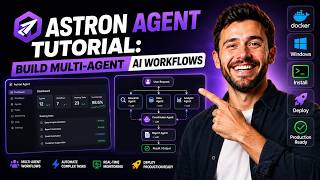

Official links
Tools that pair well with Astron Agent
Common stack mates teams adopt alongside Astron Agent, with the specific reason each pairing earns its keep.

Agent.ai
Build and deploy custom AI agents for enterprise workflows with a no-code builder.

ChatDev
ChatDev 2.0 (DevAll) is a free, open-source zero-code multi-agent platform for orchestrating AI agent workflows from YAML or JSON config.

AutoGen Studio
Open-source, low-code GUI for prototyping multi-agent AI systems on Microsoft's AutoGen.
Featured Head-to-Head Comparisons
Astron Agent vs Spider Cloud
Buyers should choose based on primary need: Astron Agent excels at orchestrating complex, governed multi-agent workflows with human approvals, while Spider Cloud is ideal for AI agents and RAG pipelines that require fast, cheap web data extraction. Astron Agent is enterprise-only with contact pricing; Spider Cloud offers a freemium model and a Rust-powered scraping engine with recent features like Browser AI commands and data connectors.
Astron Agent vs Temporal Ai
For enterprise teams needing a visual, governed, multi-model AI agent platform with commercial terms, Astron Agent is the pick. But if you want open-source durability, crash-proof workflows, and pay-as-you-go cloud – with recent serverless worker advances – Temporal AI is more cost-effective and future-proof.
Astron Agent vs Presto Voice
Choose Astron Agent if you're building complex multi-agent workflows with governance needs; choose Presto Voice if you're a QSR chain seeking drive-thru automation. They serve entirely different use cases, so your decision hinges on industry and workflow complexity. Dairy Queen's recent adoption of Presto Voice underscores its growing traction in QSR.
Alternatives to Astron Agent
View all
Agent.ai
Build and deploy custom AI agents for enterprise workflows with a no-code builder.

ChatDev
ChatDev 2.0 (DevAll) is a free, open-source zero-code multi-agent platform for orchestrating AI agent workflows from YAML or JSON config.

AutoGen Studio
Open-source, low-code GUI for prototyping multi-agent AI systems on Microsoft's AutoGen.
Frequently Asked Questions
Best-of guides
Used Astron Agent? Help shape our editorial sentiment research.