Augment Code
Augment Code's Cosmos is agent orchestration software for building a governed software factory across your SDLC.
Cosmos sells a management problem's solution, and the flat pooled pricing is the sharpest part: $20/month on Standard or $100/month on Business, each covering up to 50 seats with that same dollar figure of pooled usage per month, so idle seats cost nothing. The pre-built Experts and connected loops hold up under real PR traffic, and the IntelliJ plugin now gates .env and key files behind explicit approval. Budget carefully all the same — LLM inference carries a flat 40% service fee on top of
Verified 12h ago · liveness 94/100 · cite: rightaichoice.com/tools/augment-code
- Engineering teams of 30+ replacing ad-hoc AI coding with standardized agent loops
- Platform teams automating code review, CI triage, dependency upgrades, and security remediation
- Organizations with compliance requirements — SOC 2 Type II, CMEK, ISO 42001, SIEM, data residency
- Engineering leaders who need usage analytics and pooled cost visibility across agent runs
- Solo developers and small startups — the orchestration layer solves a coordination problem you don't have yet
- Teams that haven't settled on basic AI coding assistants; try Claude Code or Cursor first
- Shops with strict no-autonomous-agent policies where every change must be human-authored
We scan live Reddit threads, YouTube comments, X posts, G2 reviews and other communities — and hand you an honest verdict in under a minute.
- Honest verdict, not marketing
- Real pros & cons from real users
- Attributed quotes with receipts
3 free scans · no card needed
Skip Augment Code if you're a solo developer or a small team under roughly 10 engineers — the loop-orchestration layer and pooled usage balance solve a coordination problem you don't have yet, and Cursor or Claude Code will cost less for the same inner-loop work.
LLM inference is billed at the provider's public API list price plus a flat 40% service fee on top of your pooled balance — the fee does not apply to compute.
Flat $20/month Standard and $100/month Business each cover up to 50 seats with that same dollar amount pooled as monthly usage — for a 30-engineer team that's far cheaper than per-seat coding assistants like Cursor or GitHub Copilot at comparable headcount. The 40% service fee on LLM inference is the real cost driver and can push heavy agent fleets past the included pool. Teams above 50 seats, or needing SSO/OIDC/SCIM, CMEK or ISO 42001, move to custom Enterprise pricing.
In short
Augment Code — Augment Code's Cosmos is agent orchestration software for building a governed software factory across your SDLC. Best for Engineering teams of 30+ replacing ad-hoc AI coding with standardized agent loops, Platform teams automating code review, CI triage, dependency upgrades, and security remediation, Organizations with compliance requirements — SOC 2 Type II, CMEK, ISO 42001, SIEM, data residency. Plans from $20/mo.
What's new in Augment Code
Checked 8 days agoAcross the latest 5 updates: 2 feature updates, 1 changelog entry and 2 news mentions.
IntelliJ Plugin v0.491.0
The agent now asks for your approval before reading .env files, private keys, certificates and credential- or secret-named files; MCP servers over HTTP now honor your configured proxy; sidecar heap raised to 4096 MB.
Beyond AI Coding Agents: How We Built Augment's Software Factory
Augment details the Software Factory architecture behind Cosmos and how its agent workflows extend past code generation across the rest of the SDLC.
We think the FDE should be part of the product, so we built one in
Augment shipped an in-product forward-deployed-engineer style agent, framing hands-on setup and tuning as part of the product rather than a services engagement.
How we rebuilt the Auggie CLI harness to make tasks 53% cheaper than Claude Code
Augment rebuilt the Auggie CLI harness and claims tasks now run 53% cheaper than Claude Code on comparable work.
GPT-5.6 Sol is now the default model in Cosmos
GPT-5.6 Sol became the default model in Cosmos, positioned by Augment as the best value per token among its model options.
What people actually say about Augment Code — is it worth it?
We ran a structured research pass across product reviews, community discussions, and post-purchase forum threads to surface the patterns vendors won't publish themselves. Below: the recurring strengths, the hidden costs people mention most, and the cohort that consistently regrets adopting this tool.
35 mentions across 3 sources (Hacker News, Product Hunt, Lemmy) · researched Oct 10, 2026.
Weighted by the 48 posts each of 3 sources contributed.
- +Context Engine maps large codebases well — repeatedly cited as its top differentiator
- +Legacy monetization teams report measurable throughput gains versus junior-engineer baselines
- +Flat pricing covers up to 50 seats, unusual for agentic coding tools
- +Cosmos pre-built experts and loops cover review, ticket-to-PR, CVE remediation, and incident triage
- +BYOK model support and Prism router reduce model lock-in concerns
- −Heavy sponsored content and ad-like comments are explicitly criticized on Hacker News
- −Vendor-published performance benchmarks are not independently verified by any community source
- −Pooled-usage pricing can exceed the headline tier under constant Cosmos loop load
- −No Reddit, Stack Overflow, GitHub, or YouTube feedback to confirm real-world reliability
- −Cosmos loop reliability is undocumented — no user posts confirm uptime or failure modes
- • Pay-as-you-go top-ups once pooled usage is exhausted by standing Cosmos loops
- • Potential overage exposure from constant review, triage, and remediation agents firing round-the-clock
- • Enterprise-tier pricing not published, so larger deployments require a sales conversation
- • 50-seat cap per plan means a 60-seat org needs two plans or an enterprise negotiation
Viability Score
How well maintained and how widely used is Augment Code? Built from what the vendor actually publishes (docs, changelog, tutorials, integrations, pricing), whether the site is live, and how much real users discuss it. How we calculate this
Last calculated: October 2026
How we score →Key Features
- Code review loop gives every PR a substantive first-pass review within minutes
- Ticket-to-PR loop takes a Jira or Confluence ticket to a reviewed, tested change
- Vulnerability remediation maps blast radius from Dependabot and Snyk alerts
- Incident response assembles likely cause and timeline before on-call joins
- Pre-built Experts: Triage Work Dispatcher, PR Author, Code Review Fleet, Tester
- Code Review Fleet includes Pair Review, Deep Code Review, and PR Risk Analysis
- Tester exercises each change end to end and posts results with screenshots
- Agent Advisor turns a plain-language loop description into an approved plan
- Context Engine maps your codebase structurally to fetch only task-relevant context
- Prism model router with GPT-5.6 Sol as the default model since July 2026
- Runs on managed cloud sandboxes, your own machines, or mixed pools
- Native triggers for GitHub, GitLab, Slack, Linear, Jira, schedules, and typed webhooks
- Human-in-the-loop checkpoints: work pauses for review and resumes on reply
- Shared memory across runs, agents, and teams; session forking
- CLI access with a rebuilt harness Augment claims runs tasks 53% cheaper than Claude Code
About Augment Code
Cosmos is the agent orchestration platform from Augment Code, aimed at engineering organizations that want agentic coding to behave like infrastructure instead of a drawer of personal prompts. You assemble standing loops that carry the repetitive middle of the SDLC — triage, authoring, review, verification — while your engineers keep the quality gates. Augment calls the connected result a software factory and publishes outcome claims of 66% faster time to merge, 2–3× engineering throughput, 60%+ of CVEs remediated automatically, and 70%+ of incidents resolved before on-call joins. The loop library covers code review (a substantive first pass on every PR within minutes), ticket to PR (a Jira or Confluence ticket driven through to a reviewed, tested change that then feeds the review loop), vulnerability remediation (blast radius mapped from Dependabot and Snyk alerts, patches handed over for approval), and incident response (likely cause and timeline assembled before the on-call engineer arrives). Named Experts do the work: Triage Work Dispatcher, PR Author, Code Review Fleet (Pair Review, Deep Code Review, PR Risk Analysis), and Tester. Each is a reusable template with its own environment, capabilities, and memory — fork one, replace it, or build your own. Under the hood, the Context Engine maps your codebase structurally so agents pull only task-relevant context, and Prism routes each turn to a model, with GPT-5.6 Sol the default since July 2026. Runs land on managed cloud sandboxes, your own machines, or mixed pools, triggered natively from GitHub, GitLab, Slack, Linear, Jira, schedules, and typed webhooks. Governance is treated as a feature: shared memory across runs and teams, session forking, usage analytics, human-in-the-loop checkpoints, SOC 2 Type II on paid plans, CMEK, and ISO 42001 on Enterprise. If your alternative is per-seat AI coding tools priced and tuned for one developer's inner loop, Cosmos is a different purchase: flat team pricing and a
Behind the Verdict
Where Augment Code gets interesting is not the agent. It's the handoffs. Triage feeds authoring, authoring feeds review, postmortems file the next batch of tickets — wire those together and you get something a single coding assistant simply cannot be, because one assistant optimizing one developer's inner loop has no opinion about your review queue or your CVE backlog. Pick Cosmos when you already have too much agentic coding and too little consistency. Teams running 30-plus engineers, multiple repos, and a real security queue are the natural fit; so are platform teams who want one lead engineer's judgment captured as a runnable Expert rather than retold in Slack. The Expert Registry idea is the load-bearing one — improve the prompt once and every future run upgrades, which is how workflow quality actually compounds. Pass if your constraint is speed on individual tasks rather than coordination. A five-person startup gets nothing from loop orchestration and will pay for sandboxes it doesn't need; Claude Code or Cursor will get you further faster. Shops that forbid autonomous agents outright should also look away, because the whole design assumes machines draft and humans approve. Two practical caveats. First, the billing model rewards discipline: usage is measured in dollars across LLM, Context Engine, and compute, and LLM spend carries that 40% service fee. Augment's own CLI harness rebuild claims tasks run 53% cheaper than Claude Code, which is a useful counterweight, but you should instrument early and watch which loops burn budget. Second, the platform assumes connectivity — Git hosting, Jira or Linear, and alert sources. If your code can't leave the building, Augment does support running on your own machines or a mixed pool, which is the honest answer for
Researching Augment Code? Get your full AI stack in 60 seconds.
Free, no signup — tell us your goal and get tools matched to your budget & existing stack.
Real-world workflow fit
Concrete scenarios for the personas Augment Code actually fits — and what changes day-one when you adopt it.
Connect GitHub, Jira and Slack, then arm the Ticket-to-PR loop so an assigned ticket is investigated, changed and tested, with output feeding the Code Review loop and a checkpoint before merge.
Outcome: Engineers spend their review time on intent and architecture instead of line-by-line diffs, and Augment's published figure for that path is 66% faster time to merge.
Point the Vulnerability remediation loop at Dependabot and Snyk alerts so agents map blast radius across the codebase and produce reviewed patches for approval rather than research tickets.
Outcome: Augment claims 60%+ of CVEs remediated automatically, with humans approving consequential patches at a checkpoint.
Let the Incident response loop fire on PagerDuty alerts and open a Slack war room with the likely cause and a drafted timeline assembled by the Context Engine before you join.
Outcome: Augment cites 70%+ of incidents resolved before on-call joins, so the first human in the channel starts from a hypothesis rather than a blank page.
Use Cases
- Give every pull request a substantive first-pass review with inline comments and risk analysis before a senior engineer looks at it.
- Assign a Jira or Confluence ticket and get back a reviewed, tested change ready to merge.
- Triage incoming tickets with a rubric and dispatch the right expert as a worker.
- Investigate Dependabot and Snyk alerts and hand over prioritized patches instead of research.
- Assemble likely cause and a timeline for an incident before the on-call engineer joins the channel.
- Refactor a legacy module to new API patterns while preserving existing test coverage.
- Create a new microservice from scratch using existing codebase utilities.
- Run a large migration as an agent-driven ticket-to-PR program rather than a one-off project.
Models Under the Hood
as of 2026-10-16
Limitations
- Entry pricing is $20/month flat on Standard and $100/month flat on Business, each including that same amount of pooled usage per month across up to 50 seats, with pay-as-you-go top-ups once usage is exhausted.
- LLM inference is billed at the provider's public API list price plus a flat 40% service fee (no fee on compute), so usage monitoring is not optional.
- Serving these loops requires Git-based hosting and at least one integration such as GitHub, GitLab, Slack, Jira, or Linear.
- Teams larger than 50 seats move to custom Enterprise pricing.
- The platform centers on agentic SDLC workflows with quality gates, so expect real setup effort to define and tune loops.
- Enterprise-only items include SSO/OIDC/SCIM, CMEK, ISO 42001, SIEM integration, data residency options, and unlimited concurrent sessions; Standard and Business cap at 50 concurrent sessions and standard-size compute.
as of 2026-09-30
Verification history
We have re-verified Augment Code 22 times since . Each pass re-reads the vendor's own pages and re-checks every listed field against that evidence; passes where nothing had changed are marked as such.
- — re-checked, vendor evidence unchanged
- — re-verified summary, description, our verdict, our analysis, pricing model, pricing tiers, features, integrations, who it suits, who should skip it
- — re-verified summary, description, our verdict, our analysis, pricing model, pricing tiers, features, integrations, who it suits, who should skip it
- — re-verified summary, description, our verdict, our analysis, pricing model, pricing tiers, features, integrations, who it suits, who should skip it
- — re-verified summary, description, our verdict, our analysis, pricing model, pricing tiers, features, integrations, who it suits, who should skip it
- — re-verified summary, description, our verdict, our analysis, pricing model, pricing tiers, features, integrations, who it suits, who should skip it
Showing the 6 most recent of 22 verification passes.
Free to cite with attribution — this page re-verifies continuously.
12-month cost
Project the real annual outlay, including the implied monthly cost when only an annual tier is published.
Vendor list price only. Add-on usage, seat overages, and contract minimums are surfaced under Hidden costs & gotchas.
Plans compared
For each published Augment Code tier: who it actually fits, and what it adds vs. the previous tier. Cross-reference the cost calculator above for projected annual outlay.
Standard
$20/mo
Ideal for
A single team of up to 50 engineers — roughly 10 to 50 developers — starting with the Code Review and Ticket-to-PR loops and wanting to test usage burn before committing.
What this tier adds
Starting tier: $20/month flat covering up to 50 seats with $20 of pooled monthly usage, SOC 2 Type II, 50 concurrent sessions, and standard-size compute.
Business
$100/mo
Ideal for
The same up-to-50-seat team running several loops continuously — review, ticket-to-PR and security remediation in parallel — that needs more pooled usage without an Enterprise contract.
What this tier adds
Adds $80 more pooled usage per month over Standard ($100 vs $20) at the same 50-seat cap and the same feature set, so it's a capacity upgrade rather than a capability one.
Enterprise
Custom
Ideal for
Organizations above 50 seats, or regulated teams that need SSO/OIDC/SCIM, CMEK, ISO 42001, SIEM integration and data residency alongside unlimited concurrent sessions.
What this tier adds
Custom user pricing with unlimited users, bespoke usage and top-up limits, volume-based annual discounts, multi-region and custom-size compute, unlimited concurrent sessions, and the full security stack.
Where the pricing makes sense
The company stage and team size where Augment Code's pricing actually pencils out — and where peers do it cheaper.
Flat $20/month Standard and $100/month Business each cover up to 50 seats with that same dollar amount pooled as monthly usage — for a 30-engineer team that's far cheaper than per-seat coding assistants like Cursor or GitHub Copilot at comparable headcount. The 40% service fee on LLM inference is the real cost driver and can push heavy agent fleets past the included pool. Teams above 50 seats, or needing SSO/OIDC/SCIM, CMEK or ISO 42001, move to custom Enterprise pricing.
Setup time & first value
How long it actually takes to get something useful out of Augment Code — broken out by persona, not the marketing-page minute.
For a platform engineer wiring the first loop: a couple of minutes to describe it to the Advisor and approve the plan, then longer to connect GitHub/GitLab, Jira or Linear and Slack and confirm triggers. Individual developers get value from the first Code Review run on their next PR within the same day. Enterprise rollouts with SSO/OIDC/SCIM, CMEK and data residency take weeks of IT work.
Switching to or from Augment Code
How to bring data in from common predecessors and how to get it back out — written for the switcher, not the buyer.
- →From Cursor or Claude Code: keep them for individual inner-loop work and add Cosmos on top for fleet orchestration, review and ticket-to-PR loops.
- →From ad-hoc AI coding assistant subscriptions: consolidate onto Cosmos Standard at $20/month flat for up to 50 seats and arm the Code Review loop first.
- →From manual PR review queues: connect GitHub and let the Code Review Fleet post inline findings before a human reviewer is assigned.
- →From manual Dependabot/Snyk triage: connect both integrations and let the Vulnerability remediation loop map blast radius and propose patches.
- →From a homegrown CI triage script: replace it with native triggers plus the CI Failure Investigator reading failed GitHub Actions logs.
- ↗To Cursor or Claude Code: if your team shrinks below roughly 10 engineers, single-developer assistants cover the inner loop at lower total cost.
- ↗To GitHub Copilot: for basic inline code completion without loop orchestration or agent governance.
- ↗To a build-your-own orchestration stack: the Auggie CLI, MCP scopes and declarative daemon pool config give you a route out if you want to run the harness yourself.
Integrations
Resources & Guides
Tutorials & Learning

Augment Code Demo
Augment Code

Augment Code - 最高の AI コーディング アシスタント
Krish Naik
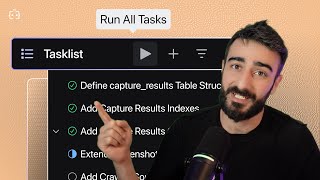
Introducing Tasklist
Augment Code
YouTube returned 6 videos for “Augment Code”, and we withheld 1: 1 did not mention Augment Code. Showing the 5 we can prove are about Augment Code.
Official links
Tools that pair well with Augment Code
Common stack mates teams adopt alongside Augment Code, with the specific reason each pairing earns its keep.
Warp
Warp Factories runs fleets of cloud coding agents across your SDLC, defined in code as factory.yaml.
GitLab Duo
GitLab Duo adds agentic AI agents and policy-governed workflows across the DevSecOps lifecycle

Kilocode
Kilo is an open-source AI coding agent with 500+ models at exact provider rates across VS Code, JetBrains, CLI, cloud, and Slack.
Featured Head-to-Head Comparisons
Augment Code vs Cursor
Pick Cursor if you want an agent that autonomously builds and ships features across IDE, CLI, and Slack — it's more accessible and flexible for startups and modern teams. Choose Augment Code if you're an enterprise needing governed, standardized SDLC workflows with compliance certifications and human-in-the-loop checkpoints. For most individual developers and small teams, Cursor's $20/mo entry beats Augment Code's $100 flat.
Augment Code vs Claude
If you're an enterprise team looking to automate the entire SDLC with governed agent loops, Augment Code is the clear choice — its flat $100/mo pricing and pre-built Experts beat piecing together prompts. If you're an individual professional or developer needing deep document analysis, long-context reasoning, or a versatile assistant across devices, Claude is the better fit. For solo devs or small startups, Claude's freemium model is more accessible; Augment Code's enterprise overhead is overkill.
Augment Code vs Windsurf
For enterprises needing governance, compliance, and end-to-end SDLC automation, Augment Code's Cosmos is the clear choice—its agent orchestration and compliance features (SOC 2, HIPAA, ISO 42001) are unmatched. For developers who want a flexible, multi-agent IDE with free access to capable models, Windsurf (Devin Desktop) offers a lightweight, cost-effective alternative. Pick based on whether you prioritize organizational control or developer agility.
Alternatives to Augment Code
View allWarp
Warp Factories runs fleets of cloud coding agents across your SDLC, defined in code as factory.yaml.
GitLab Duo
GitLab Duo adds agentic AI agents and policy-governed workflows across the DevSecOps lifecycle

Frequently Asked Questions
Best-of guides
Used Augment Code? Help shape our editorial sentiment research.