
Beever Atlas
Open-source, self-hosted team knowledge base that turns Slack, Discord, Teams, and Telegram chat into a dual-memory AI wiki.
For teams whose institutional memory is trapped in Slack threads and Discord channels, Beever Atlas is the most complete open-source take on a team LLM wiki we've seen at v0.1.0 — dual memory (Weaviate + Neo4j), auto wiki generation with decision diagrams, four chat-platform adapters, MCP tools, and a REST API, all under Apache 2.0. The catch is operational: you're running Docker, Weaviate, and Neo4j yourself, plus OAuth apps for Slack, Discord, and Teams. Choose it when self-hosting is a requirement and you have someone who enjoys owning infrastructure. If you want zero-setup convenience, Notion AI or Mem0 will get you there with far less YAML — you'll trade ownership and multi-hop graph
Verified 1d ago · liveness 80/100 · cite: rightaichoice.com/tools/beever-atlas
- Engineering teams recovering architectural decisions from Slack threads and Teams meetings
- Privacy-conscious organizations that need chat knowledge to stay on their own infrastructure
- Remote teams reconstructing incident timelines and decisions made across time zones
- Product teams clustering user feedback from Discord and Slack into themes with source links
- Teams that want a fully managed SaaS knowledge base with no servers to run
- Users unwilling to operate Docker, Weaviate, and Neo4j themselves
- Teams whose primary communication happens outside Slack, Discord, Teams, or Telegram
We scan live Reddit threads, YouTube comments, X posts, G2 reviews and other communities — and hand you an honest verdict in under a minute.
- Honest verdict, not marketing
- Real pros & cons from real users
- Attributed quotes with receipts
3 free scans · no card needed
Skip Beever Atlas if you want a managed knowledge base with zero infrastructure to run — Atlas requires you to deploy Docker, Weaviate, and Neo4j yourself, and it's a v0.1.0 release where APIs and behavior may still shift.
Running Weaviate and Neo4j alongside Atlas means extra containers, storage, and memory on whatever host you use — the infrastructure bill lands on you, not the vendor.
Atlas's open-source release is Apache 2.0 and self-hosted, so your real cost is the compute you run (Weaviate, Neo4j, Docker) plus the LLM spend for the extract stage — that typically favors teams with a Kubernetes host or a spare VM and an engineer who owns it. Against that, managed alternatives like Notion AI or Mem0 trade a per-seat subscription for zero infrastructure. Compare total cost of ownership, not list price.
In short
Beever Atlas — Open-source, self-hosted team knowledge base that turns Slack, Discord, Teams, and Telegram chat into a dual-memory AI wiki. Best for Engineering teams recovering architectural decisions from Slack threads and Teams meetings, Privacy-conscious organizations that need chat knowledge to stay on their own infrastructure, Remote teams reconstructing incident timelines and decisions made across time zones. Free to use.
What's new in Beever Atlas
Checked 7 days agoAcross the latest 1 update: 1 launch.
What people actually say about Beever Atlas — is it worth it?
We ran a structured research pass across product reviews, community discussions, and post-purchase forum threads to surface the patterns vendors won't publish themselves. Below: the recurring strengths, the hidden costs people mention most, and the cohort that consistently regrets adopting this tool.
22 mentions across 2 sources (YouTube, Product Hunt) · researched Aug 7, 2026.
Average across the 2 sources that answered — each source counts once, not each post.
- +Open-source with Apache 2.0 license, so no vendor lock-in.
- +Dual-memory architecture (Weaviate + Neo4j) enables both semantic search and relationship mapping.
- +6-stage AI pipeline includes quality gate validation (confidence ≥0.5) for accurate knowledge extraction.
- +MCP server integration allows Claude Desktop and Claude Code to directly access the knowledge base.
- +Automated wiki generation with decision diagrams and source links saves manual documentation time.
- −Very early release (v0.1.0) with likely frequent breaking changes.
- −Requires managing Weaviate and Neo4j, a heavy infrastructure burden for small teams.
- −No community support channels or documented troubleshooting exist yet.
- −Performance benchmarks only claim <200ms retrieval; real-world results unverified.
- −No mobile app or desktop client; web-only interface may limit accessibility.
- • Infrastructure costs for running Weaviate and Neo4j (cloud or dedicated servers).
- • Time and effort for setup, maintenance, and updates.
Viability Score
How well maintained and how widely used is Beever Atlas? Built from what the vendor actually publishes (docs, changelog, tutorials, integrations, pricing), whether the site is live, and how much real users discuss it. How we calculate this
Last calculated: October 2026
How we score →Key Features
- 6-stage pipeline: sync, extract, validate, store, cluster, wiki
- Dual-memory architecture: Weaviate vector search plus Neo4j knowledge graph
- Semantic memory handles ~80% of queries in under 200ms
- Graph memory for multi-hop traversal, temporal chains, and entity links
- 3-tier retrieval with fuzzy search and multimodal support
- Quality gate drops extractions below a 0.5 confidence threshold
- Multi-platform sync for Slack, Discord, Microsoft Teams, and Telegram
- Real-time ingestion of messages, threads, and files from connected platforms
- Automated wiki generation with citations and decision diagrams
- Natural language Q&A with grounded answers and source citations
- Topic clustering of related facts via cosine similarity
- File import for PDFs, Markdown, and documents
- MCP server exposing beever_ask, beever_search, beever_graph, beever_wiki
- Works with Claude Desktop, Claude Code, and any MCP-compatible client
- REST API and Docker deployment, self-hosted under Apache 2.0
About Beever Atlas
Beever Atlas is an open-source, self-hostable knowledge base that ingests your team's chat conversations and turns them into searchable, citable answers and auto-generated wiki pages. You connect Slack, Discord, Microsoft Teams, or Telegram, and a 6-stage pipeline — sync, extract, validate, store, cluster, wiki — pulls messages in real time, uses an LLM to extract facts, entities, and relationships, filters low-confidence extractions at a ≥0.5 threshold, and writes to a dual-memory store. Retrieval runs on two systems: semantic memory on Weaviate vector embeddings handles roughly 80% of queries in under 200ms with 3-tier fuzzy search; graph memory on Neo4j handles the harder ~20% — multi-hop traversal, temporal chains, entity links — so questions like "who decided to use RS256?" and "how did our auth approach evolve?" get grounded, sourced answers. You can also auto-generate structured wiki pages with citations and decision diagrams. Atlas is built to be wired into developer workflows: MCP support exposes beever_ask, beever_search, beever_graph, and beever_wiki to Claude Desktop, Claude Code, and any MCP-compatible client, backed by a REST API and Docker deployment, and file import pulls PDFs, Markdown, and documents into the same knowledge layer as chat messages. It shipped as an Apache 2.0 open-source release at v0.1.0 in April 2026 and is aimed at engineering, product, and remote teams that live in chat and want to stop losing decisions to scroll-back — plus privacy-conscious organizations that need chat knowledge to stay on their own infrastructure. Against managed options like Notion AI or Mem0, the tradeoff is clear: you get ownership and graph-backed recall, but you run the stack.
Behind the Verdict
Beever Atlas is one of the few genuinely interesting entries in the "team LLM wiki" category, and it earns that mostly by being honest about what it is: a self-hosted pipeline, not a hosted chatbot with a memory tab. The architecture is the product. Chat messages flow through a 6-stage pipeline (sync, extract, validate, store, cluster, wiki). The validate stage is the design decision we like most — extractions below a 0.5 confidence threshold are dropped rather than written, which means your wiki is smaller but less polluted by LLM hallucination than a naive "summarize every channel" approach. The dual-memory split is the second decision we like: Weaviate handles the ~80% of queries where you just want semantic similarity in under 200ms, and Neo4j handles the ~20% where you actually need relationships — "who decided X," "how did our approach to auth evolve," "which decisions touched the API design." Graph traversal is what makes temporal and multi-hop questions answerable at all, and almost no competitor in this space does it for chat history. The MCP surface is a smart bet. Exposing beever_ask, beever_search, beever_graph, and beever_wiki means Atlas drops into Claude Desktop or Claude Code as a tool rather than forcing you into a new UI, and the REST + Docker combo covers the rest. Auto-generated wiki pages with citations back to the source Slack or Discord message are the feature that will sell this internally — a decision doc that cites the thread where the decision happened is materially more trustworthy than a Notion page someone forgot to update. Where it gets harder: v0.1.0 is early, and the docs are candid that features and stability will evolve. Self-hosting means operating Weaviate and Neo4j, not just one container — that's real work, and the docs we scraped don't publish rate limits or concurrency-scaling figures, so you're sizing the stack yourself for large workspaces. The open-source release also doesn't include the governance layer (SSO/SAML, audit logs, RBAC, spend controls) that the Enterprise tier lists. Practical fit: engineering teams that already run Docker and want architectural-decision recall; product teams clustering Discord and Slack feedback into themes with source links; remote teams reconstructing what happened while they were asleep; open-source communities summarizing RFC and plugin consensus. Poor fit: anyone who wants a managed SaaS with no servers, anyone whose chat lives in email or a tool outside the four supported platforms, and anyone buying this as a personal second brain — it's team-scoped. Compare against Mem0 (managed memory layer, less wiki output), Khoj (more general personal/team assistant), Obsidian+LLM (notes-first, no chat ingestion), and Notion AI (managed, no graph, no self-host). Atlas's moat is the combination — open source, self-hosted, chat ingestion, dual memory, MCP — and it's the only one on that list with all five.
Researching Beever Atlas? Get your full AI stack in 60 seconds.
Free, no signup — tell us your goal and get tools matched to your budget & existing stack.
Real-world workflow fit
Concrete scenarios for the personas Beever Atlas actually fits — and what changes day-one when you adopt it.
Connects the #engineering Slack workspace, lets the pipeline backfill the last few months of messages, then asks Atlas "why did we move from HS256 to RS256?" expecting the answer to cite the exact threads and dates.
Outcome: Gets a grounded answer with links to the original Slack messages plus an auto-generated Authentication wiki page that lists the decision, the key drivers, and the migration timeline — no scroll-back required.
Points Atlas at the community Discord, then asks "what feature requests came up this sprint?" to prep a roadmap review.
Outcome: Requests are clustered into themes by cosine similarity, each with direct links to the source conversation, so the roadmap doc cites real user quotes instead of a PM's memory.
Uses Claude Desktop with the Atlas MCP server connected, and each morning calls beever_ask on the channels that moved overnight.
Outcome: Gets a grounded summary of what was decided and what's still open, with citations, before the first standup — no meetings sacrificed to time-zone catch-up.
Use Cases
- Recover architectural decisions from Slack threads — "Who decided to use JWT for the v2 API?" — with context on why RS256 was chosen over HS256.
- Auto-generate structured wiki pages from Discord channel history, complete with decision diagrams and citations back to the source thread.
- Cluster user feedback from Discord and Slack into themes, with direct links to each source conversation.
- Ask natural-language questions across chat plus imported PDFs and docs and get grounded answers with citations.
- Catch up on missed discussions across time zones by querying what happened in a channel overnight.
- Wire the knowledge base into Claude Code or a custom agent via MCP so answers come from your own team history.
Models Under the Hood
as of 2026-10-17
Limitations
- Beever Atlas is at v0.1.0, so features and stability may still evolve — treat the docs as a moving target, not a spec sheet.
- Self-hosting is required, and that means deploying and operating Weaviate and Neo4j yourself alongside the Atlas services, plus setting up OAuth apps for each chat platform you connect.
- Extracted knowledge quality depends on LLM accuracy, and the pipeline only accepts extractions that clear the ≥0.5 confidence threshold — a deliberate design choice that trades recall for precision, so some real but low-signal facts won't land in the wiki.
- The scraped documentation does not publish rate limits or concurrency-scaling figures, so capacity planning for large workspaces is on you.
- The Open Source release does not include the governance layer — SSO/SAML, audit logs, RBAC, spend controls — that Beever lists under Enterprise, so compliance-heavy buyers should plan for that conversation.
as of 2026-10-11
Verification history
We have re-verified Beever Atlas 10 times since . Each pass re-reads the vendor's own pages and re-checks every listed field against that evidence; passes where nothing had changed are marked as such.
- — re-checked, vendor evidence unchanged
- — re-verified summary, description, our verdict, our analysis, pricing model, pricing tiers, features, integrations, who it suits, who should skip it
- — re-verified summary, description, our verdict, our analysis, pricing model, pricing tiers, features, integrations, who it suits, who should skip it
- — re-checked, vendor evidence unchanged
- — re-checked, vendor evidence unchanged
- — re-checked, vendor evidence unchanged
Showing the 6 most recent of 10 verification passes.
Free to cite with attribution — this page re-verifies continuously.
12-month cost
Project the real annual outlay, including the implied monthly cost when only an annual tier is published.
Vendor list price only. Add-on usage, seat overages, and contract minimums are surfaced under Hidden costs & gotchas.
Plans compared
For each published Beever Atlas tier: who it actually fits, and what it adds vs. the previous tier. Cross-reference the cost calculator above for projected annual outlay.
Open Source
$0
Ideal for
Engineering and product teams with someone who can run Docker, Weaviate, and Neo4j, and who need chat knowledge to stay on their own infrastructure.
What this tier adds
Starting tier — Apache 2.0 license, the full dual-memory pipeline, four chat adapters, MCP server, REST API, and wiki generation, all self-hosted.
Enterprise
Custom
Ideal for
Organizations that need governance and support on top of Atlas — SSO, audit trails, and role-based access for a compliance-aware deployment.
What this tier adds
Adds SSO and SAML, audit logs and compliance reporting, role-based access controls, spend controls and usage limits, dedicated support with an SLA, and custom deployment options.
Where the pricing makes sense
The company stage and team size where Beever Atlas's pricing actually pencils out — and where peers do it cheaper.
Atlas's open-source release is Apache 2.0 and self-hosted, so your real cost is the compute you run (Weaviate, Neo4j, Docker) plus the LLM spend for the extract stage — that typically favors teams with a Kubernetes host or a spare VM and an engineer who owns it. Against that, managed alternatives like Notion AI or Mem0 trade a per-seat subscription for zero infrastructure. Compare total cost of ownership, not list price.
Setup time & first value
How long it actually takes to get something useful out of Beever Atlas — broken out by persona, not the marketing-page minute.
If you already run Docker and are comfortable with Neo4j and Weaviate: roughly an afternoon to bring up the stack, create OAuth apps for each chat platform, and get the first platform syncing. Without that background, budget a weekend, and expect a second pass once you tune which channels to ingest and what confidence threshold you want. First real value (a cited answer to a real question)
Switching to or from Beever Atlas
How to bring data in from common predecessors and how to get it back out — written for the switcher, not the buyer.
- →From Notion AI or Confluence: keep the wiki as read-only reference, connect chat platforms to Atlas, and let auto-generated pages replace the manually maintained decision docs over the first few weeks.
- →From Mem0: point your existing memory consumers at the Atlas REST API instead of the Mem0 client, and let the extract stage rebuild facts from source chat rather than importing old memory entries.
- →From Obsidian + LLM plugins: export notes to Markdown and use file import so your vault lives in the same knowledge layer as chat, then keep Obsidian for writing and Atlas for recall.
- →From a Slack export archive: skip manual JSON parsing — connect the workspace and let the sync stage backfill, which preserves thread structure and timestamps.
- ↗To a managed SaaS wiki (Notion AI, Mem0): export auto-generated wiki pages first, since the graph relationships and confidence scores won't carry over automatically.
- ↗To Khoj or a general assistant: expect to rebuild the entity graph, as Neo4j relationships are Atlas-specific and aren't a portable format.
- ↗To a custom in-house memory layer: the REST API and MCP tools are the clean exit — you can query beever_search and beever_graph to extract your facts before decommissioning.
Integrations
Resources & Guides
Tutorials & Learning
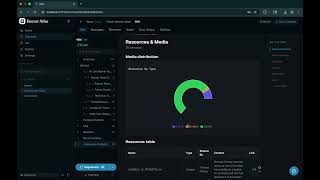
Beever Atlas — turn your conversations into a living wiki!
Hello Votee

注目の開発者向けツール:DeepSeek TUI、CocoIndex、DocuSeal、FreeLLMAPI、Beever Atlas
ManuAGI - AutoGPT Tutorials
Beever Atlas: Open-Source AI Converts Chats to Wikis!
ai_pulse
YouTube returned 6 videos for “Beever Atlas”, and we withheld 3: 3 did not mention Beever Atlas. Showing the 3 we can prove are about Beever Atlas.
Official links
Tools that pair well with Beever Atlas
Common stack mates teams adopt alongside Beever Atlas, with the specific reason each pairing earns its keep.

Llmwiki
Open-source, self-hosted LLM wiki that compiles your raw sources into a maintained knowledge base

Onyx
Open-source enterprise AI chat and permission-aware search across 50+ connected sources, self-hosted or air-gapped.

MyMemo AI
MyMemo AI turns your saved links, videos, PDFs and voice notes into a searchable knowledge base you chat with.
Featured Head-to-Head Comparisons
Beever Atlas vs Spider Cloud
Spider Cloud is the go-to tool if you need real-time web data for AI agents at scale with a proven Rust engine and ultra-low cost. Beever Atlas wins if your priority is capturing team conversations into an AI-queryable knowledge base with full privacy via self-hosting. They solve opposite problems — pick based on whether you need external web scraping or internal team knowledge management.
Beever Atlas vs Voyage Ai
Choose Voyage AI if you need high-accuracy, domain-specialized embeddings for enterprise RAG and are willing to pay for managed, compliant infrastructure. Choose Beever Atlas if you want a free, self-hosted tool to automatically capture team conversations into a structured, searchable knowledge base with minimal upfront cost and full data control.
Beever Atlas vs Temporal Ai
Temporal AI is the right choice if you need bulletproof orchestration for AI agents and mission-critical workflows, especially with its latest serverless and priority features. Beever Atlas excels for engineering teams wanting to turn messy chat histories into an organized, self-hosted knowledge base at zero cost. Choose based on your core need: reliable execution vs. knowledge capture.
Alternatives to Beever Atlas
View all


Frequently Asked Questions
Best-of guides
Used Beever Atlas? Help shape our editorial sentiment research.